Artwork
Birth of Venus
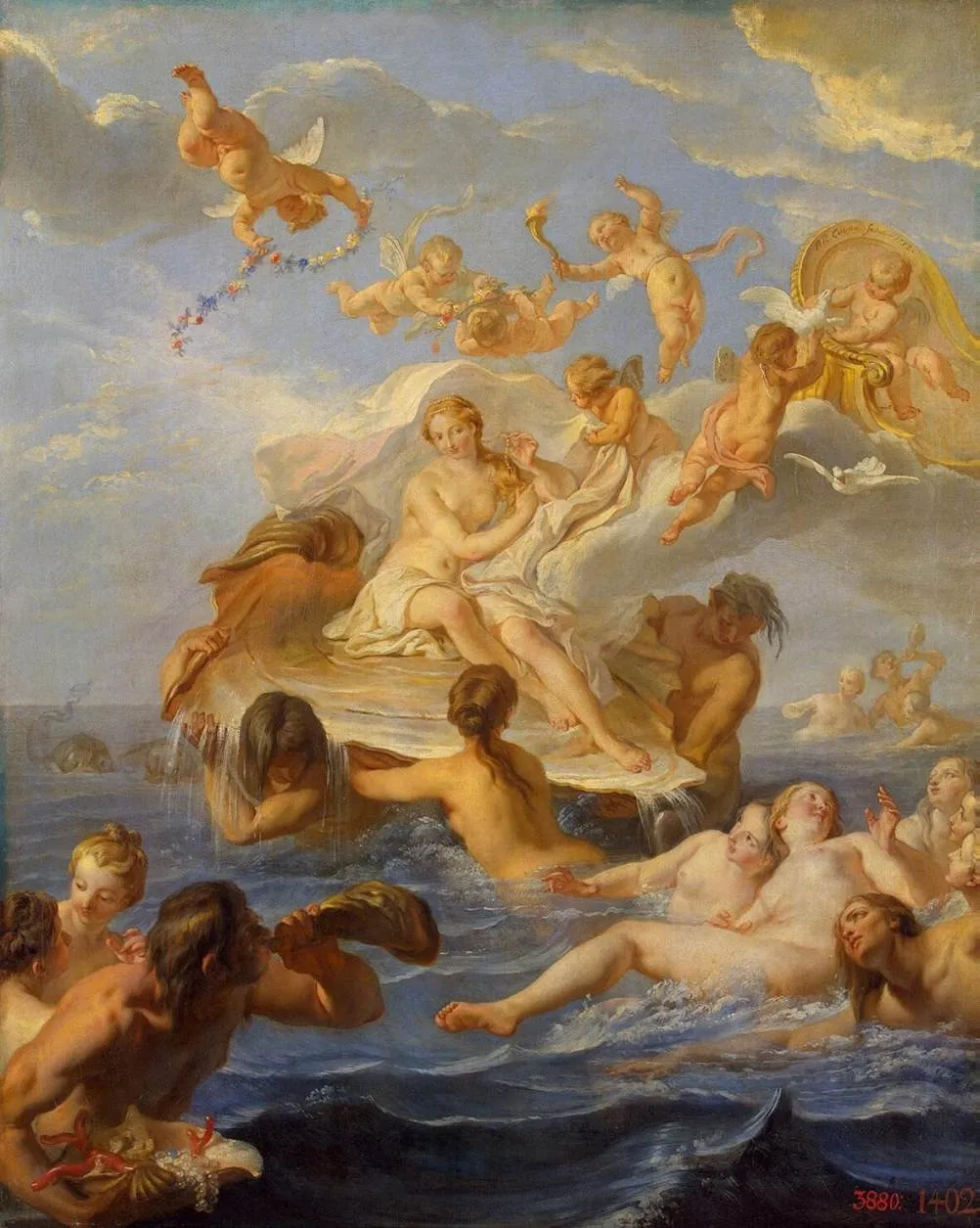
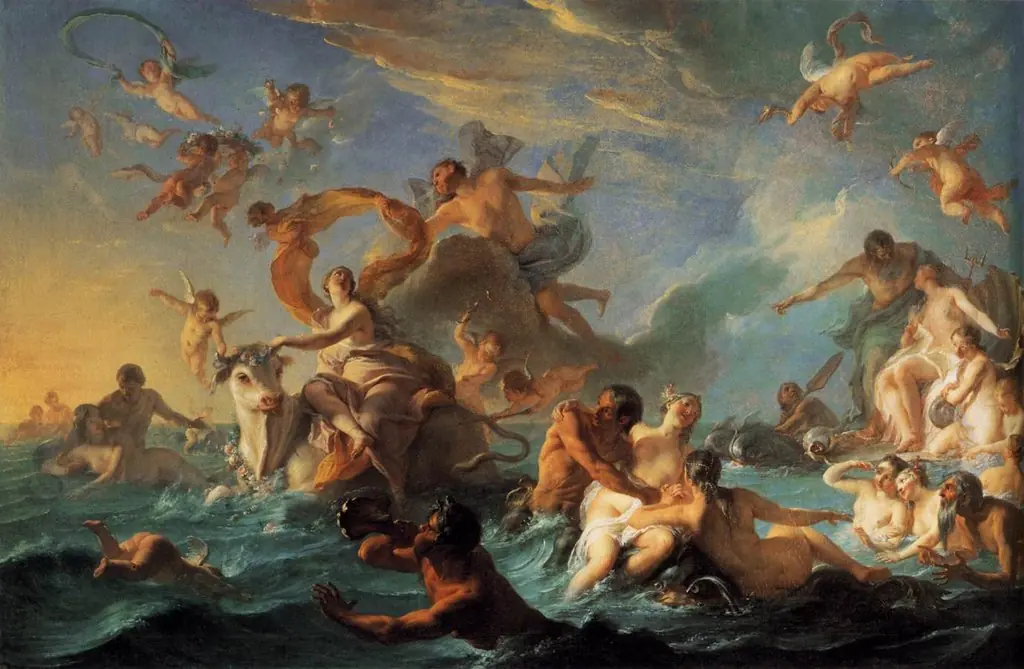
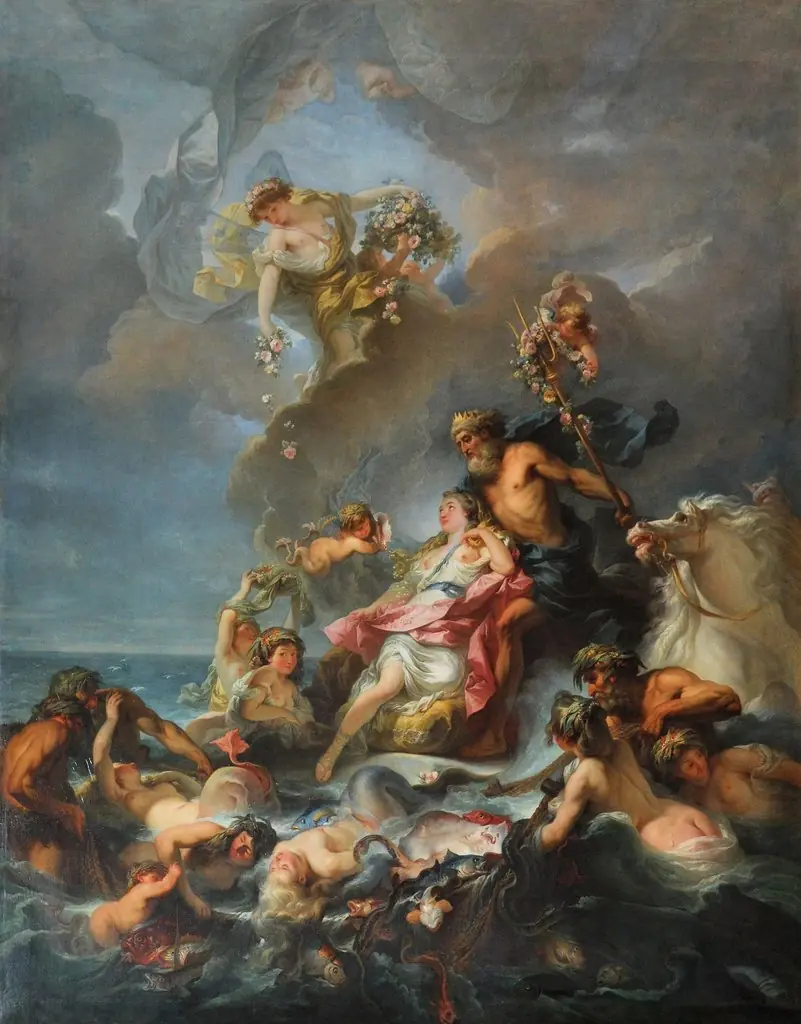
Birth of Venus is an oil painting by the Rococo painting artist Nöel-Nicolas Coypel. It dates from 1732 and is held in the collection of the Hermitage Museum. Nöel‑Nicolas Coypel’s 1732 oil on canvas presents a mythological scene centered on Venus emerging from the sea.
About this work
Overview
The palette is dominated by muted blues, whites and warm flesh tones, creating a serene, otherworldly atmosphere.
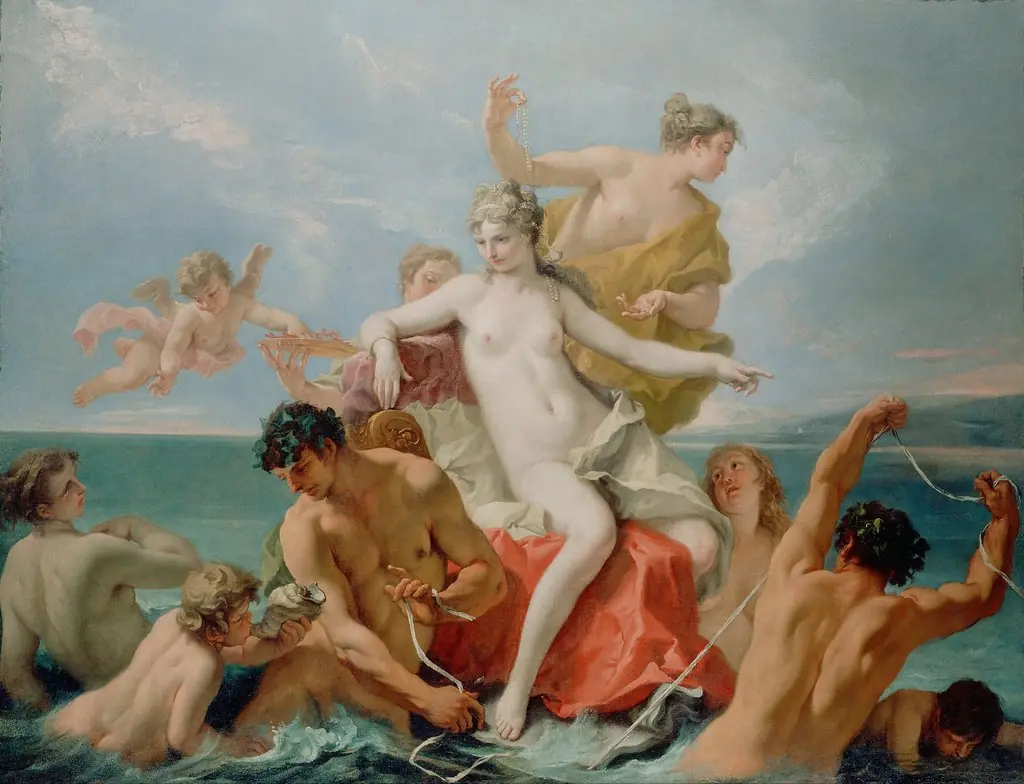
Nöel‑Nicolas Coypel’s 1732 oil on canvas presents a mythological scene centered on Venus emerging from the sea. The composition places the goddess seated upon a scallop shell, surrounded by a host of figures—both adult and child—who drift in the water or hover above, some bearing wings. The palette is dominated by muted blues, whites and warm flesh tones, creating a serene, otherworldly atmosphere.
Subject & Meaning
The work interprets the classical birth of Venus, the Roman goddess of love, as a moment of divine emergence. The surrounding attendants, likely representing nymphs, cupids, and other celestial beings, emphasize her status as a celestial beauty destined to inspire humanity. The gentle illumination that seems to emanate from the goddess underscores her role as a source of light and affection in mythic narratives.
Technique & Style
Coypel employs smooth, blended brushwork to render skin and drapery, achieving a luminous, almost ethereal quality. The subtle chiaroscuro modelled forms, while the soft clouds and calm sea recede into a hazy background, enhancing depth without harsh contrast. The overall effect is a dreamlike tableau where figures appear to glow from within, characteristic of the Rococo’s graceful elegance.
History & Provenance
Completed in 1732, the painting entered the collection of the State Hermitage Museum in Saint Petersburg, where it remains on display. Its acquisition reflects the museum’s 18th‑century interest in French academic works and the broader European fascination with mythological subjects during the period.
Artist & collection