Artwork
The Miracles of Saint James the Greater
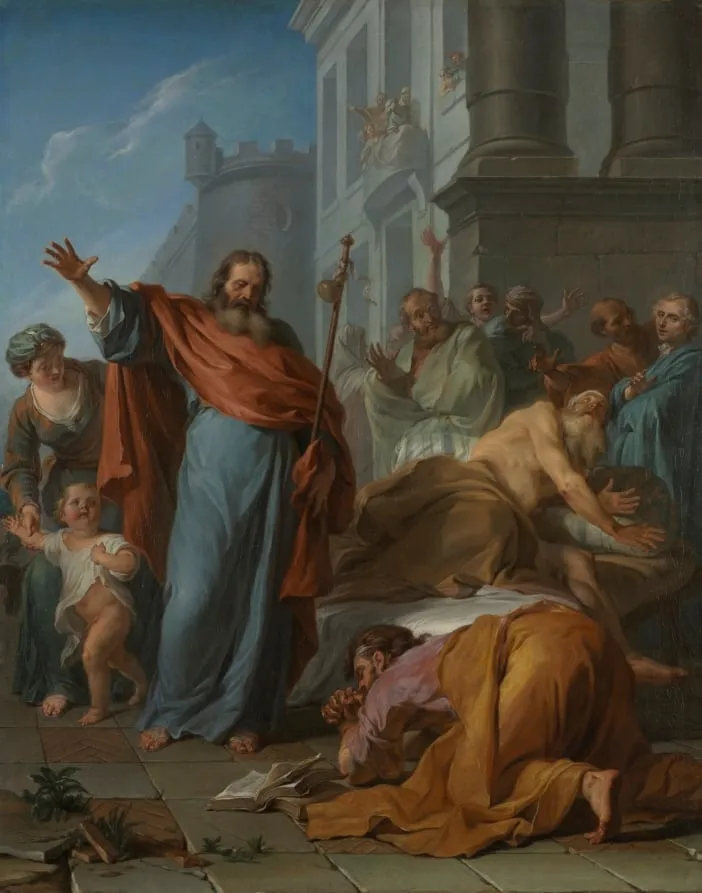
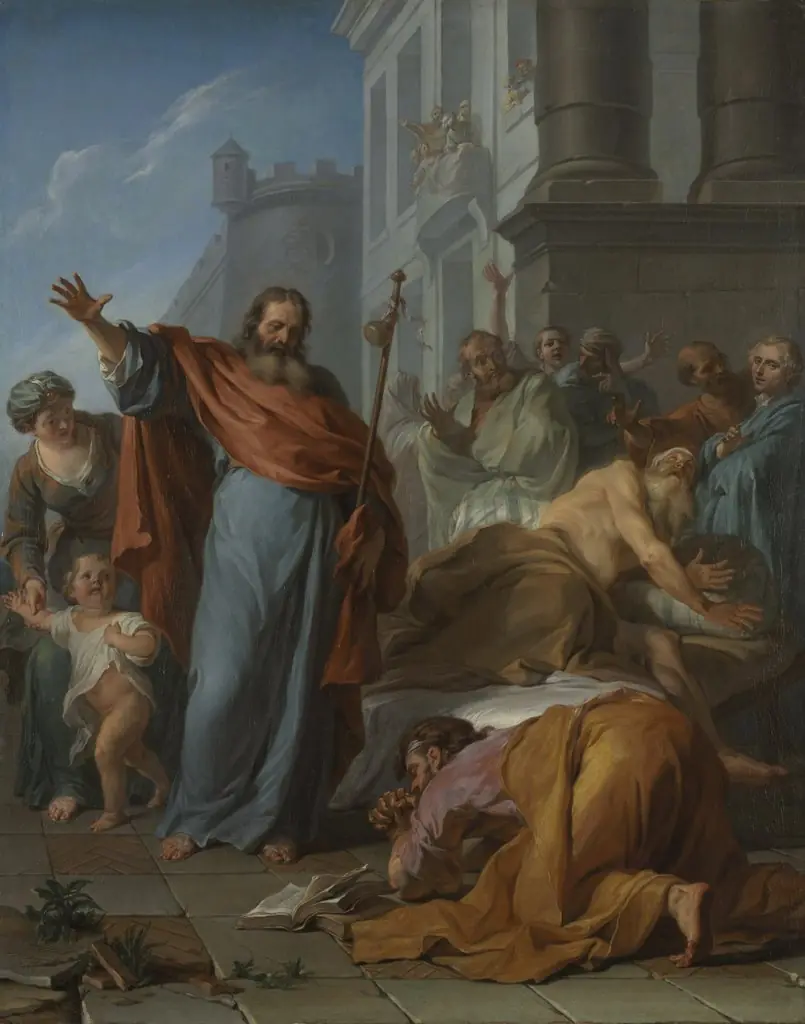
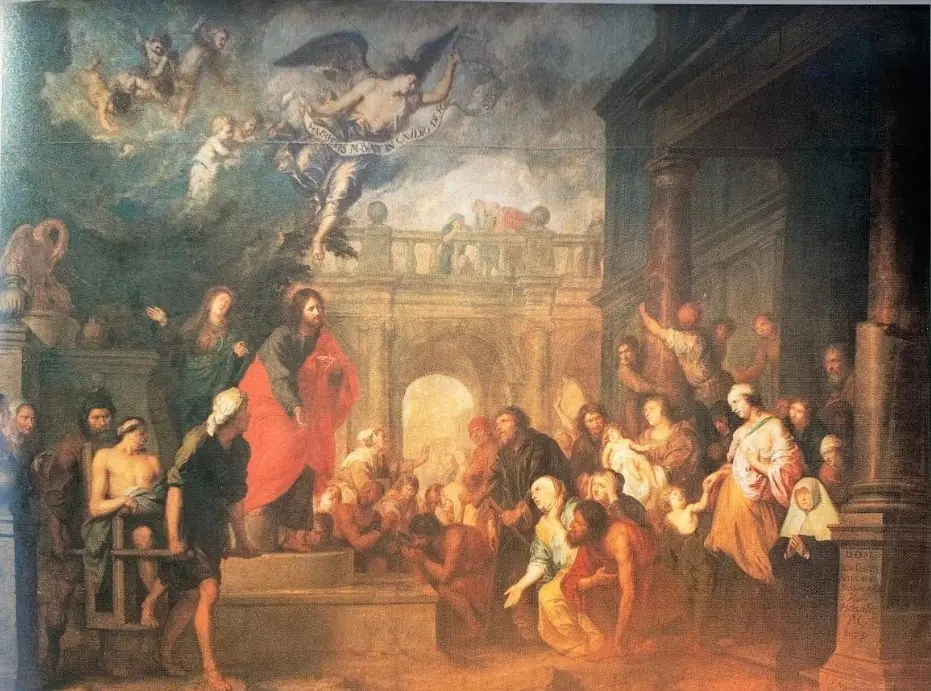
The Miracles of Saint James the Greater is an unspecified painting by the Baroque artist Nöel-Nicolas Coypel. It dates from 1726 and is held in the collection of the Cleveland Museum of Art. Noël Nicolas Coypel’s painting unites two distinct legends of Saint James the Greater into a single dynamic composition.
About this work
Overview
Noël Nicolas Coypel’s painting unites two distinct legends of Saint James the Greater into a single dynamic composition. Though modest in size, the work achieves a sense of scale through its architectural backdrop and carefully arranged figures. The scene captures moments of divine intervention, transforming a narrative of sorcery and suffering into a testament of faith and conversion.
Subject & Meaning
Both events signify the triumph of Christian faith over paganism and physical affliction, reinforcing the saint’s role as a conduit of divine power.
The painting illustrates two miracles attributed to Saint James: the defeat of the sorcerer Hermogenes, whose cursed spells rebound upon him, and the healing of a paralytic man. Hermogenes, kneeling in supplication, abandons his pagan writings as demons swirl around him, while the healed man rises from his crutches nearby. Both events signify the triumph of Christian faith over paganism and physical affliction, reinforcing the saint’s role as a conduit of divine power.
Technique & Style
Coypel employs clear spatial organization and expressive gestures to guide the viewer through the layered narrative. Figures are rendered with dignified poise, their postures conveying emotional and spiritual turning points. The architectural setting provides structural gravity, while subtle lighting enhances the drama without relying on extreme chiaroscuro. The composition balances movement and stillness, creating rhythm without chaos.
History & Provenance
Painted in the late 17th century, the work reflects the French academic tradition’s interest in biblical narratives and moral allegory. It likely originated as part of a devotional or institutional commission, common for religious subjects during the reign of Louis XIV. Its survival in relatively intact condition suggests it remained in ecclesiastical or aristocratic hands, valued for its theological clarity and artistic refinement.
Context
Coypel worked during a period when French art emphasized clarity, moral instruction, and classical harmony. The fusion of multiple miracles into one scene aligns with Counter-Reformation ideals that sought to visually affirm Catholic doctrine. The inclusion of demons and miraculous healings responded to popular devotional culture, where saints were seen as active intercessors in daily life.
Legacy
The painting exemplifies how academic artists synthesized legend and doctrine into accessible visual stories. While not widely known today, it represents a broader trend in French religious painting that prioritized narrative coherence and emotional resonance over spectacle. Its restrained grandeur influenced later depictions of saints in French ecclesiastical art, emphasizing dignity over theatricality.
Artist & collection

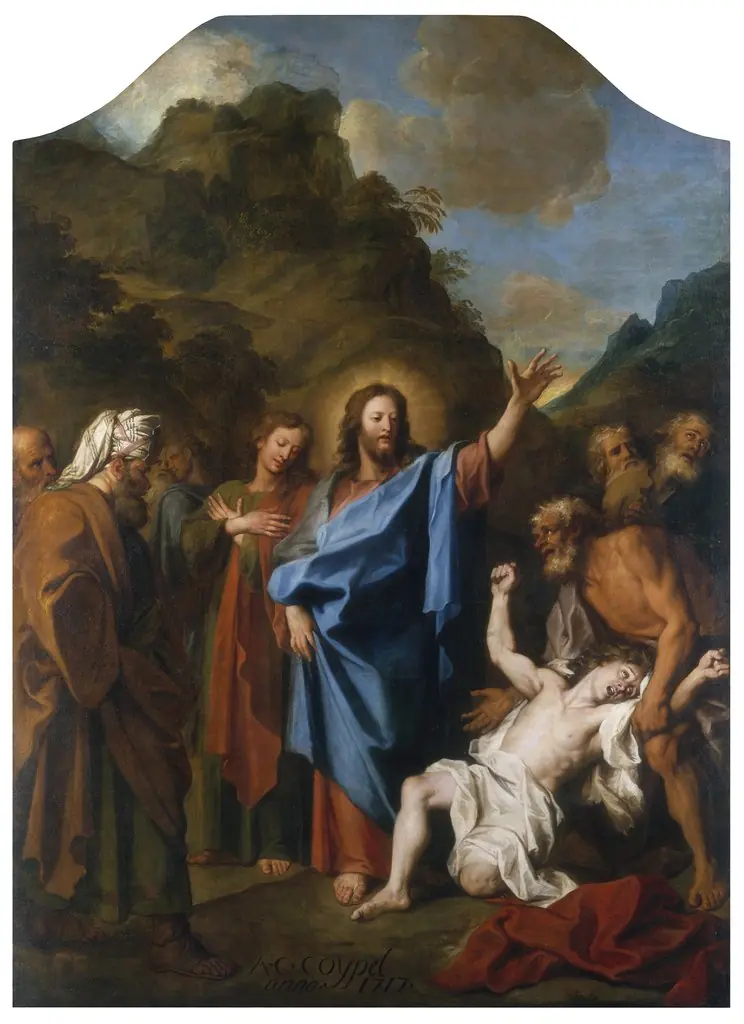 Christ Curing a Possessed Man
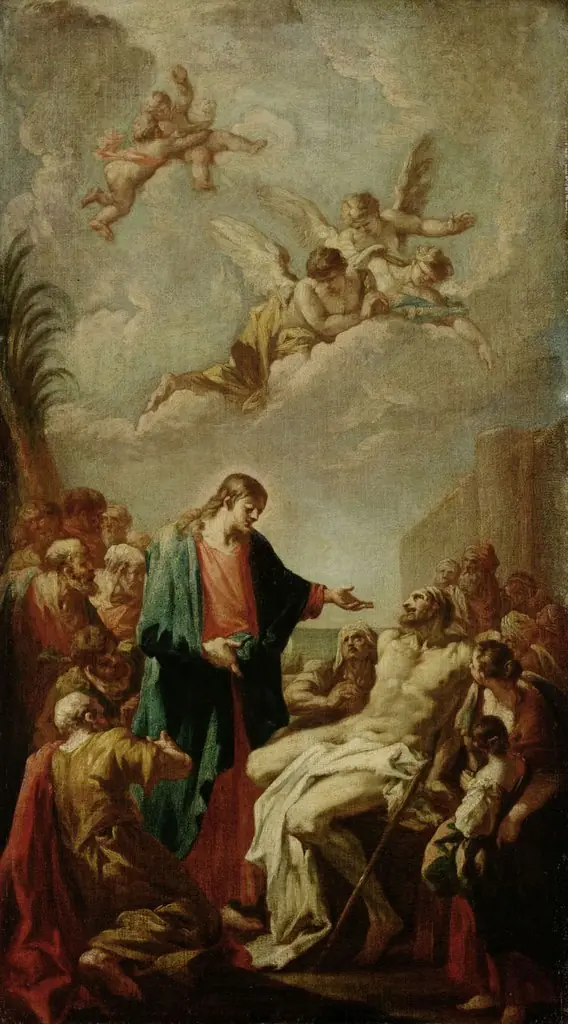 Christus heilt den Gichtbrüchigen
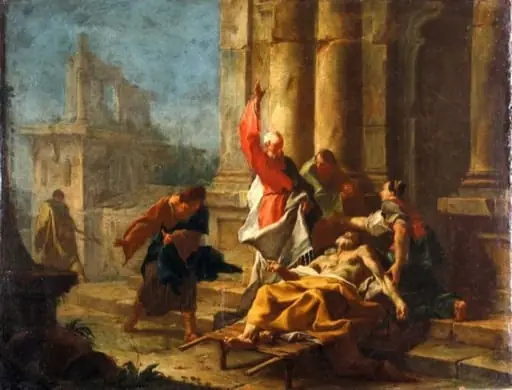 Sântul Petru tămăduind un bolnav; pandant: Socrate în închisoare
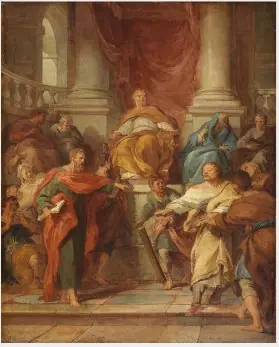 Elymas the Sorcerer Struck with Blindness, sketch
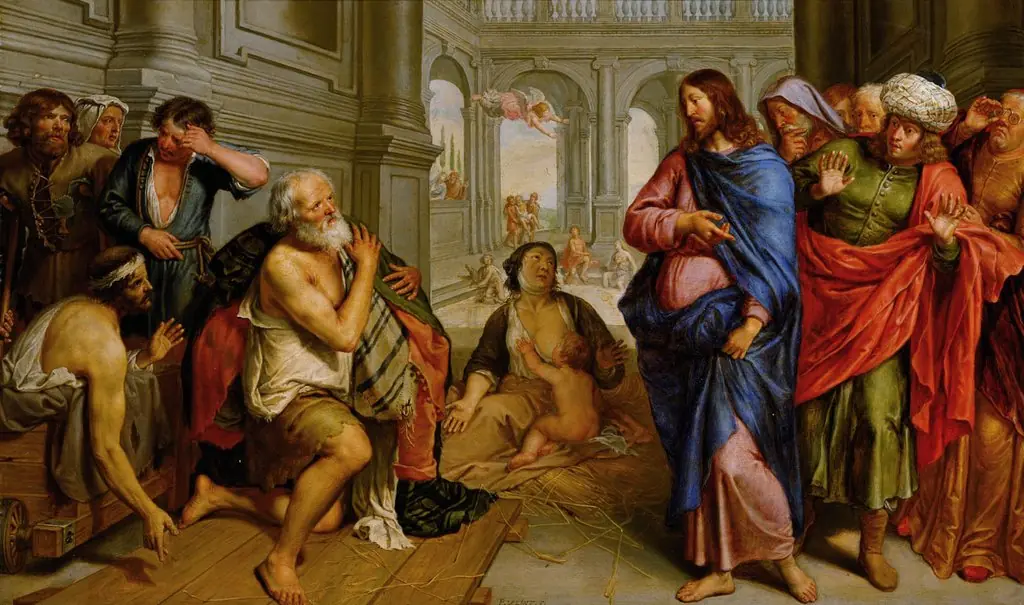 Christ healing the lame at the pool of Bethesda
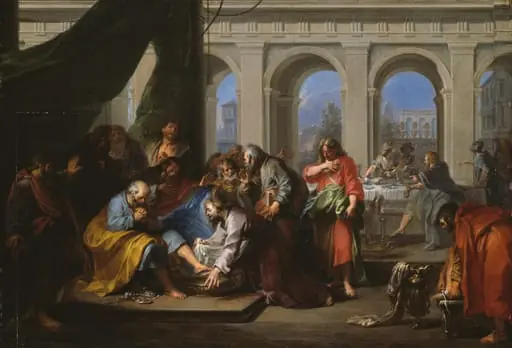 Christ Washing the Feet of His Disciples
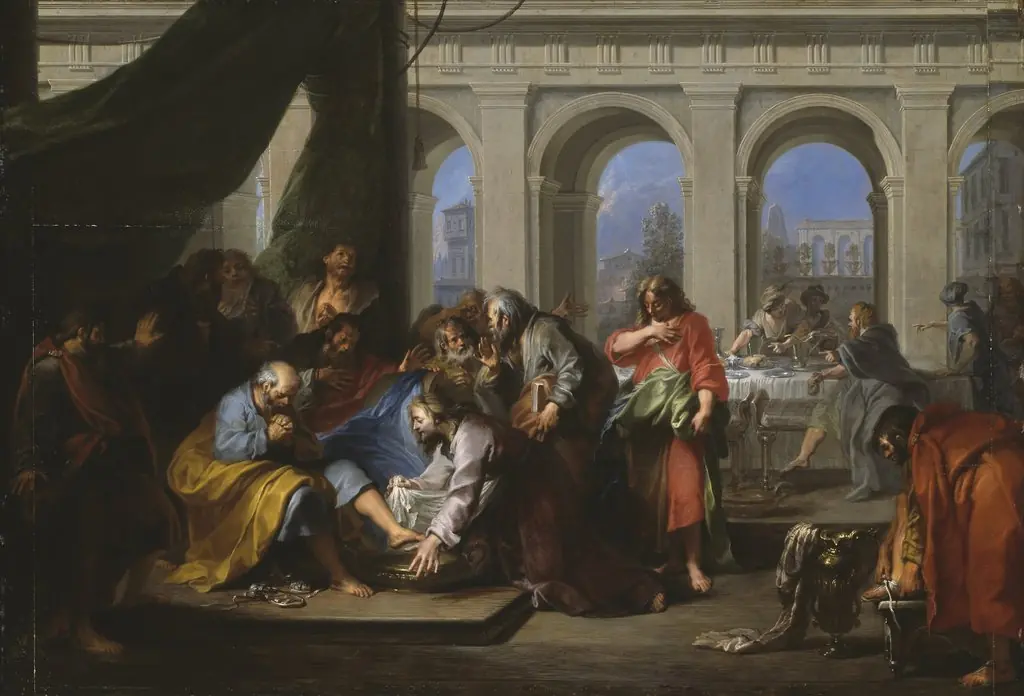 Christ Washing the Feet of His Disciples
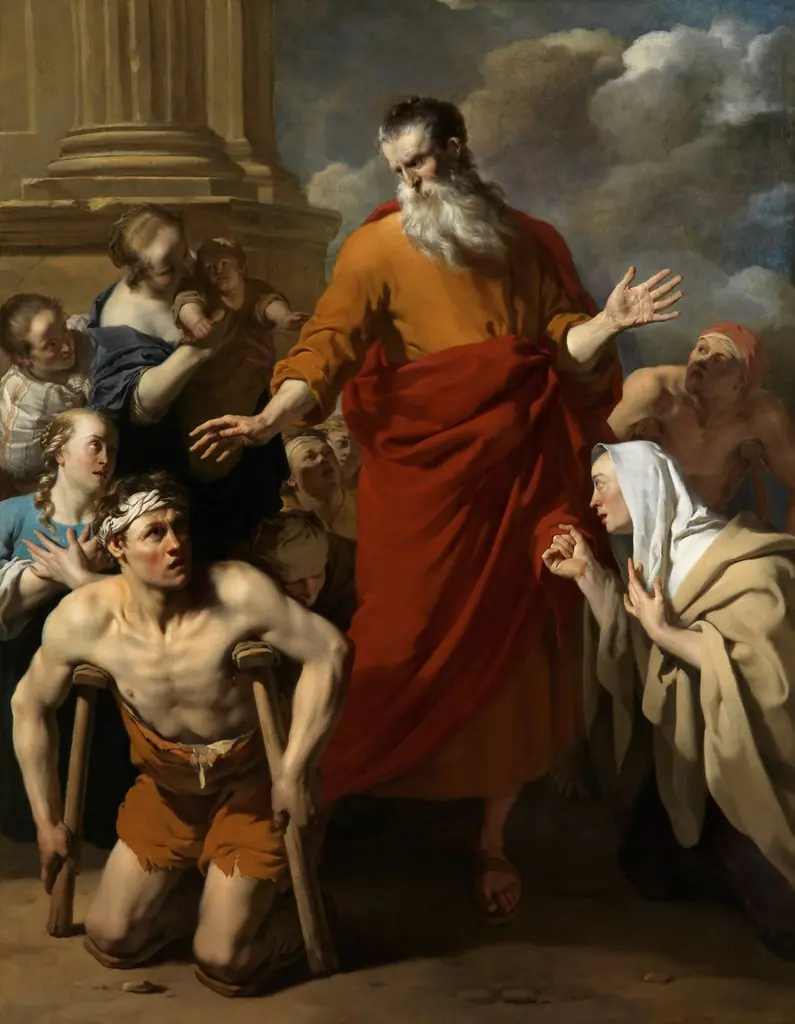 St Paul Healing the Cripple at Lystra
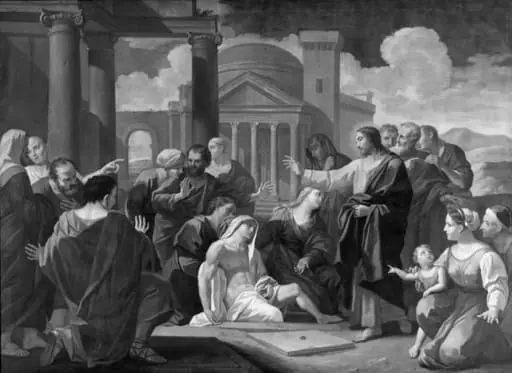 Lazarus' opvækkelse
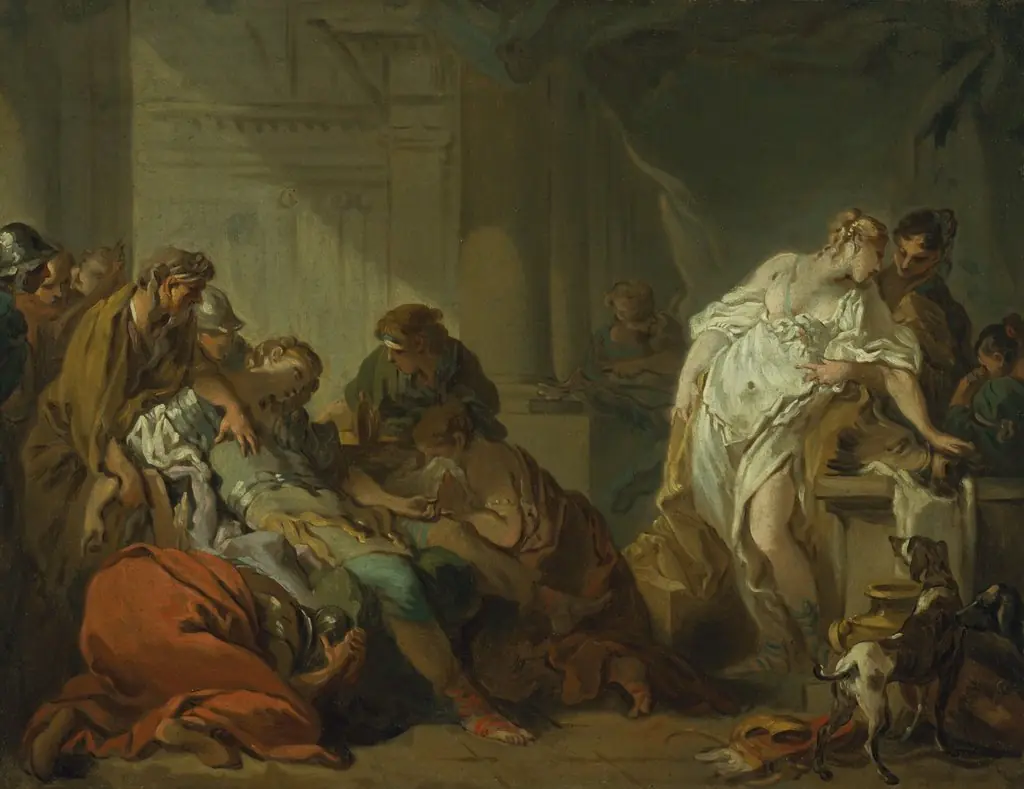 Death of Meleager
 Christ Healing the Sick People Lying near the Pool of Bethesda