Artwork
Raja Dhrub Dev
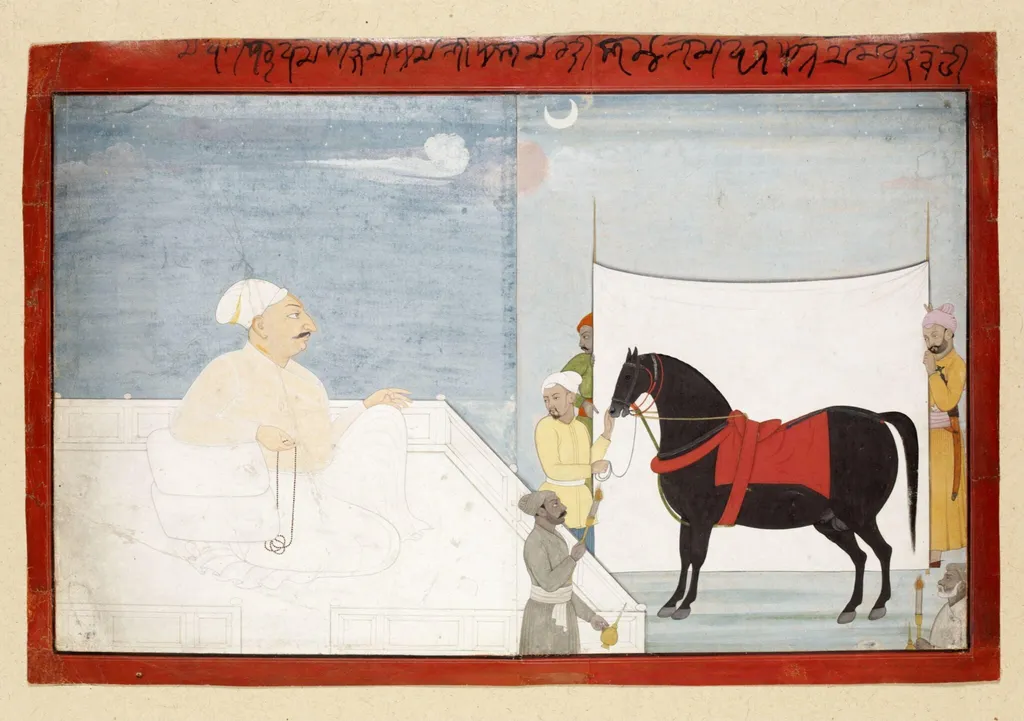
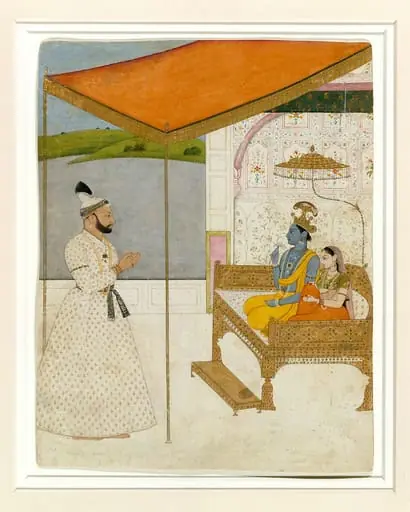
Raja Dhrub Dev is a paint painting by the Baroque artist Nainsukh. It dates from 1740 and is held in the collection of the Victoria and Albert Museum.
About this work
Overview
The scene balances the stillness of the ruler with the quiet activity of attendants on the right, creating a composed, intimate moment.
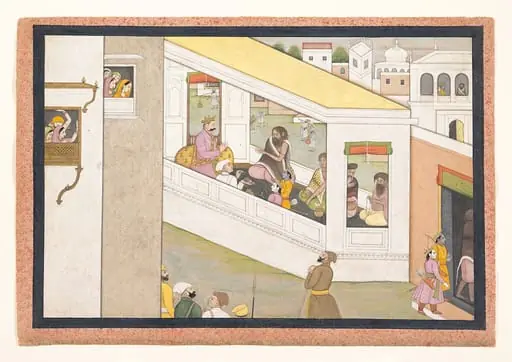
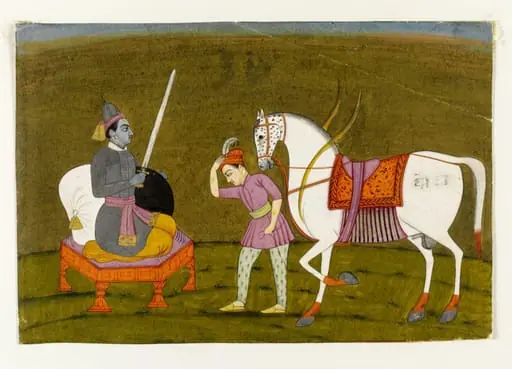
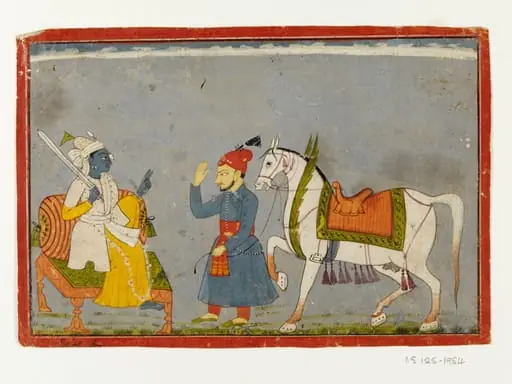
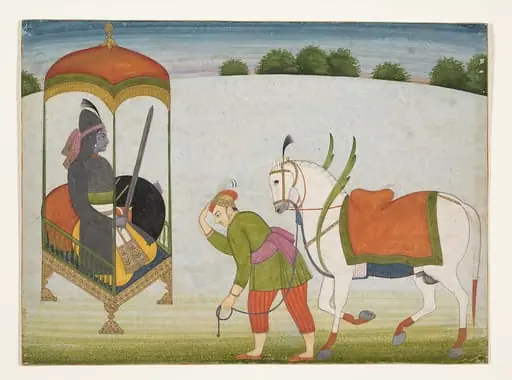
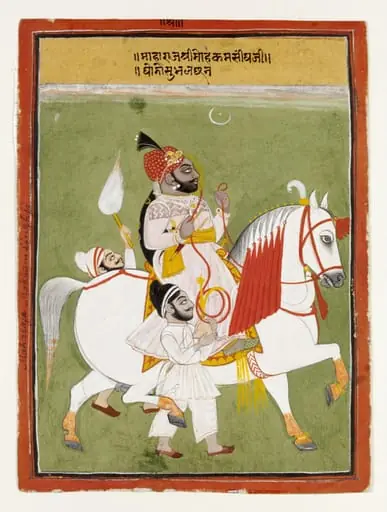
This painting depicts Raja Dhrub Dev, a ruler of the Punjab hills, seated on a white marble terrace. The composition is divided into two halves, seamlessly joined along the terrace’s balustrade. The scene balances the stillness of the ruler with the quiet activity of attendants on the right, creating a composed, intimate moment. The work is attributed to Nainsukh, known for his nuanced observation of courtly life.
Subject & Meaning
Raja Dhrub Dev is portrayed in quiet repose, his presence marked by the inscription identifying him. The attendants on the right engage in routine tasks—holding a white sheet to frame the horse, guiding the animal, and carrying torches. These figures suggest a ceremonial or preparatory moment, perhaps for an evening procession. The focus on mundane detail elevates the ruler’s dignity through understated context rather than grandeur.
Technique & Style
Nainsukh employs a restrained palette of soft tones, enhancing the painting’s quiet atmosphere. The ruler’s form is rendered with subtle modeling, while the attendants are detailed with precise brushwork, each gesture carefully observed. The seamless join between the two panels demonstrates technical control, with the terrace’s balustrade continuing uninterrupted, reinforcing the unity of the scene despite its composite structure.
History & Provenance
The painting originates from the Punjab hill states in the mid-18th century, likely commissioned for a royal patron. It remained within regional collections before entering institutional holdings. While Nainsukh’s hand is clearly evident in the right panel, the extent of his involvement in the left—where the ruler is depicted—remains uncertain, leaving open the possibility of workshop participation.
Context
Created during a period when Pahari painting shifted from idealized courtly imagery toward intimate, observational realism, this work reflects Nainsukh’s influence. His focus on individualized figures and everyday moments broke from earlier stylized conventions. The painting aligns with a broader trend in 18th-century Himalayan courts toward personal, documentary-style portraiture.
Legacy
The painting stands as a key example of Nainsukh’s contribution to Pahari art, demonstrating his ability to merge narrative detail with psychological depth. Its quiet composition and technical precision influenced later artists in the region. Though not widely exhibited, it remains a touchstone for scholars studying the evolution of portraiture in early modern North India.
Artist & collection