Artwork
Jean-Baptiste Colbert
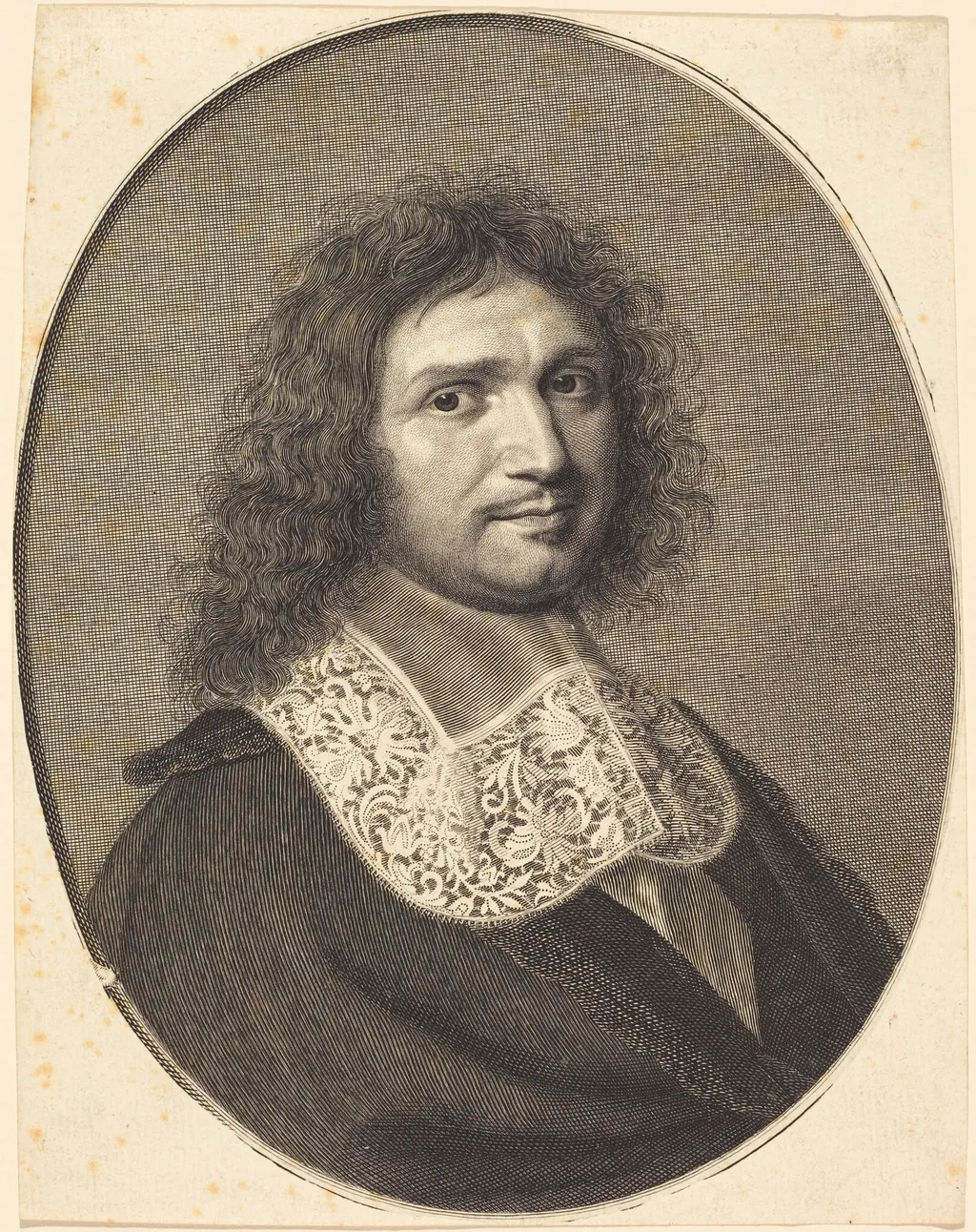
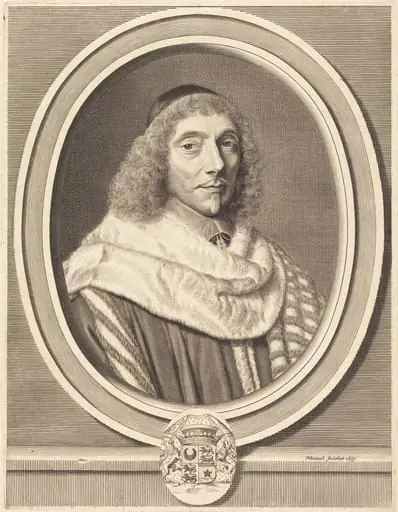
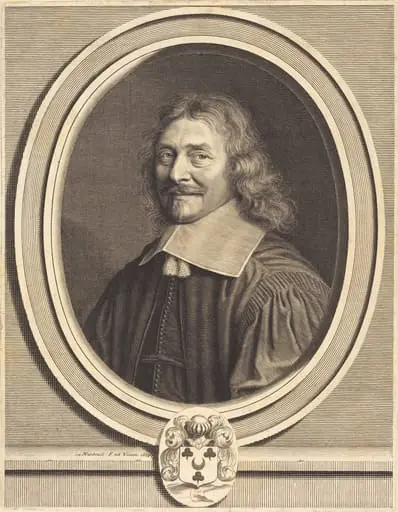
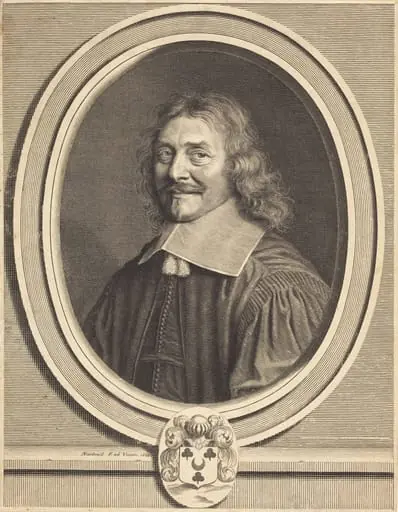
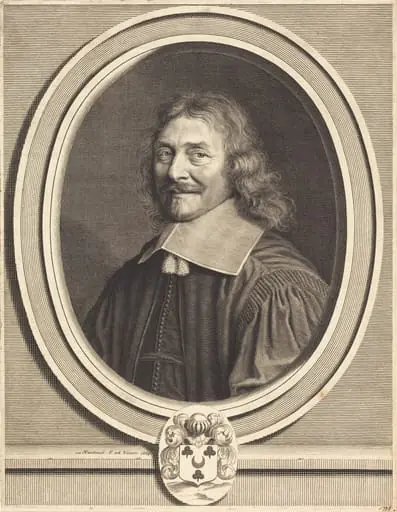
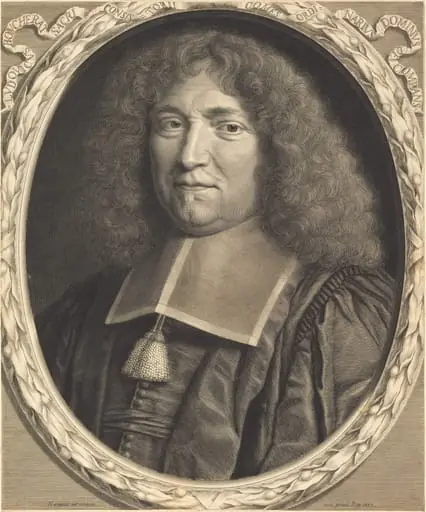
Jean-Baptiste Colbert is an ink print by the Baroque artist Robert Nanteuil. It dates from 1667 and is held in the collection of the National Gallery of Art.
About this work
Overview
The circular format and formal composition reflect its function as an official portrait, intended for circulation among court circles and administrative elites.
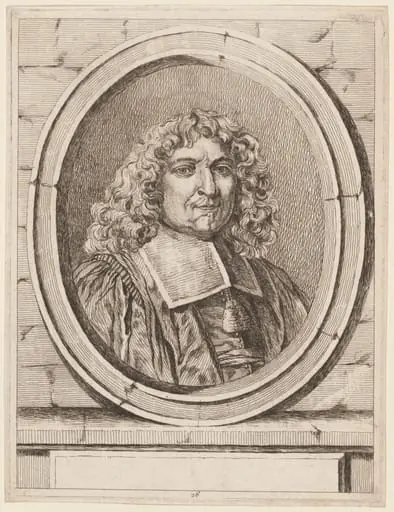
This black-and-white print is a proof impression of Jean-Baptiste Colbert, created around 1667 by Robert Nanteuil. Executed as an engraving, the image was produced by incising fine lines into a metal plate, then inked and pressed onto paper. The circular format and formal composition reflect its function as an official portrait, intended for circulation among court circles and administrative elites.
Subject & Meaning
Colbert, Louis XIV’s minister of finance and a central architect of French state policy, is depicted with solemn composure. His detailed lace collar and curled hair signal his status and refinement, while the unsmiling gaze conveys authority and diligence. The portrait was not merely a likeness but a tool of political representation, reinforcing his role as a pillar of royal governance and bureaucratic order.
Technique & Style
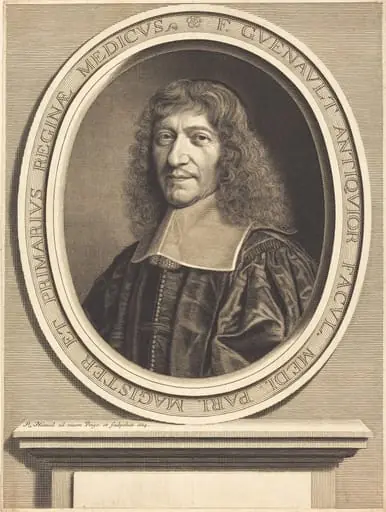
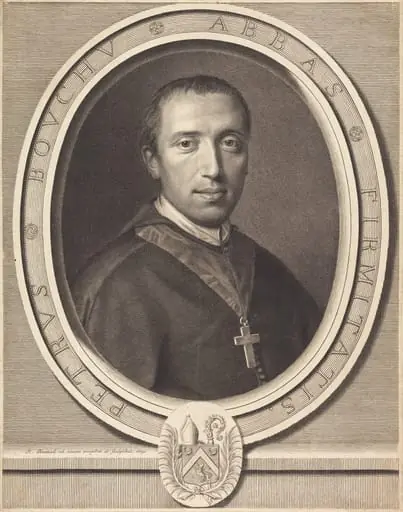
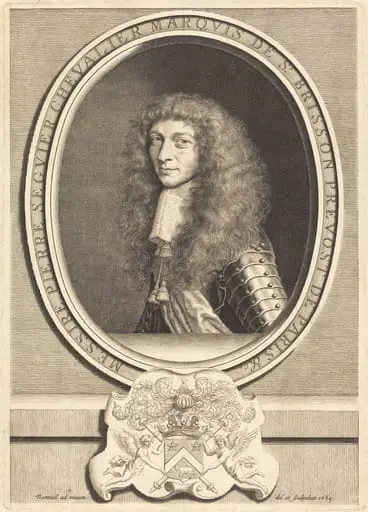
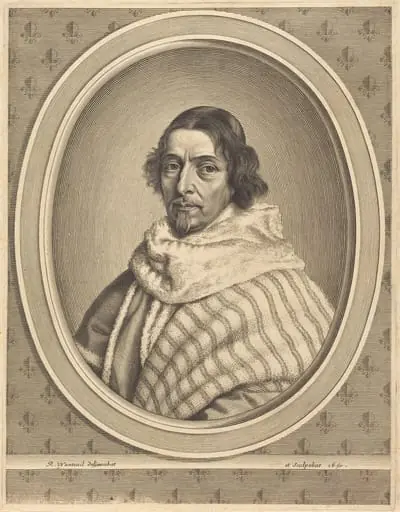
Nanteuil employed meticulous engraving techniques to render texture and volume. Fine, controlled lines define the intricate lace of the collar and the curl of Colbert’s hair, while subtle tonal gradations suggest depth without shading. The round frame concentrates attention on the face and upper torso, emphasizing dignity and presence. The proof impression reveals the artist’s hand in refining details before final printing.
History & Provenance
Created during Colbert’s peak influence at the French court, this engraving likely served as a diplomatic or administrative gift. As a favored court artist, Nanteuil produced numerous portraits of royal officials, and this work was part of a broader effort to visually consolidate the monarchy’s administrative elite. The proof status suggests it was made for review or limited distribution before wider reproduction.
Context
In mid-17th century France, engraved portraits were vital for disseminating the image of power beyond the palace. Colbert’s likeness, like those of other ministers, helped establish a visual language of state authority. Nanteuil’s work aligned with Louis XIV’s broader project of centralizing control, using art to project stability, order, and the legitimacy of royal governance.
Legacy
Nanteuil’s engravings set a standard for French portraiture in the late Baroque period. His ability to convey character through precise line work influenced later portraitists and printmakers. Though the political context has faded, the technical precision and restrained elegance of this print remain as enduring examples of how printmaking served statecraft in early modern Europe.
Artist & collection
Artist
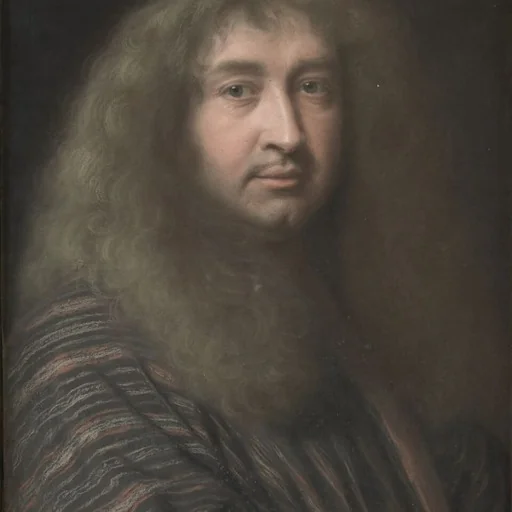
Robert Nanteuil (French pronunciation: ; 1623 – 9 December 1678) was a French portrait artist: engraver, draughtsman and pastellist to the court of Louis XIV.