Artwork
Rene, Marquis de Maisons
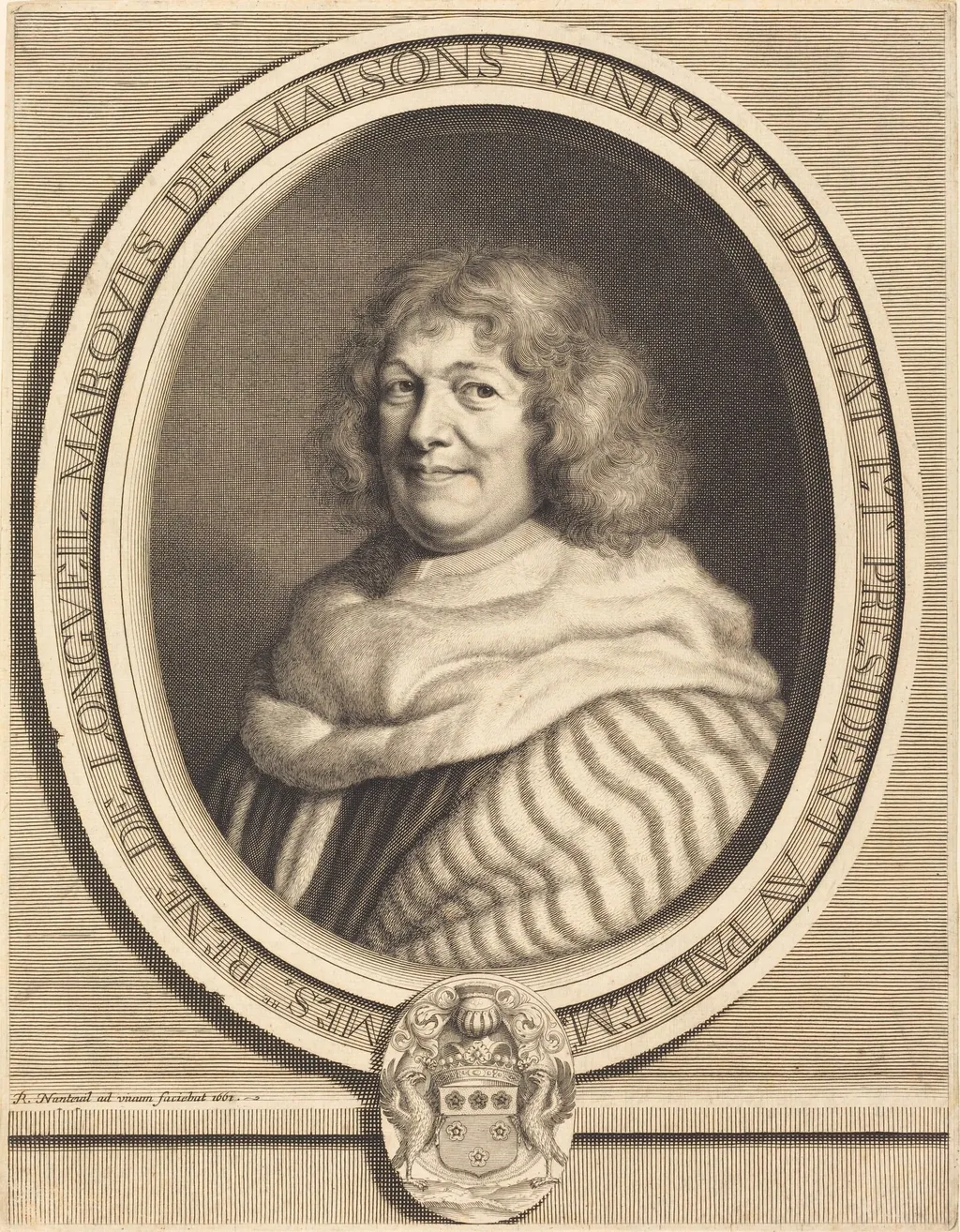
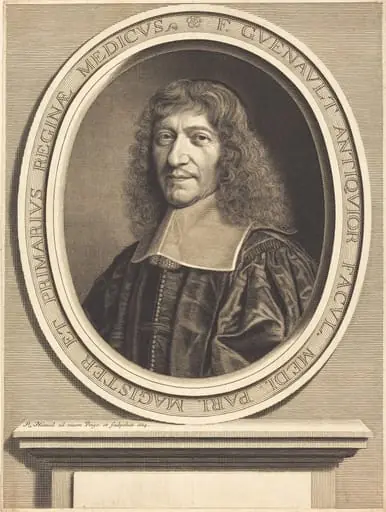
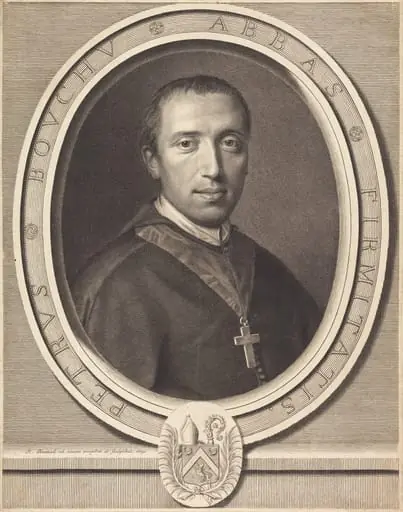
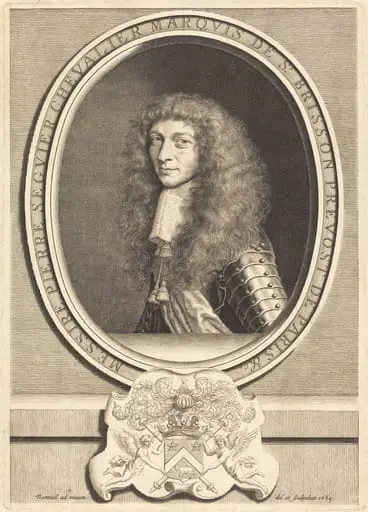
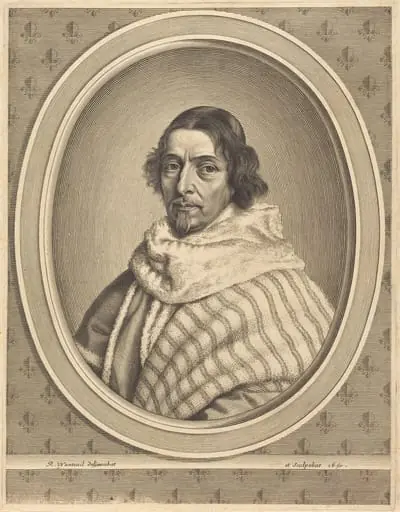
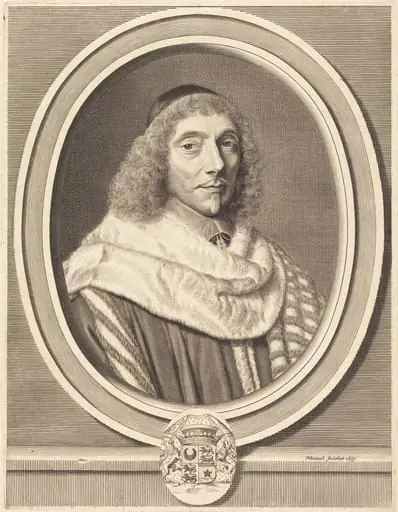
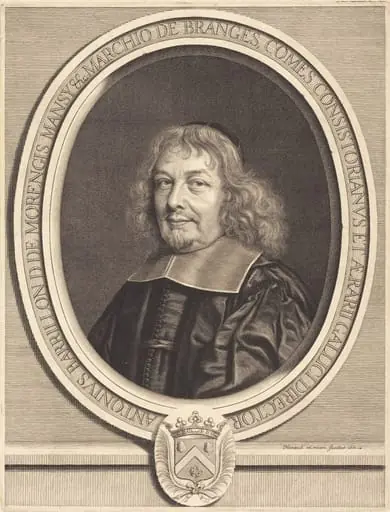
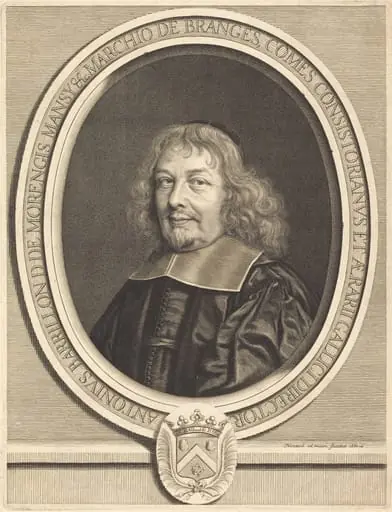
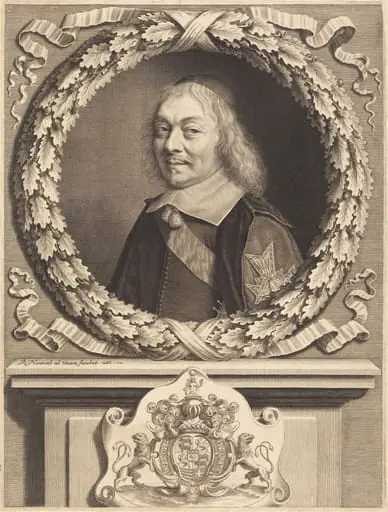
Rene, Marquis de Maisons is an ink print by the Baroque artist Robert Nanteuil. It dates from 1661 and is held in the collection of the National Gallery of Art.
About this work
Overview
Executed in black ink on paper, the work exemplifies Nanteuil’s skill as a court engraver, known for precise line work and subtle tonal gradations.
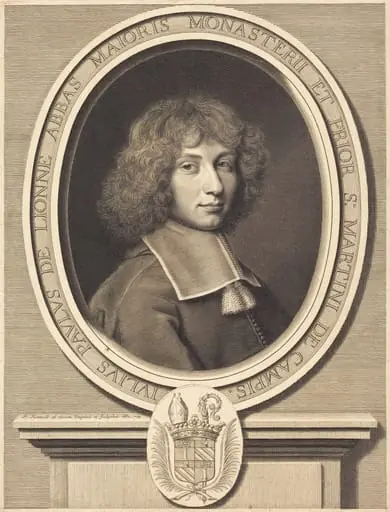
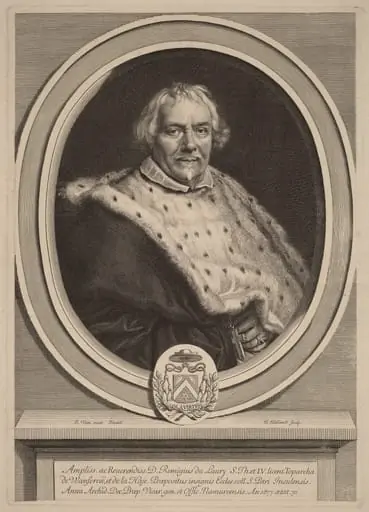
This 1661 engraving by Robert Nanteuil portrays René, Marquis de Maisons, a French nobleman connected to the court of Louis XIV. Executed in black ink on paper, the work exemplifies Nanteuil’s skill as a court engraver, known for precise line work and subtle tonal gradations. The portrait is framed by ornamental borders and inscriptions, typical of formal portraiture of the period, emphasizing the subject’s status through refined craftsmanship rather than elaborate setting.
Subject & Meaning
René, Marquis de Maisons, is depicted with a composed demeanor, his round face and gentle gaze conveying dignity without ostentation. The inclusion of a fur collar and a small heraldic emblem at the base signals his noble rank and familial lineage. The plain background focuses attention on his features and attire, aligning with the era’s preference for restrained elegance. The portrait functions as both a personal likeness and a social document, affirming his place within the aristocratic hierarchy.
Technique & Style
Nanteuil employed fine, controlled etching lines to model the contours of the face and the texture of the fur collar, creating a sense of volume and softness through delicate hatching. The contrast between the smooth skin and the rendered wool of the collar demonstrates his mastery of tonal variation. Decorative borders and engraved text frame the image, reflecting the conventions of printed portraiture in 17th-century France, where precision and clarity were paramount.
History & Provenance
Created in 1661, the engraving was likely commissioned to commemorate the Marquis’s position at court or to circulate among elite circles. As a favored engraver of Louis XIV’s court, Nanteuil produced numerous portraits of nobility, many of which were distributed as visual records of power. This piece survives as part of a broader corpus of engraved likenesses that helped define the visual culture of the French aristocracy during the early reign of the Sun King.
Context
In mid-17th-century France, engraved portraits served as tools of social memory and political representation. With the rise of absolutism, visual documentation of courtiers became increasingly important. Nanteuil’s work aligned with this trend, offering a standardized yet intimate format for portraying nobility. The absence of landscape or symbolic props reflects a shift toward psychological realism and the emphasis on personal identity within a rigid social structure.
Legacy
Nanteuil’s engravings, including this portrait, set a benchmark for portraiture in print during the Baroque period. His ability to capture individual character through line alone influenced generations of engravers across Europe. Though mass-produced, these works retained an air of exclusivity, preserving the likenesses of court figures for posterity and contributing to the enduring visual language of French aristocratic identity.
Artist & collection
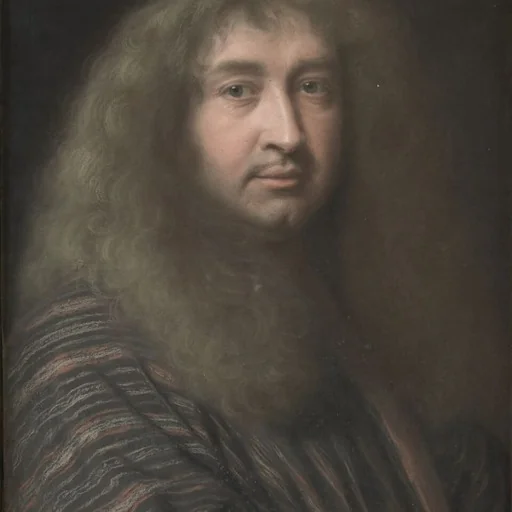
Artist
Robert Nanteuil (French pronunciation: ; 1623 – 9 December 1678) was a French portrait artist: engraver, draughtsman and pastellist to the court of Louis XIV.