Artwork
Bingham-Melcomb, Dorsetshire
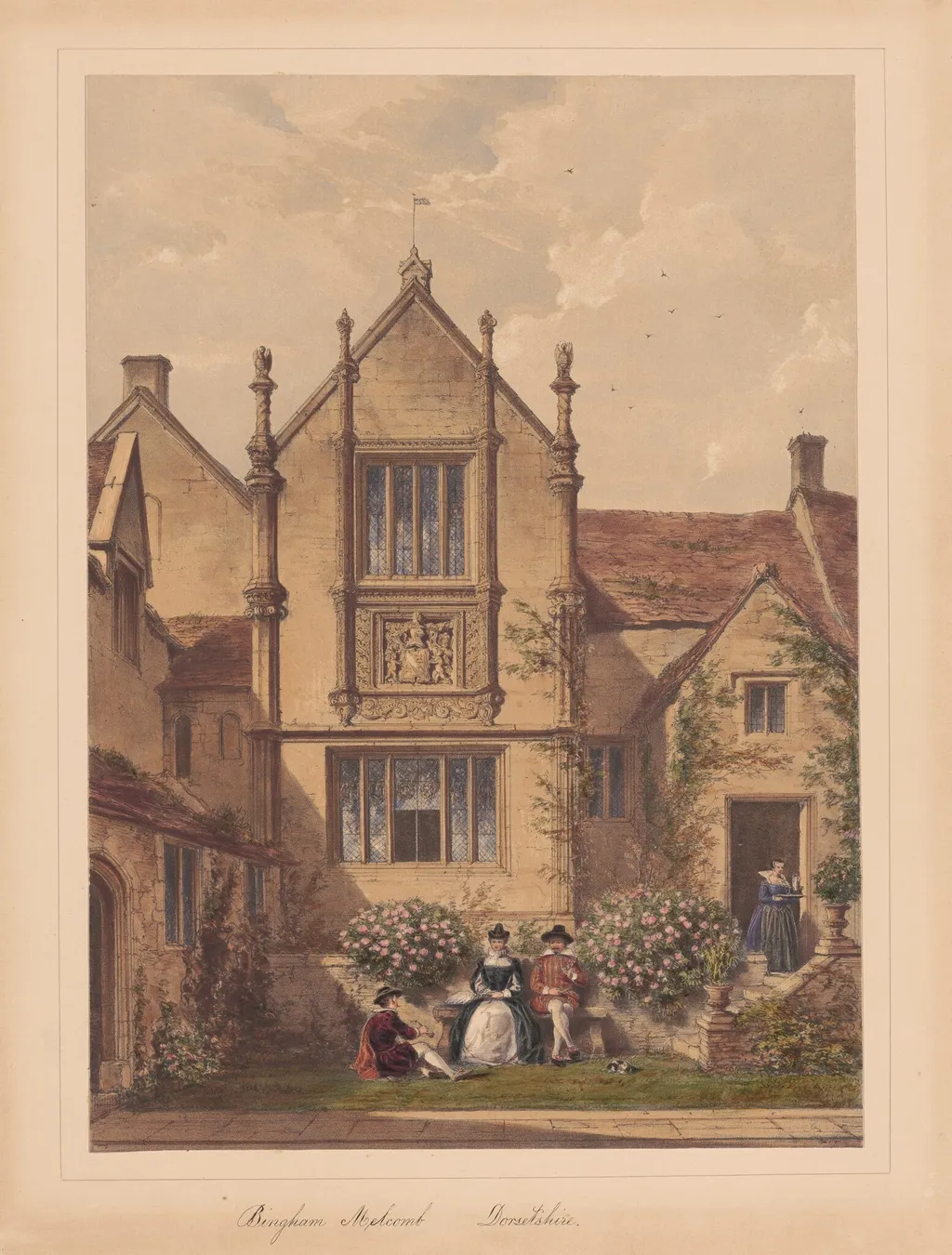
Bingham-Melcomb, Dorsetshire is an ink print by the Romanticist artist Joseph Nash. It dates from 1849 and is held in the collection of the National Gallery of Art.
About this work
Overview
Executed on wove paper and mounted to board, it belongs to Nash’s four-volume series documenting historic English country houses.
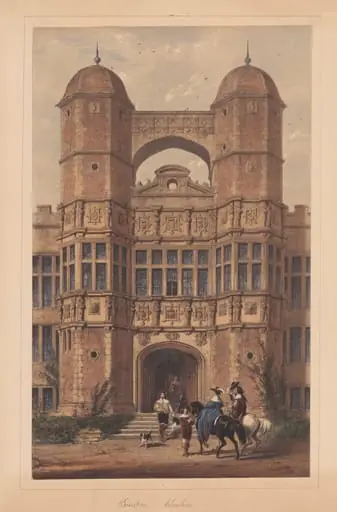
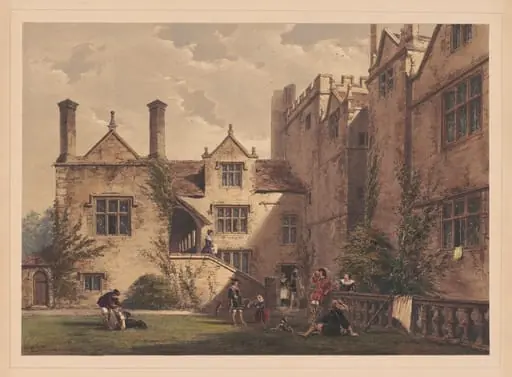
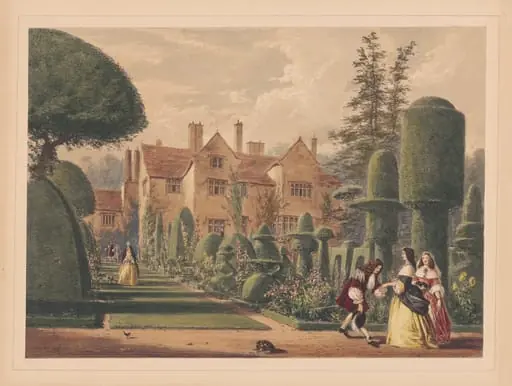
Created in 1849 by Joseph Nash, this hand-colored lithograph depicts the estate of Bingham-Melcomb in Dorsetshire. Executed on wove paper and mounted to board, it belongs to Nash’s four-volume series documenting historic English country houses. The work combines precise lithographic line work with delicate manual coloring, reflecting a methodical effort to preserve the visual character of architectural heritage during a period of rapid change.
Subject & Meaning
The scene captures a tranquil courtyard of a modest yet well-maintained stone residence, framed by climbing vegetation and quiet human activity. A woman near the doorway and two figures seated by a planter suggest daily life within the estate. The composition avoids grandeur, instead emphasizing order, continuity, and the quiet dignity of rural architecture, aligning with Nash’s aim to record vanishing domestic landscapes of England’s past.
Technique & Style
Nash employed lithography to render fine architectural details, then applied watercolor by hand to enhance textures and hues. The warm brown walls, soft green vines, and carefully painted flowers reveal meticulous attention to naturalistic color. The sky, lightly rendered with pale clouds, provides a gentle contrast. The hand coloring distinguishes each impression, making the print both a mechanical reproduction and a unique, artisanal object.
History & Provenance
The print was produced as part of Nash’s series *Mansions of England in the Olden Time*, published between 1839 and 1849. The project was commissioned to document country houses before they were altered or lost to modernization. Bingham-Melcomb was one of many sites selected for its architectural integrity. The work’s survival in its original mounted state suggests it was valued as a finished piece, not merely a plate for reproduction.
Context
In mid-19th century England, antiquarian interest in historic buildings grew alongside industrial expansion. Nash’s project responded to this cultural moment, offering visual records of structures deemed emblematic of national heritage. His focus on domestic, rather than ecclesiastical or royal, architecture reflected a broader shift toward valuing everyday historical environments, not just monuments of power.
Legacy
Nash’s lithographs, including this one, remain valuable as documentary records of English estates that have since changed or disappeared. While not widely celebrated as fine art, they serve as important references for architectural historians and preservationists. The hand-colored technique underscores the transitional nature of print culture—bridging mechanical reproduction and artisanal craft in an era of emerging industrial methods.
Artist & collection
Artist
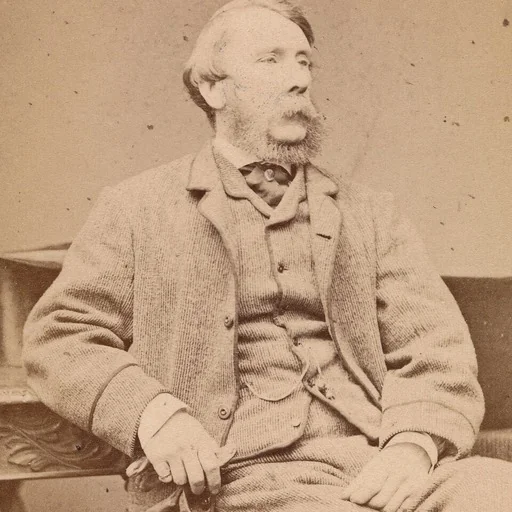
Joseph Nash (17 December 1809 – 19 December 1878) was an English watercolour painter and lithographer, specialising in historical buildings. His major work was the 4-volume Mansions of England in the Olden Time, published from 1839–49.

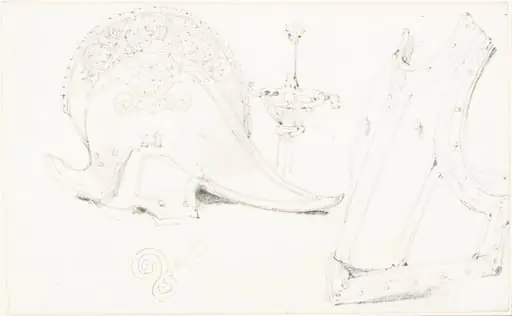 Study of a Helmet, Breastplate, and Rapier
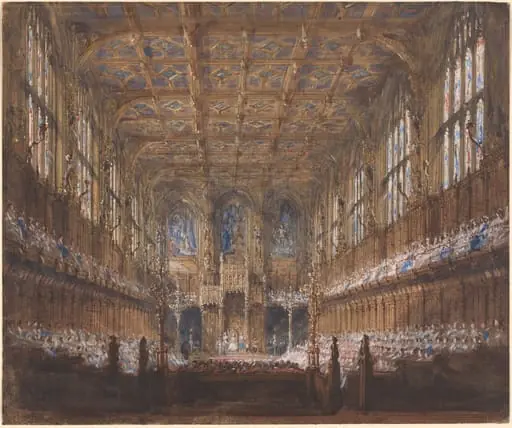 The State Opening of Parliament in the Rebuilt House of Lords
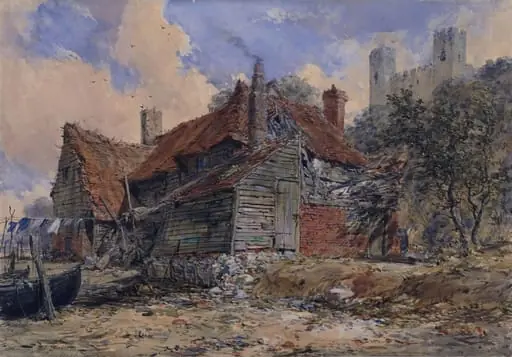 Rochester
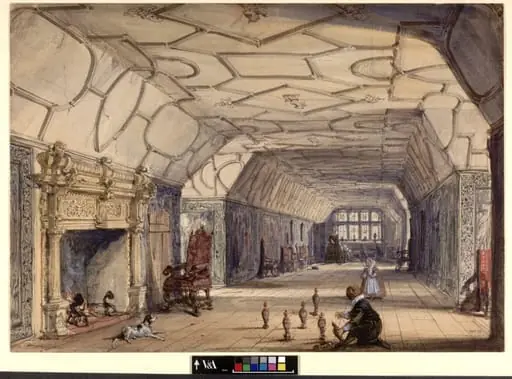 The gallery at Knole House, near Sevenoaks
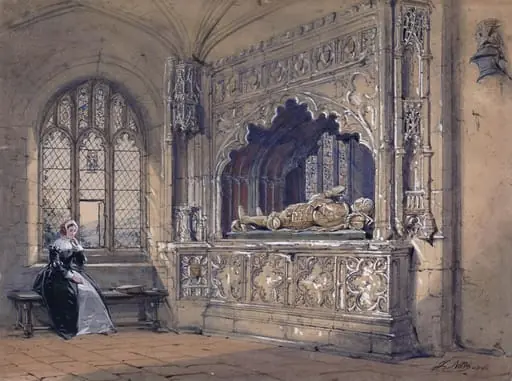 The supposed tomb of Thomas Fiennes, in Herstmonceux Church, Sussex, looking south-east from the North Chapel
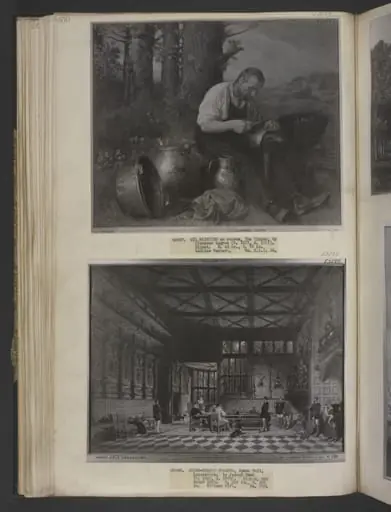 Speke Hall, Lancashire
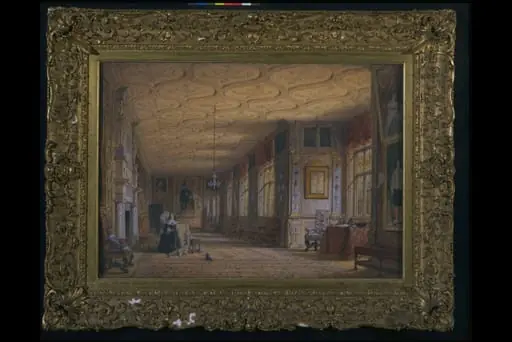 The Cartoon Gallery at Knole
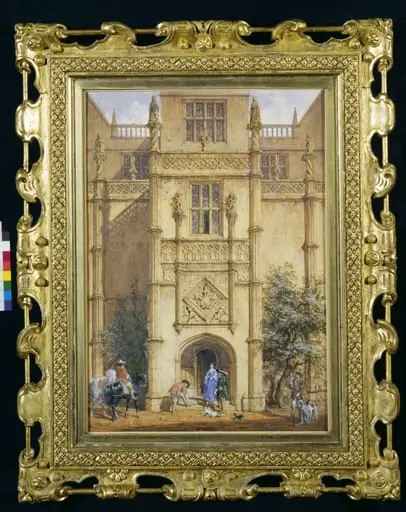 The Porch at Montacute House, Somerset