Artwork
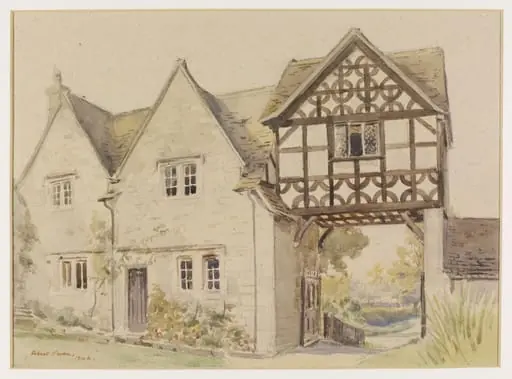
Entrance to Stanway House
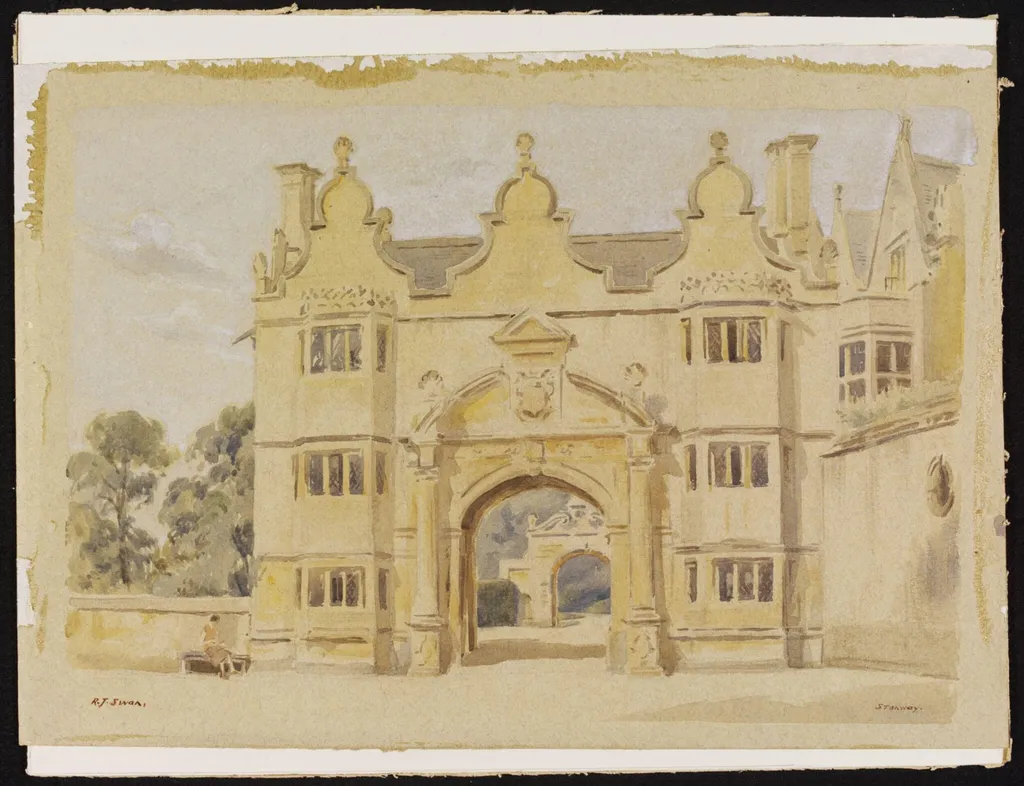
Entrance to Stanway House is a watercolor work on paper by the Impressionist artist Swan. It dates from 1942 and is held in the collection of the Victoria and Albert Museum. Painted in 1942, this watercolour captures the gatehouse of Stanway House, a Jacobean-era structure in Gloucestershire.
About this work
Overview
The scene includes surrounding vegetation and a solitary figure on a bench, grounding the monument in quiet, everyday observation.
Painted in 1942, this watercolour captures the gatehouse of Stanway House, a Jacobean-era structure in Gloucestershire. Created as part of the 'Recording Britain' initiative, the work documents architectural heritage during wartime. The artist rendered the building with delicate washes, emphasizing its limestone façade and intricate detailing. The scene includes surrounding vegetation and a solitary figure on a bench, grounding the monument in quiet, everyday observation.
Subject & Meaning
The gatehouse, constructed around 1630 by the Tracey family, served as a ceremonial entrance to their manor. Its scallop-shell motifs, a family emblem, and symmetrical gables reflect Jacobean ideals of order and status. The inclusion of a lone figure on the bench suggests human presence amid historical permanence, subtly contrasting the transience of life with the endurance of architecture. The view of the main house beyond the arch reinforces the gate’s role as a threshold between public and private realms.
Technique & Style
The artist employed transparent watercolour washes to convey the soft, sunlit texture of Cotswold limestone. Fine brushwork defines mullioned windows, carved pediments, and the delicate scallop shells atop gables. Light colours blend gently, avoiding harsh lines, which enhances the atmospheric quality of the scene. The composition directs the eye through the arch toward the distant manor, using depth and subtle tonal variation rather than sharp detail to suggest spatial recession.
History & Provenance
This watercolour was produced during World War II under the 'Recording Britain' scheme, funded by the Pilgrim Trust to preserve visual records of at-risk heritage sites. It was acquired by the Victoria and Albert Museum as part of the project’s archive. The work remains a documented example of how British artists responded to wartime uncertainty by turning their attention to enduring landmarks, ensuring their visual memory would survive even if the structures themselves were lost.
Context
Created during a period of national upheaval, the painting reflects a broader cultural effort to safeguard Britain’s architectural identity. The 'Recording Britain' project enlisted artists to capture rural and historic sites before they could be damaged by conflict or neglect. Stanway House, though not under immediate threat, symbolized continuity and regional character. The choice of watercolour—portable and immediate—aligned with the project’s goal of rapid, on-site documentation.
Legacy
The watercolour contributes to a significant archive of 20th-century British topographical art, now held by the Victoria and Albert Museum. It exemplifies how documentary art of the era balanced precision with poetic restraint. Today, it serves as both a historical record and a quiet testament to the resilience of vernacular architecture, offering insight into how communities valued their built heritage during times of crisis.
Artist & collection
Artist
In 1942, this watercolor artist captured Cirencester and the Cotswolds in soft, detailed scenes.

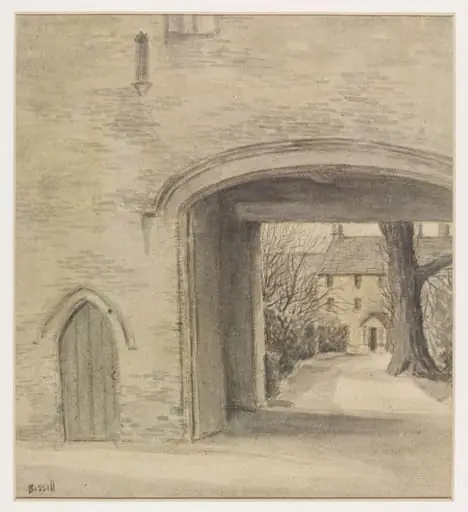 Old Monastery Doorway, now the entrance to Quenington Court, Quenington
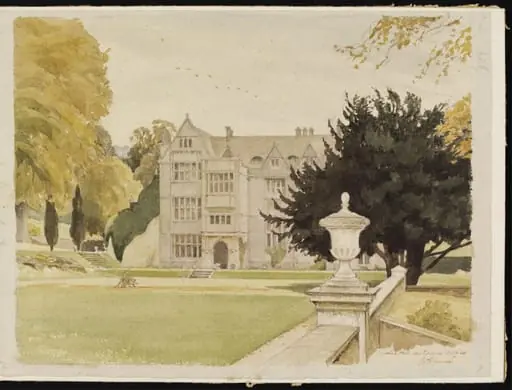 Woollas Hall, Eckington, near Pershore
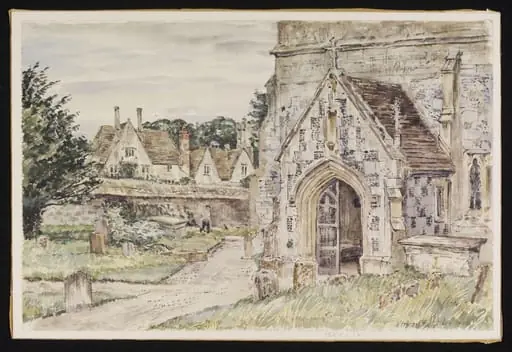 Church Porch and Manor, Avebury
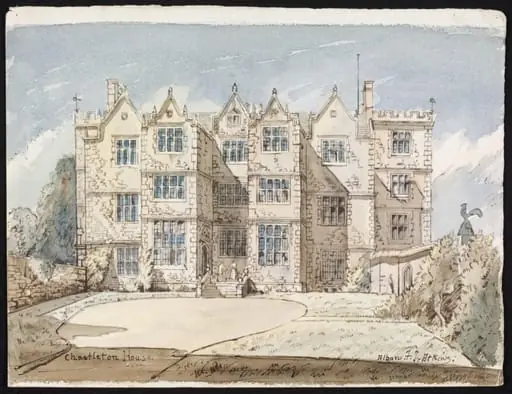 Chastleton House
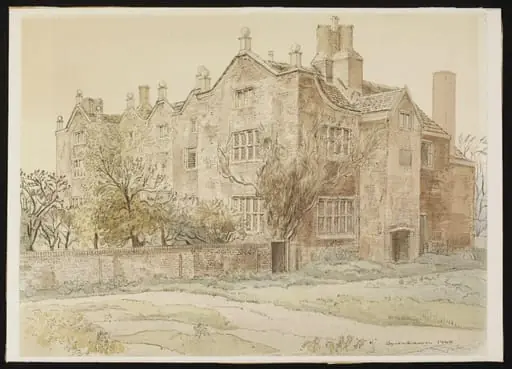 Hough End Hall, Manchester
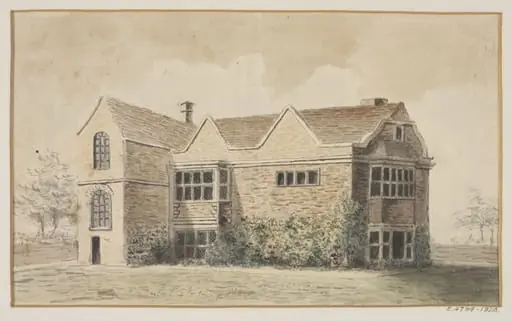 Untitled
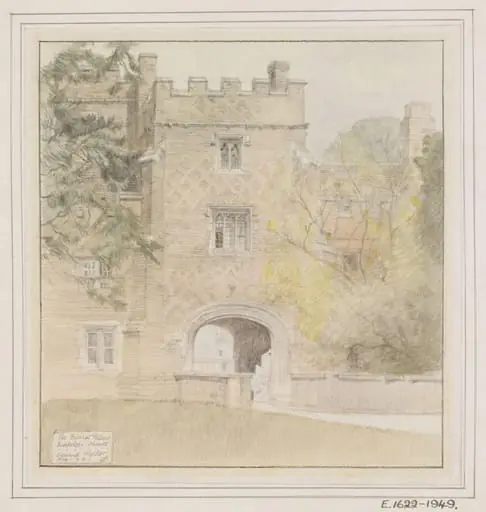 The Bishops' Palace, Buckden
 Hangleton Manor, near Brighton
 Watercolour drawing by the Grieve family, probably by Thomas Grieve, showing the gatehouse of Garlinge Castle, Kent
 Entrance to Ramsbury Manor