Artwork
Rouen, St. Etienne
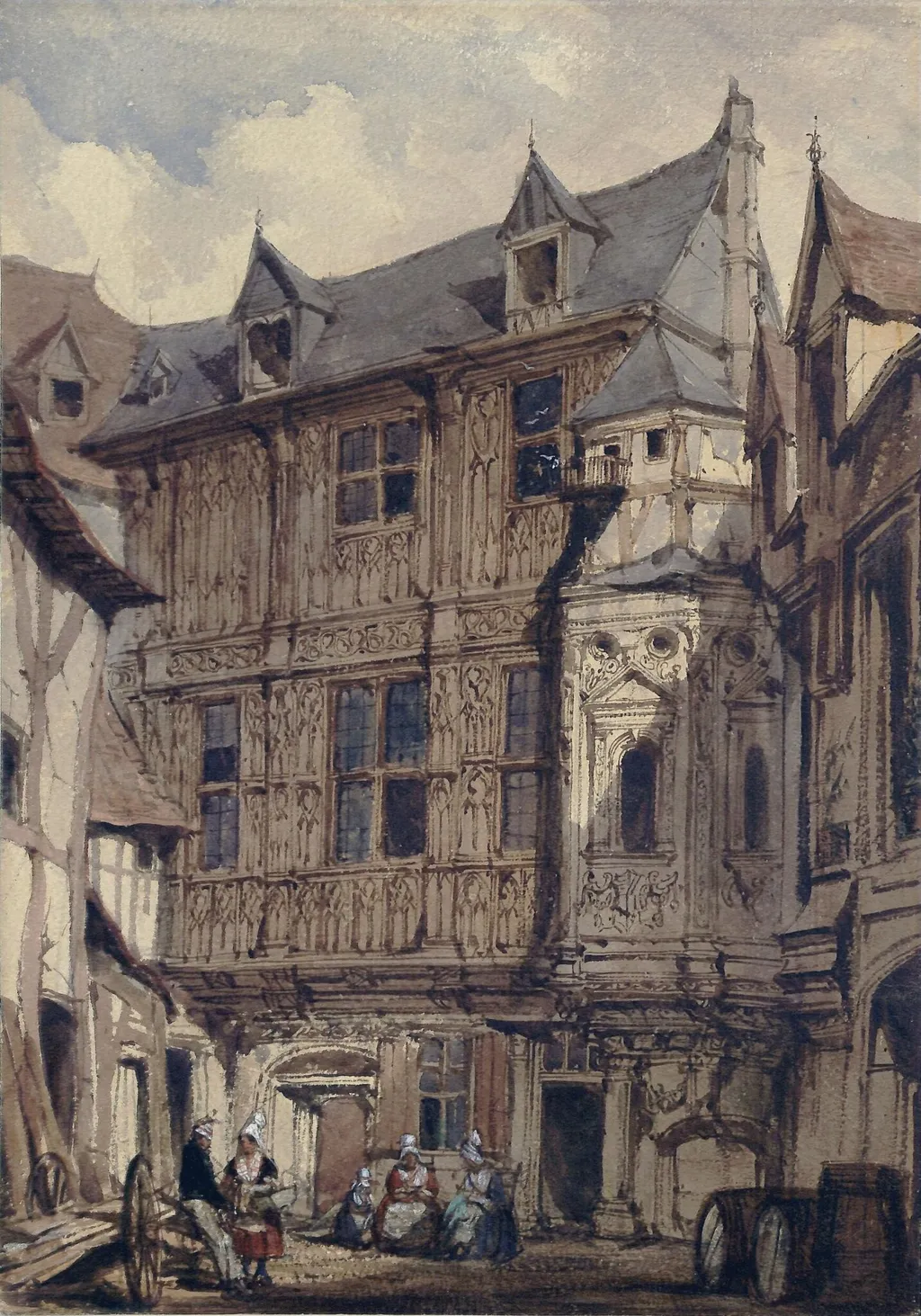
Rouen, St. Etienne is a watercolor work on paper by the Impressionist artist Joseph Nash. It dates from 1868 and is held in the collection of the Victoria and Albert Museum.
About this work
Overview
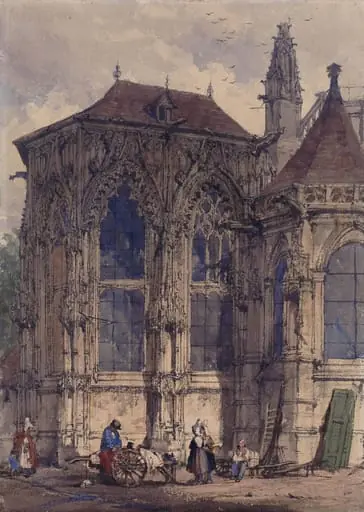
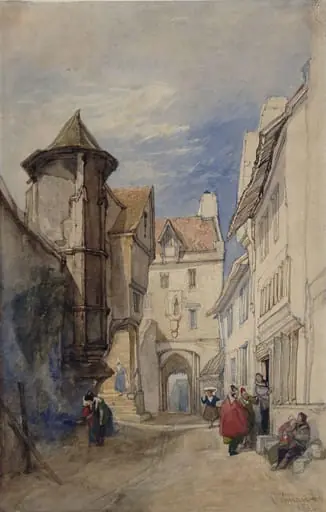
Joseph Nash's watercolour 'Rouen, St. Etienne' (April 1868) captures the eponymous church in Rouen, confirmed by the artist's inscription on the mount's reverse.
Subject & Meaning
The artwork focuses on St. Etienne's church, highlighting its architectural intricacies—carvings, large windows, and ornate patterns—set amidst a quiet, everyday scene of people in a courtyard or street, engaging in casual activities.
Technique & Style
Nash employed soft, nuanced colors and gentle brushstrokes to convey the building's textured, mixed-material construction (wood and stone). Subtle interplay of light and shadow adds depth without sharp delineation.
History & Provenance
Created in April 1868, the work's provenance is not detailed here beyond Nash's confirming inscription on the back of the mount.
Context
While specific contextual influences are not outlined, the piece reflects Nash's interest in capturing European architectural subjects in a characteristic watercolour approach of his time.
Legacy
The artwork's legacy is noted through its comparison to similar works at the Victoria and Albert Museum, implying a recognized style within Nash's oeuvre and period watercolour practices.
Artist & collection
Artist
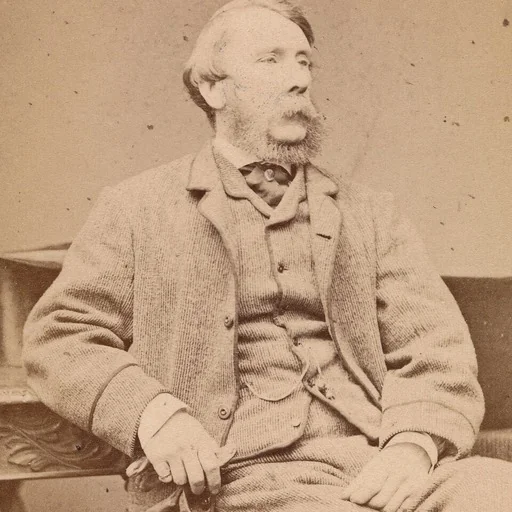
Joseph Nash (17 December 1809 – 19 December 1878) was an English watercolour painter and lithographer, specialising in historical buildings. His major work was the 4-volume Mansions of England in the Olden Time, published from 1839–49.

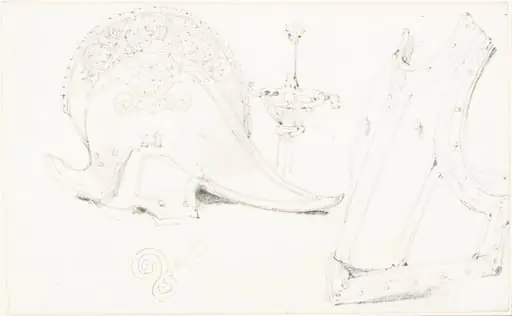 Study of a Helmet, Breastplate, and Rapier
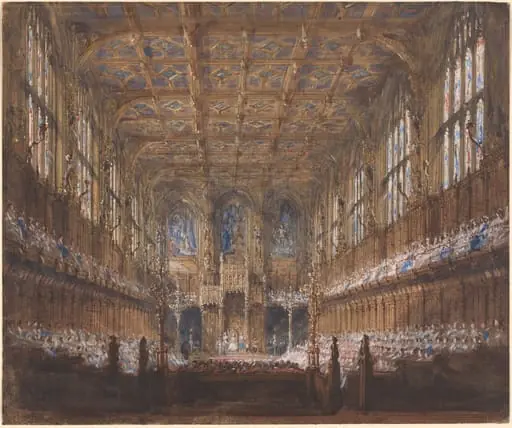 The State Opening of Parliament in the Rebuilt House of Lords
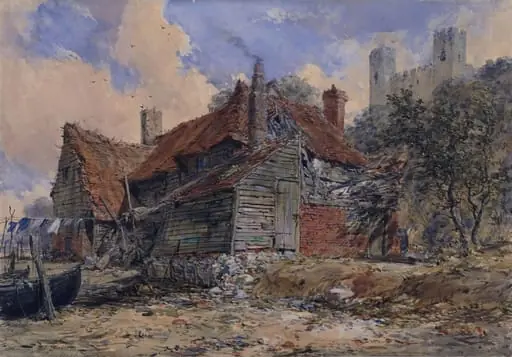 Rochester
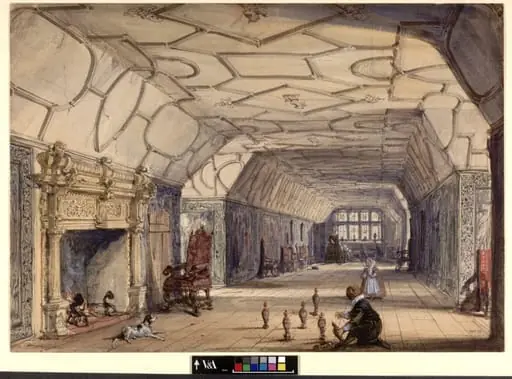 The gallery at Knole House, near Sevenoaks
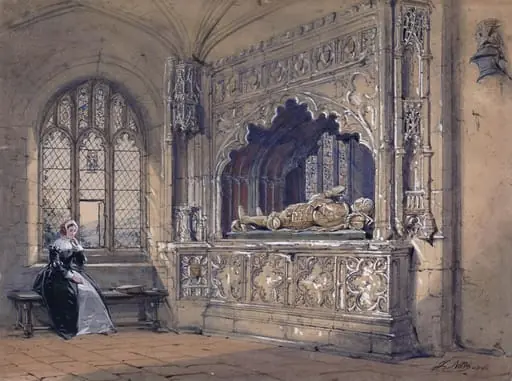 The supposed tomb of Thomas Fiennes, in Herstmonceux Church, Sussex, looking south-east from the North Chapel
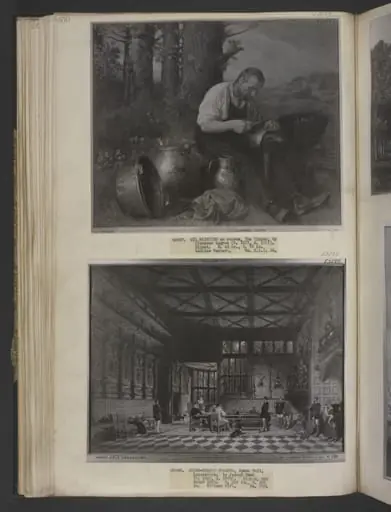 Speke Hall, Lancashire
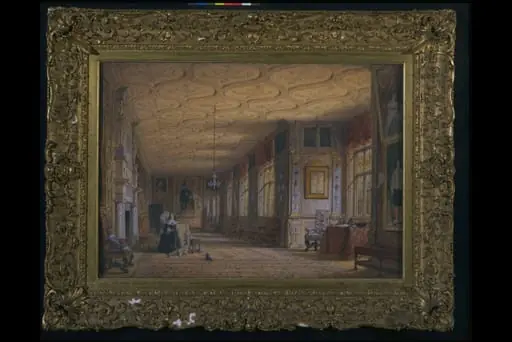 The Cartoon Gallery at Knole
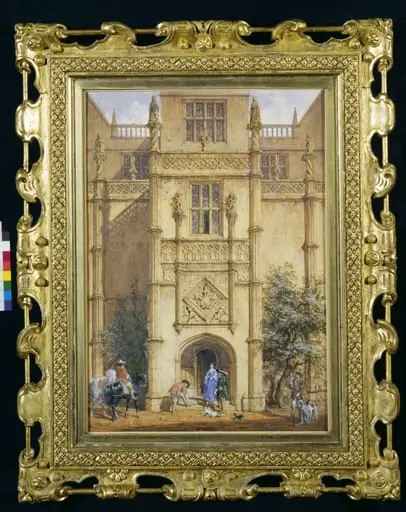 The Porch at Montacute House, Somerset
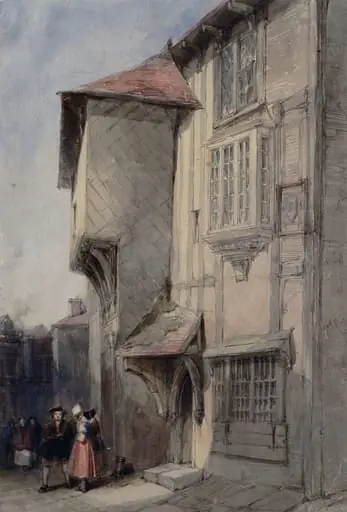 A street scene
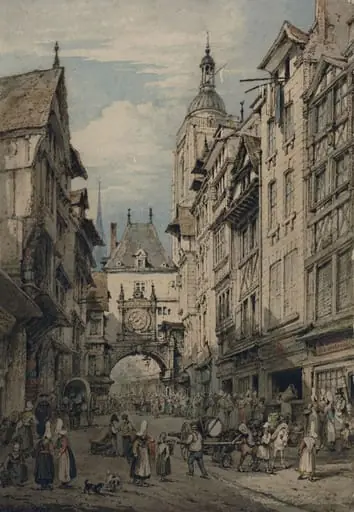 Rue de la Grosse Horloge
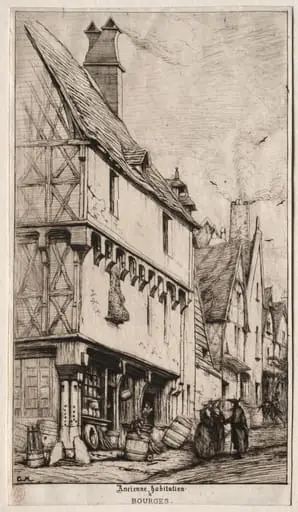 An Old House at Bourges, sometimes called the Musician's House
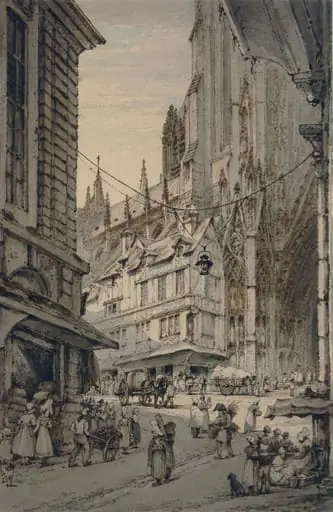 Rouen
Rouen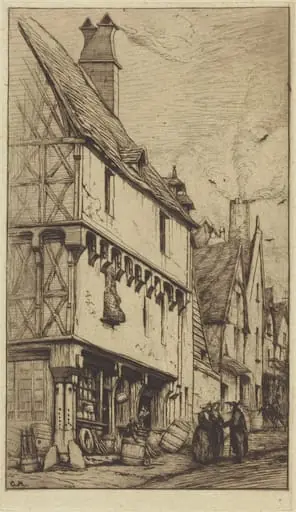 Ancienne habitation à Bourges, dite "La Maison du Musicien" (An Old House at Bourges, Sometimes Called the "Musician's House")
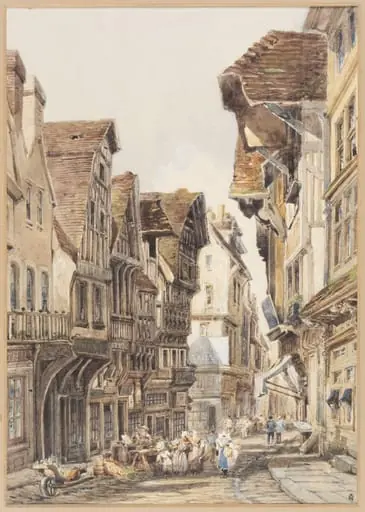 Old Houses at Lisieux, Normandy
 East End of the Church of St. Jacques, Dieppe
 Rue des Toiles, Bourges
 Old Houses, Vitré
 Rue des Toilés, Bourges
 Topographical drawing
 A Gateway in a Norman Town