Artwork
Oală mare bombată cu buza evazată. Prezintă două toarte late dispuse pe o parte. Nesmălțuită. Decorată în partea superioară cu linie vălurită și linii concentrice. Cromatică: fond: cărămiziu; motive: roșu.
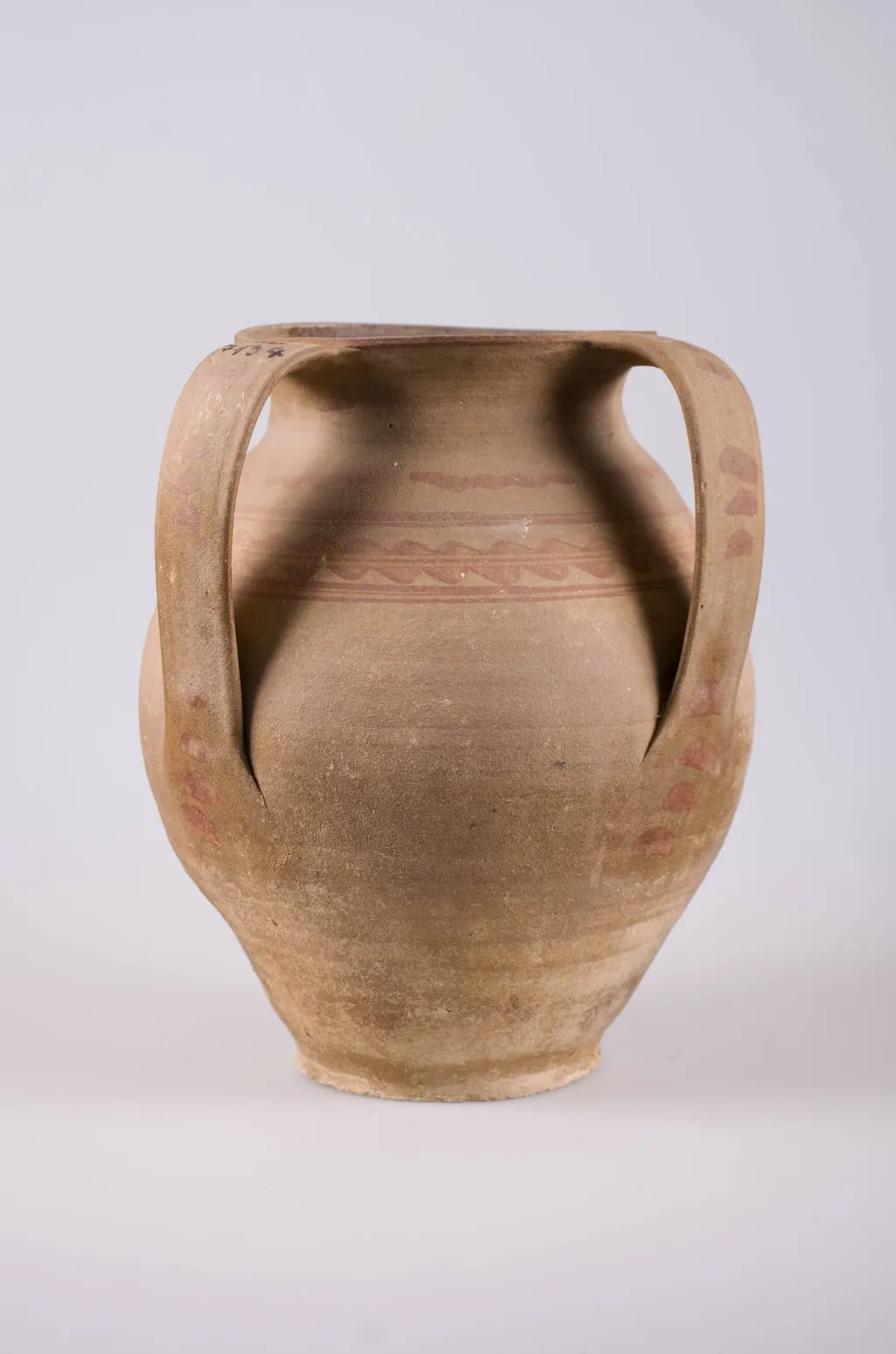
Oală mare bombată cu buza evazată. Prezintă două toarte late dispuse pe o parte. Nesmălțuită. Decorată în partea superioară cu linie vălurită și linii concentrice. Cromatică: fond: cărămiziu; motive: roșu. is a photography by Nedea Sabin. It is held in the collection of the ASTRA National Museum Complex. The object is a large, bulbous ceramic vessel with an evanescent mouth, crafted from unglazed reddish‑brown clay.
About this work
Overview
The object is a large, bulbous ceramic vessel with an evanescent mouth, crafted from unglazed reddish‑brown clay. Its form includes a broad body, a narrowed neck, and a flared rim, and it bears two wide handles positioned on one side of the vessel.
Subject & Meaning
The decorative scheme consists of a single wavy line accompanied by a series of concentric circles applied to the upper portion of the pot. Both motifs are rendered in red pigment against the brick‑colored background, creating a simple yet striking visual contrast.
Technique & Style
The piece shows evidence of hand‑building techniques, with irregularities in shape and surface that indicate it was shaped without the use of a potter’s wheel. The lack of glaze leaves the natural texture of the clay visible, while the painted red designs are applied directly onto the dry surface.
History & Provenance
No specific provenance or dated attribution is provided for the vessel. Its unglazed state and decorative motifs align with traditional pottery practices found in various regional craft traditions, suggesting it may have been produced for utilitarian or ceremonial purposes.
Artist & collection
Artist

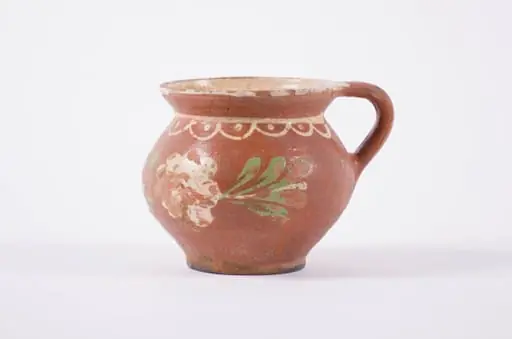 Vas de lut cu gura largă, smălțuit în totalitate. Din baza plată pornesc pereții bombați care se îngustează în partea superioară terminată cu o buză evazată spre exterior. Prezintă o toartă, pentru manipulare care leagă gura cu partea mediană. Interiorul vasului este smălțuit cu smalț alb, în exterior având un fond maro deschis cu decor, realizat prin pictare cu pensula, dispus în partea mediană, ilustrând două flori cu petale albe despărțite de frunze verzi. În partea superioară linie vălurită cu câte un punct în mijloc. Cromatică: fond: maro; motive: alb; verde.
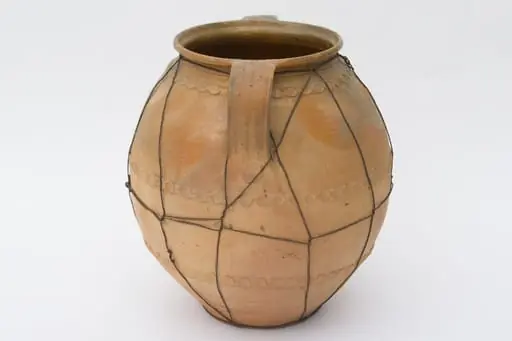 Vas din lut de mari dimensiuni cu corpul sferic; bombat la mijloc. Marginile gurii sunt ușor evazate spre exterior. Prezintă două toarte dispuse diametral opus, care unesc gura cu partea superioară a vasului. Pe suprafața vasului există trei "brâie alveolate" realizate în relief dispuse circular, unul în partea superioară pe pântec și celălalt în partea inferioară, amprentate cu degetul. Vasul prezintă smălțuire în partea superioară și urme de culoare verde. Oala este îmbrăcată într-o rețea de sârmă. Cromatica: fond: maro deschis.
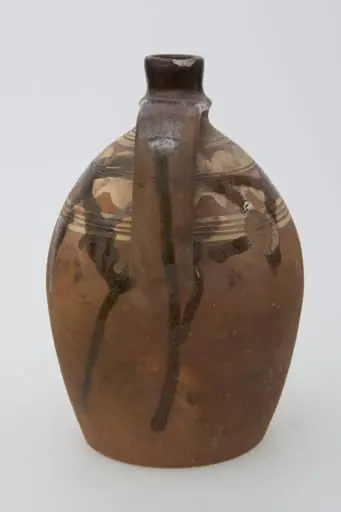 Ulciorul este realizat din ceramică. Pereții vasului sunt bombați și îngustați spre partea superioară unde se termină printr-un gât cu buza răsfrântă în exterior. Din partea superioară a gâtului aproape de buză pornește toarta vasului arcuită și prevăzută cu o "țâță". La baza gâtului și la diametrul maxim al ulciorului linii concentrice din angobă. Vasul este nears. Cromatică: maro deschis, maro închis, alb.
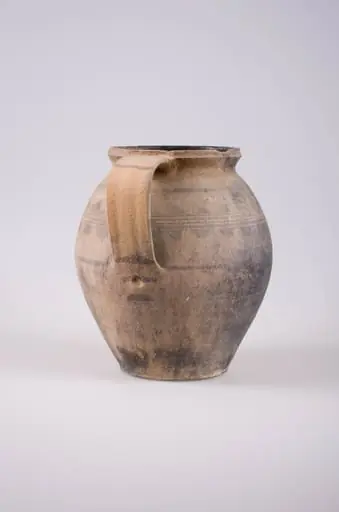 Oală borcan cu corp pântecos bombat cu gât profilat, cu buza evazată tăiată drept și toartă lată. Decorat în partea superioară cu cinci linii ușor adâncite realizate cu piaptănul care secționează un val pictat realizat cu degetul încadrate de două linii maro-roșcat. Toarta prezintă două caneluri este decorată cu o linie în partea superioară și trei linii în partea inferioară. Cromatică: fond: cărămiziu; motive: maro-roșcat. Prezintă urme de ardere secundară.
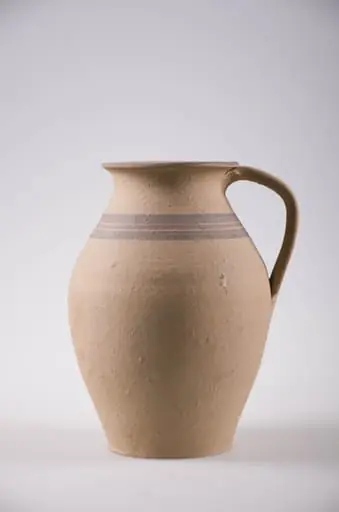 Oală borcan cu gât foarte pronunțat și buză evazată; de sub gât pleacă o toartă, unindu-se cu corpul în zona diametrului maxim; este decorată pe umeri cu cinci linii - două negre încadrează trei linii maro. Cromatică: fond: cărămiziu; motive: negru, maro închis.
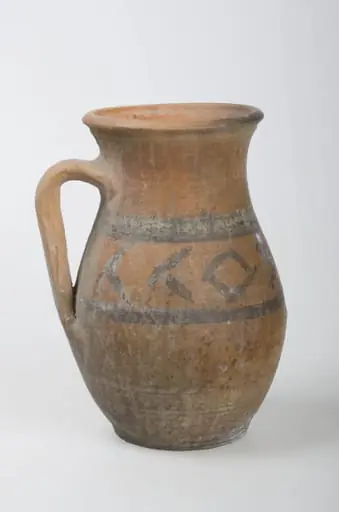 Recipient cilindric ușor bombat ce se îngustează în zona gâtului și apoi se continuă cu gura lată și buza evazată. Prezintă o toată ce pornește imediat din mijlocul gâtului și se termină în zona maximă de bombare. Structura ornamentala este realizată pe partea mediană, trecând pe sub toartă. Ornamentația se face cu ajutorul a două linii circulare, paralele între care sunt pictate motive geometrice de linii drepte așezate în unghi și romburi. Cromatică: cărămiziu; negru.
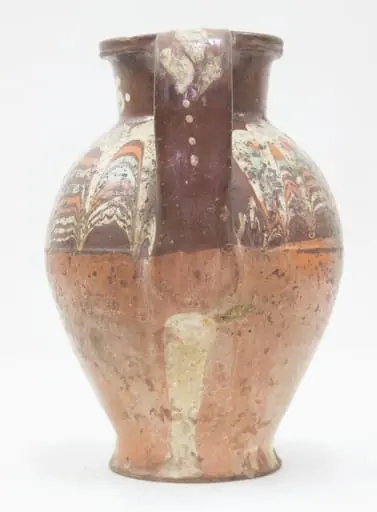 Recipient de formă bitronconică cu buza evazată, cu o toartă și „țâțână” pe cealaltă parte. Pe gât, inscripția „1936”. Vasul este smălțuit și decorat pe jumătatea superioară cu motive policrome liber desenate. Cromatică: fond - maro, decor - alb, maro, verde, gălbui. Jumătatea inferioară a obiectului este nesmălțuită.
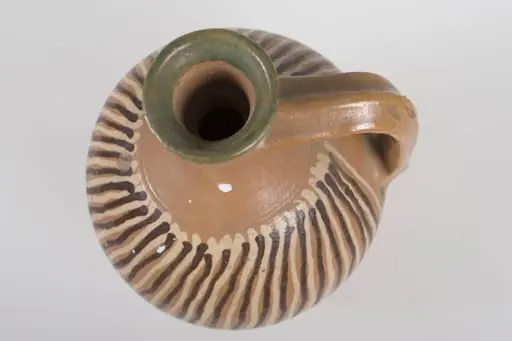 Recipient din lut de formă ovoidală cu gâtul scurt și buza avazată. Pe toată suprafața, pornind de pe umărul vasului, alternanțe de linii pictate albe și maro închis, dispuse vertical. Buza și partea superioară a gâtului sunt smălțuite în verde. Cromatică: fond: cărămiziu; motive: verde; alb; maro închis.
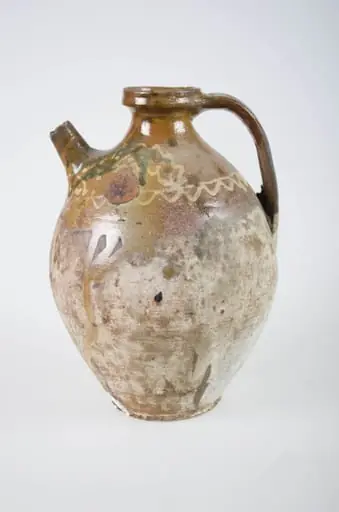 Vas de formă ovoidală cu gât lung, cu gura largă și buza înălțată. Prezintă o toartă care pleacă din gura vasului și se unește cu corpul în zona diametrului maxim. Din umăr, în partea opusă torții pleacă o țâță scurtă (burciuc). Vasul este smălțuit pe exterior în partea superioară unde prezintă și un decor format din motive geometrice: linie și linie în val deasupra cărora se regăsesc motive florale. Cromatica: fond: cărămiziu; motiver: alb-gălbui, verde. Prezintă uzură funcțională.
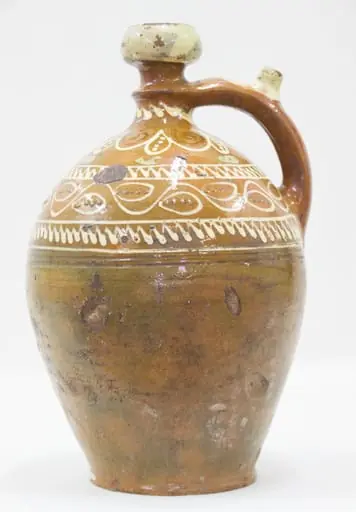 Ulcior de formă bitronconică cu gura îngustă și rotundă, cu o toartă și un orificiu pentru scurgerea lichidului, smălțuit și decorat pe jumătatea superioară cu motive vegetale (ghirlande) și geometrice (spirale; patru cercuri concentrice cu o linie șerpuită între ele).Cromatică: maro (fond), decor - galben, bej, alb, verde. Jumătatea inferioară a obiectului este nesmălțuită.