Artwork
Oală borcan cu gât foarte pronunțat și buză evazată; de sub gât pleacă o toartă, unindu-se cu corpul în zona diametrului maxim; este decorată pe umeri cu cinci linii - două negre încadrează trei linii maro. Cromatică: fond: cărămiziu; motive: negru, maro închis.
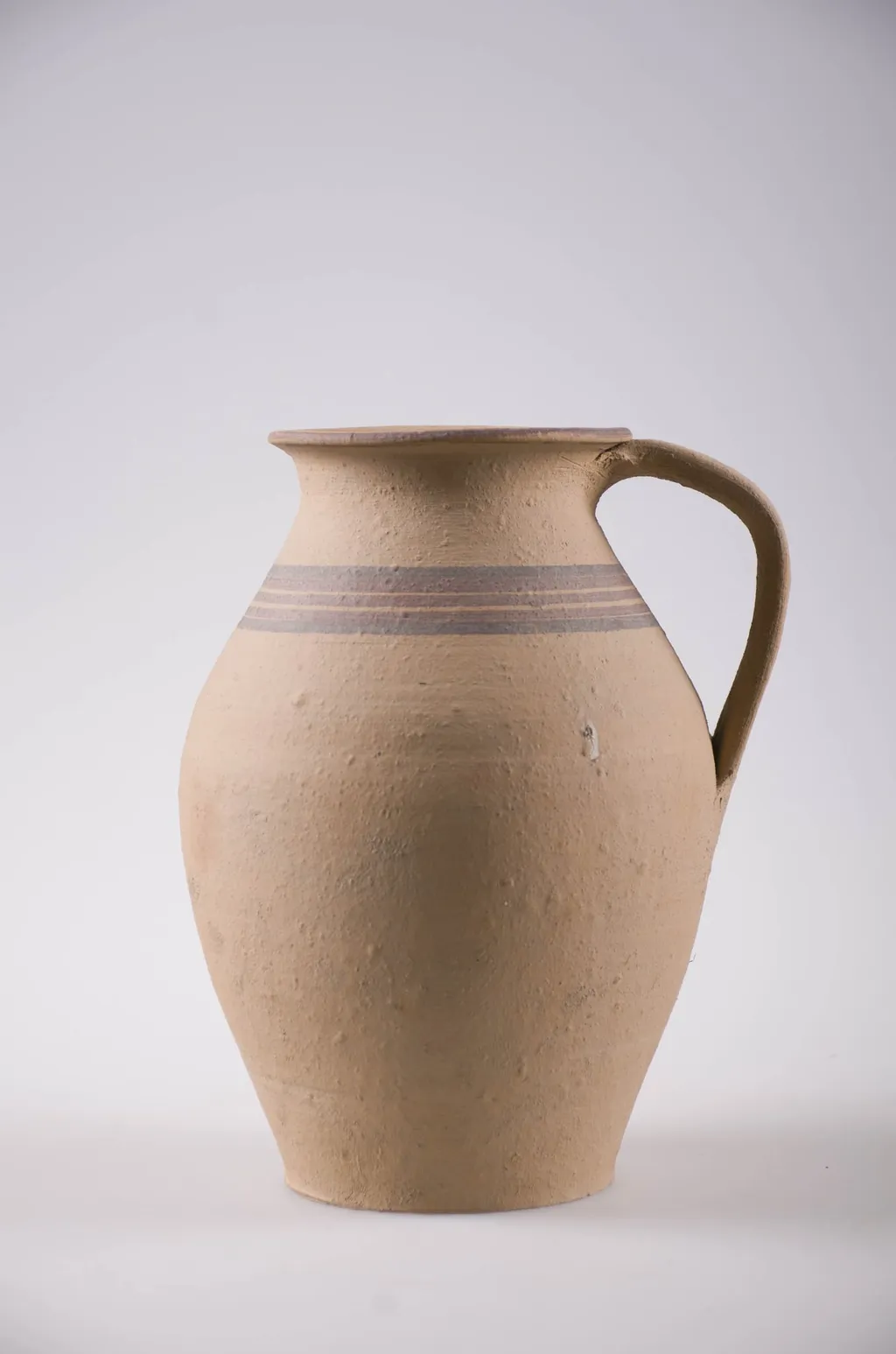
Oală borcan cu gât foarte pronunțat și buză evazată; de sub gât pleacă o toartă, unindu-se cu corpul în zona diametrului maxim; este decorată pe umeri cu cinci linii - două negre încadrează trei linii maro. Cromatică: fond: cărămiziu; motive: negru, maro închis. is a photography by Pârtea Gheorghe. It is held in the collection of the ASTRA National Museum Complex.
About this work
Overview
This ceramic vessel features a pronounced neck and flared rim, with a handle that originates at the neck and joins the body at its broadest circumference.
This ceramic vessel features a pronounced neck and flared rim, with a handle that originates at the neck and joins the body at its broadest circumference. Its surface is decorated with five horizontal bands on the shoulders, arranged as two outer black lines framing three inner dark brown ones. The ground color is a reddish-brown clay tone, creating a muted contrast with the applied pigments. The form and decoration reflect regional pottery traditions of the early 20th century in Romania.
Subject & Meaning
No figurative imagery or symbolic motifs are present; the decoration is purely geometric. The arrangement of lines may serve an ornamental or structural purpose, possibly indicating vessel classification or regional identity. The absence of narrative elements suggests utility over ritual significance, aligning with everyday domestic use in rural communities.
Technique & Style
The vessel was hand-formed from earthenware and fired to achieve a reddish-brown body. Decorative lines were applied with pigment, likely iron-rich slips or mineral paints, before a final firing. The precision of the bands implies use of a brush or stylus, not freehand. The restrained palette and linear repetition reflect a folk aesthetic rooted in functional craft rather than artistic experimentation.
History & Provenance
The object is attributed to Pârtea Gheorghe, a Romanian potter active in the early 1900s. It originates from a tradition of rural ceramic production in the Oltenia region, where similar vessels were made for storage and transport. No documented collection history exists, but comparable pieces are held in regional ethnographic museums, suggesting local circulation and use.
Context
This jug belongs to a broader corpus of Romanian folk ceramics produced between the late 19th and mid-20th centuries. Its form and decoration align with utilitarian wares made in small village workshops, often for household use. The color scheme and linear motifs are consistent with regional styles that prioritized durability and simplicity over elaborate ornamentation.
Legacy
Pârtea Gheorghe’s work, including this vessel, contributes to the documented heritage of Romanian folk pottery. While not widely exhibited outside regional collections, such objects remain important for understanding pre-industrial material culture. Contemporary ceramicists in Romania occasionally reference these forms as touchstones for traditional craftsmanship.
Artist & collection
Artist
Gheorghe Pârtea didn’t just make pots—he shaped them like he was whispering to the clay.

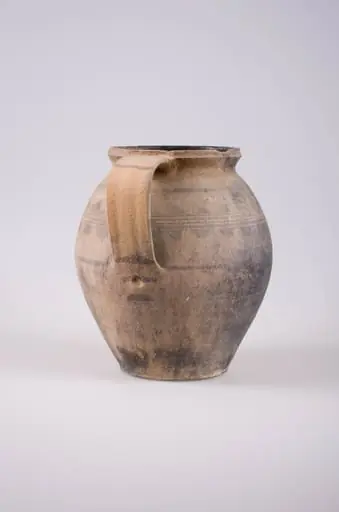 Oală borcan cu corp pântecos bombat cu gât profilat, cu buza evazată tăiată drept și toartă lată. Decorat în partea superioară cu cinci linii ușor adâncite realizate cu piaptănul care secționează un val pictat realizat cu degetul încadrate de două linii maro-roșcat. Toarta prezintă două caneluri este decorată cu o linie în partea superioară și trei linii în partea inferioară. Cromatică: fond: cărămiziu; motive: maro-roșcat. Prezintă urme de ardere secundară.
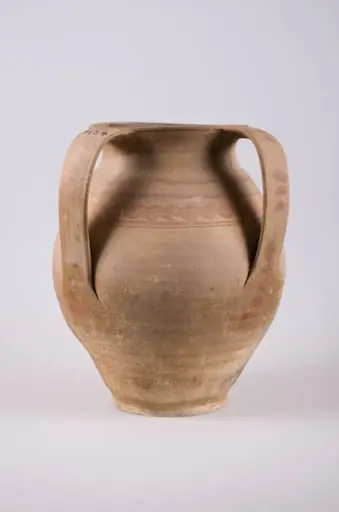 Oală mare bombată cu buza evazată. Prezintă două toarte late dispuse pe o parte. Nesmălțuită. Decorată în partea superioară cu linie vălurită și linii concentrice. Cromatică: fond: cărămiziu; motive: roșu.
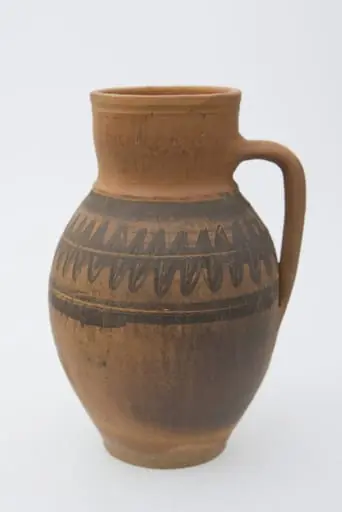 Recipient sferoidal, bombat în partea mediană, gât puțin adunat și gura largă. Prezintă toartă laterală ce leagă partea inferioară a gâtului cu partea de diametru maxim al ulciorului. Decor în partea superioară a vasului compus din linii orizontale dintr-o bandă zimțată neagră ce ilustrează motivul ”dintelui de lup'' (linie frântă în unghi ascuțit), încadratată de două linii dispuse circular. Peste linia zimțată se suprapune o linie trasată în humă, precum și incizii superficiale ce urmăresc conturul motivului decorativ. Cromatică: fond: rosu-cărămiziu; motive: negru.
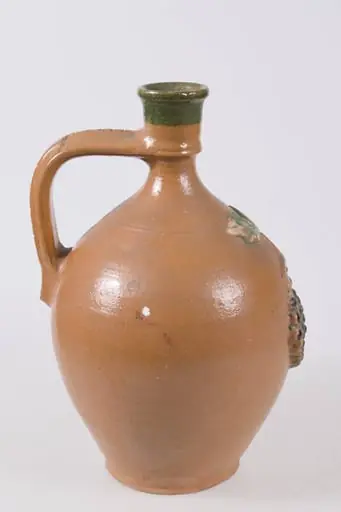 Recipient de lut de formă sferică cu gâtul lung și buza rasfrântă. Prezintă o toartă ce pleacă de la baza gâtului spre partea mediană a vasului. Decorat frontal, în relief, cu doi ciorchini cu frunze. Smălțuit la gură. Cromatică: fond: cărămiziu; motive: verde; negru.
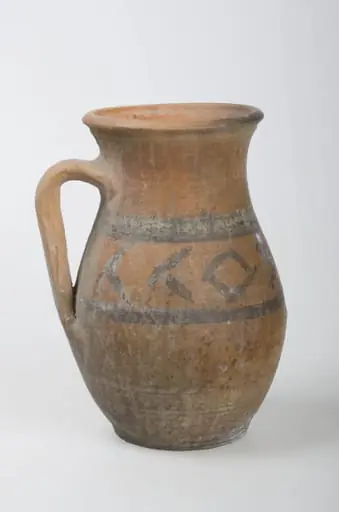 Recipient cilindric ușor bombat ce se îngustează în zona gâtului și apoi se continuă cu gura lată și buza evazată. Prezintă o toată ce pornește imediat din mijlocul gâtului și se termină în zona maximă de bombare. Structura ornamentala este realizată pe partea mediană, trecând pe sub toartă. Ornamentația se face cu ajutorul a două linii circulare, paralele între care sunt pictate motive geometrice de linii drepte așezate în unghi și romburi. Cromatică: cărămiziu; negru.
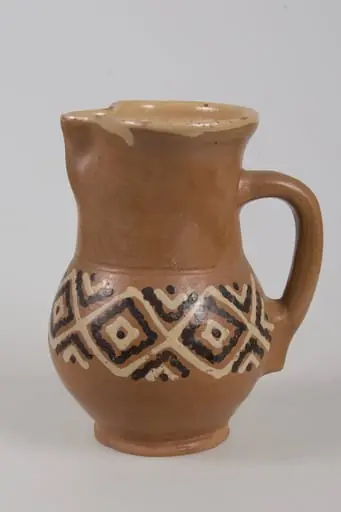 Vas din lut de formă sferoidală cu inel la bază, gât înalt și drept, cu toartă prinsă între gât și mijlocul vasului. Capătul inferior al toartei are un pinten. Angobat in interior cu smalț la exterior și interior. Decor cu motive geometrice: brâu de romburi pictat cu corn in hume naturale; două dungi imprimate cu piaptănul. Prezintă cioc de scurgere. Cromatică: fond: alb-crem în interior; cărămiziu în exterior; motive: alb; negre.
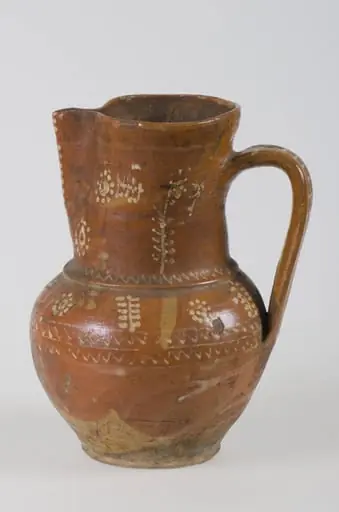 Cană înaltă cu o toartă și gura ovoidală terminată cu un cioc pe partea opusă torții. Toarta pornește de sub gură și se termină sub diametrul maxim al vasului. Smălțuită exterior. Decorată pe toată suprafața cu motive florale stilizate, motive fitomorfe (frunze stilizate) și motive geometrice: linie, linie ondulată, punct. Cromatică: fond: maroniu; motive: alb.
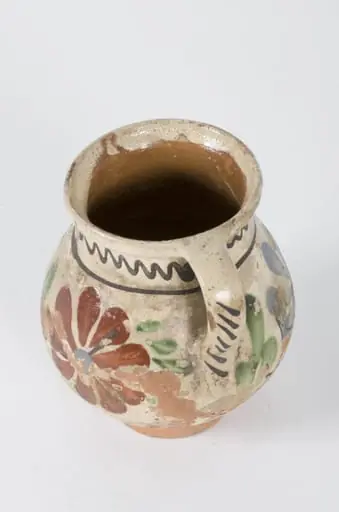 Vas de lut cu baza înaltă, bombat în partea mediană, cu gâtul scurt și buza evazată. Smălțuit pe întreaga suprafață, Prezintă o toartă care pleacă din buza vasului și se unește cu corpul deasupra diametrului maxim, decorată cu linii oblice. Sub buza vasului este decorat cu o linie vălurită dispusă circular și una dreaptă. Pe suprafața exterioară a vasului sunt pictate două flori, una cu petale albastre și cealaltă cu petale maro. Între cele două flori există frunze de culoare verde și o linie în diagonală încadrată de două șiruri de ondulații. Cromatică: fond: alb; cărămiziu; motive: negru; albastru; verde; maro.
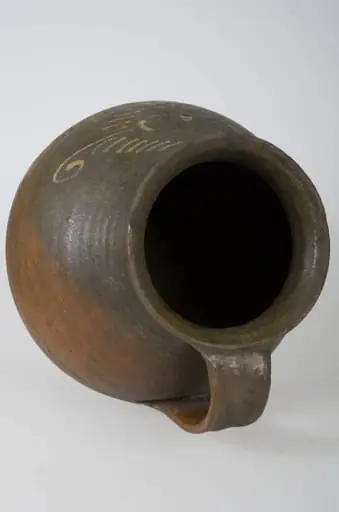 Vas de formă ovoidală bombat în partea mediană, cu buză dreaptă și ieșită ușor în afară, smălțuit. Prezintă o toartă lată ce unește gura vasului cu partea de diametru maxim. Decorații în plan frontal, ilustând o floare cu petale sugerate de linii verzi, ce radiază dintr-un punct alb. Motivul central este încadrat de linii albe paralele orizontale, ce crează forma unui romb. Cromatică: fond: brun; motive; alb; verde.
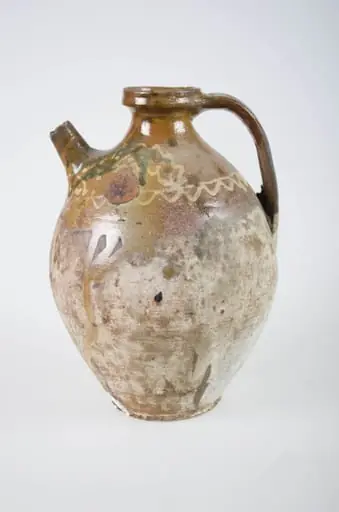 Vas de formă ovoidală cu gât lung, cu gura largă și buza înălțată. Prezintă o toartă care pleacă din gura vasului și se unește cu corpul în zona diametrului maxim. Din umăr, în partea opusă torții pleacă o țâță scurtă (burciuc). Vasul este smălțuit pe exterior în partea superioară unde prezintă și un decor format din motive geometrice: linie și linie în val deasupra cărora se regăsesc motive florale. Cromatica: fond: cărămiziu; motiver: alb-gălbui, verde. Prezintă uzură funcțională.
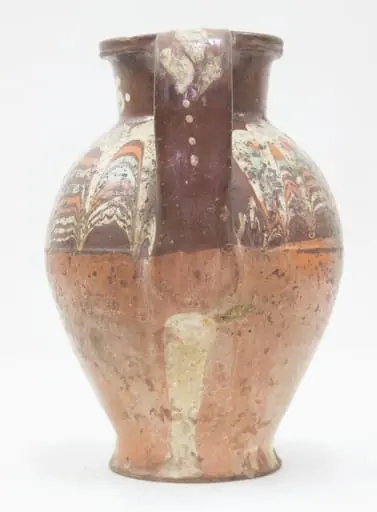 Recipient de formă bitronconică cu buza evazată, cu o toartă și „țâțână” pe cealaltă parte. Pe gât, inscripția „1936”. Vasul este smălțuit și decorat pe jumătatea superioară cu motive policrome liber desenate. Cromatică: fond - maro, decor - alb, maro, verde, gălbui. Jumătatea inferioară a obiectului este nesmălțuită.
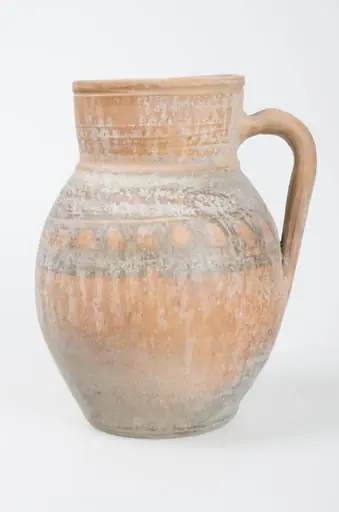 Piesă de ceramică cilindric realizat prin prelucrarea manuală la roată. Din bază plată pornesc pe vertical pereți arcuiți spre exterior ce se încheie prin îngustare printr-un gât drept și înalt cu buza rotunjită. De la jumătatea gâtului până la zona de bombare maximă, pe o parte este așezată o toartă rotunjită. Vasul este lustruit la exterior. Structura ornamentală este amplasată imediat sub gât până la baza toartei, trecând pe sub aceasta și este reprezentată prin motive geometrice, zig-zagul; pătratul; linia dreaptă. Cromatică: cărămiziu; negru.
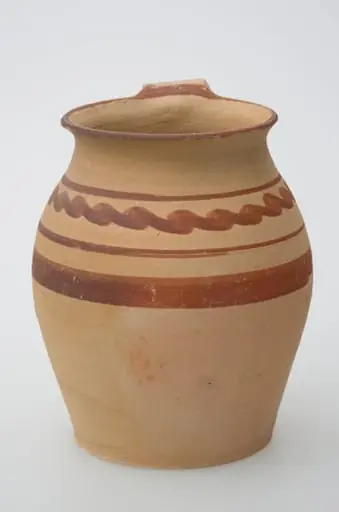 Oală de formă bitronconică, cu corpul alungit spre bază și buza ușor răsfrântă spre exterior. Prezintă o toartă plată ce pleacă de la buză și se unește cu corpul vasului în zona diametrului maxim. Decorul este format din linii drepte paralele, dublate de linii ondulate, plasate în zona mediană a vasului.
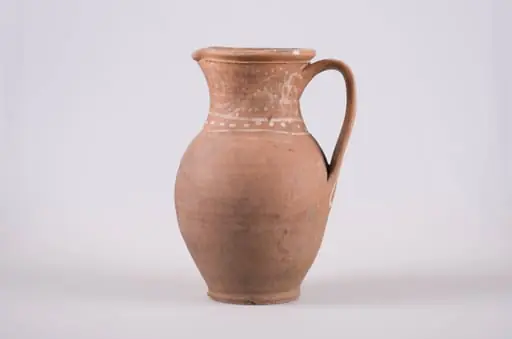 Recipient sferoidal cu gura largă și cioc. Prezintă toartă laterală. Decorul este floral și geometric pe toată suprafața gâtului format din linii, puncte, spirale. Decorat și pe toartă cu o linie de jur împrejur, iar pe buza vasului format din puncte. Cromatică: fond: cărămiziu; motive: alb.
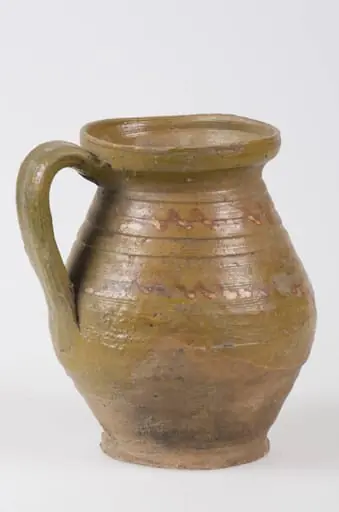 Vas bitronconic cu gât scurt și foarte profilat, cu gura înaltă și dreaptă. Prezintă o toartă care pleacă de sub buză și se unește cu corpul sub zona diametrului maxim. Este smălțuit în interior și la exterior (parțial nesmălțuit în partea de jos). În partea superioară prezintă un decor geometric realizat din cinci linii incizate și două linii în val pictate. Toarta este decorată cu puncte. Cromatică: fond: cărămiziu și pe alocuri verziu; motive: alb; maroniu. Prezintă uzură funcțională.
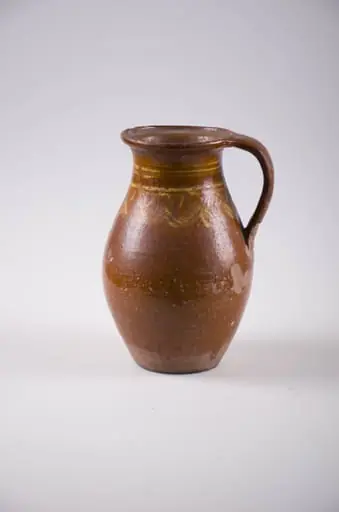 Oală de formă bitronconică cu buza evazată și cu o toartă. Decorată cu ornamente în formă de semicercuri dispuse în jurul gâtului. Este smălțuită pe toată suprafața exterioară. Cromatică: fond: cărămiziu; motive: galben.
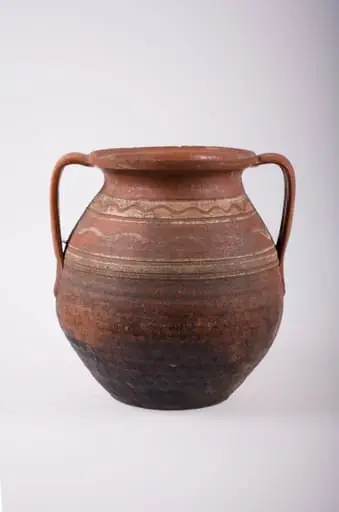 Oala bombată cu două toarte late, aplatizate, dispuse de o parte și de alta a gurii vasului; buză evazată; decorată în exterior cu motive geometrice: linii, linii vălurite pe un registru de cromatică albă. Cromatică: fond: maro; motive: alb-gălbui. Smălțuită pe gura vasului, interior și pe mânerul vasului.
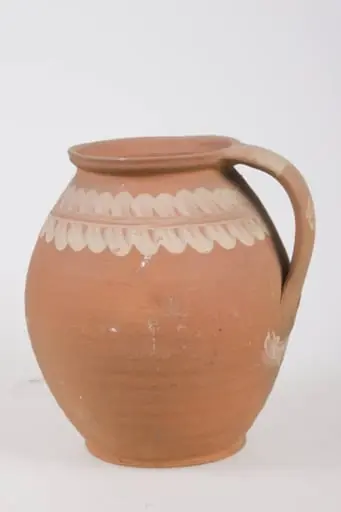 Oală ce are corpul bombat simetric cu diametrul maxim la mijlocul vasului, gâtul scurt și gura dreaptă. Buza este răsfrântă în exterior și toartă între buză și mijlocul vasului. Decor pe umăr cu linie ondulată realizată cu degetul și două linii paralele realizate cu fichieșul; dungi paralele pe toartă.
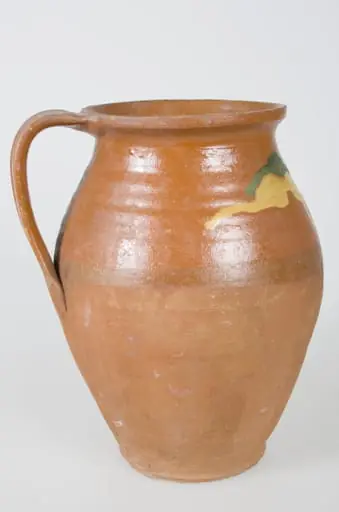 Vas bombat în partea mediană și cu buza evazată, smălțuit în jumătatea superioară. Prezintă o toartă ce leagă buza vasului de partea mediană. Decorații frontale realizate prin stropire, sub forma a două linii suprapuse și neregulate dispuse orizontal. Cromatică: fond cărămiziu; motive: verde; galben.
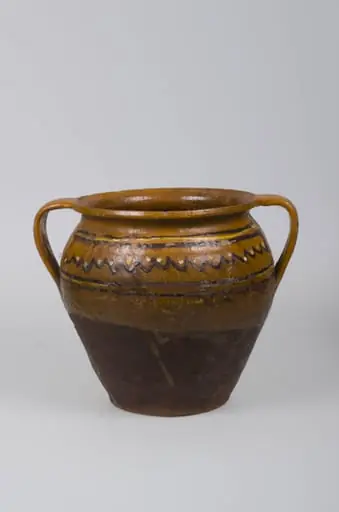 Vasul are formă bitronconică, prevăzut cu două toarte dispuse vertical în opoziție una față de cealalltă. Gâtul foarte profilat și buza evazată. Toartele pornesc din buza vasului și se unesc cu corpul în zona diametrului vasului, fiind aplatizate. Oala are urme de ardere secundară; este smălțuită în interior și în exterior (doar jumătatea superioară). Este folosită atât la pregătirea hranei cât și pentru păstrarea alimentelor și pentru transportul hranei la câmp. Oala este decorată pe umăr cu motive geometrice: linii drepte, linie în val, puncte. Cromatică cărămiziu; galben; maro închis.
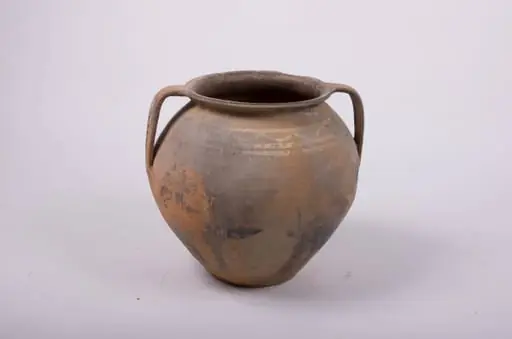 Vas sferoidal cu buza răsfrântă. Prezintă două torți care pornesc de la gura vasului și se unesc pe umăr cu corpul vasului. Decorat pe umăr cu o linie dreaptă urmată de una în val și alte două drepte. Cromatică: motive albe pe fondul cărămiziu al vasului.