Artwork
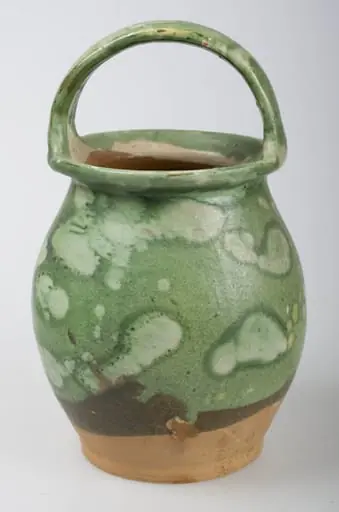
Recipient de formă bitronconică cu buza evazată, cu o toartă și „țâțână” pe cealaltă parte. Pe gât, inscripția „1936”. Vasul este smălțuit și decorat pe jumătatea superioară cu motive policrome liber desenate. Cromatică: fond - maro, decor - alb, maro, verde, gălbui. Jumătatea inferioară a obiectului este nesmălțuită.
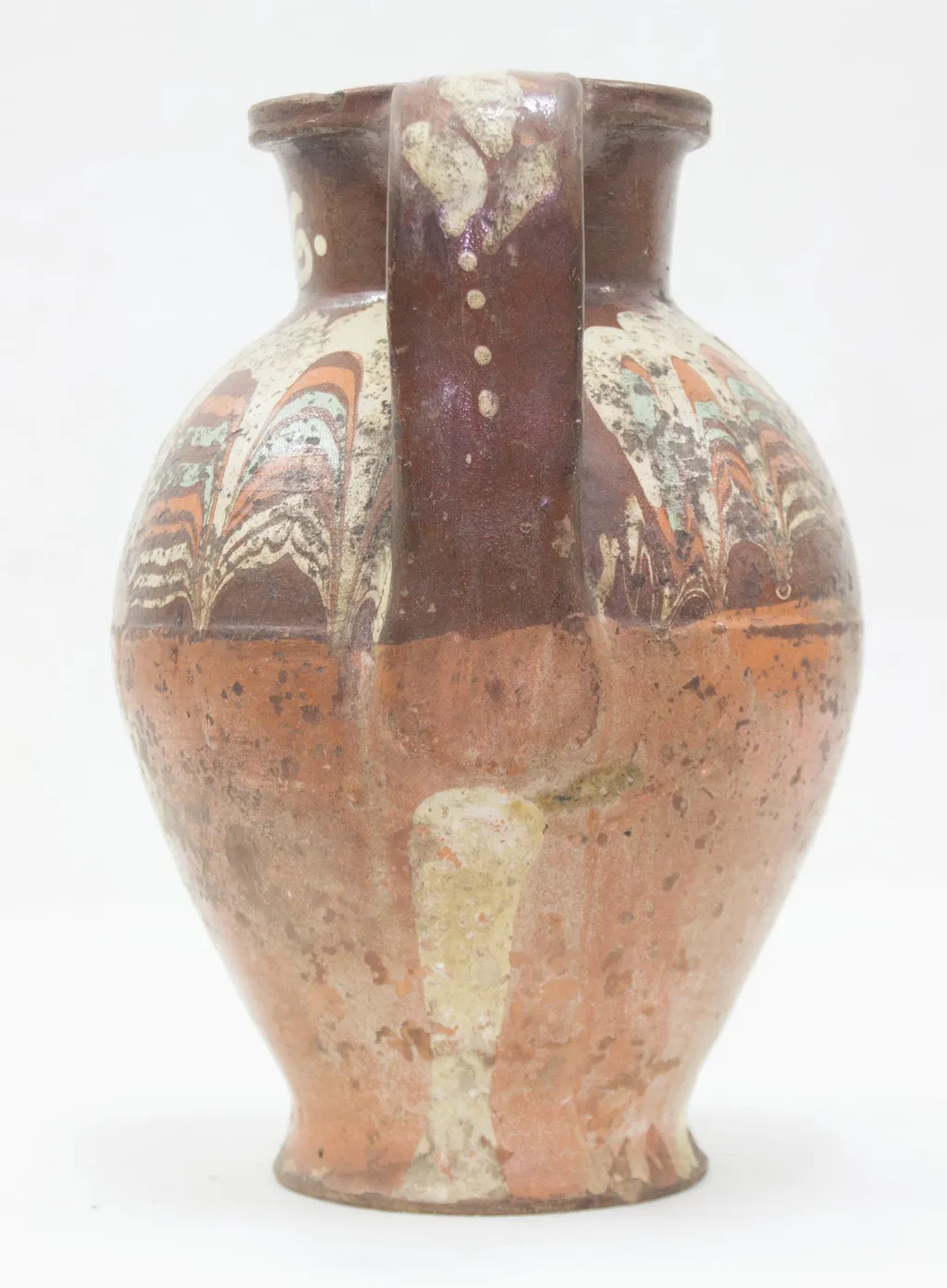
Recipient de formă bitronconică cu buza evazată, cu o toartă și „țâțână” pe cealaltă parte. Pe gât, inscripția „1936”. Vasul este smălțuit și decorat pe jumătatea superioară cu motive policrome liber desenate. Cromatică: fond - maro, decor - alb, maro, verde, gălbui. Jumătatea inferioară a obiectului este nesmălțuită. is a photography by olar. It is held in the collection of the "Dimitrie Gusti" National Village Museum.
About this work
The top half has faded paint—swirls of brown, white, and hints of green and yellow—while the bottom half is plain and rough.
This is an old clay pot with a worn, earthy look. The top half has faded paint—swirls of brown, white, and hints of green and yellow—while the bottom half is plain and rough. The neck has a small lip, and the pot shows signs of age, like chips and cracks.
The pot has the year "1936" written on its neck, and the paint is uneven, like it was hand-drawn. The colors are muted, blending into each other in spots.
If you like this kind of handmade pottery, look up Museum of Ethnography for more pieces like this.
Overview
This ceramic vessel, dated 1936, features a distinctive bitronconic form with an everted rim, a single handle, and a protruding "nipple" on the opposite side. Its worn, earthy appearance reflects its age.
Subject & Meaning
The vessel's subject is not explicitly representational; instead, its decorative elements and traditional craftsmanship imply a functional, possibly ritualistic, purpose within a cultural context.
Technique & Style
The piece exhibits handmade pottery techniques. The upper half is partially glazed with freely drawn, polychrome motifs on a brown background, incorporating white, green, and yellow hues. The lower half remains unglazed, showcasing the natural clay.
History & Provenance
Dated to 1936 by an inscription on the neck, the vessel's origins and direct provenance are not detailed here, though its style suggests a folk or ethnographic context, potentially aligning with collections like those of the Museum of Ethnography.
Context
The vessel's design and craftsmanship place it within traditional, early 20th-century folk pottery practices, characterized by functional forms and simple, expressive decorations.
Legacy
As a piece of early 20th-century folk pottery, it contributes to the understanding and appreciation of traditional craftsmanship, potentially influencing contemporary pottery through its preservation in ethnographic collections.
Artist & collection
Artist
These folk potters shaped everyday jugs and bowls, glazing only the top half and painting them with spirals, flowers, and bristle-like sprigs in mustard, green, and brown.
Museum
"Dimitrie Gusti" National Village Museum
Continue through works from the same source collection.
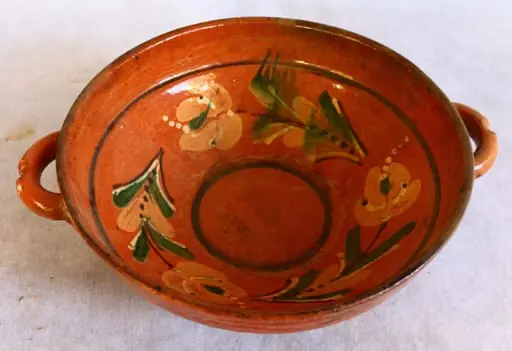 Vas de formă tronconică, cu două toarte laterale („cu urechi”) și una mică la spate. Decor geometric și floral stilizat: între două cercuri concentrice (unul pe fundul vasului, iar cel de-al doilea în partea superioară), trei flori cu frunze stilizate. Cromatică: roșu, negru, verde, alb, galben. Timp de lucru: circa două săptămâni.
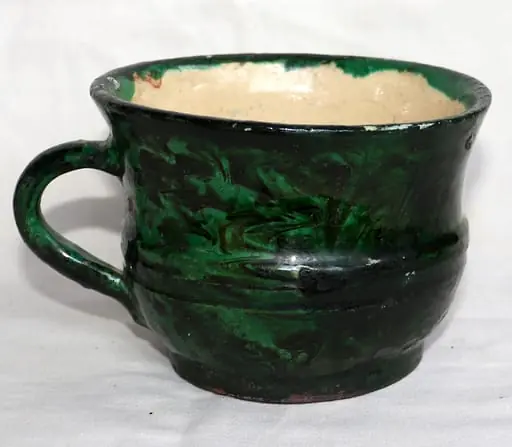 Piesa are o formă cilindrică, fiind lărgită în partea superioară și îngustată către bază. Are toartă situată în zona centrală a suprafeței. Este smălțuită și decorată cu motive geometrice: pe toată suprafața se găsesc forme geometrice (mai ascuțite și mai rotunjite), neregulate, realizate cu pensula; asemenea și toarta. La mijlocul cănii (în partea exterioară) se găsesc două cercuri incizate de jur-împrejur, acestea fiind singurele motive ornamentale ale obiectului. Culorile folosite pentru decorarea ulcelei sunt verde și negru, la interior piesa fiind de culoare bej (crem); fundul nu este smălțuit, culoarea fiind cea cărămizie.
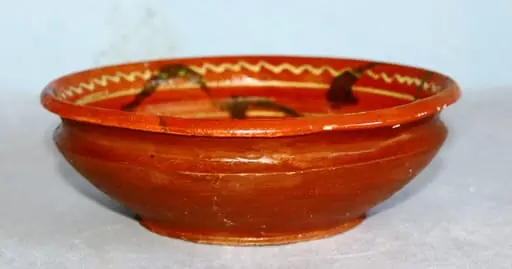 Piesă de formă circulară, adâncită, cu partea superioară concavă la exterior și gaură pentru agățat la spate. În centru, o spirală circulară, înconjurată de patru grupuri de semicercuri cu o bulină în centru. Pe margine: pete elipsoidale între cercuri concentrice și linie șerpuită înspre interior. Stropituri cu verde suprafața interiorului. Cromatică: cărămiziu, alb-gălbui, verde. Timp de lucru: circa două săptămâni.
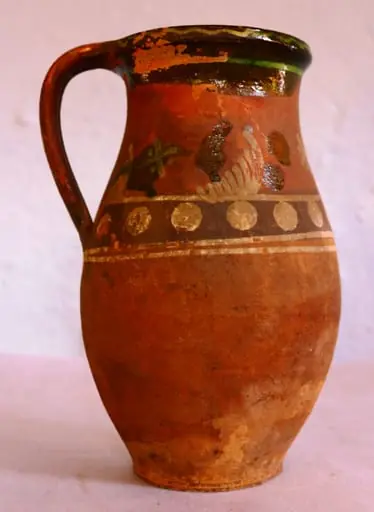 Vas cu corpul bombat, gura largă și o toartă laterală. Central, între două cercuri la bază și unul deasupra, un șir de buline. În partea superioară, patru grupuri de linii curbe, grupate cu o creastă de cocoș. Cruci de punte între brațe. O linie în zig-zag pe gura vasului și una orizontală pe toartă. Cromatică: cărămiziu, brun, alb-gălbui, verde. Timp de lucru: circa două spătămâni.
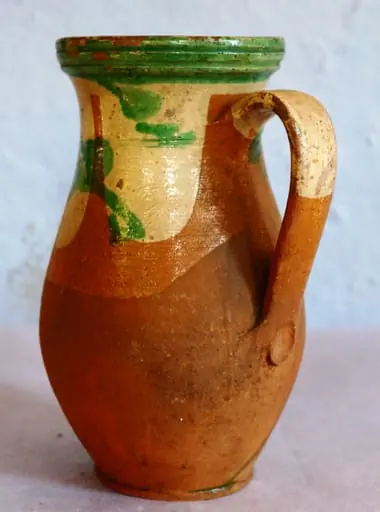 Vas puțin bombat, cu gura largă și toartă laterală. De la gura vasului coboară pete mari ovoidale peste care s-a stropit cu verde. Fondul este cărămiziu în partea inferioară și ocru în partea superioară. Jumătatea de sus a toartei cu alb-gălbui. Cromatică: cărămiziu, ocru, gălbui, verde, alb-gălbui. Timp de lucru: circa două săptămâni.
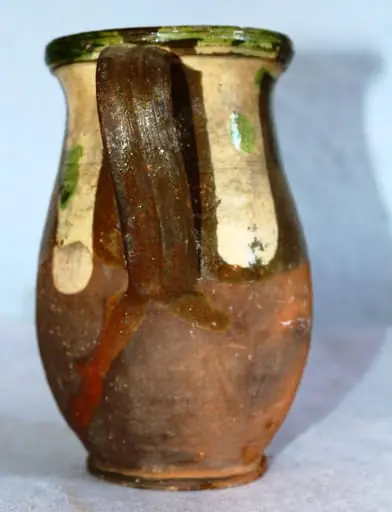 Vas de formă bombată, cu gura largă și toartă laterală. În partea superioară a piesei, pete mari alungite (benzi sau „limbi”) de culoare, realizate prin scurgere, alternând cu fundalul. Peste aceste benzi, pete verzi stropite. Pe buza vasului, la exterior, două cercuri incizate. Cromatică: cărămiziu, alb-gălbui, verde închis. Timp de lucru: circa două săptămâni.
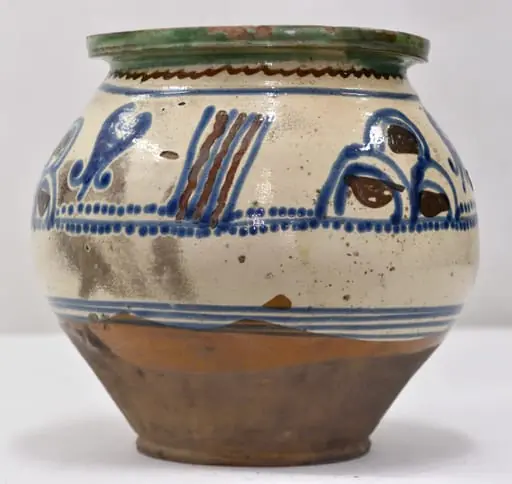 Piesa, al cărei corp este lărgit în partea mediană, are gâtul îngustat și buza evazată. Are atașată o toartă în jumătatea superioară. Este pictată (decorată), conținând motive decorative geometrice și florale: linii verticale, mici linii orizontale, aranjate una deasupra celeilalte, cercuri, de jur-împrejur (între ele fiind creat un registru în care s-a aplicat pictura), flori, fragmente de cerc grupate câte trei, o linie șerpuită în jurul gâtului oalei; toarta este, de asemenea, decorată cu scurte linii orizontale suprapuse. Partea de jos a obiectului este nedecorată. Culorile obiectului, cu excepția suprafeței nedecorate de culoare cărămizie, sunt: alb-crem, maro închis și deschis, verde și albastru.
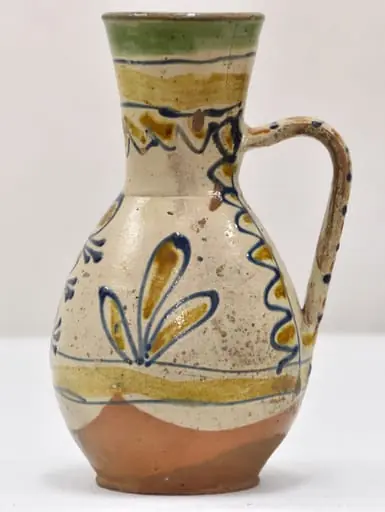 Piesa are o formă relativ cilindrică, fiind îngustată în jumătatea superioară și lărgită (bombată) în cea inferioară. Este dotată cu o toartă laterală. Suprafața exterioară este pictată (decorată), conținând motive decorative geometrice și vegetale: pete de culoare și linii orizontale pe toartă, cercuri de jur-împrejur atât în partea superioară cât și în partea inferioară, semicercuri separate prin câte câte trei liniuțe ramificate - de o parte și de cealaltă a unei linii verticale, două grupuri a câte trei frunze fiecare și linii șerpuite alături de câte o linie verticală (două). Partea de jos a obiectului nu este decorată având culoarea cărămizie. Culorile decorului sunt: alb-crem (fondul), albastru, verde și galben-ocru.
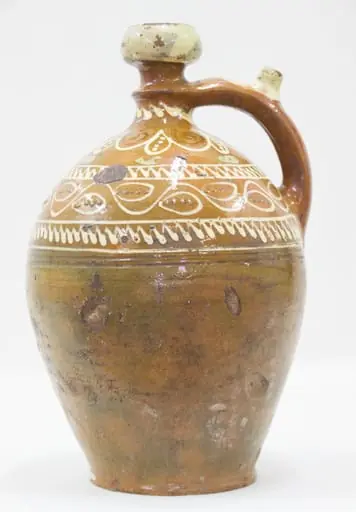 Ulcior de formă bitronconică cu gura îngustă și rotundă, cu o toartă și un orificiu pentru scurgerea lichidului, smălțuit și decorat pe jumătatea superioară cu motive vegetale (ghirlande) și geometrice (spirale; patru cercuri concentrice cu o linie șerpuită între ele).Cromatică: maro (fond), decor - galben, bej, alb, verde. Jumătatea inferioară a obiectului este nesmălțuită.
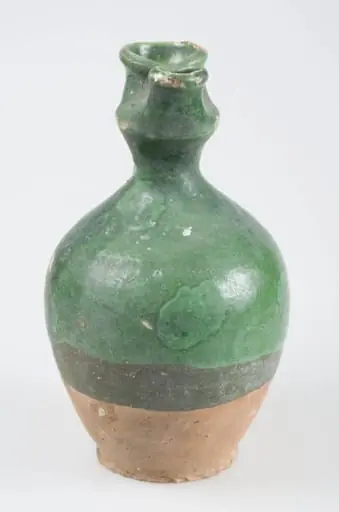 Ulcior mic de formă sferică smălțuit pe jumătatea superioară din suprafața exterioară. Vaul prezintă gură largă, bilobată și evazată, cu ciur în interior. Vasul are "țâță" pentru băut poziționat la jumătatea torții. Decorul este realizat prin stropirea cu smalț, formând linii și puncte neregulate. Cromatică: maro deschis; verde (trei nuanțe).
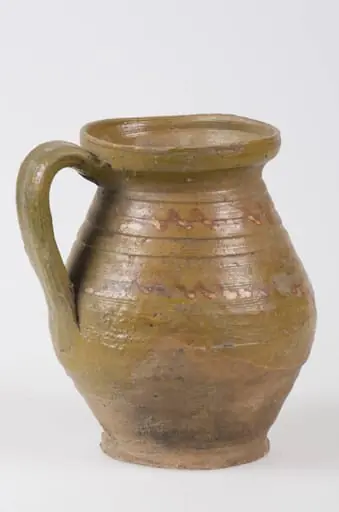 Vas bitronconic cu gât scurt și foarte profilat, cu gura înaltă și dreaptă. Prezintă o toartă care pleacă de sub buză și se unește cu corpul sub zona diametrului maxim. Este smălțuit în interior și la exterior (parțial nesmălțuit în partea de jos). În partea superioară prezintă un decor geometric realizat din cinci linii incizate și două linii în val pictate. Toarta este decorată cu puncte. Cromatică: fond: cărămiziu și pe alocuri verziu; motive: alb; maroniu. Prezintă uzură funcțională.
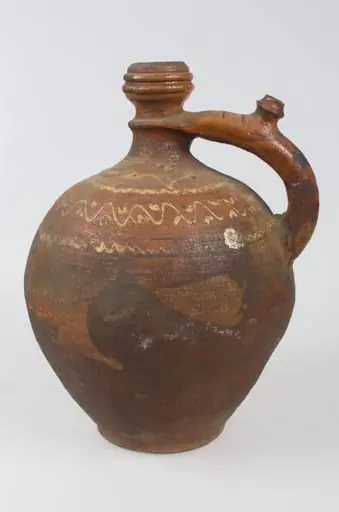 Vas de formă bitronconică prevăzut cun un gât ușor alungit și cu buză pe care se identifică două brâuri profilate. Pe toarta de formă semicirculară se identifică un orificiu pentru consumarea lichidului (”țâță”). Toarta pleacă din zona mediană a orificiului de umplere și se unește cu corpul vasului pe zona diametrului maxim. Vasul prezintă smalț la exterior cu urme de degradare. Decorul se identifică la baza gâtului și constă din motive geometrice: linii curbe, brâuri și motive vegetale. Cromatică: fond: cărămiziu: motive: crem; maron închis
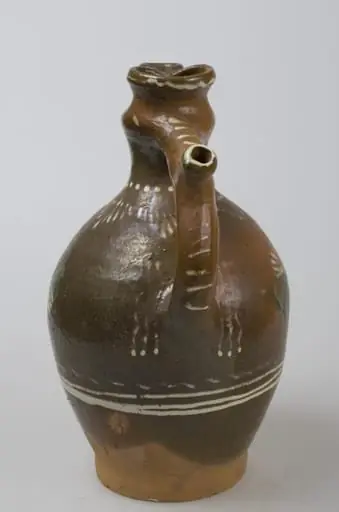 Recipient bitronconic cu gura bilobată. Prezintă mâner cu ”țâță”. Smălțuit până aproape de bază. Decorul este amplasat pe toată suprafața și este format din motive geometrice (linie); motive florale (pansea); motive fitomorfe (brad). Cromatică: fond: cărămiziu; motive: verde; maron; alb.
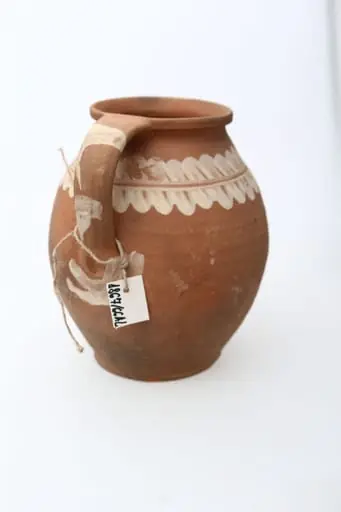 Recipient din lut nesmălțuit, de formă bitronconică, având gât îngust, gura ușor răsfrântă și buza dreaptă. Prevăzut cu o toartă lată și arcuită fixată la buză și la mijlocul vasului. Decorat cu degetul pe umeri cu motive zoomorfe (dintele de lup), și pe toartă cu motive geometrice neregulate. Decorat cu pastă de angobă, albă. Se folosește la fiertul mâncării pe vatră liberă în familii mai puțin numeroase. Cromatică:fundal cărămiziu,motive: alb.
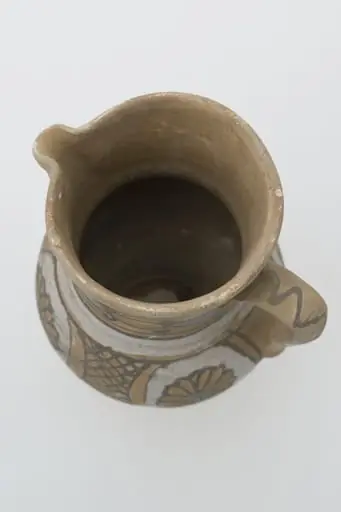 Cană de vin de formă bitronconică cu gâtul lung și buză dreaptă cu cioc. Registrele ornamentale se succed de jos în sus, delimitate de cercuri concentrice, și prezintă pe corpul vasului motive florale și geometrice sub formă de hașură întrerupte de partea de sus de o zonă cerc alb mai gros și mai apoi continuat cu cercuri concentrice ce delimitează de mijloc și de sub buză două cercuri albe groase (angoba). Cromatică: fond: alb; cărămiziu; motive: maro; gri; albastru.
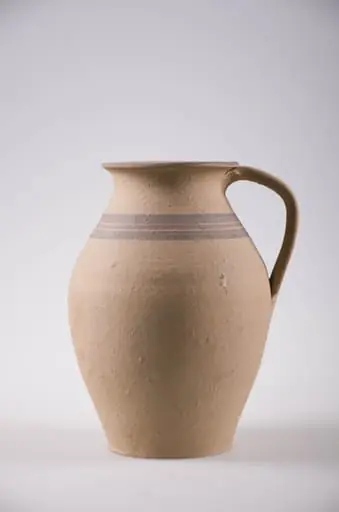 Oală borcan cu gât foarte pronunțat și buză evazată; de sub gât pleacă o toartă, unindu-se cu corpul în zona diametrului maxim; este decorată pe umeri cu cinci linii - două negre încadrează trei linii maro. Cromatică: fond: cărămiziu; motive: negru, maro închis.
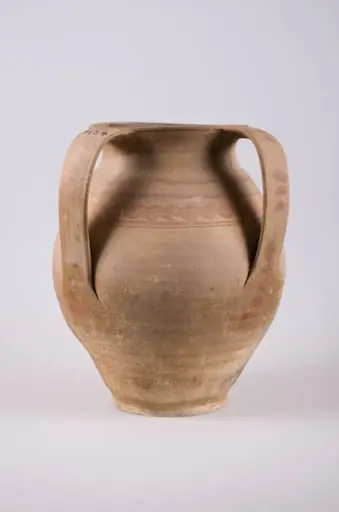 Oală mare bombată cu buza evazată. Prezintă două toarte late dispuse pe o parte. Nesmălțuită. Decorată în partea superioară cu linie vălurită și linii concentrice. Cromatică: fond: cărămiziu; motive: roșu.
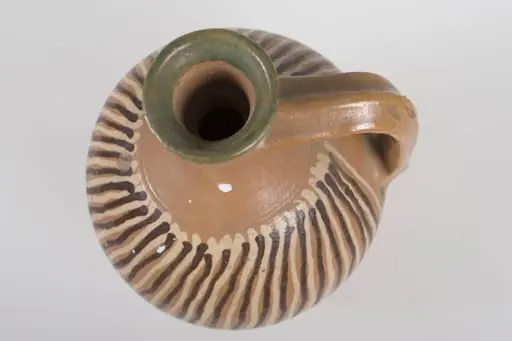 Recipient din lut de formă ovoidală cu gâtul scurt și buza avazată. Pe toată suprafața, pornind de pe umărul vasului, alternanțe de linii pictate albe și maro închis, dispuse vertical. Buza și partea superioară a gâtului sunt smălțuite în verde. Cromatică: fond: cărămiziu; motive: verde; alb; maro închis.
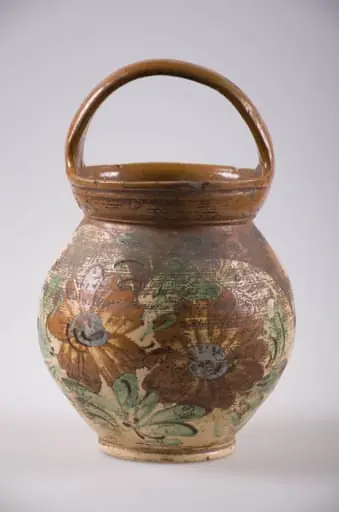 Oală de formă bitronconică cu buza largă din care se ridică o toartă ce fixează diametrul buzei (mănușar). Corpul vasului este bitronconic, toarta și buza vasului au un smalț de culoare cărămizie. În partea din față a corpului vasului, pe un fond alb-gălbui (culoarea untului) sunt pictate două flori (albastru, galben, maron, verde) restul corpului având desenate vrejuri ornamentale. Pe buza vasului, la exterior, prezintă caneluri închise la culoare. Cromatică: fond: maro; motive: albastru; galben; maron; verde.
 Oală de formă bitronconică cu baza plată cu pereții puternic arcuiți îngustându-se ușor în partea superioară. Buza este puțin răsfrântă la exterior. Prezintă o toartă de susținere plasată diametral, peste gură (mănușă). Angobat, stropit cu verde, smălțuit în interior și exterior. Cromatică: verde; maro; alb.