Artwork
Thomas Holland, Jesuit
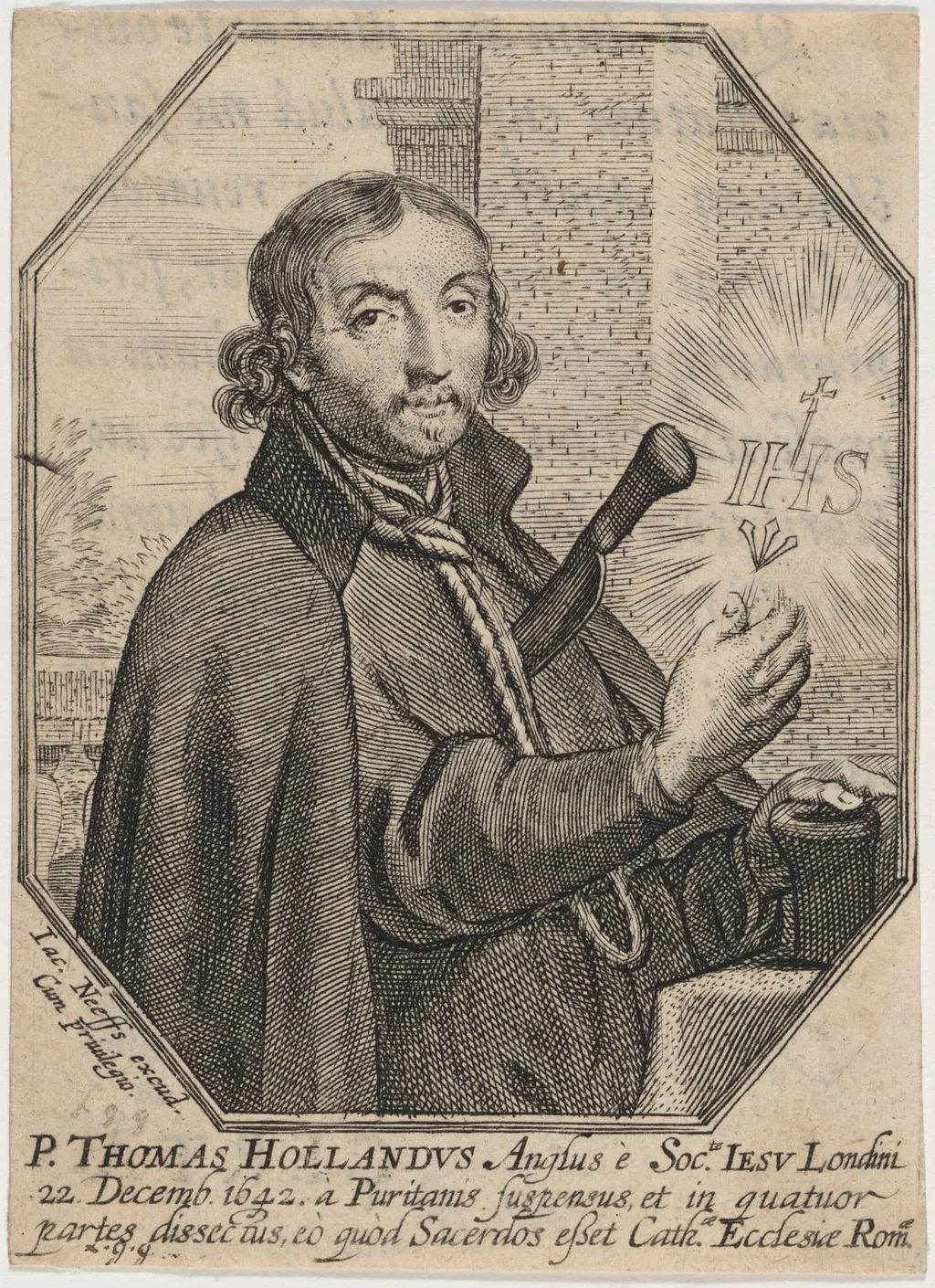
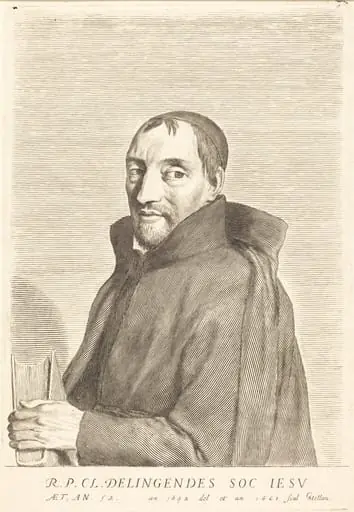
Thomas Holland, Jesuit is an ink print by the Baroque artist Jacobus Neeffs. It dates from 1635 and is held in the collection of the National Gallery of Art.
About this work
Overview
This 1635 engraving by Jacobus Neeffs portrays Thomas Holland, a Jesuit priest, in a formal portrait. Rendered with precise line work and tonal gradations, the image captures the subject in a static, contemplative pose. The medium reflects the precision typical of early 17th-century printmaking, where fine etched lines define form and texture without color.
Subject & Meaning
Thomas Holland, depicted in a dark religious robe with a white collar and a rope belt, is shown holding a staff and raising his left hand in a gesture of blessing or admonition. The austere setting—a brick wall and distant window—emphasizes his monastic life. The imagery conveys quiet authority and spiritual resolve, aligning with Jesuit ideals of discipline and devotion.
Technique & Style
Neeffs employed engraving, a technique involving incised lines on a metal plate inked and pressed onto paper. The fine, controlled strokes model the folds of fabric, the texture of skin, and the roughness of the wall. Shading is achieved through cross-hatching, creating subtle contrasts that lend volume and depth to the figure without relying on tone or wash.
History & Provenance
Created in 1635, the engraving likely served as a portrait for Jesuit circles, possibly distributed among members or used in devotional contexts. Holland, an English Jesuit active in continental Europe, was known for his missionary work. The print’s survival suggests it was valued within religious networks, though its early ownership remains undocumented.
Context
In the early 1600s, engravings of religious figures were common tools for identity and propaganda, especially among persecuted Catholic orders in Protestant regions. Holland’s portrayal reflects the Jesuit emphasis on education and visible piety. The composition echoes contemporary portrait prints, balancing individuality with institutional conformity.
Legacy
The engraving remains a rare visual record of Thomas Holland, preserving his likeness for historical study. While not widely reproduced, it contributes to the visual archive of Jesuit missionaries in early modern Europe. Its technical precision and restrained composition exemplify the role of print in sustaining religious identity during a time of upheaval.
Artist & collection