Artwork
A Gothic Architectural Facade and Funerary Sculpture at Crystal Palace
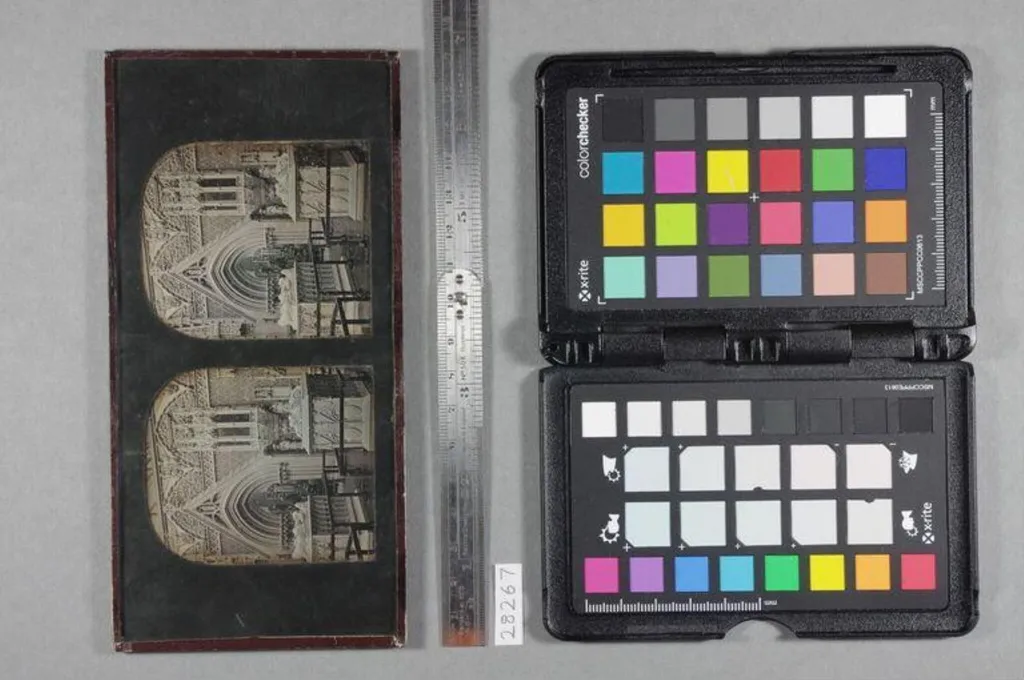
A Gothic Architectural Facade and Funerary Sculpture at Crystal Palace is a photographic photography by the Impressionist artist Negretti and Zambra. It dates from 1855 and is held in the collection of the Victoria and Albert Museum.
About this work
Overview
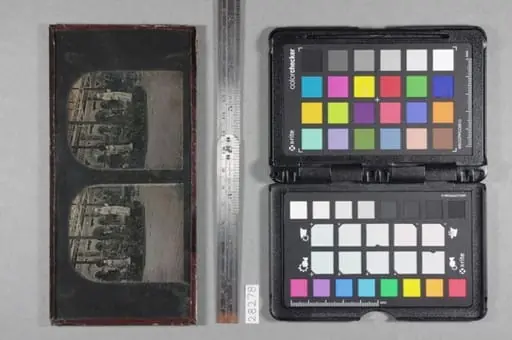
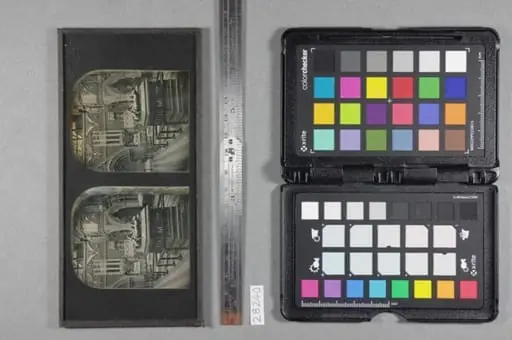
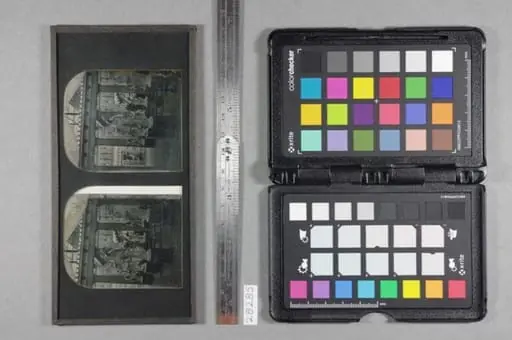
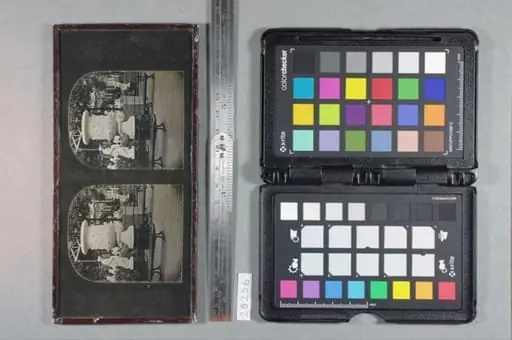
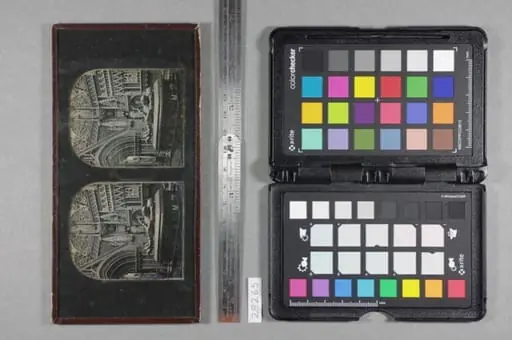
The image is a stereoscopic daguerreotype taken in 1855 by the firm Negretti and Zambra. It captures two stone works displayed at the Crystal Palace after its move to Sydenham, presented on a pair of arched daguerreotype plates set within a black, glazed mount and a passe-partout frame. A label from the makers is attached to the back of the frame.
Subject & Meaning
One plate shows a Gothic façade, complete with pointed arches and sculpted figures typical of medieval church architecture. The second plate depicts a funerary monument: a recumbent effigy holding a cross, representing a traditional tomb sculpture.
Technique & Style
The daguerrotype process creates a monochrome image on silver‑plated copper, preserving fine surface detail of the stone carvings. The stereoscopic format, using two slightly offset plates, would have allowed viewers to perceive depth when examined through a suitable viewer.
History & Provenance
Negretti and Zambra, a prominent 19th‑century photographic studio, produced the work shortly after the Crystal Palace’s relocation in the early 1850s. The photograph remained in the studio’s possession, as indicated by the attached label, and later entered the collection of the Victoria and Albert Museum.
Context
During the mid‑19th century, the Crystal Palace served as a public exhibition space for architectural fragments and sculptures rescued from demolition or decay. Displaying Gothic elements and funerary art reflected contemporary Victorian interest in medieval revivalism and historic preservation.
Artist & collection
Artist

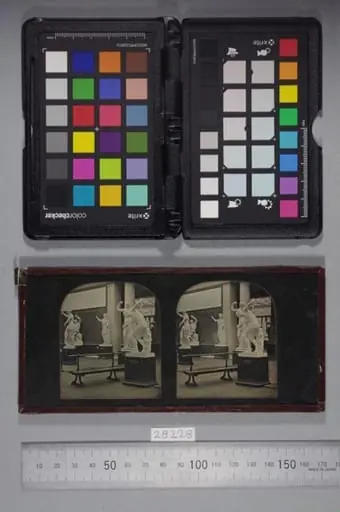 Sculpture Court at Crystal Palace, including the Discobolus
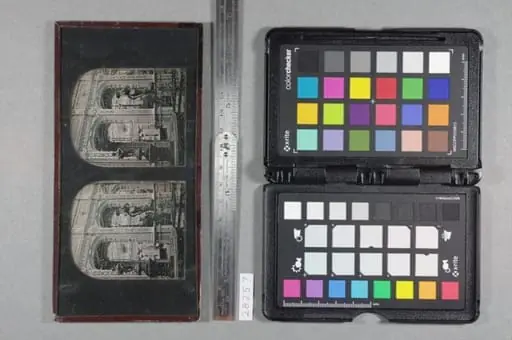 Sculpture Court at Crystal Palace, including Donatello's 'David'
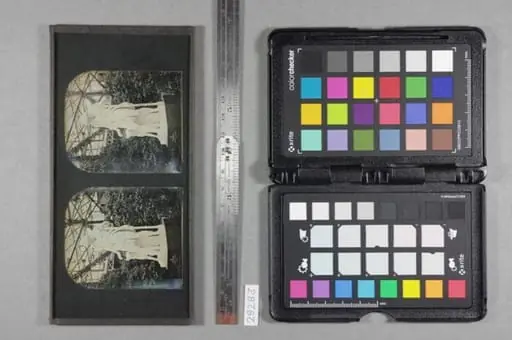 Sculpture of Ulysses at Crystal Palace
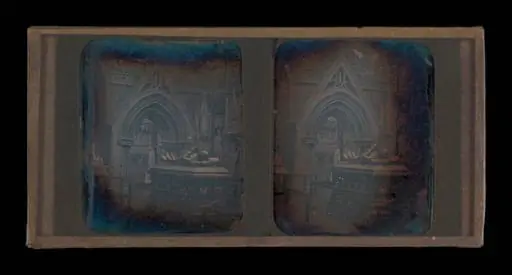 Gothic or Medieval Funerary Statuary
 Guy Little Theatrical Photograph
 View of Gothic Architecture, Sculpture and Tomb Displayed at Crystal Palace
 Sculpture of Bacchus at Crystal Palace
 Monumental Egyptian Sculpture at Crystal Palace