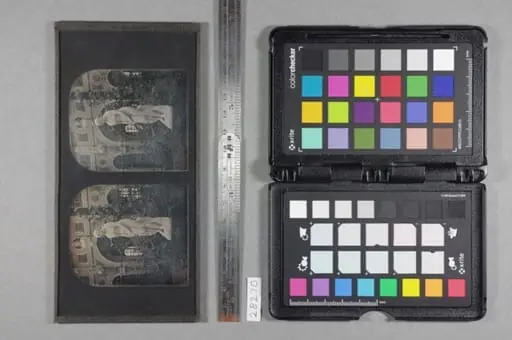
Artwork
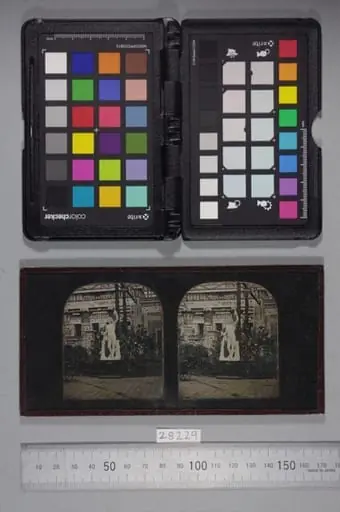
'Triton' by Giovanni Angelo Montorsoli at Crystal Palace
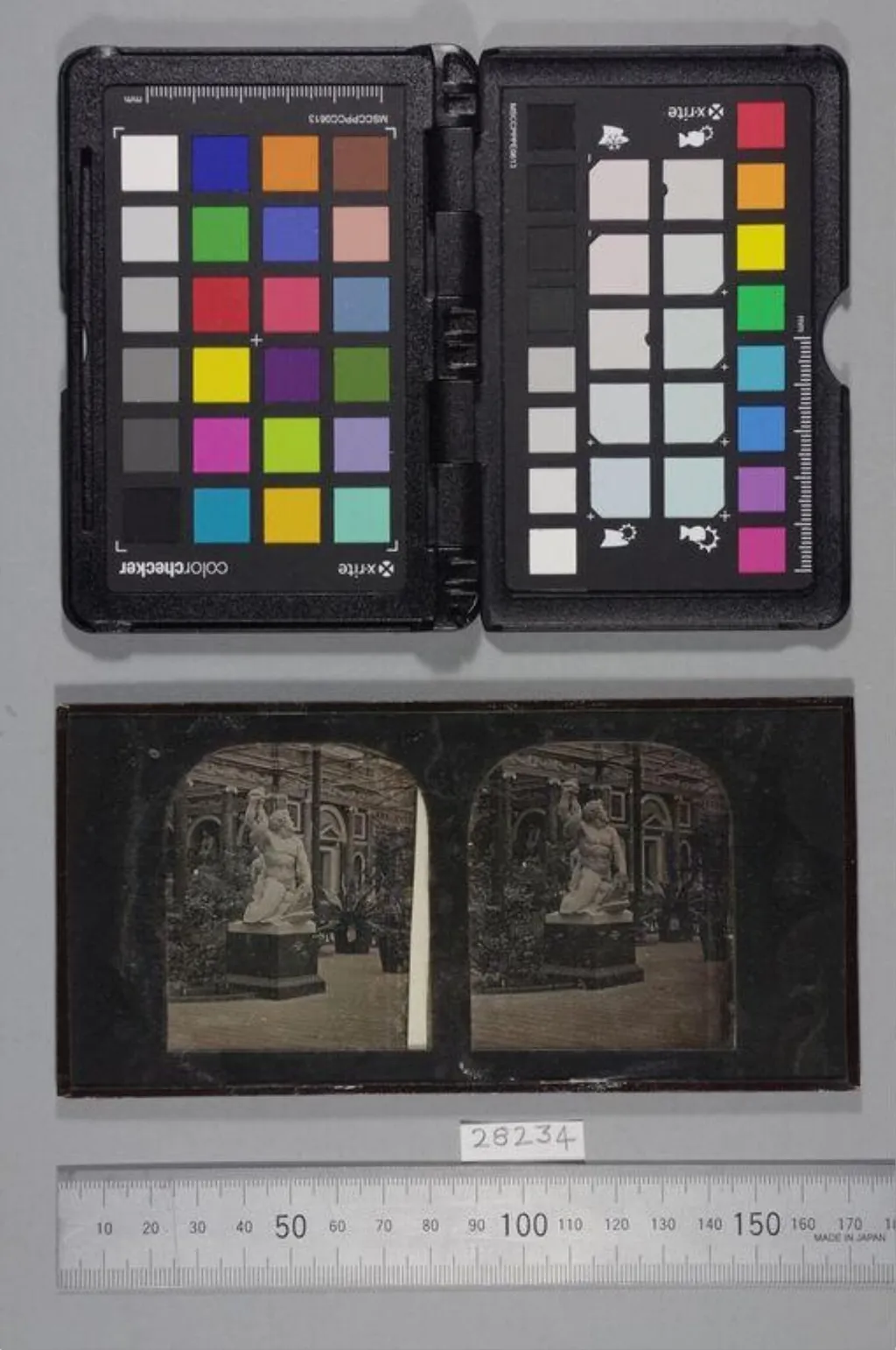
'Triton' by Giovanni Angelo Montorsoli at Crystal Palace is a photographic photography by the Impressionist artist Negretti and Zambra. It dates from 1855 and is held in the collection of the Victoria and Albert Museum.
About this work
Overview
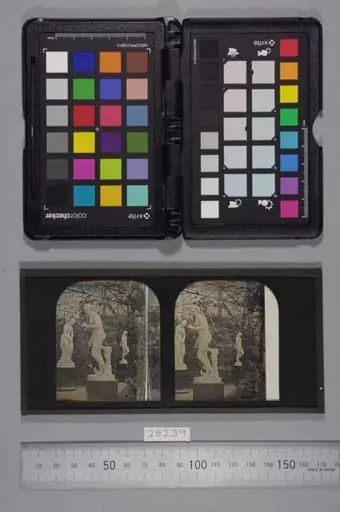
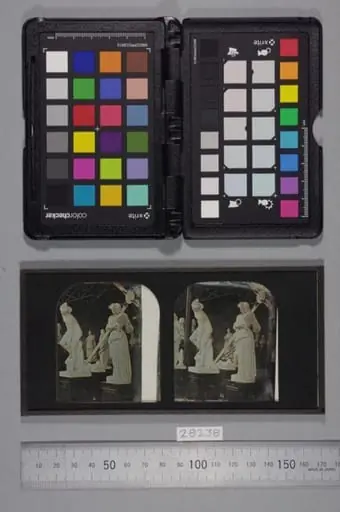
A stereoscopic daguerreotype from 1855 captures Giovanni Angelo Montorsoli’s sculpture of Triton as it was displayed in the Crystal Palace at Sydenham.
A stereoscopic daguerreotype from 1855 captures Giovanni Angelo Montorsoli’s sculpture of Triton as it was displayed in the Crystal Palace at Sydenham. The image, produced by Negretti and Zambra, presents two slightly offset black-and-white views meant to be viewed through a stereoscope for depth. The sculpture is framed by architectural elements and foliage, reflecting the palace’s effort to recreate classical environments. A color palette guide rests atop the photograph, likely used for calibration in early photographic reproduction.
Subject & Meaning
The sculpture depicts Triton, a mythological sea god and son of Poseidon, shown in a dynamic pose with arms raised, possibly holding a conch shell. Montorsoli’s interpretation emphasizes muscular vitality and classical harmony, aligning with Renaissance ideals of human form and mythological narrative. The figure’s gesture suggests command over the sea, reinforcing Triton’s role as a herald of oceanic forces. Its placement in the Crystal Palace contextualized ancient myth within a modern exhibition of cultural heritage.
Technique & Style
The daguerreotype employs the early photographic process known for its sharp detail and mirror-like surface, capturing the sculpture’s texture and the play of light across stone. The stereoscopic format enhances spatial perception, allowing viewers to experience the sculpture’s three-dimensionality. The composition frames the statue within the palace’s classical arches and columns, using architectural elements to frame and elevate the subject. The inclusion of a color chart indicates an early attempt to standardize visual accuracy in photographic documentation.
History & Provenance
Montorsoli’s Triton, originally created in 1540 for the Fountain of Neptune in Florence, was moved to the Crystal Palace in Sydenham after the Great Exhibition of 1851. The 1855 daguerreotype documents its display in the palace’s newly constructed gardens, part of an effort to present European sculpture as a continuous cultural lineage. The photograph’s back bears a label from Negretti and Zambra, a prominent London firm known for scientific and topographical imaging, confirming its role in early museum documentation.
Context
The Crystal Palace at Sydenham served as a public museum of art and industry, housing reproductions and original works to educate and entertain. Triton’s placement among classical statues reflected Victorian fascination with antiquity and the belief in art’s moral and educational value. The use of stereoscopic photography aligned with contemporary scientific interests in perception and representation, making the sculpture accessible to a wider audience beyond the physical site.
Legacy
This daguerreotype preserves a moment when classical sculpture was recontextualized through industrial-era technology. It represents an early intersection of art conservation, public education, and photographic innovation. While the original sculpture remains in Florence, this image endures as a record of its 19th-century display, illustrating how cultural artifacts were reinterpreted for modern audiences through both exhibition design and emerging visual media.
Artist & collection
Artist

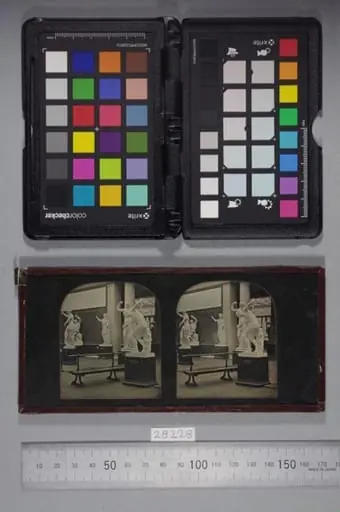 Sculpture Court at Crystal Palace, including the Discobolus
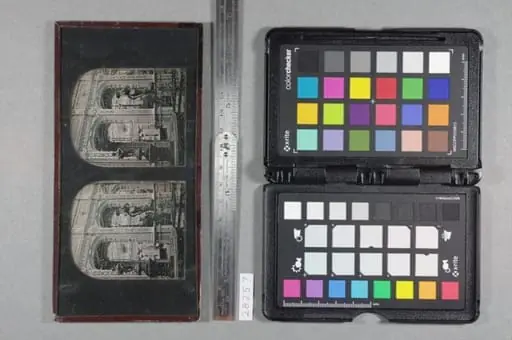 Sculpture Court at Crystal Palace, including Donatello's 'David'
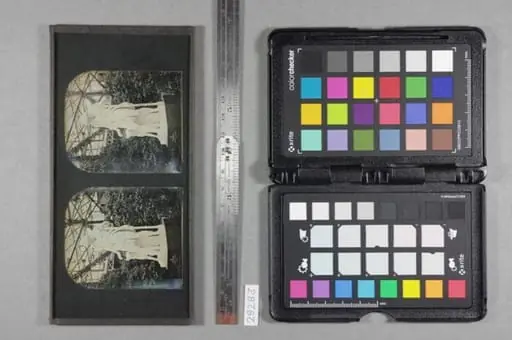 Sculpture of Ulysses at Crystal Palace
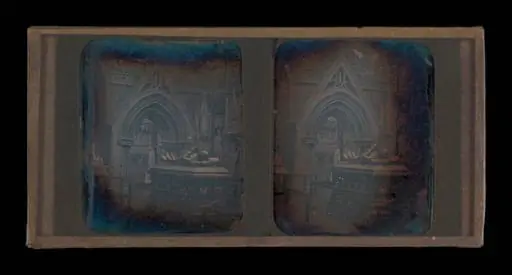 Gothic or Medieval Funerary Statuary
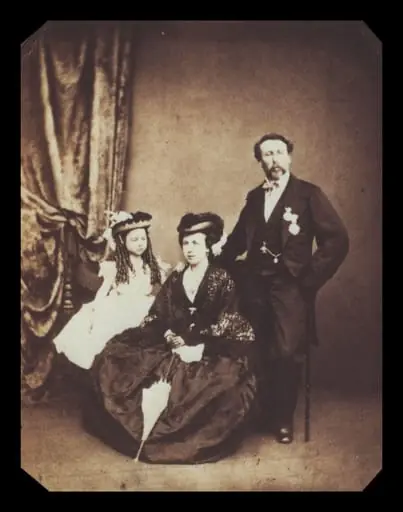 Guy Little Theatrical Photograph
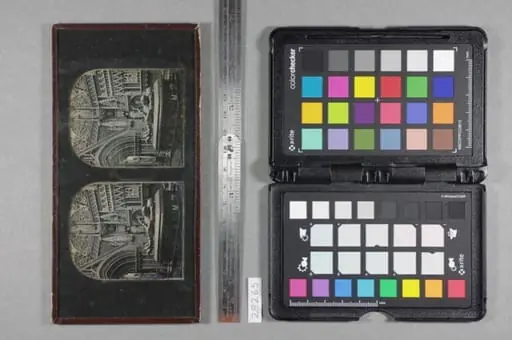 View of Gothic Architecture, Sculpture and Tomb Displayed at Crystal Palace
 Sculpture of Bacchus at Crystal Palace
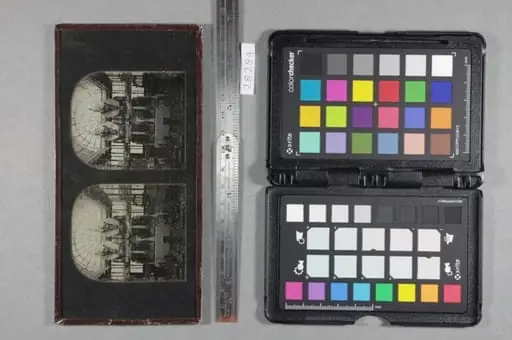 Monumental Egyptian Sculpture at Crystal Palace