Artwork
Știrbei Barbu la Acropole
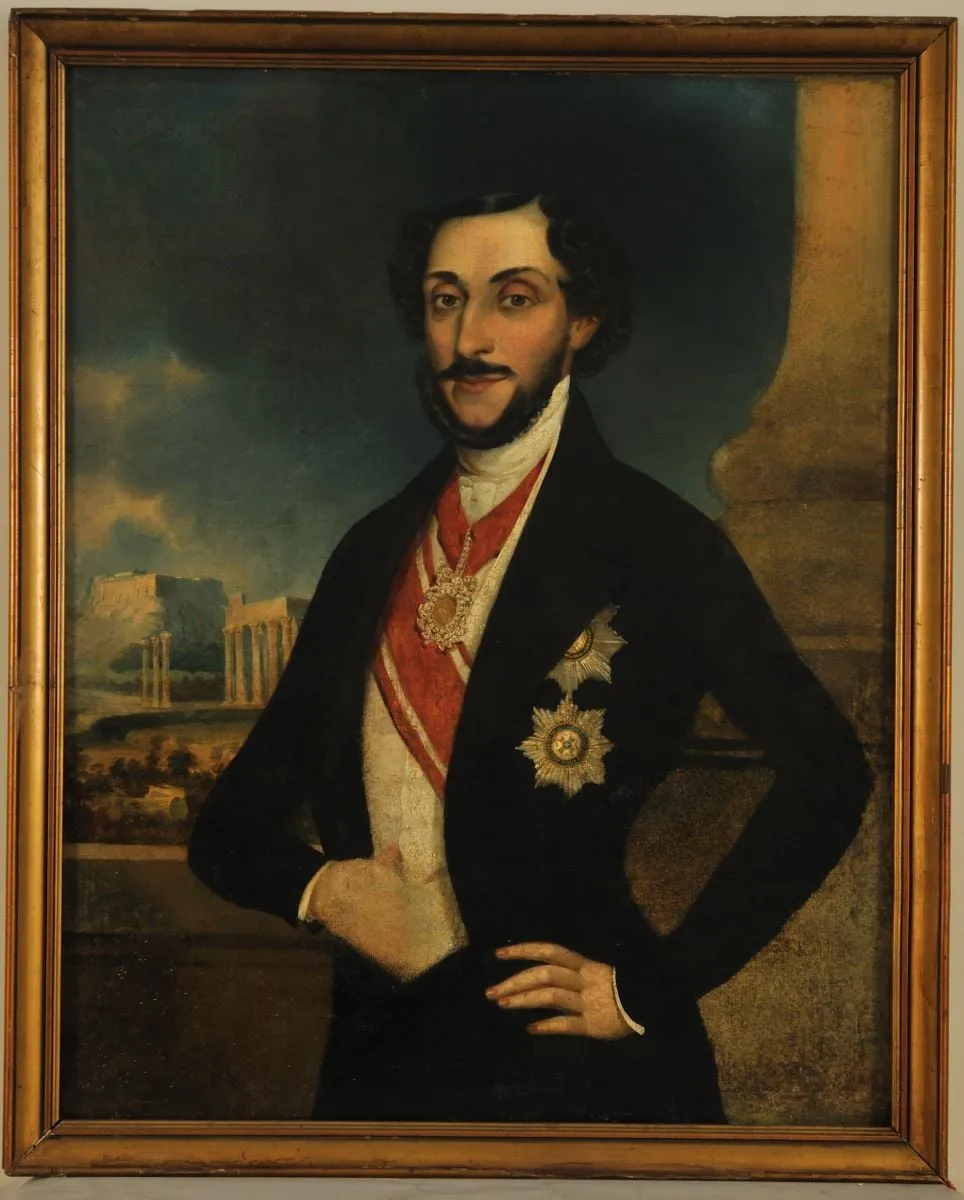
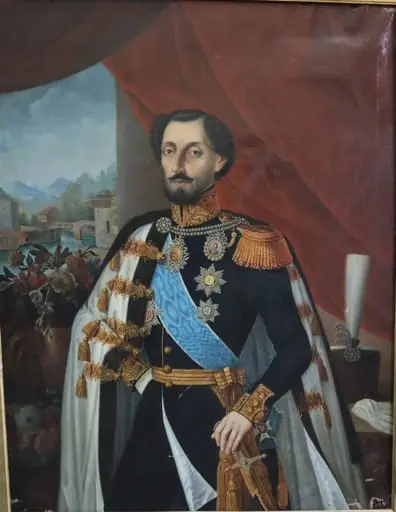
Știrbei Barbu la Acropole is an unspecified painting by Ion Negulici. It is held in the collection of the National Museum of Romanian History. The canvas presents a formally dressed male figure positioned before a distant landscape that includes ancient architectural ruins.
About this work
Overview
The canvas presents a formally dressed male figure positioned before a distant landscape that includes ancient architectural ruins. He wears a dark coat over a white shirt, a red sash across his chest, and is decorated with several medals, suggesting a rank or official status. His posture is confident, with his right hand on his hip and his left arm hanging loosely.
Subject & Meaning
The portrait likely commemorates an individual of military or civil distinction, as indicated by the insignia displayed on his attire. The inclusion of classical ruins in the background may allude to the subject’s connection to heritage, scholarship, or a broader cultural identity tied to antiquity.
Technique & Style
Rendered with a clear, realistic approach, the work employs a balanced composition that foregrounds the sitter against a receding backdrop. The handling of light emphasizes the textures of the coat and medals, while the landscape is treated with softer brushwork, creating depth without detracting from the central figure.
Context
The painting reflects a 19th‑century tradition of portraiture that combines personal representation with symbolic settings. Its visual language recalls the style of Ion Negulici, a Romanian painter known for integrating historical motifs into contemporary portraiture.
History & Provenance
The artwork, titled “Știrbei Barbu la Acropole,” is cataloged as an image file, suggesting it may be part of a digital collection or archive. No further details on its ownership history or exhibition record are provided.
Artist & collection
Artist
Ion Negulici was the kind of artist who kept one foot in the drawing room and the other in the street, sketching politicians and soldiers when they weren’t looking.

 Portrait of Nikolai Monsey
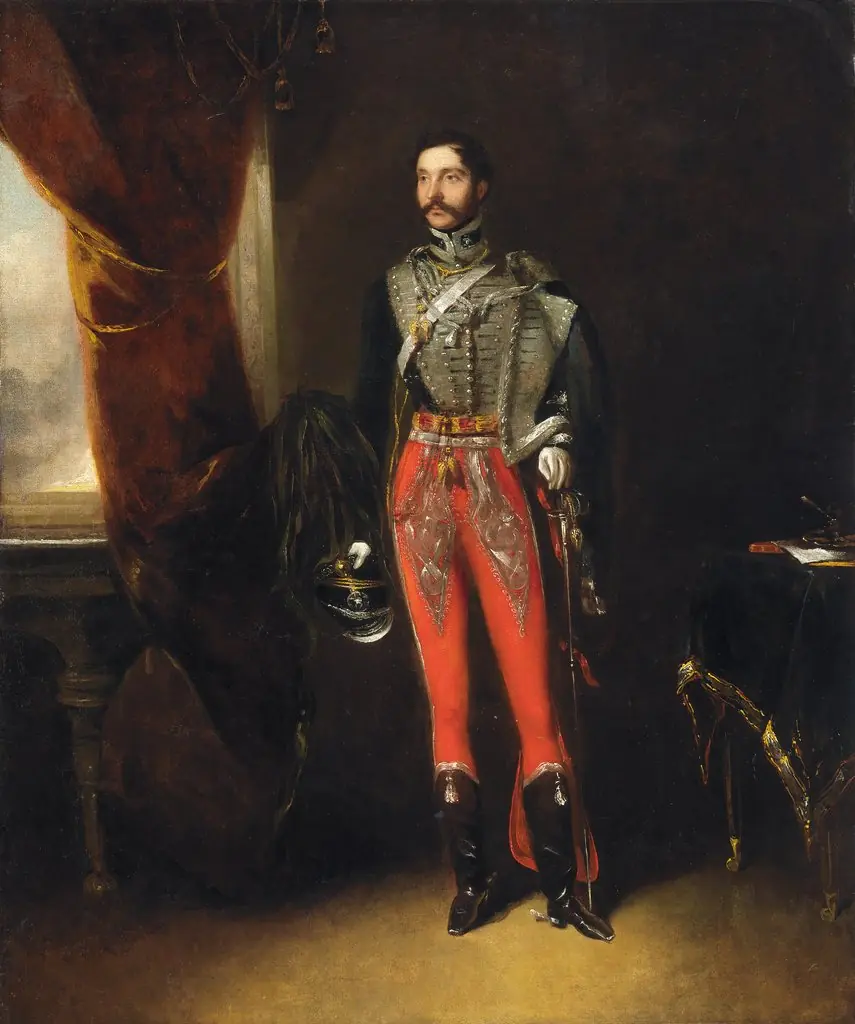 Portrait of Captain McNamara, MP
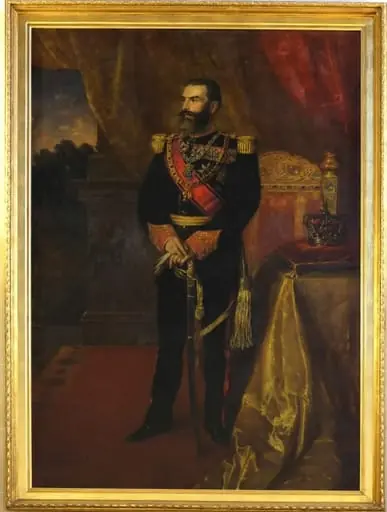 Portretul regelui Carol I
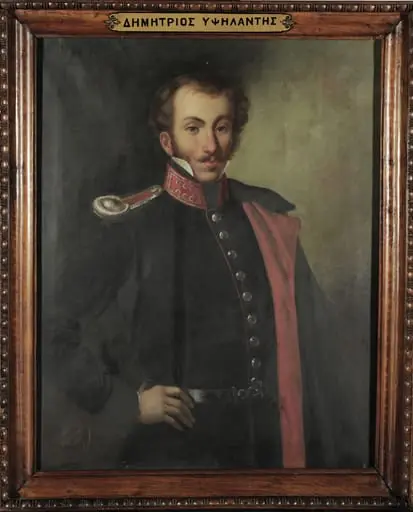 Προσωπογραφία του Δημητρίου Υψηλάντη
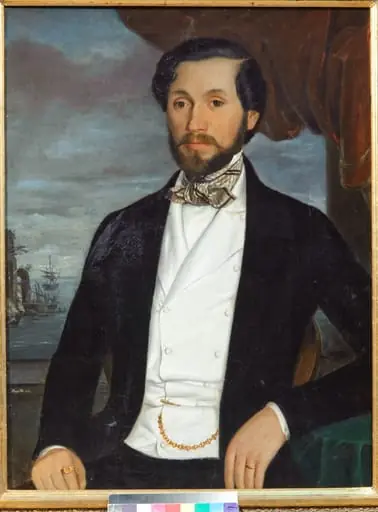 Portretul pictorului Carol Popp de Szathmári
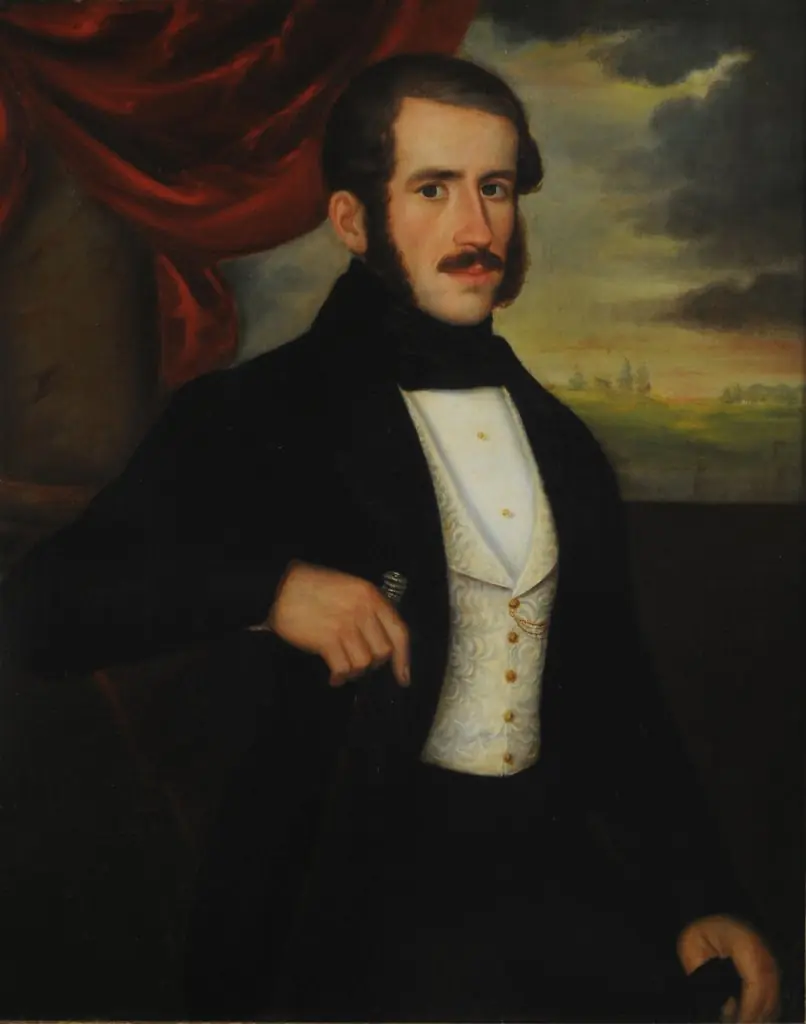 Retrato de Antonio Rodríguez Ro (Retrato de Antonio Rodriguez Roo)
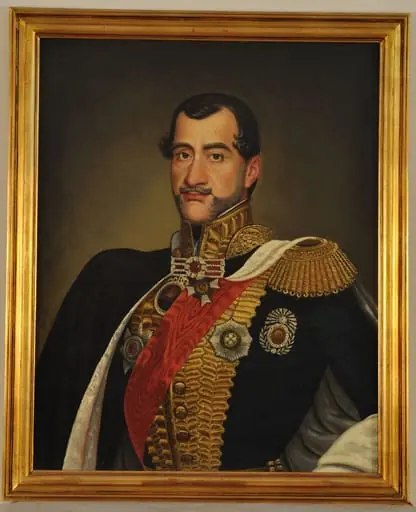 Alexandru Dimitrie Ghica
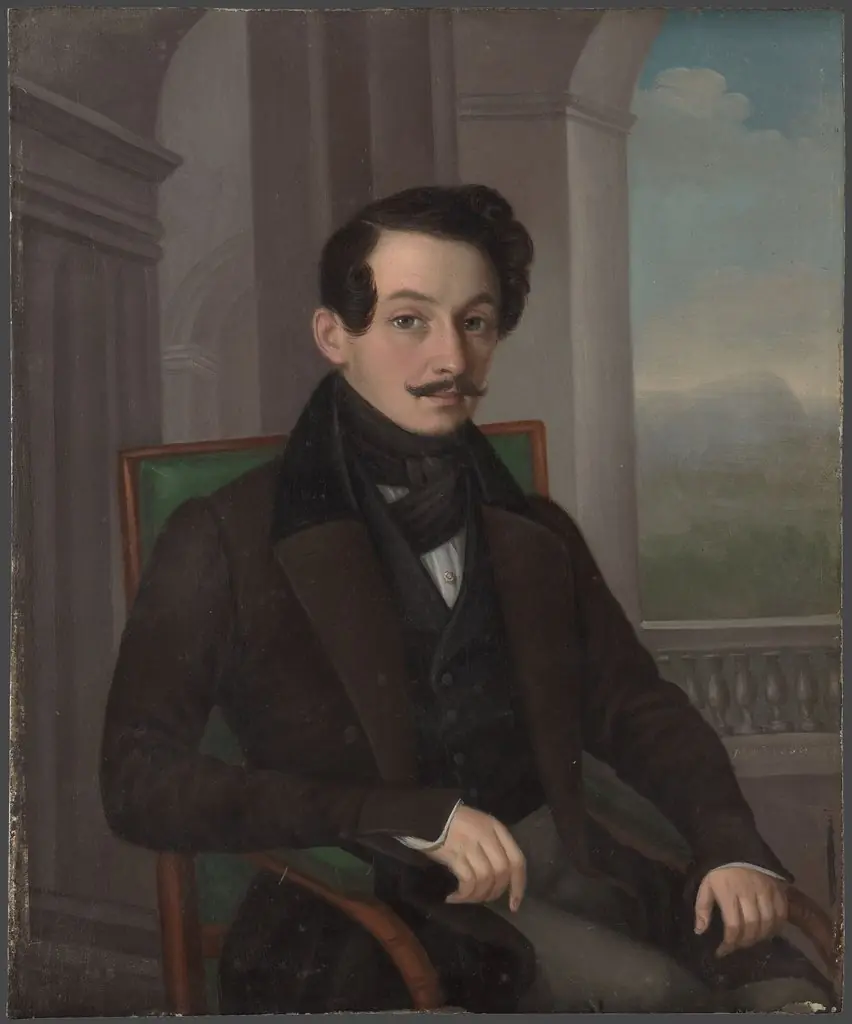 Портрет неизвестного
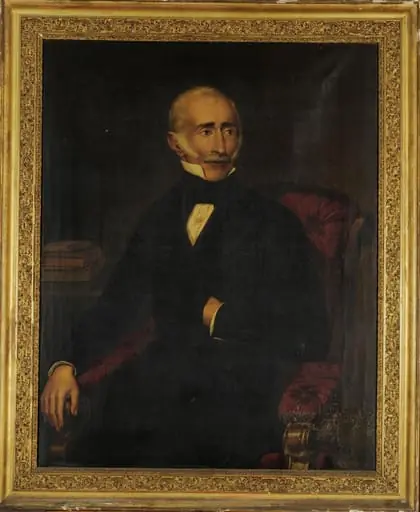 Προσωπογραφία του Ανδρέα Λουριώτη
 Barbu Știrbei Vodă