Artwork
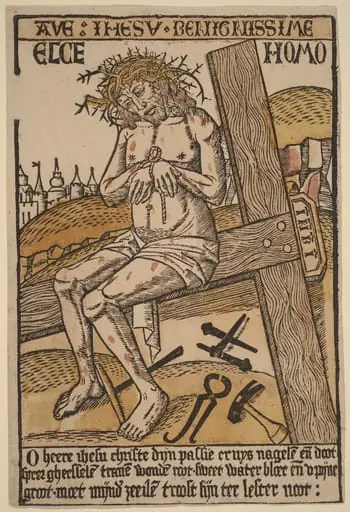
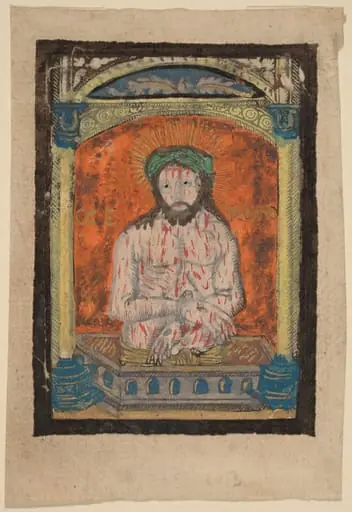
Christ as the Man of Sorrows
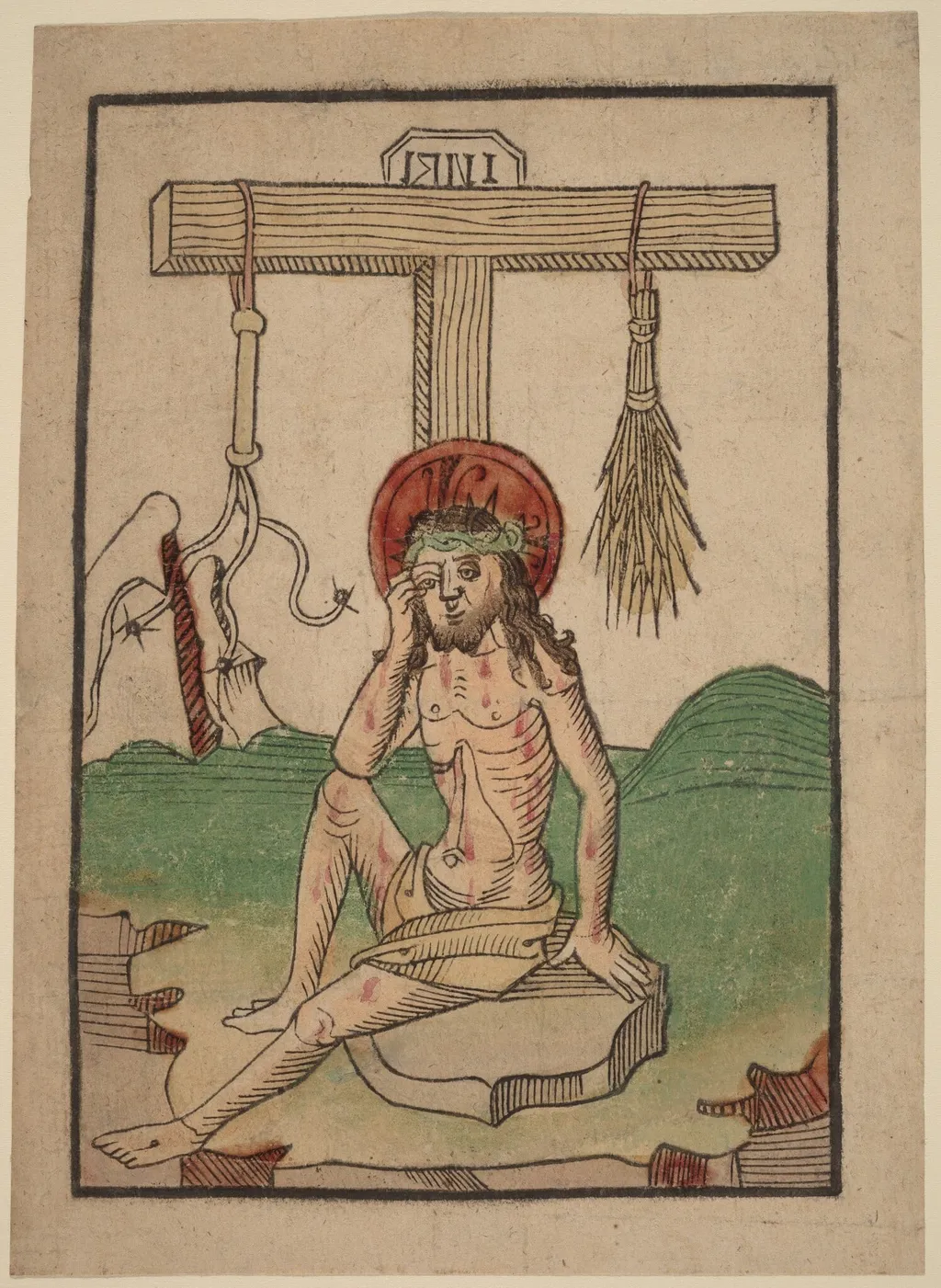
Christ as the Man of Sorrows is an ink print by the Renaissance artist Netherlandish 15th Century. It dates from 1480 and is held in the collection of the National Gallery of Art.
About this work
Overview
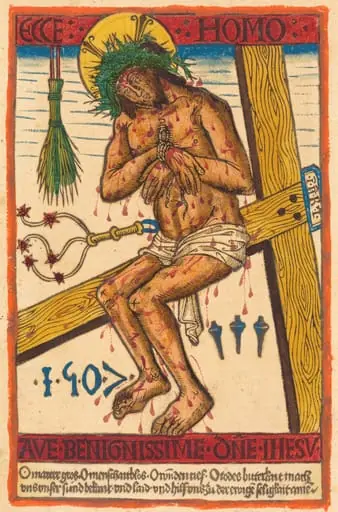
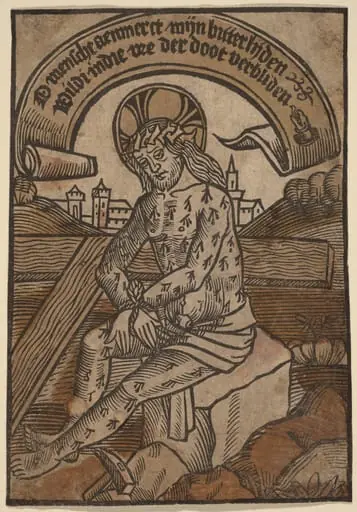
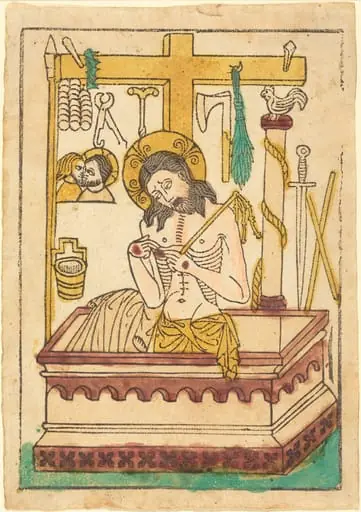
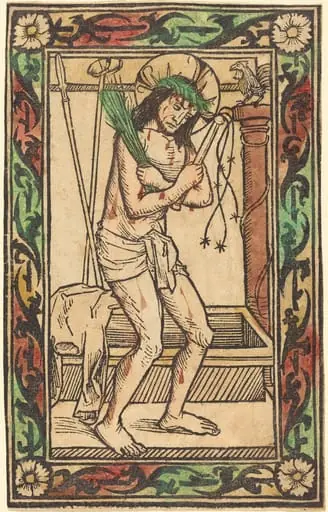
This woodcut depicts Christ as the Man of Sorrows, rendered in monochrome lines and hand-colored with green, yellow, red, and brown pigments on laid paper.
This woodcut depicts Christ as the Man of Sorrows, rendered in monochrome lines and hand-colored with green, yellow, red, and brown pigments on laid paper. Created using the woodcut technique, common in the 15th century, the image combines carved relief printing with delicate manual coloring. The composition centers on a seated Christ, surrounded by symbolic elements that convey suffering and redemption, typical of devotional imagery from the late medieval period.
Subject & Meaning
Christ is shown seated, crowned with thorns and bearing wounds marked by small red dots, evoking his physical torment. His folded hands suggest prayer and resignation. Behind him, the cross with its rope and sticks alludes to the crucifixion. To the left, a winged figure ascending a pole references the biblical story of the bronze serpent, symbolizing healing through faith. Together, these elements frame Christ’s suffering as redemptive and prophetic.
Technique & Style
The image was produced by carving the design into a wooden block, inking the raised surfaces, and pressing it onto paper. Fine lines define Christ’s form, while minimal shading and sparse color—applied by hand—accentuate key features. The style is restrained, prioritizing clarity and symbolic legibility over naturalism. This approach reflects the devotional function of the print, intended for private contemplation rather than public display.
History & Provenance
Though the exact origin and maker are unknown, the work aligns with German or Netherlandish devotional prints of the late 1400s. Such images were widely circulated among lay believers seeking personal connection to Christ’s passion. The use of hand-coloring suggests a modestly priced, yet carefully produced object, likely owned by a middle-class individual rather than a church institution.
Context
In the 15th century, woodcuts enabled the mass reproduction of religious imagery, supporting a growing culture of private piety. The Man of Sorrows motif, emphasizing Christ’s humanity and suffering, resonated with spiritual movements that encouraged emotional identification with the Passion. The inclusion of the bronze serpent—a typological prefiguration of Christ’s salvation—reflects contemporary theological interpretations linking Old and New Testaments.
Legacy
This print exemplifies how early print technology democratized access to sacred imagery, shaping personal devotion across social classes. Its simplicity and symbolic clarity influenced later devotional prints and illustrated religious texts. While not attributed to a major artist, it stands as a representative artifact of the era’s visual spirituality, preserving the quiet intensity of medieval piety through accessible means.
Artist & collection

Artist
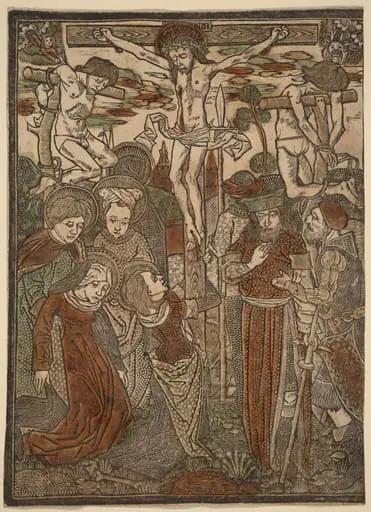
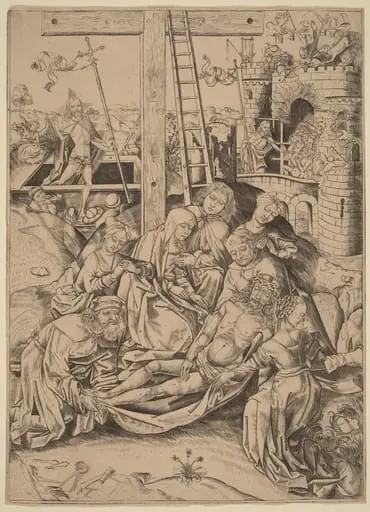
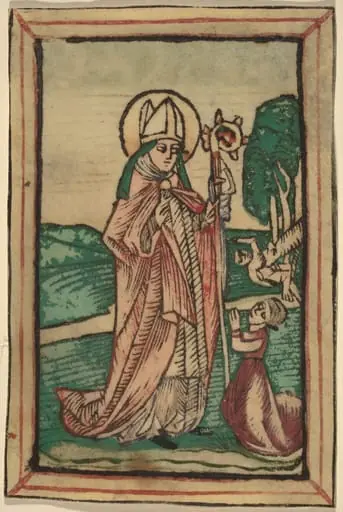
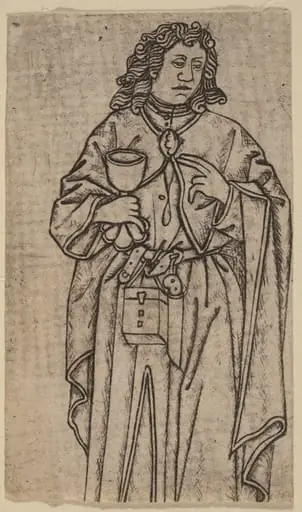
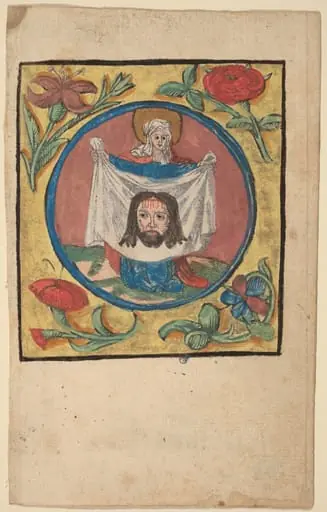
These prints show Christ’s suffering in bold, hand-colored images from 15th-century Northern Europe.