Artwork
Christ as the Man of Sorrows
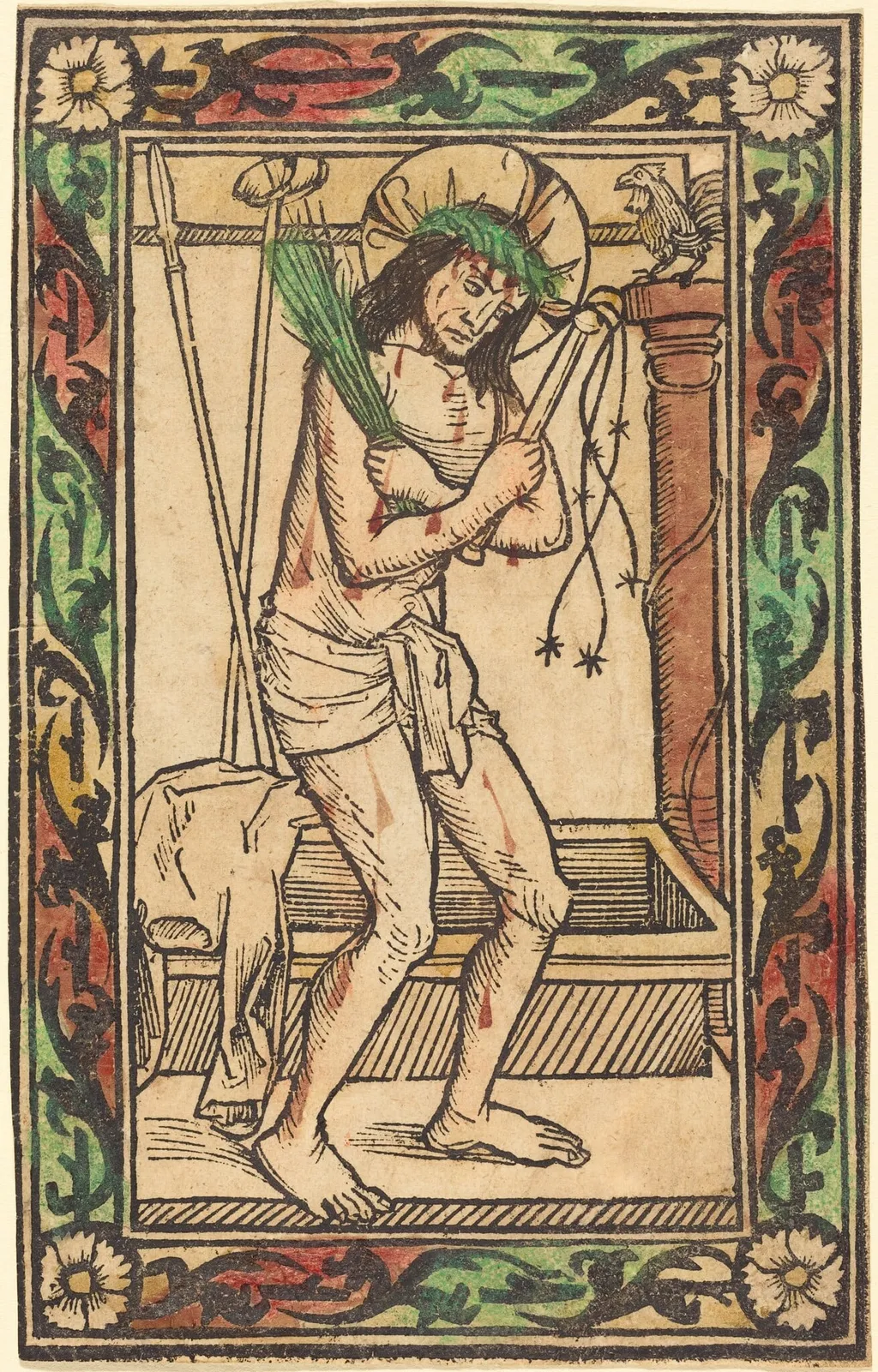
Christ as the Man of Sorrows is an ink print by the Renaissance artist German 15th Century. It dates from 1490 and is held in the collection of the National Gallery of Art.
About this work
Overview
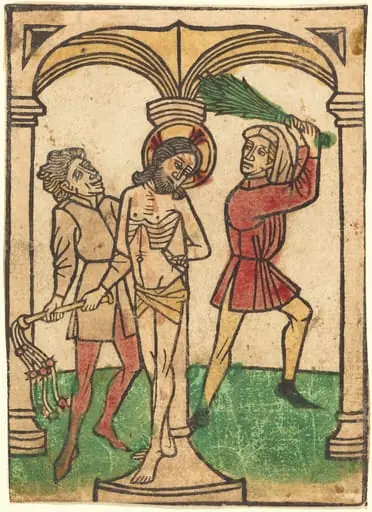
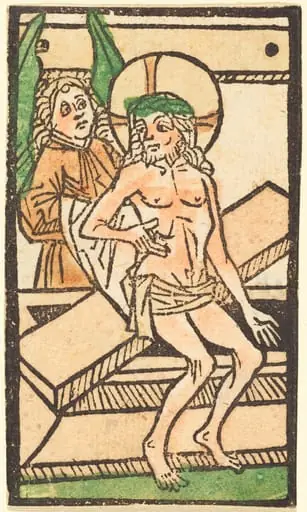
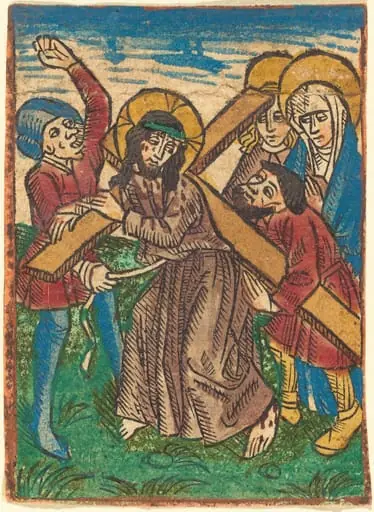
Christ as the Man of Sorrows is a hand-colored woodcut print depicting a poignant scene of Christ bearing the cross. The image features sharp lines, a stiff yet clear composition, and vibrant, hand-applied colors in red, green, and yellow, contrasting with the simplicity of the woodcut technique.
Subject & Meaning
The subject is Christ, portrayed as the Man of Sorrows, symbolizing his suffering. He is shown bare-chested, wearing a crown of thorns and wrapped in a waist cloth, carrying the cross. A small bird perched on a pillar in the background may allude to the Holy Spirit or innocence witnessing his ordeal.
Technique & Style
Executed as a woodcut, the piece showcases sharp, defined lines characteristic of the medium. The addition of hand-colored elements in red lake, green, and yellow introduces a layer of depth and vibrancy, distinguishing the colored areas from the printed outlines. The decorative floral patterns at the edges frame the scene in a traditional, ornate style.
Context
The use of woodcut, a popular printmaking technique during the medieval and early modern periods, suggests the work was likely intended for widespread dissemination of religious imagery. The hand-coloring indicates it may have been produced for a slightly more affluent audience or for special devotional purposes.
History & Provenance
Unfortunately, specific historical and provenance details for this particular woodcut are not provided, leaving its exact date, artist, and ownership history unclear. Further research would be necessary to contextualize it within the broader timeline of woodcut production.
Legacy
As a representative of religious woodcuts with hand-coloring, this piece contributes to the understanding of how early printmaking technologies were used to disseminate religious themes. Its style and technique reflect the transitional period between medieval and early modern European artistic practices.
Artist & collection

Artist
This 15th-century German artist carved vivid religious scenes into metal and wood, then hand-painted them in bright, symbolic colors.

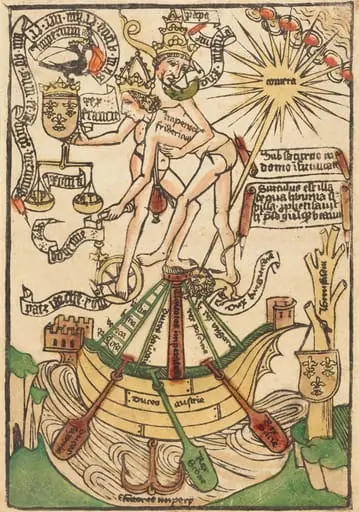 Allegory of the Meeting of Pope Paul II and Emperor Frederick III
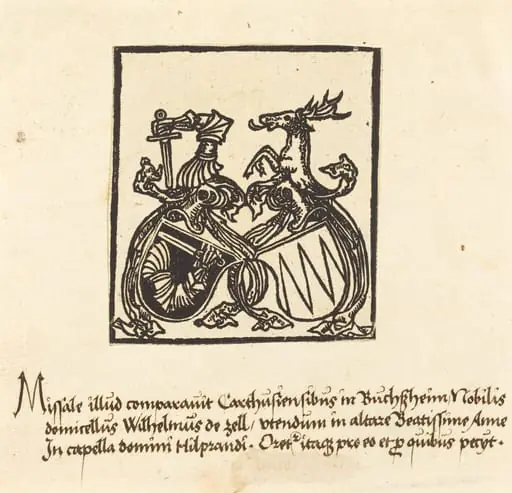 Bookplate of Wilhelm von Zell
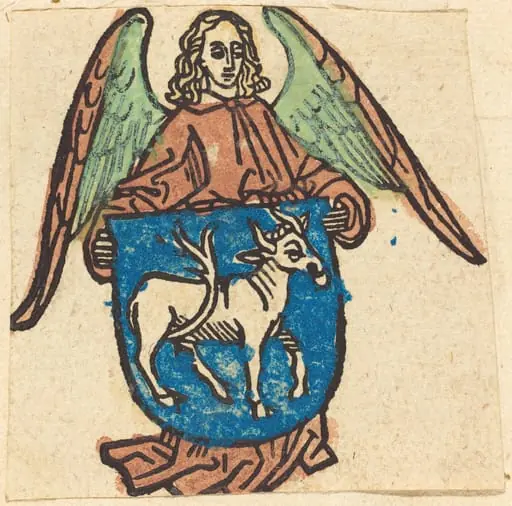 Bookplate of Hilprand Brandenburg of Bibrach
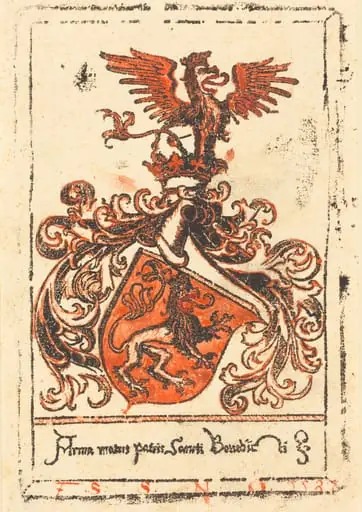 Bookplate of the Abbey of Ottobeuren
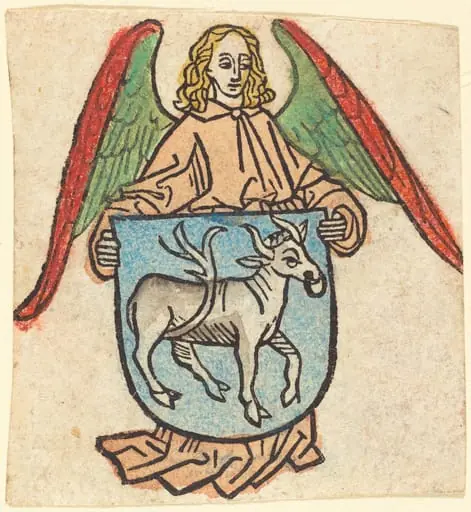 Bookplate of Hilprand Brandenburg of Bibrach
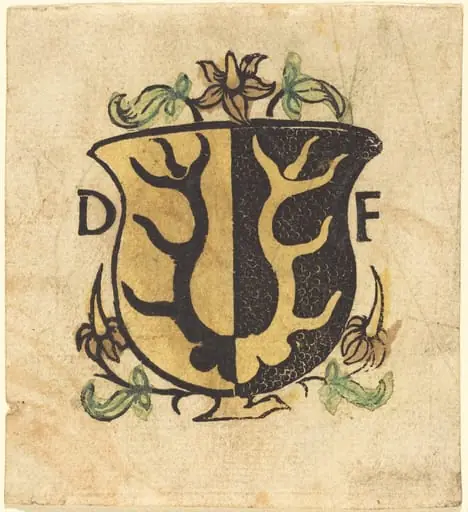 Bookplate of Dominicus Frauenfelder
![Studies for Six Figures (sheet from a model book) [recto], by German 15th Century](https://artifactworldgallery.com/img/german-15th-century--studies-for-six-figures-sheet-from-a-model-book-recto--4837429e0755bc3f-w320.webp) Studies for Six Figures (sheet from a model book) [recto]
Studies for Six Figures (sheet from a model book) [recto]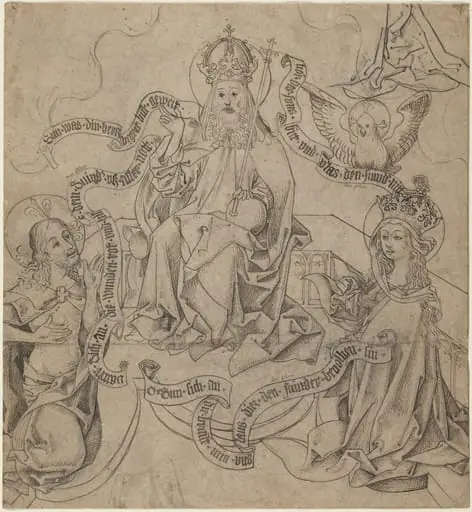 Christ and Mary Interceding with God the Father