Artwork
The Lamentation
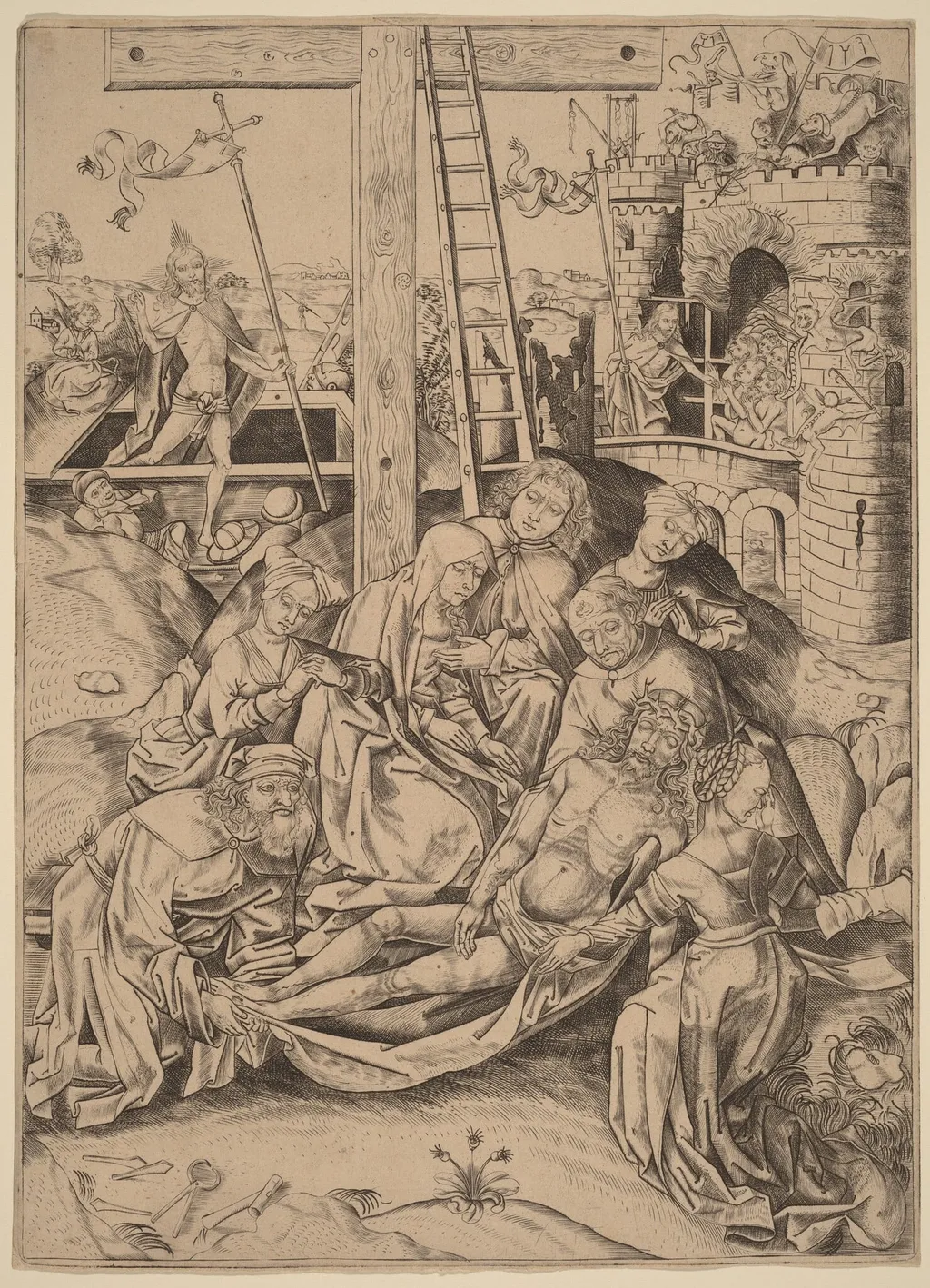
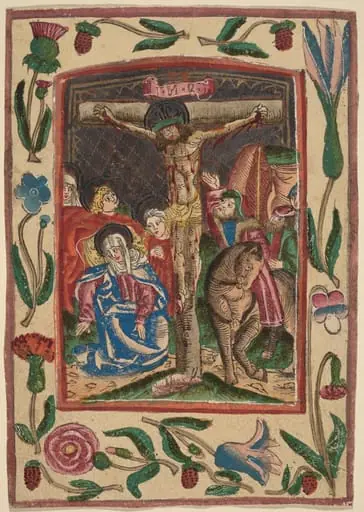
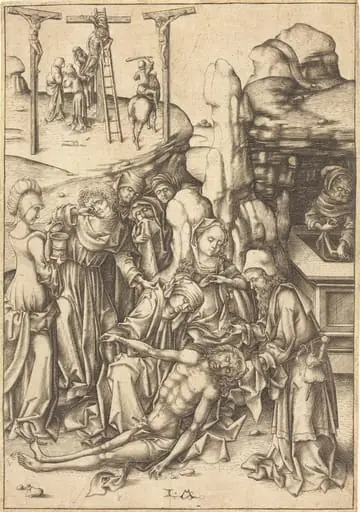
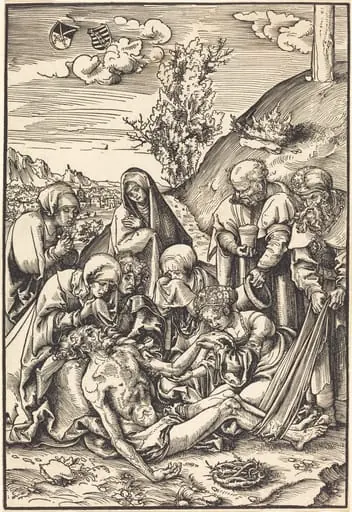
The Lamentation is an ink print by the Renaissance artist Netherlandish 15th Century. It dates from 1401 and is held in the collection of the National Gallery of Art.
About this work
Overview
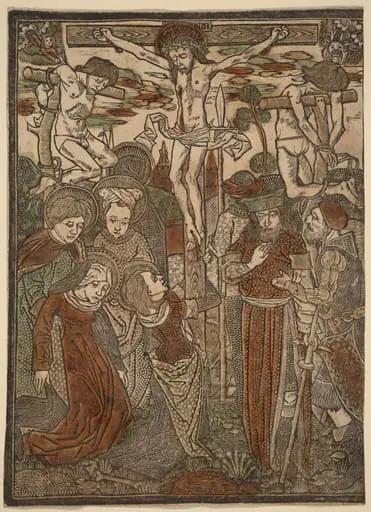
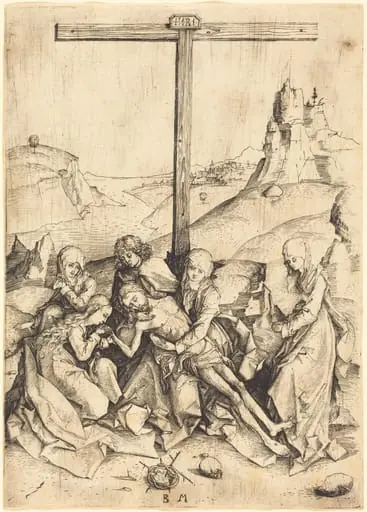
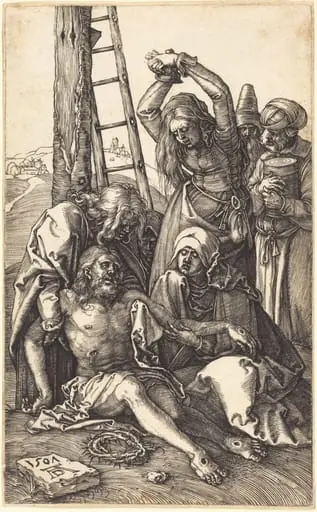
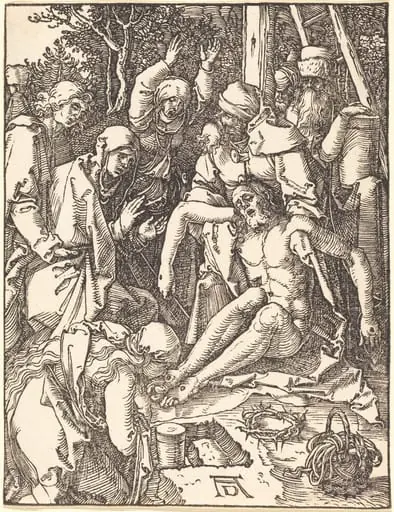
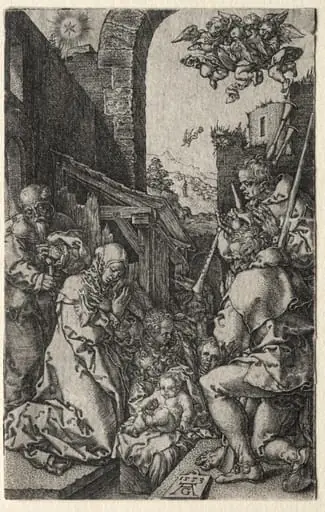
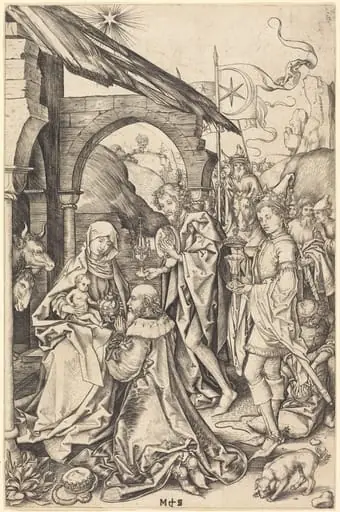
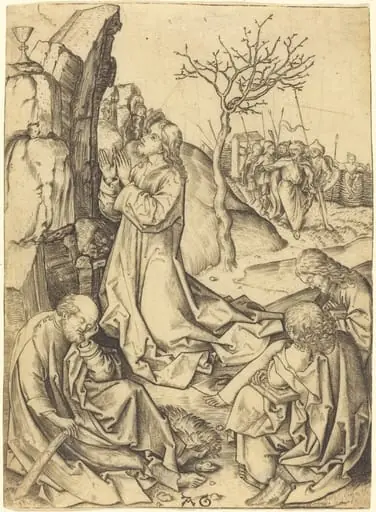
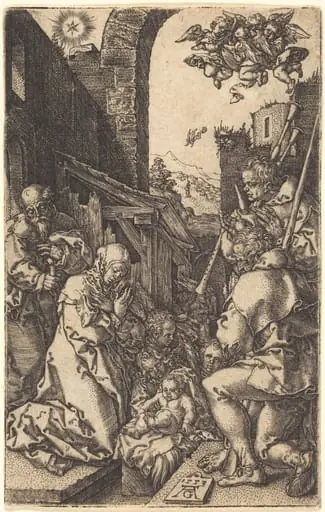
The work titled *The Lamentation* is an engraved print executed on laid paper. It depicts a somber assembly gathered around a supine figure, whose lifeless form is surrounded by mourners with uplifted hands. The composition is set against an unadorned, dark background that emphasizes the central drama without distraction.
Technique & Style
Created by incising a metal plate, the image was inked and transferred to paper, producing fine, crisp lines reminiscent of scratches. The artist employed dense cross‑hatching to model volume and shade, achieving depth through tonal variation rather than pigment. The result is a monochrome rendering that relies on line work to convey atmosphere.
Subject & Meaning
The scene portrays a communal response to death, focusing on the collective gesture of grief as figures lean over the fallen body. The raised hands suggest prayer or supplication, while the stark backdrop isolates the event, inviting contemplation of mortality and shared sorrow.
History & Provenance
The engraving is part of the collection of the National Gallery of Art in Washington, D.C. Its acquisition details are recorded in the museum’s holdings, where it is catalogued as a representative example of early printmaking techniques.
Context
Printed works like this were central to the dissemination of religious and moral narratives in the period before widespread painting reproduction. By translating a dramatic tableau into a reproducible medium, the artist enabled broader access to the visual representation of lament and devotion.
Artist & collection

Artist
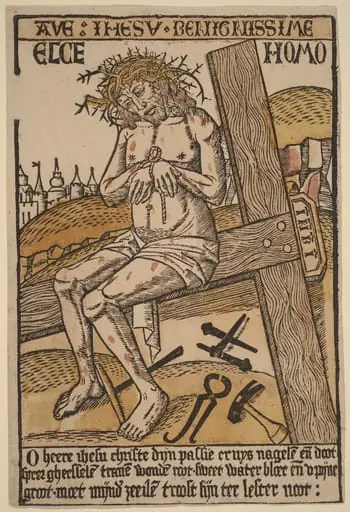
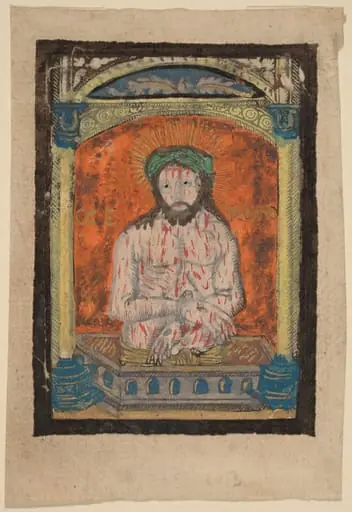
These prints show Christ’s suffering in bold, hand-colored images from 15th-century Northern Europe.