Artwork
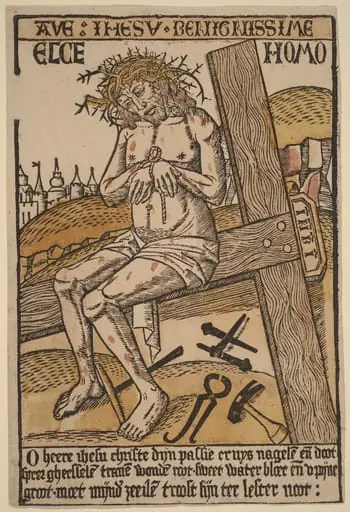
Christ as the Man of Sorrows
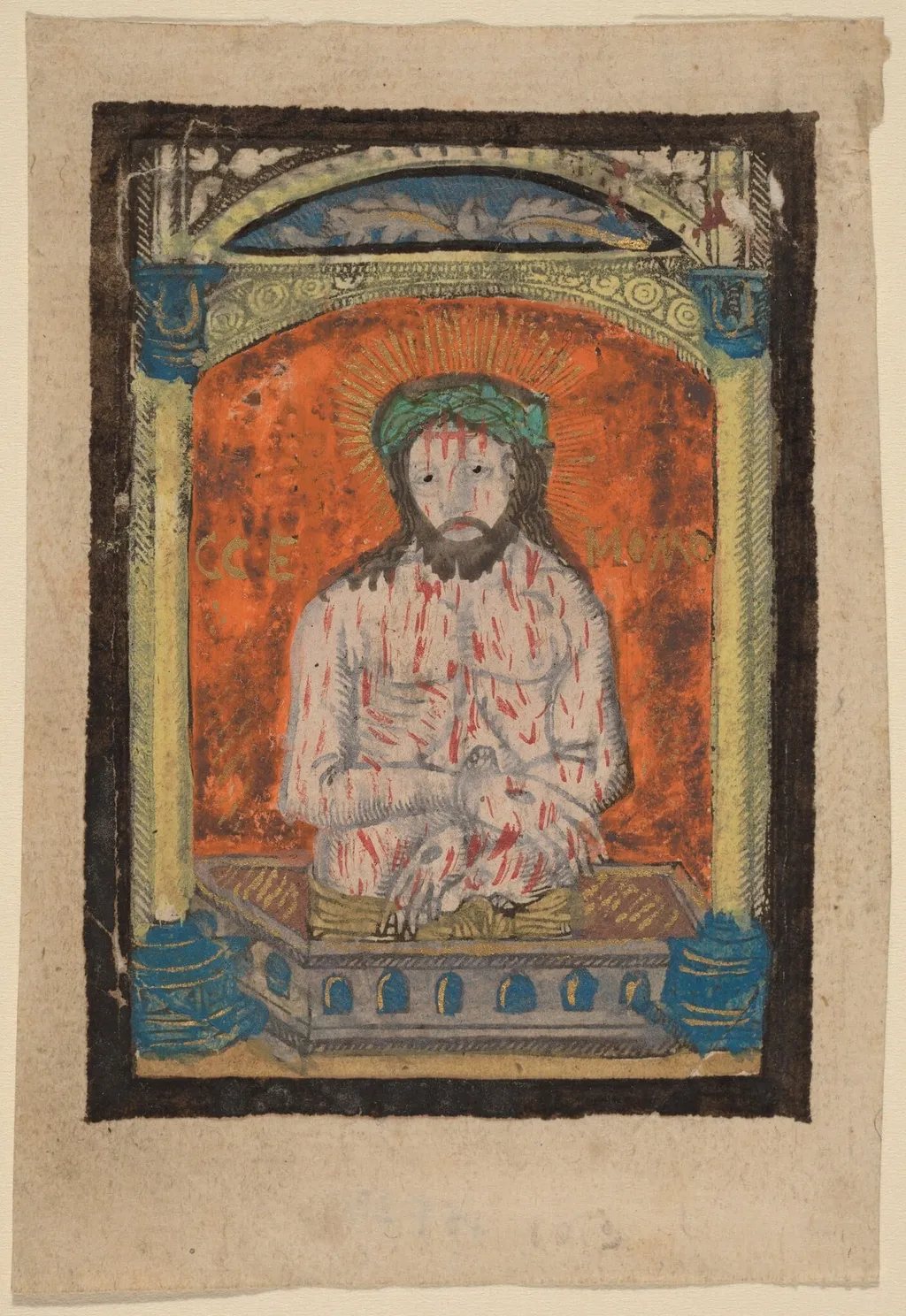
Christ as the Man of Sorrows is an ink print by the Renaissance artist Netherlandish 15th Century. It dates from 1401 and is held in the collection of the National Gallery of Art.
About this work
Overview
Rendered on laid paper, the composition centers on a seated figure with visible wounds, set against a vivid orange background and crowned by a golden halo.
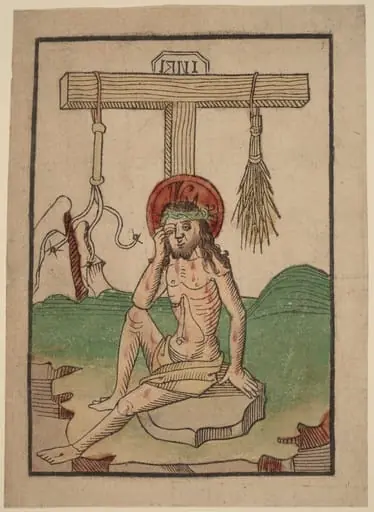
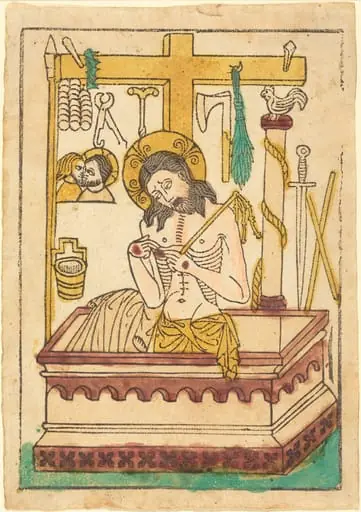
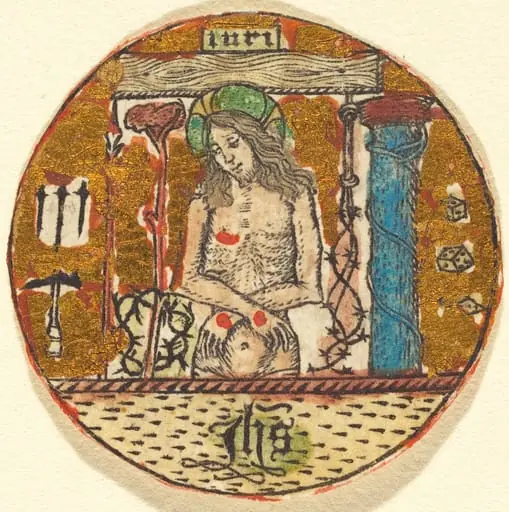
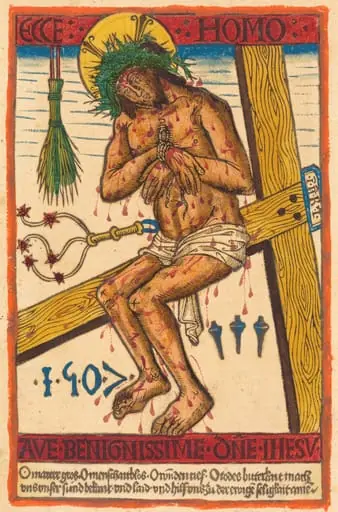
This hand-colored woodcut depicts Christ as the Man of Sorrows, a devotional image emphasizing his physical suffering. Rendered on laid paper, the composition centers on a seated figure with visible wounds, set against a vivid orange background and crowned by a golden halo. The use of color and carved linework reflects Renaissance printmaking traditions, where religious subjects were reproduced for private contemplation.
Subject & Meaning
The figure represents Christ in his post-crucifixion state, marked by red streaks symbolizing wounds from the Passion. Dressed in a white robe and green head covering, he sits on an ornate throne, evoking both royal dignity and human vulnerability. The image invites quiet meditation on sacrifice, a common theme in late medieval and Renaissance piety, where bodily suffering was visualized to deepen spiritual empathy.
Technique & Style
Created through woodcut, the image was carved into a wooden block, inked, and pressed onto paper, then manually colored with pigments. The bold outlines and flat planes reflect the limitations and strengths of the medium, while the bright orange background and gold halo enhance spiritual focus. The stylized throne and architectural elements in the upper border suggest a celestial setting, typical of devotional prints of the era.
History & Provenance
Though the exact origin and early ownership are undocumented, the work aligns with Northern European print production of the 15th or early 16th century. Similar images circulated widely among lay devotees, often bound in prayer books or displayed in homes. The hand-coloring indicates a higher-quality, possibly commissioned, version meant for personal devotion rather than mass distribution.
Context
This print emerged during a period when religious imagery became more accessible through print technology. The Man of Sorrows motif was especially popular in regions influenced by the Devotio Moderna, a movement encouraging intimate, emotional engagement with Christ’s suffering. Such images bridged the gap between monastic contemplation and lay spirituality, making sacred narratives tangible in domestic settings.
Legacy
The woodcut tradition of depicting Christ’s wounds influenced later devotional art across Europe, shaping how suffering was visually encoded in Christian iconography. While the medium gave way to engraving and etching, the emotional intensity and compositional clarity of such prints endured, laying groundwork for the visual language of Baroque religious imagery.
Artist & collection

Artist
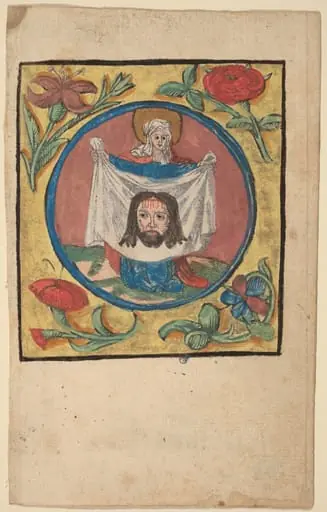
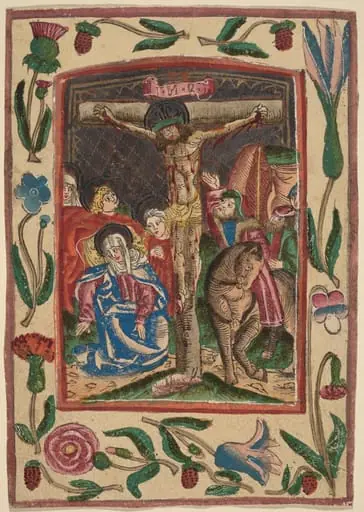
These prints show Christ’s suffering in bold, hand-colored images from 15th-century Northern Europe.