Artwork
Border Illustration with the Tree of Jesse
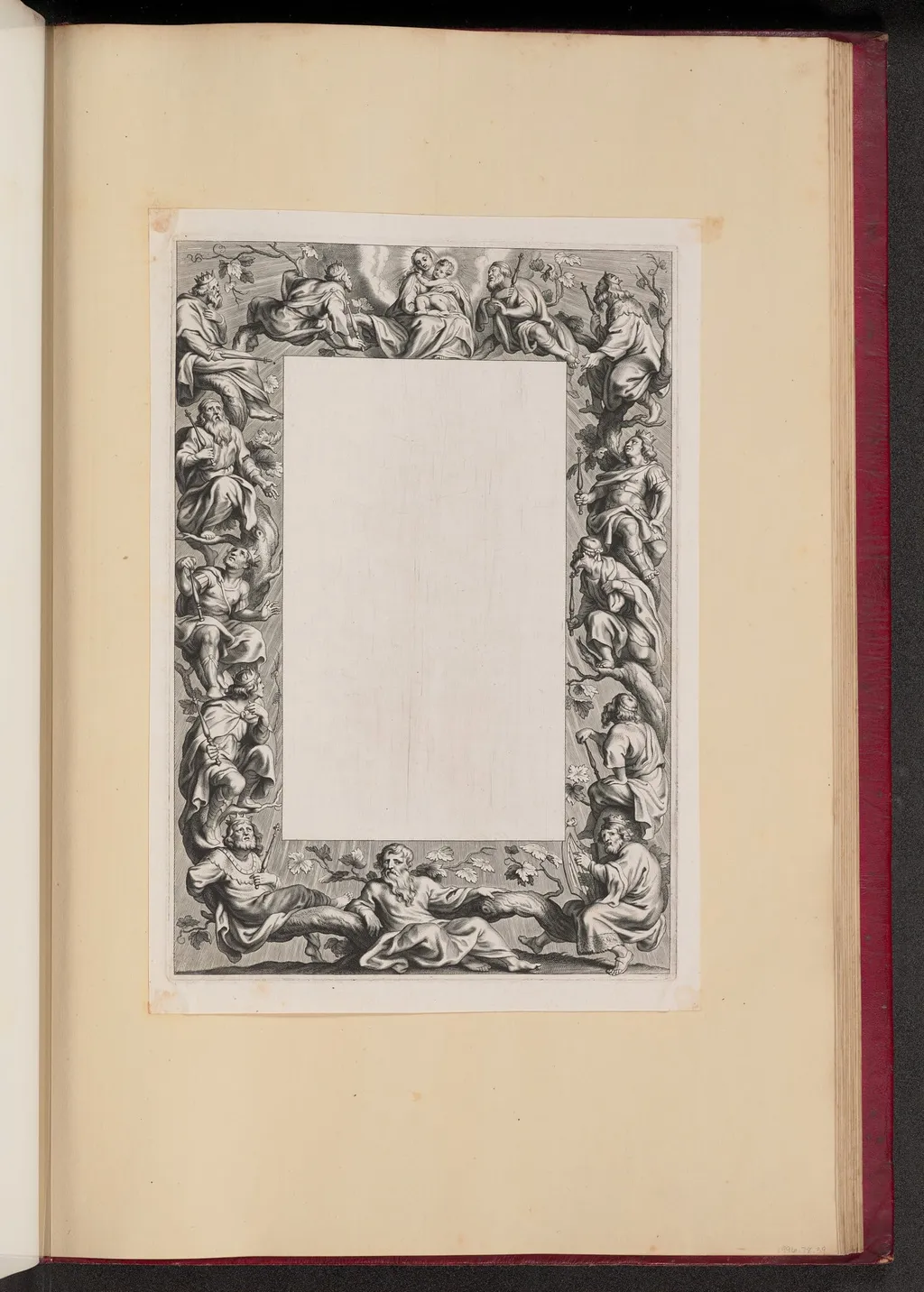
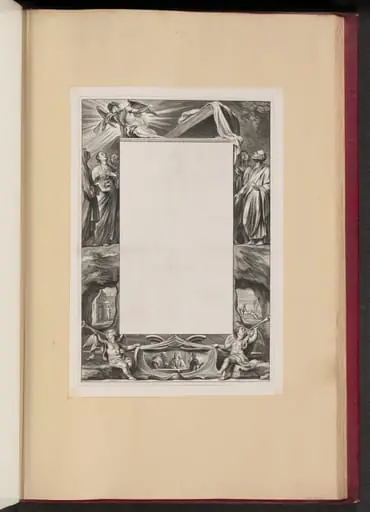
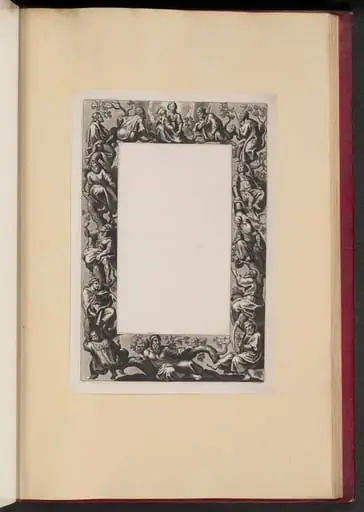
Border Illustration with the Tree of Jesse is an ink print by the Baroque artist Netherlandish 17th Century. It dates from 1613 and is held in the collection of the National Gallery of Art. This engraving on laid paper is a proof state, lacking inscriptions or lettering, suggesting it was pulled before final publication.
About this work
Overview
This engraving on laid paper is a proof state, lacking inscriptions or lettering, suggesting it was pulled before final publication.
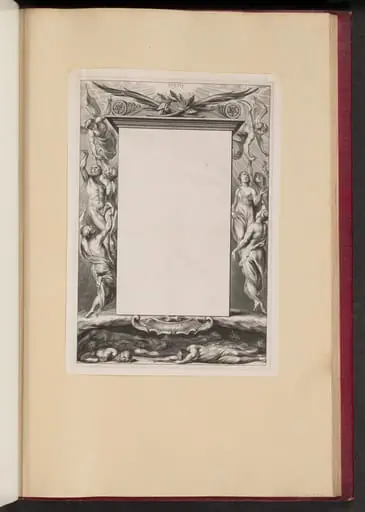
This engraving on laid paper is a proof state, lacking inscriptions or lettering, suggesting it was pulled before final publication. The composition centers on a large, unmarked void surrounded by a dense arrangement of figures. Rendered in monochrome, the scene unfolds along the margins, with no central image to anchor the narrative, creating an unusual visual tension between presence and absence.
Subject & Meaning
The figures encircling the empty center are arranged in a hierarchical, genealogical pattern, evoking the Tree of Jesse—a biblical lineage tracing Christ’s ancestry from Jesse, father of King David. The reclining figure at the base likely represents Jesse, while ascending figures symbolize his descendants, including kings and prophets. The void may indicate the future arrival of Christ, left intentionally unresolved as the culmination of the line.
Technique & Style
The image is executed in fine-line engraving, with delicate hatching and cross-contouring to define drapery and anatomy. Figures are rendered with elongated proportions and expressive gestures, typical of late medieval and early Renaissance printmaking. The density of detail around the perimeter contrasts sharply with the blank center, emphasizing compositional asymmetry and symbolic emptiness.
History & Provenance
As a proof before letters, this impression predates the final published version, likely used by the artist or publisher to review the design. It belongs to a tradition of Northern European religious prints from the late 15th or early 16th century, where biblical genealogies were popular subjects for devotional and educational use. Its survival in proof form suggests limited circulation, possibly held in private or workshop collections.
Context
During the late Middle Ages, the Tree of Jesse was a common motif in stained glass, manuscripts, and prints, used to visually affirm Christ’s divine lineage. Engravings like this served both liturgical and pedagogical functions, making complex theological concepts accessible to lay audiences. The absence of a central figure reflects a theological emphasis on anticipation rather than depiction, aligning with contemporary devotional practices.
Legacy
This print exemplifies the transition from manuscript illumination to print culture, where intricate narrative structures were adapted for reproducible media. Its preserved proof state offers insight into the artist’s process and the evolving role of visual symbolism in religious instruction. Though not widely known today, such works influenced later generations of Northern European printmakers and iconographers.
Artist & collection

Artist
This artist was born in the Netherlands in the early 1600s and made drawings and engravings.