Artwork
Border Illustration with Two Putti and Fruit
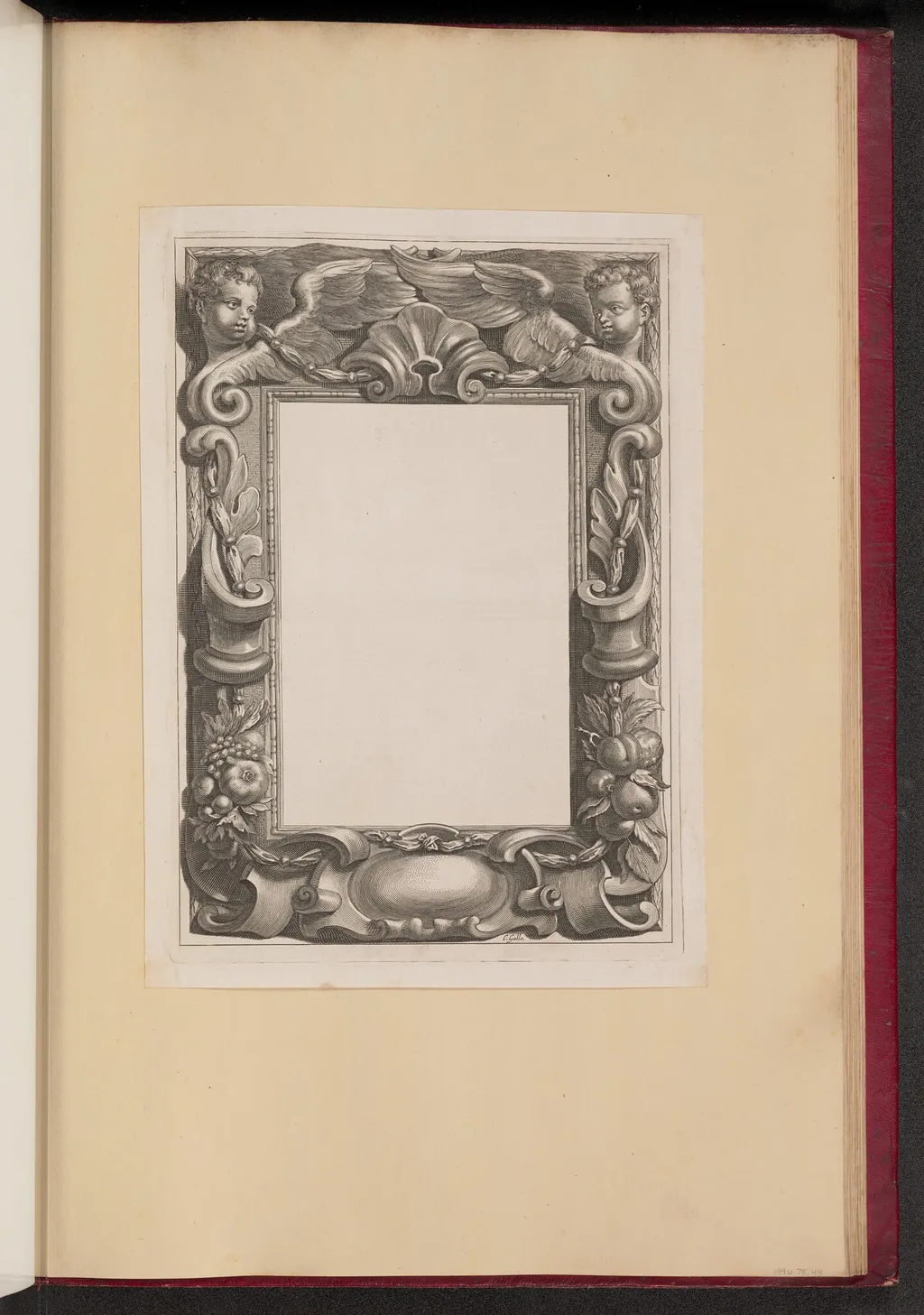
Border Illustration with Two Putti and Fruit is an ink print by the Baroque artist Cornelis Galle I. It dates from 1613 and is held in the collection of the National Gallery of Art. Created in 1613 by Cornelis Galle the Elder, this engraving on laid paper is an early proof, predating the addition of lettering.
About this work
Overview
This piece exemplifies his skill in translating ornamental motifs into fine linear engraving, serving as a decorative border rather than a standalone image.
Created in 1613 by Cornelis Galle the Elder, this engraving on laid paper is an early proof, predating the addition of lettering. Galle, trained in Antwerp and Rome, produced detailed prints both from his own designs and after works by others. This piece exemplifies his skill in translating ornamental motifs into fine linear engraving, serving as a decorative border rather than a standalone image.
Subject & Meaning
Two winged putti, their curls and musculature rendered with delicate precision, appear to support an empty rectangular frame. Above them, vines curl around clusters of grapes and pomegranates, while a shell rests at the base. The empty center suggests the print was intended as a frame for another image, possibly a portrait or religious scene, common in print culture of the period.
Technique & Style
Executed in fine-line engraving on a metal plate, the work demonstrates Galle’s mastery of controlled incisions to create texture and depth. The swirling foliage and soft modeling of the putti’s bodies rely on closely spaced hatching and cross-hatching. The use of laid paper, with its characteristic chain lines, indicates an early impression, capturing the crispness of the plate before wear or reworking.
History & Provenance
As a proof before letters, this impression likely served as a trial for the final print, possibly for review by a publisher or patron. Galle, active in Antwerp’s thriving print trade, often circulated such proofs among colleagues. Its survival suggests it was retained for its artistic merit rather than commercial use, offering insight into the production process of early 17th-century Northern European prints.
Context
In early 17th-century Antwerp, ornamental borders like this were widely used in printed books and single-sheet engravings to elevate the presentation of images. Galle’s work reflects the influence of Italian Mannerism, absorbed during his Roman training, and the demand for decorative prints among collectors and publishers seeking refined, allegorical motifs.
Legacy
Galle’s border designs, including this one, contributed to the standardization of decorative frames in printmaking. Though not widely exhibited as independent works, such engravings influenced later ornamentalists and book designers. Their technical precision and classical references remained touchstones for engravers well into the 18th century.
Artist & collection

Artist
Cornelis Galle the Elder (1576 – 29 March 1650), a younger son of Philip Galle, was born at Antwerp in 1576, and was taught engraving by his father.

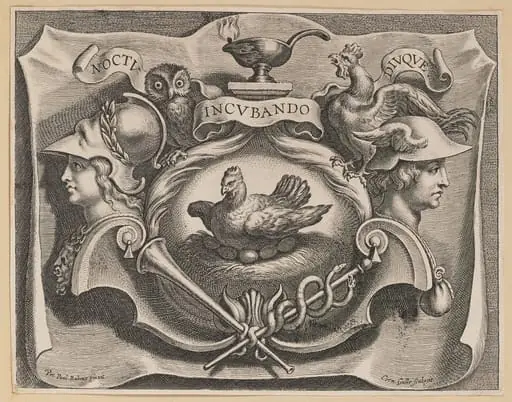 Vignette for the Title Page of Martinus Bonacina, Opera Omnia
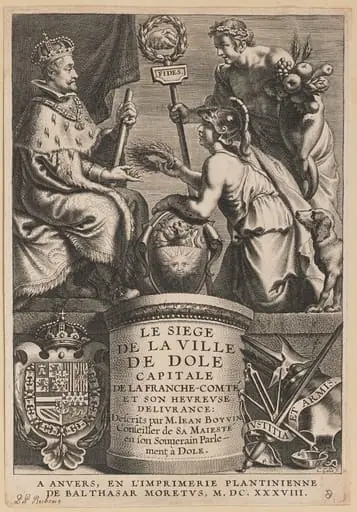 Title Page for Jean Boyvin, Le Siege de la Ville de Dole
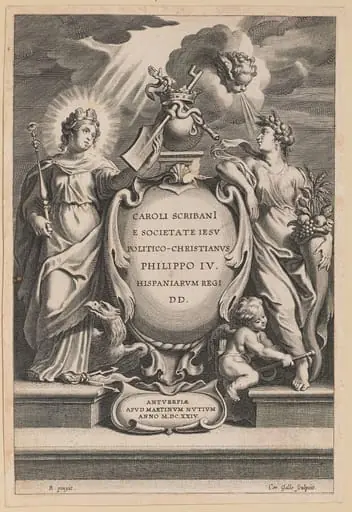 Title Page for Carolus Scribani, Politico-Christianus
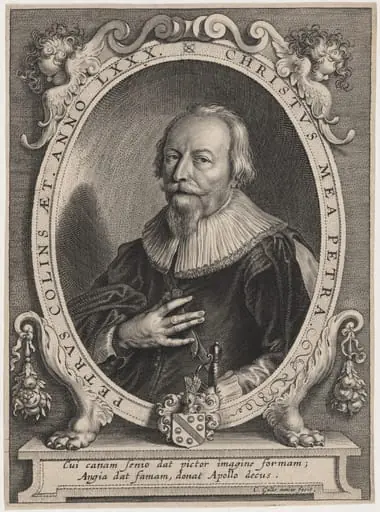 Petrus Collins
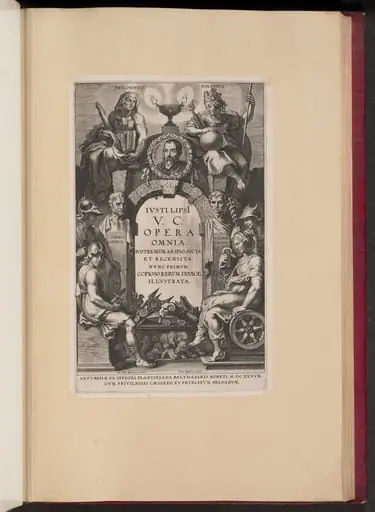 Title Page for Justus Lipsius, Opera Omnia, I
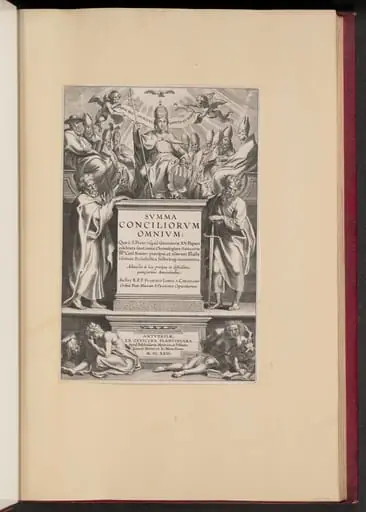 Title Page for F. Longo a Coriolano's "Svmma Conciliorvm Omnivm"
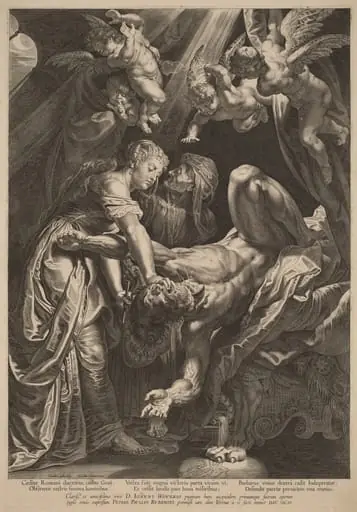 Judith Beheading Holofernes
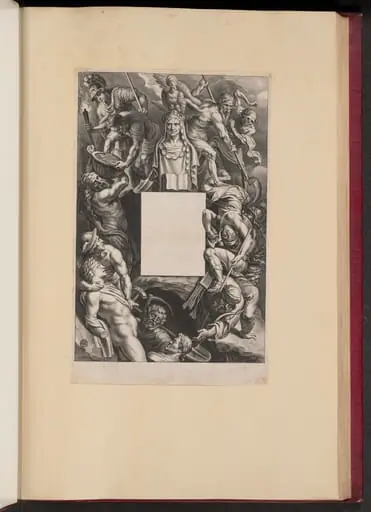 Title Page for Hubert Goltzius, Romanae et Graecae Antiqvitatis Monvmenta (Opera Omnia, I)
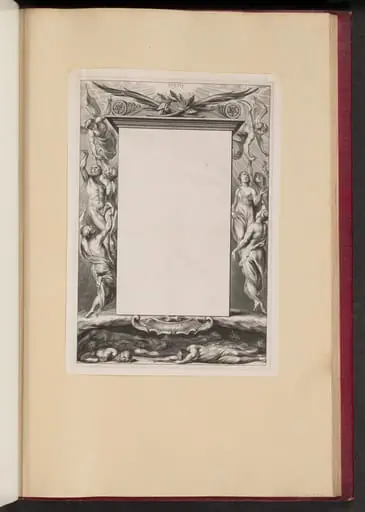 Border Illustration with Heaven and Hell "Corpora S.S."
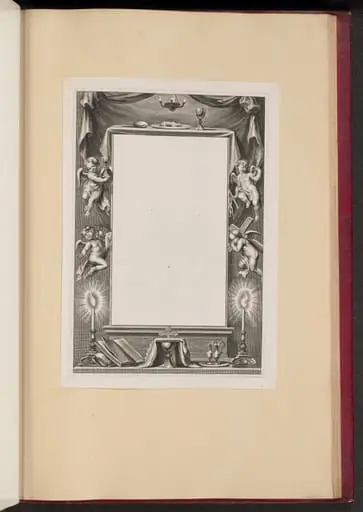 Border Illustration with Putti Holding the Attributes of the Passion
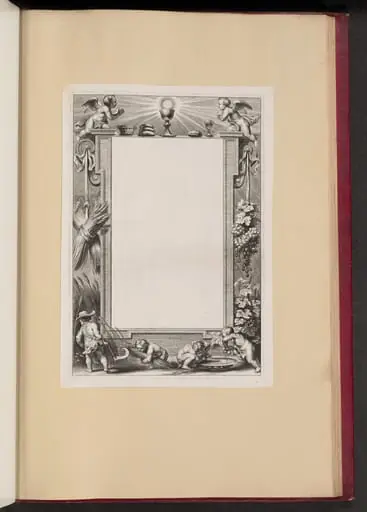 Border Illustration with Putti Harvesting Offerings to God
 Border Illustration with the Tree of Jesse
 Border Illustration for the Missale Romanum: The Tree of Jesse
 Border Illustration with Two Putti "Scientia, Fortitvdo, Pietas, Timor-DNI, Sapientia, Intellectvs, Consilivm"
 Border Illustration with the Ascension of Christ, Keys and Fish