Artwork
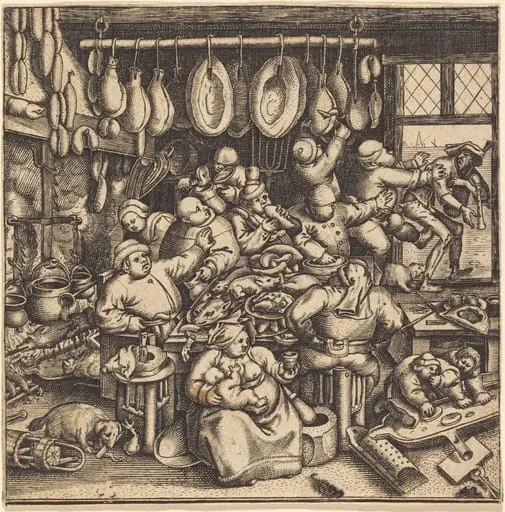
The Fat Kitchen
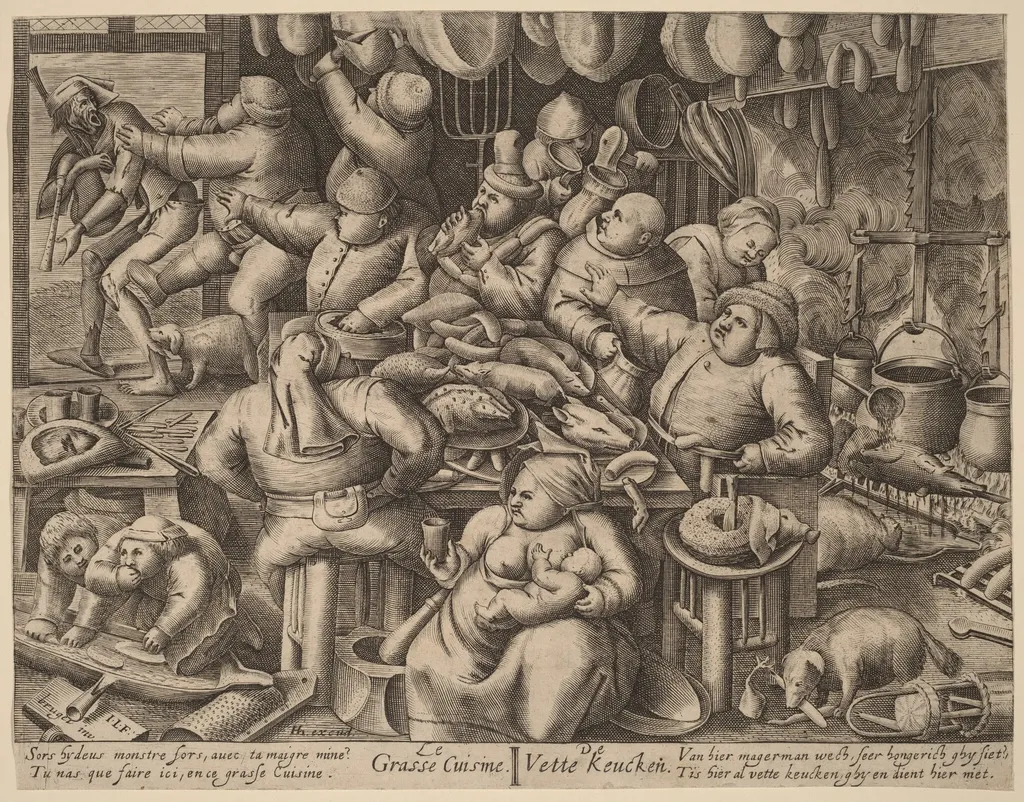
The Fat Kitchen is an ink print by the Renaissance artist Netherlandish 17th Century. It dates from 1597 and is held in the collection of the National Gallery of Art.
About this work
Overview
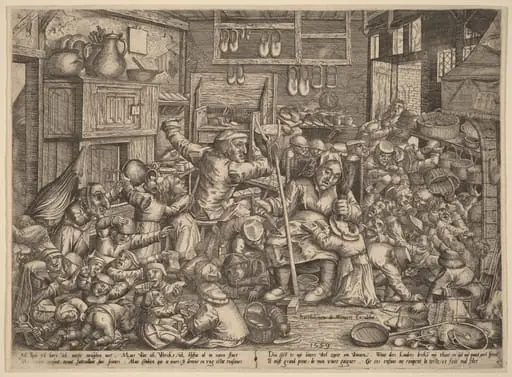
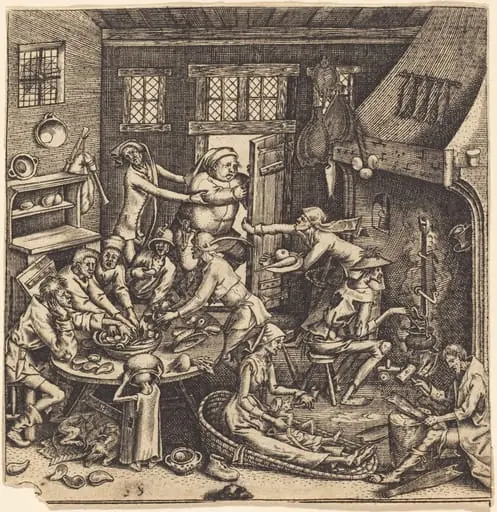
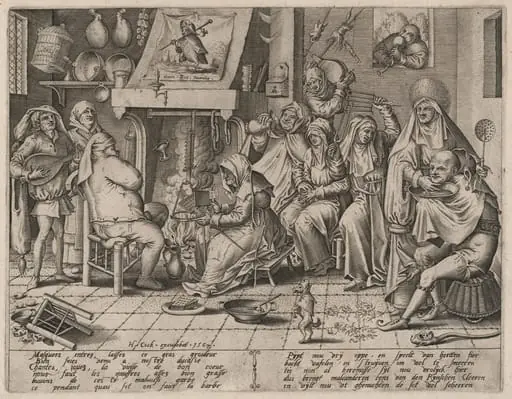
The Fat Kitchen is an early Dutch engraving executed on laid paper. The print presents a bustling kitchen interior crowded with figures engaged in the preparation and consumption of food. A cook stirs a large pot while others reach for bread and meat, and a dog rummages among the debris. The composition is dense, conveying a sense of abundance and disorder.
Subject & Meaning
The scene functions as a visual satire on gluttony and avarice. Figures are shown stuffing food into their mouths and even their pockets, suggesting excess. A small rat in the corner pilfers cheese, serving as a discreet moral warning against waste and greed. The inclusion of the dog and the chaotic activity reinforces the theme of overindulgence.
Technique & Style
The composition mirrors the narrative clarity of contemporary Dutch genre paintings, illustrating how prints could replicate and disseminate painted subjects.
Created through engraving, the work demonstrates the meticulous line work characteristic of the medium, allowing fine detail in the crowded interior. The artist employs cross-hatching to model forms and texture, achieving tonal variation on laid paper. The composition mirrors the narrative clarity of contemporary Dutch genre paintings, illustrating how prints could replicate and disseminate painted subjects.
Context
Produced in the Dutch Republic during the 17th century, the print reflects the period’s interest in moralizing genre scenes. Such works often commented on everyday life, using humor to critique social vices. The kitchen setting aligns with domestic interiors popular in Dutch art, while the satirical edge connects it to a broader tradition of didactic imagery.
Legacy
The Fat Kitchen exemplifies how printmaking expanded the reach of Dutch genre motifs beyond the confines of painted panels. By translating a complex, narrative scene into an affordable medium, it contributed to the diffusion of moral commentary among a wider audience. The work remains a reference point for studying the interplay between engraving technique and social critique in early modern art.
Artist & collection

Artist
This artist was born in the Netherlands in the early 1600s and made drawings and engravings.