Artwork
Exempel und Lehr Jetziger Welt Lauf
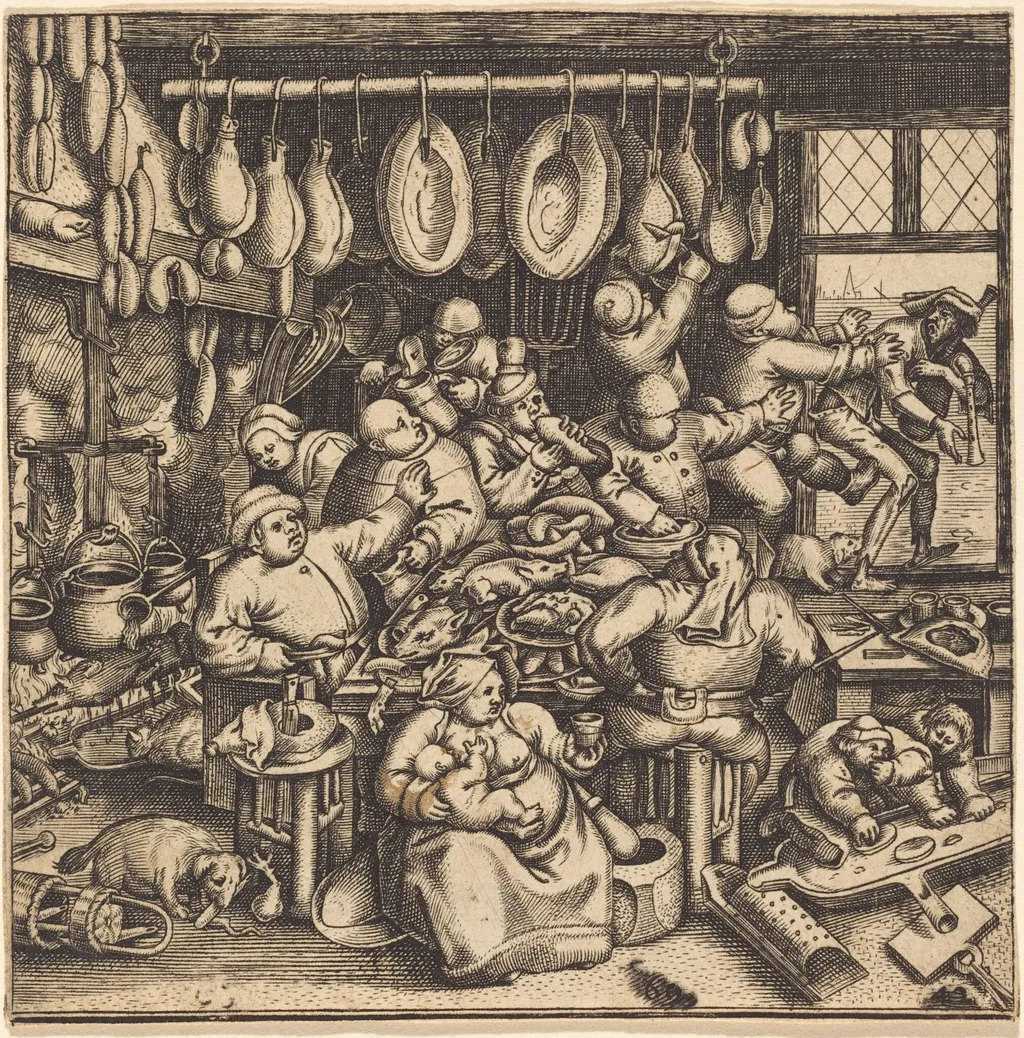
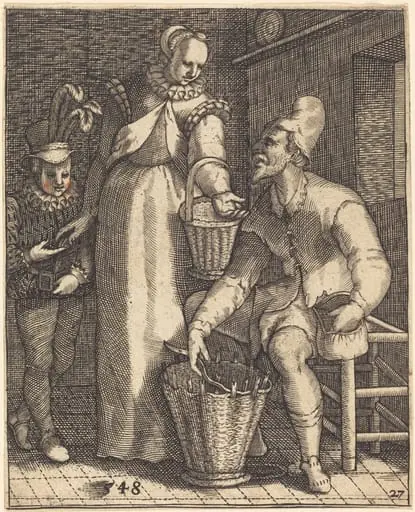
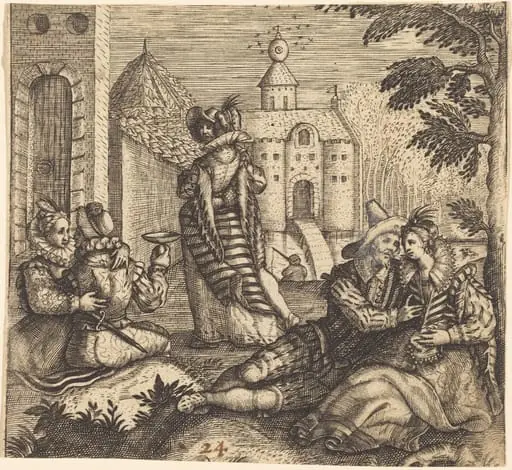
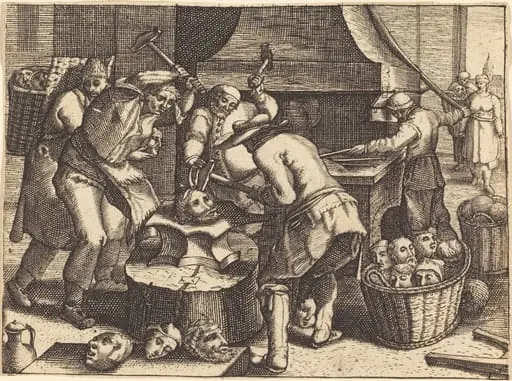
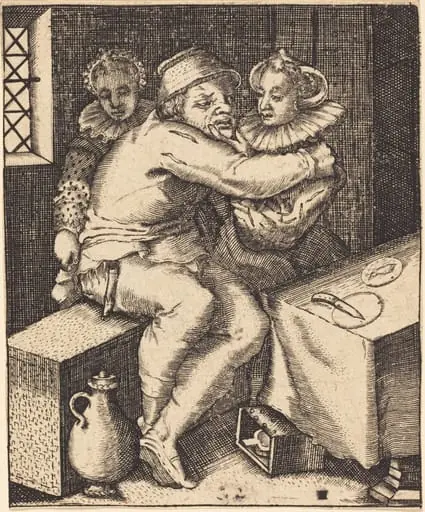
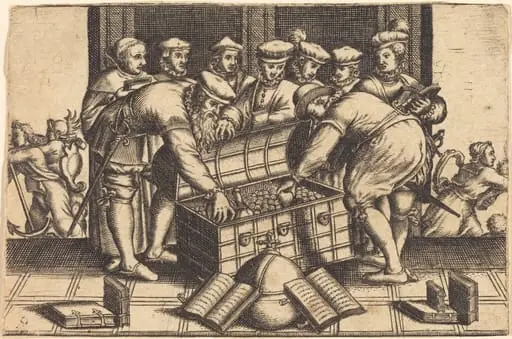
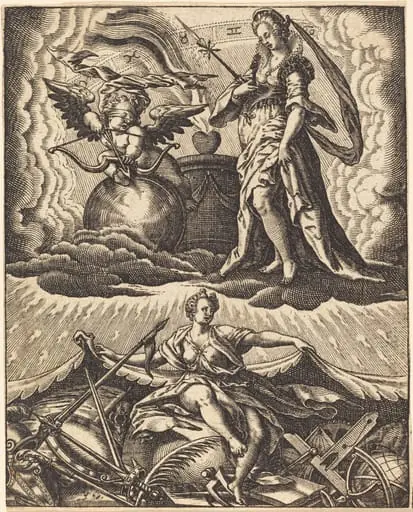
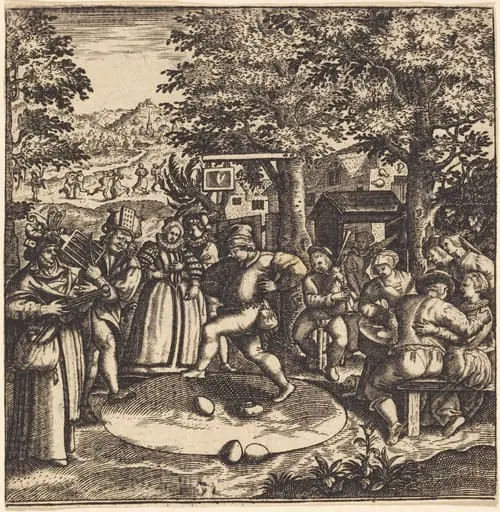
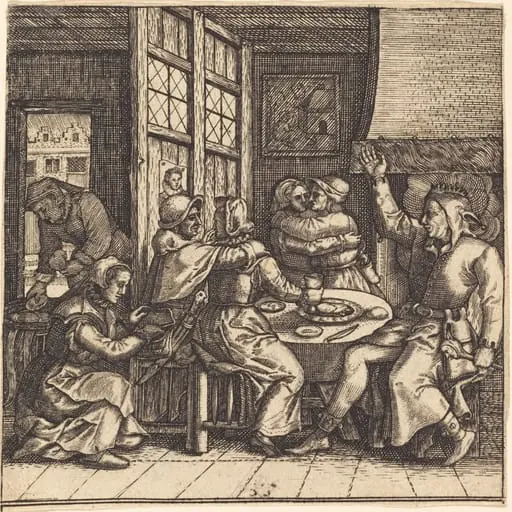
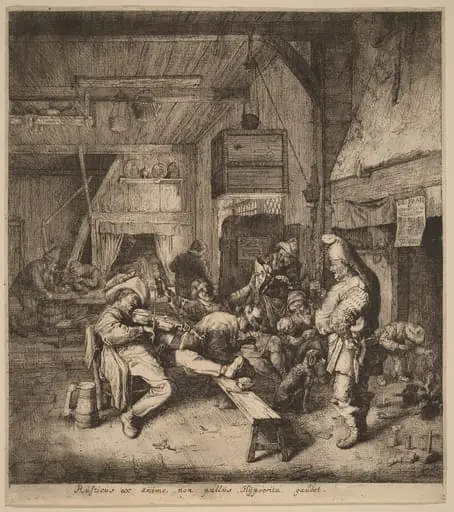
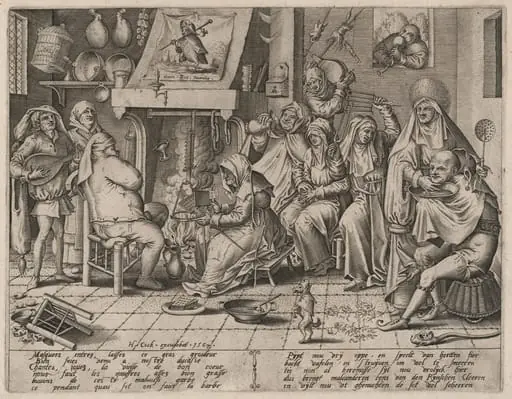
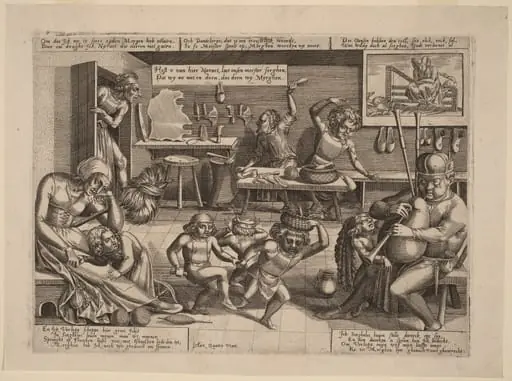
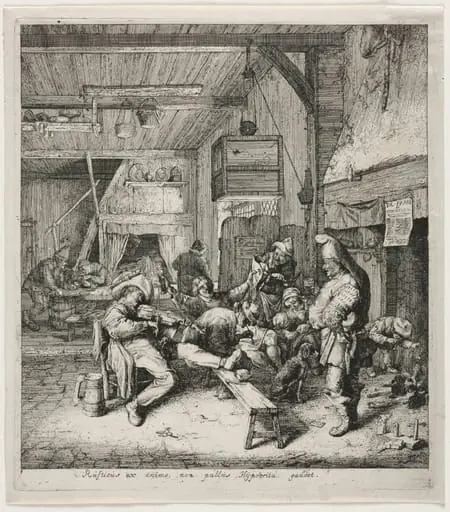
Exempel und Lehr Jetziger Welt Lauf is an ink print by the Baroque artist Andreas Bretschneider III. It dates from 1622 and is held in the collection of the National Gallery of Art.
About this work
Overview
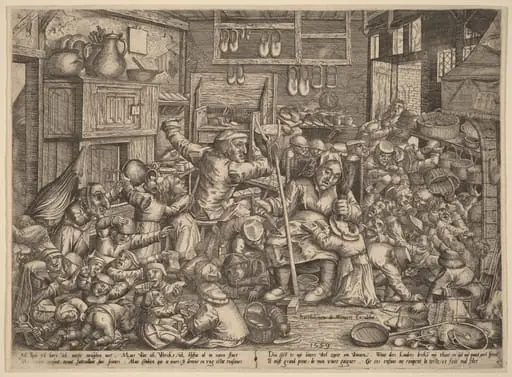
The composition conveys a sense of entrapment and disarray, with bodies overlapping and gestures suggesting distress or confusion.
Created in 1622 by Andreas Bretschneider III, this etching presents a densely composed scene of human disorder. The print captures a chaotic tangle of figures amid domestic objects—pots, pans, and tools—arranged in a cramped, shadowed space. The composition conveys a sense of entrapment and disarray, with bodies overlapping and gestures suggesting distress or confusion. Its intricate line work reflects the technical precision typical of early 17th-century German printmaking.
Subject & Meaning
The scene functions as a moral allegory, depicting the instability of worldly pursuits. Figures are shown entangled in everyday items, their postures implying helplessness or panic. The suspended, empty vessels above the crowd may symbolize the futility of material concerns. The torn clothing and disheveled forms reinforce a theme of societal or spiritual collapse, aligning with contemporary Protestant warnings against moral decay and earthly distraction.
Technique & Style
Executed in etching, the work employs fine, incised lines to build texture and depth. The artist uses dense hatching and cross-contouring to model forms within the confined space, enhancing the feeling of claustrophobia. Facial expressions are rendered with subtle gradations, capturing fear and surprise. The lack of clear spatial recession and the overlapping figures create a compressed visual field, typical of emblematic prints designed for symbolic impact over naturalism.
History & Provenance
The print originates from a period of religious and political upheaval in the Holy Roman Empire, shortly before the Thirty Years' War. Bretschneider, active in Nuremberg, produced works often aligned with moralizing Protestant traditions. While specific early ownership records are sparse, similar prints from this era circulated among urban elites as devotional or didactic objects, suggesting this piece was part of a broader genre of cautionary imagery.
Context
This print belongs to a tradition of German emblematic art that used visual allegory to convey ethical lessons. Contemporary publications, such as moralizing broadsheets and emblem books, frequently depicted chaos as a consequence of sin or neglect of divine order. The cluttered composition and symbolic objects reflect a cultural preoccupation with transience and the fragility of human endeavors during a time of widespread social unrest.
Legacy
Though not widely reproduced in later centuries, the work exemplifies the persistence of moral allegory in early modern print culture. Its dense, symbolic style influenced regional printmakers who continued to explore themes of disorder and divine judgment. Today, it remains a valuable artifact for understanding how visual media conveyed ethical concerns to literate urban audiences before the rise of mass printing.
Artist & collection