Artwork
The Rape of Europa
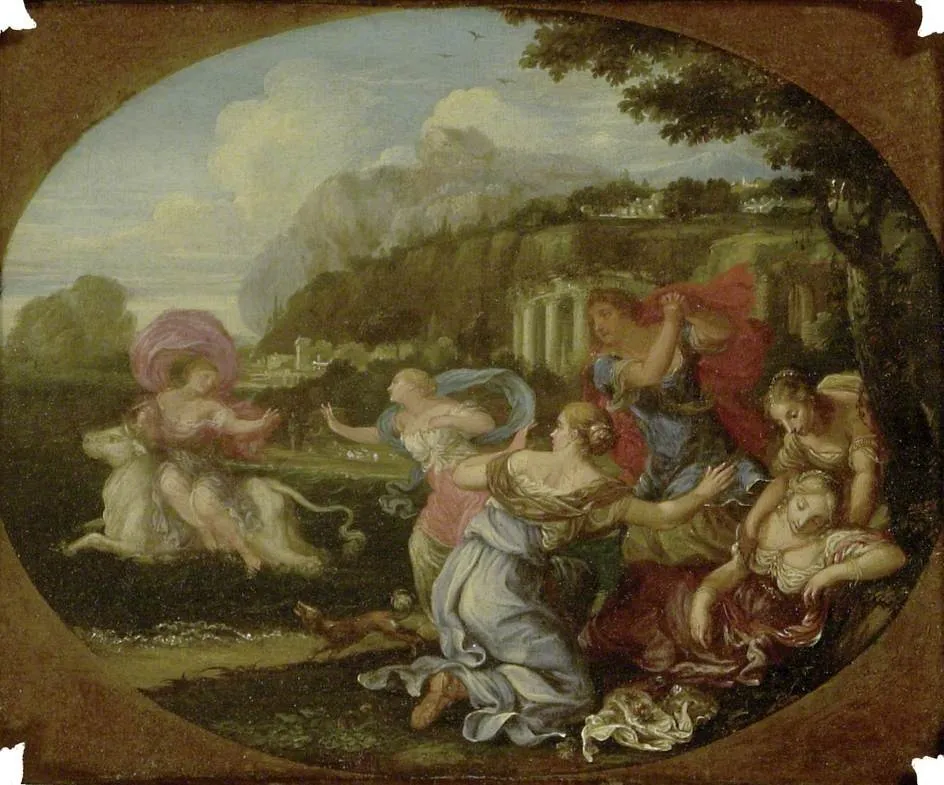
The Rape of Europa is an oil painting by the Early Baroque Italian artist Niccolò Berrettoni. It dates from 1669 and is held in the collection of the Ashmolean Museum.
About this work
Overview
It depicts a moment from classical mythology in which the goddess Europa is abducted by Zeus in the form of a bull.
Painted around 1669, The Rape of Europa is an oil on canvas work by Niccolò Berrettoni. It depicts a moment from classical mythology in which the goddess Europa is abducted by Zeus in the form of a bull. The painting is part of the Ashmolean Museum’s collection in Oxford, where it has remained since its acquisition. Its composition centers on a dramatic, emotionally charged scene set against a quiet natural backdrop.
Subject & Meaning
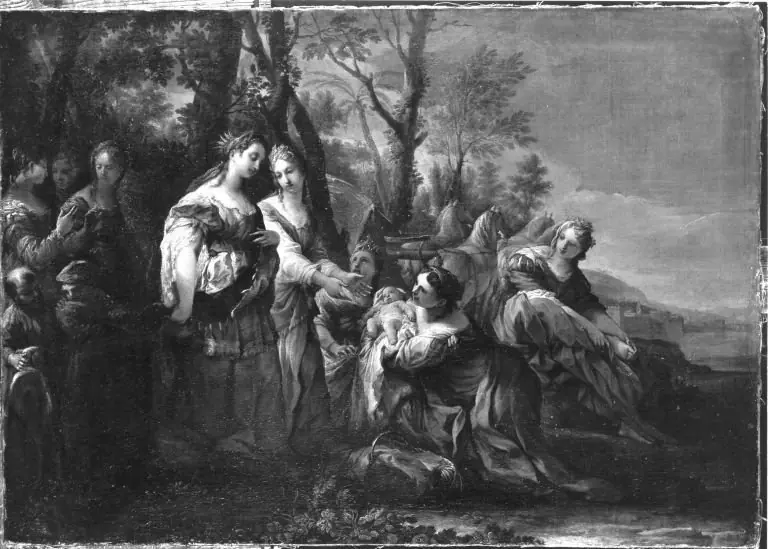
The scene illustrates Europa’s abduction by Zeus, who appears as a gentle bull, drawing her away from her companions. The women surrounding her express alarm and helplessness, their gestures emphasizing the violence of the moment. Though rooted in myth, the painting conveys human vulnerability and the capriciousness of divine power. The absence of the bull’s full form shifts focus to the emotional impact on the witnesses rather than the act itself.
Technique & Style
Berrettoni employs a restrained palette of earthy browns, muted greens, and soft blues to ground the scene in naturalism. Figures are rendered with soft contours and subtle tonal shifts, suggesting volume without overt dramatic lighting. The brushwork is delicate, avoiding the stark contrasts of chiaroscuro; instead, the mood is conveyed through composition and gesture, with figures arranged in a tight, unstable cluster to heighten tension.
History & Provenance
The painting entered the Ashmolean Museum’s collection in the 19th century, likely through the bequest of a private collector. Its attribution to Berrettoni has been consistently supported by stylistic analysis and archival records. No major alterations or restorations are documented, and the work retains its original surface and frame. It has been exhibited intermittently since its acquisition, primarily in thematic displays of Baroque mythological painting.
Context
Created in the late 17th century, the work reflects the enduring appeal of classical myths among Italian painters of the period. Berrettoni, active in central Italy, was influenced by Bolognese traditions that favored narrative clarity and emotional restraint over theatricality. This painting aligns with regional tendencies to treat mythological subjects with psychological nuance rather than grand spectacle, distinguishing it from more flamboyant Venetian or Roman interpretations.
Legacy
Though not widely known outside scholarly circles, The Rape of Europa contributes to the understanding of lesser-known Baroque painters who adapted classical themes with quiet intensity. Its preservation in a public institution ensures continued study of how mythological narratives were interpreted beyond the most celebrated masters. The work remains a quiet example of how emotional gravity could be conveyed through subtlety rather than spectacle.
Artist & collection
Artist
Niccolò Berrettoni (1637–1682) was an artist, born in Province of Pesaro and Urbino.