Artwork
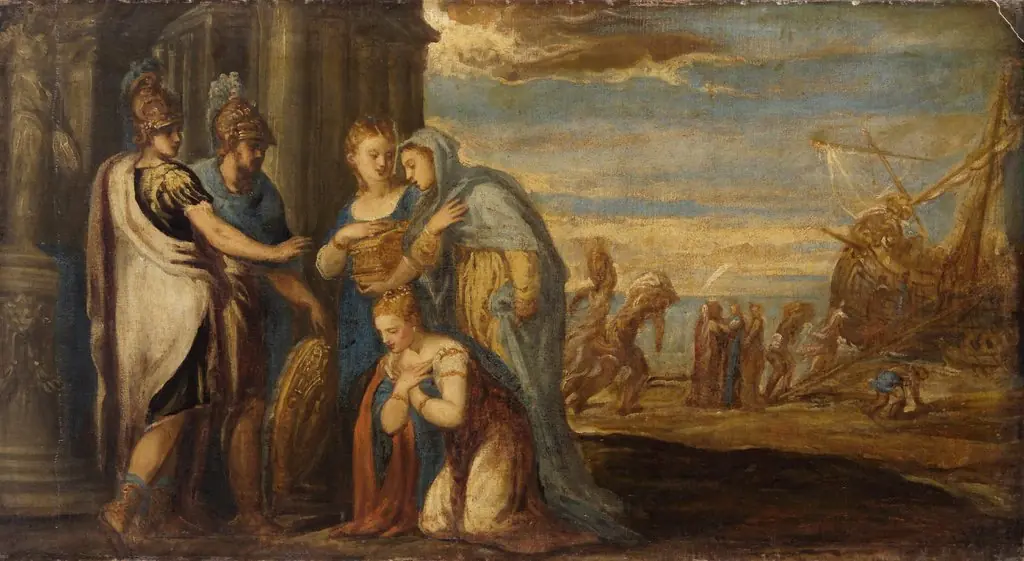
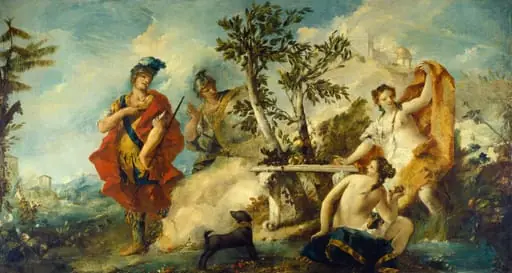
Aeneas called away from Dido
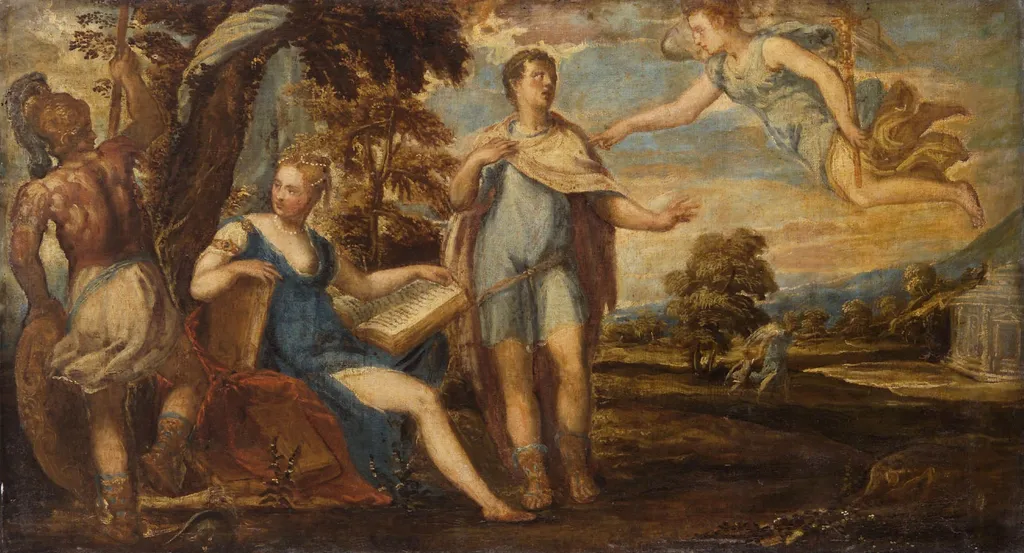
Aeneas called away from Dido is an unspecified painting by the Mannerist artist Andrea Schiavone. It dates from 1555 and is held in the collection of the Kunsthistorisches Museum.
About this work
Overview
The composition presents five figures in an open landscape, illuminated by a sky that holds two winged presences.
Andrea Schiavone’s 1555 oil on canvas, titled *Aeneas called away from Dido*, captures a pivotal episode from Virgil’s *Aeneid* in which the Trojan leader is ordered to depart Carthage, abandoning Queen Dido. The composition presents five figures in an open landscape, illuminated by a sky that holds two winged presences. The work is part of the permanent collection of the Kunsthistorisches Museum in Vienna.
Subject & Meaning
The central narrative follows Aeneas, shown in a blue cloak clutching a scroll, as he receives the summons to resume his destiny. Dido, kneeling in a matching blue dress, gazes downward, embodying grief and resignation. A muscular attendant with a spear leans against a tree, while the two ethereal winged figures above—interpreted as divine messengers—underscore the mythic weight of the departure.
Technique & Style
Schiavone merges the luminous color palette typical of Venetian painting with the elongated forms and complex poses characteristic of Mannerism. The figures display exaggerated musculature and elegant gestures, while the landscape—trees, a river, and a distant structure—provides a theatrical backdrop. The use of bright blues and the interplay of light on the scroll and jewelry enhance the scene’s dramatic tension.
History & Provenance
Born Andrea Meldolla in Dalmatia, Schiavone spent most of his career in Venice, where he cultivated a hybrid style. The painting entered the Kunsthistorisches Museum’s holdings in the early 20th century, having previously passed through private collections in Central Europe. Its accession record notes the work’s attribution to Schiavone and its dating to 1555.
Context
The episode depicted reflects the broader Renaissance fascination with classical literature and the moral dilemmas of duty versus love. By choosing this moment, Schiavone aligns with contemporary humanist interests, while the inclusion of celestial figures hints at the intervention of fate—a theme recurrent in Mannerist visual narratives.
Artist & collection
Artist
Andrea Meldolla (Croatian: Andrija Medulić), also known as Andrea Schiavone or Andrea lo Schiavone, literally "Andrew the Slav", (c.