Artwork
Staircase at Thorpe Ash Hall
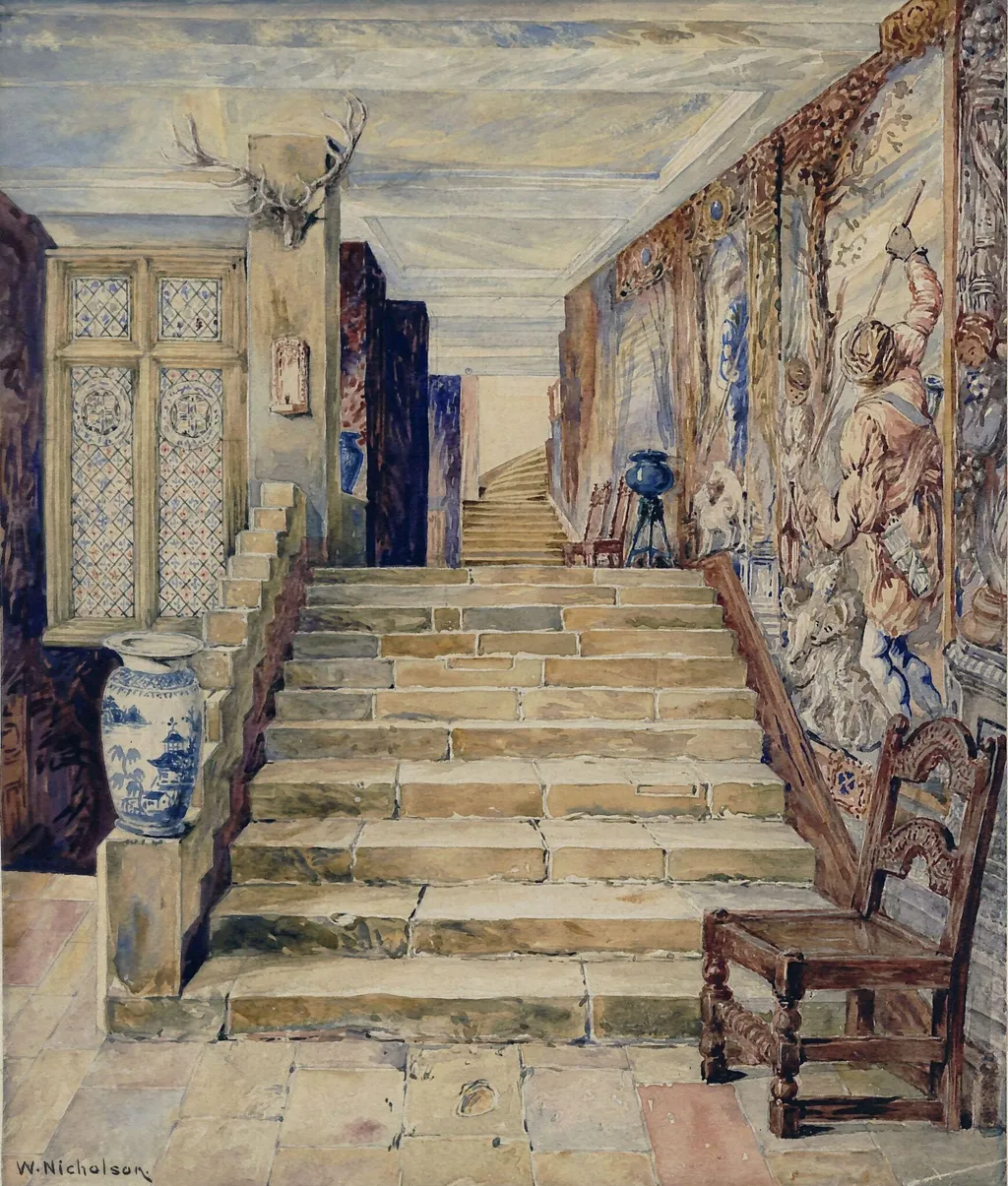
Staircase at Thorpe Ash Hall is a watercolor work on paper by William Nicholson. It dates from 1850 and is held in the collection of the Victoria and Albert Museum.
About this work
Overview
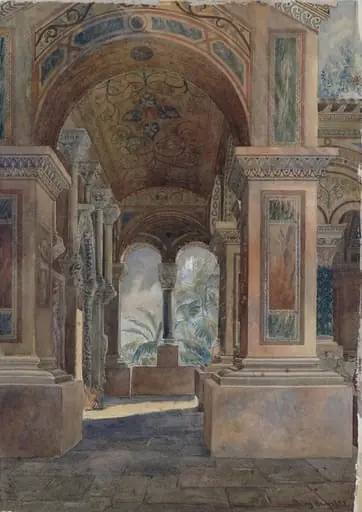
William Nicholson’s 1850 watercolour captures the interior of a grand staircase at Thorpe Ash Hall. Executed in transparent washes, the work records architectural detail with quiet precision. The artist’s signature confirms authorship, and the medium’s inherent delicacy tempers the imposing scale of the space, creating a restrained yet evocative record of a domestic interior.
Subject & Meaning
The composition centers on a stone staircase flanked by ornate tapestries and a blue-and-white porcelain vase on a pedestal.
The composition centers on a stone staircase flanked by ornate tapestries and a blue-and-white porcelain vase on a pedestal. A wooden chair rests against the wall, suggesting recent use or quiet abandonment. These elements imply a lived-in aristocratic setting, where function and display coexist. The absence of figures amplifies a sense of stillness, inviting contemplation of the space’s social and aesthetic role.
Technique & Style
Nicholson employs watercolour with subtle layering to render light filtering through unseen windows. The stone steps gain depth through graded washes, while the tapestries are suggested with soft, blurred edges. The wooden railing and chair are defined with fine, dry brushwork. The medium’s translucency enhances the airy quality of the scene, balancing architectural solidity with atmospheric light.
History & Provenance
The painting originates from Thorpe Ash Hall, a country house in Norfolk, and was likely created during a period of renovation or documentation. Its survival suggests it was retained within the family or estate collection. No public record of early exhibitions exists, and its provenance remains tied to private ownership until its later appearance in institutional archives.
Context
In mid-19th century England, watercolour was increasingly used for architectural records by amateur and professional artists alike. Nicholson’s work aligns with this trend, reflecting a growing interest in documenting domestic interiors as expressions of taste and lineage. Unlike grand oil paintings of the era, this piece prioritizes intimacy over monumentality, capturing the quiet dignity of private spaces.
Legacy
The watercolour stands as a modest but significant example of topographical art from the period. It contributes to the visual record of English country house interiors, offering insight into material culture and spatial design. While not widely exhibited, its preservation underscores its value as a documentary artifact rather than a celebrated work of fine art.
Own this work as a print
Artist & collection
Artist
British printmaker William Nicholson turned everyday objects into bold, graphic art.

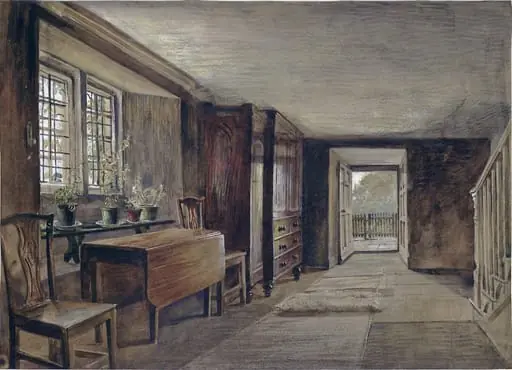 The Entrance Hall of Mortham Tower, Rokeby, Yorkshire
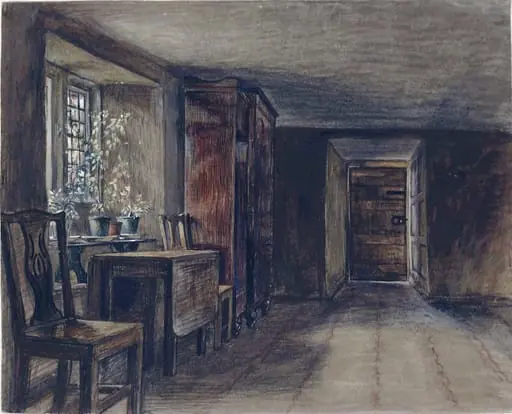 The Entrance Hall of Mortham Tower, Rokeby, Yorkshire
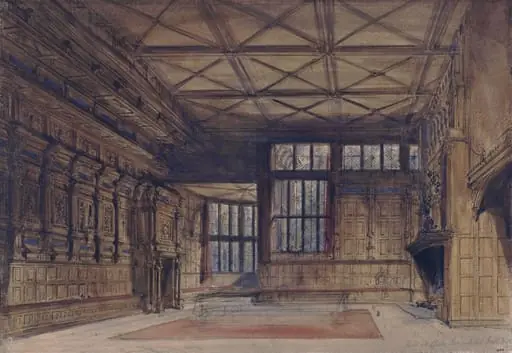 The Hall at Speke, Lancashire
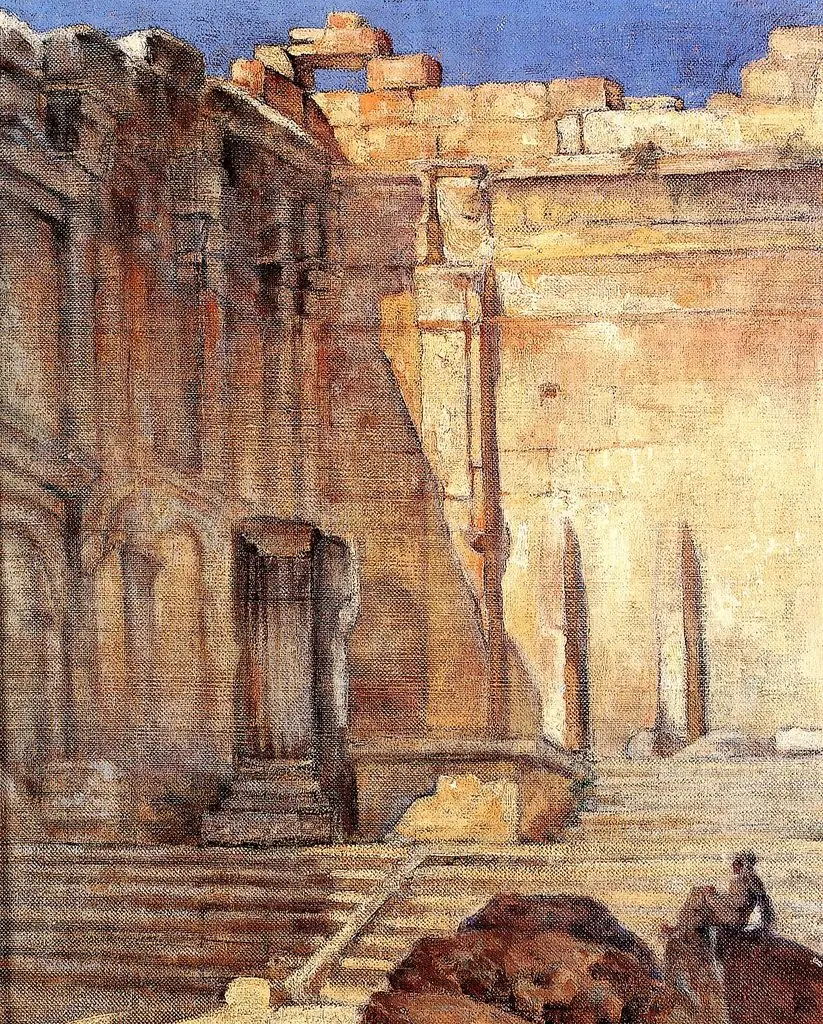 Baalbek, Temple of Bacchus (2)
 Stage Setting for 'Twelfth Night' by William Shakespeare
 The Interior of the Great Hall, Greenwich
 Grange Farm, The Abbot's House, Wigmore Abbey remains
 Music Gallery, St. Michael's Church, Bishop's Cleeve
 Interior of the Byzantine Court