Artwork
Staircase of Francis I, Château de Blois
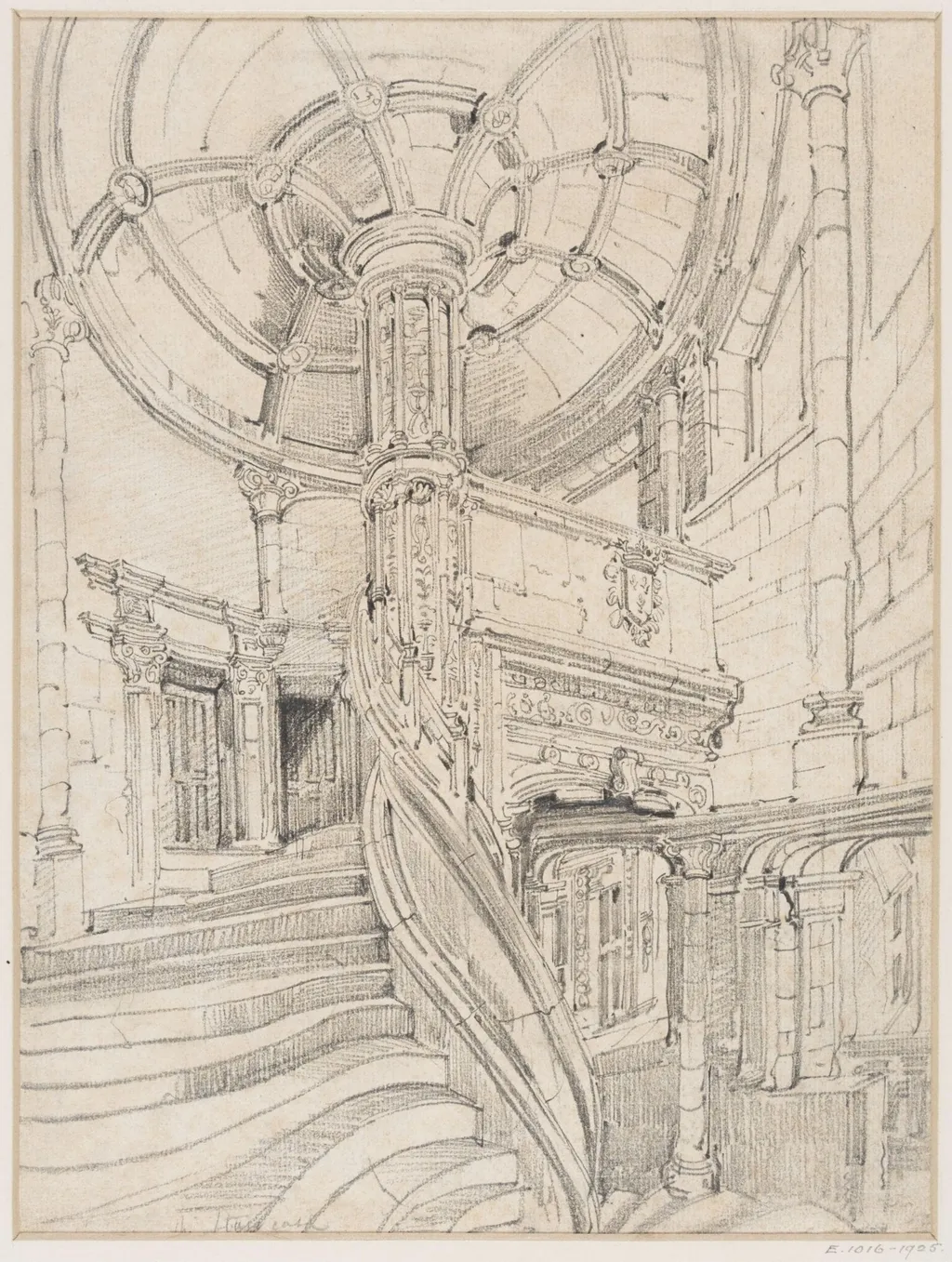
Staircase of Francis I, Château de Blois is a drawing by the Romanticist artist John Junior Burgess. It dates from 1833 and is held in the collection of the Victoria and Albert Museum.
About this work
Overview
This drawing represents the Staircase of Francis I, situated on the northwest side of the Château de Blois courtyard, capturing its architectural grandeur.
Subject & Meaning
The subject is a grand, curved stone staircase with intricate carvings and ornate details, conveying elegance and grandeur within the château's context.
Technique & Style
Rendered in a realistic style, the drawing utilizes cross-hatching and stippling to achieve depth and texture, emphasizing the staircase's intricate architectural elements.
History & Provenance
Originally part of the Château de Blois, the staircase's drawing highlights its historical significance as part of Francis I's renovations, though specific artist details are not provided.
Context
Created during a period of French Renaissance architectural innovation, the staircase embodies the era's emphasis on beauty and grand architectural statements.
Legacy
The drawing serves as a historical record of the staircase's design, contributing to the appreciation of 16th-century French architectural achievements.
Artist & collection
Artist
John Junior Burgess drew the architectural bones of 19th-century Europe—church facades, grand hotels, ducal homes, and concert halls—all in precise line.

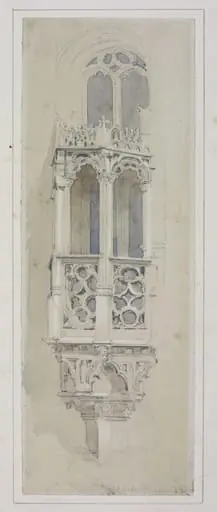 Sketch of a window and balcony, Hotel de Ville, Brussels
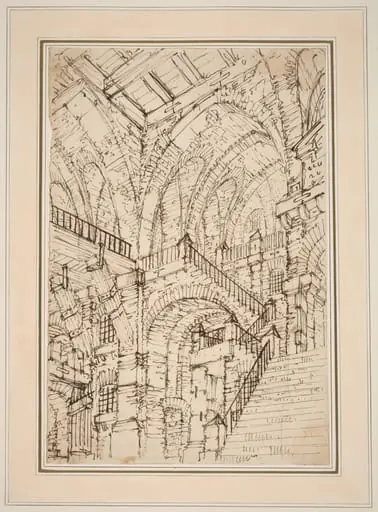 A Prison Interior with a Monumental Staircase
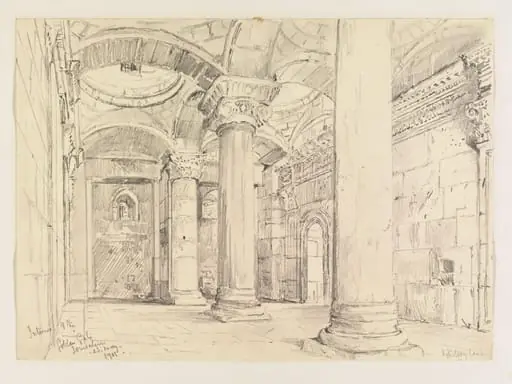 Interior of the Golden Gate Jerusalem
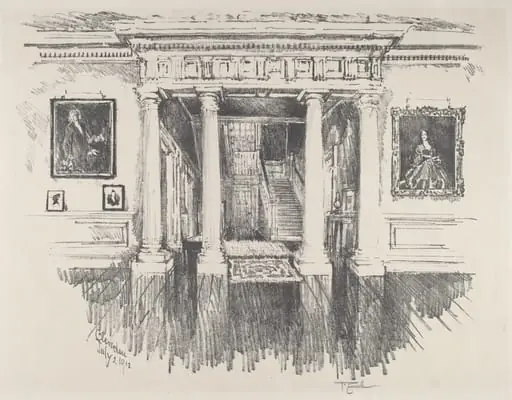 The Hall at Cliveden
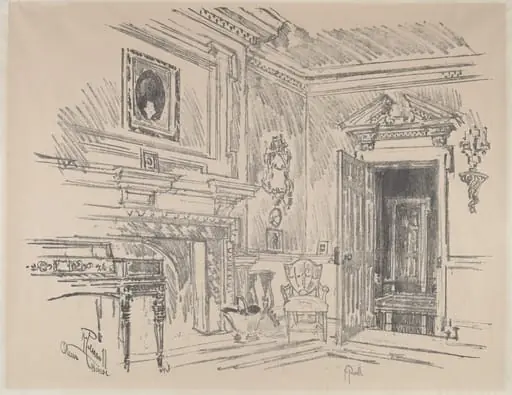 Drawing Room at Cliveden
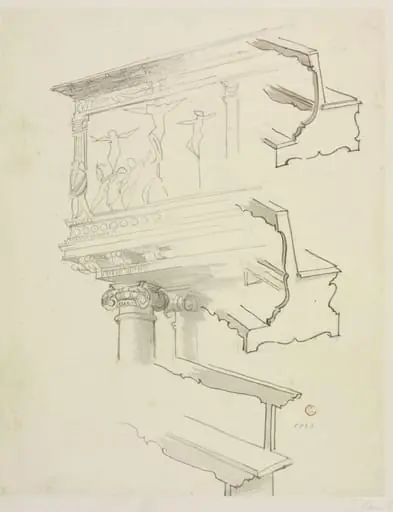 Untitled
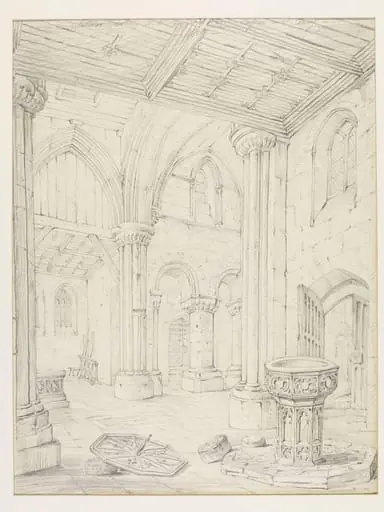 Priory church at Boxgrove
 Architectural drawing
 Amiens Cathedral
 Two Studies of an Interior with Furniture
 An Elaborate Staircase in a Palace