Artwork
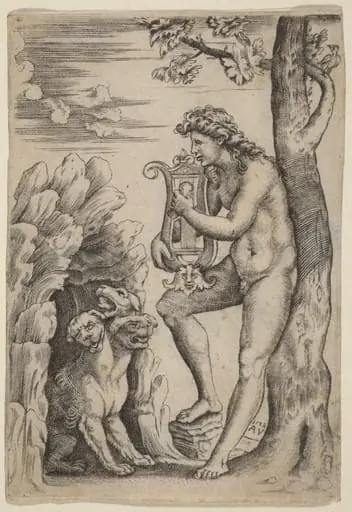
Orpheus Charming the Animals
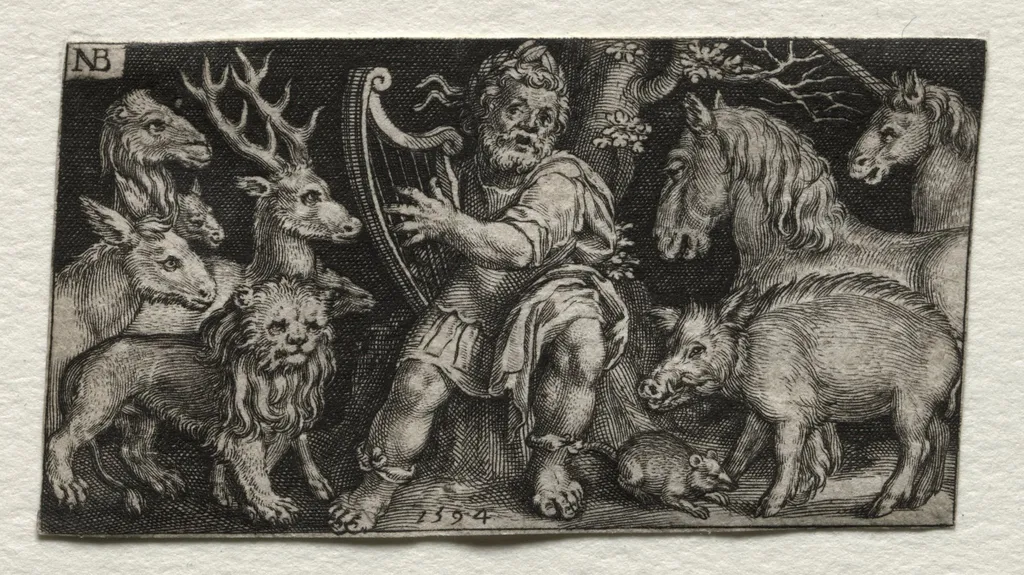
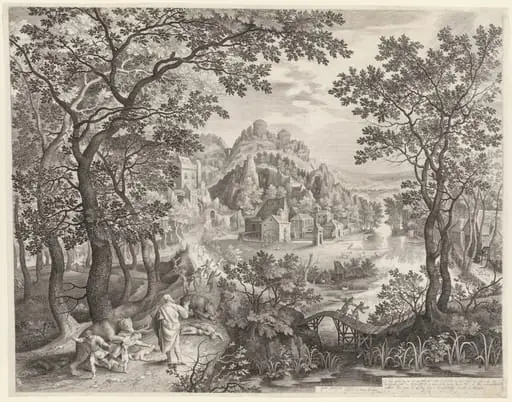
Orpheus Charming the Animals is a print by the Renaissance artist Nicolaes de Bruyn. It dates from 1594 and is held in the collection of the Cleveland Museum of Art.
About this work
Overview
The piece draws on classical myth and the Northern European print tradition, demonstrating technical precision and compositional restraint.
Nicolaes de Bruyn’s 1594 engraving *Orpheus Charming the Animals* is a finely detailed work produced in the Dutch Republic, following his training in Antwerp under his uncle Abraham de Bruyn. The piece draws on classical myth and the Northern European print tradition, demonstrating technical precision and compositional restraint. Its small scale and intricate line work reflect the conventions of reproductive engraving practiced in the late 16th century.
Subject & Meaning
The scene illustrates the myth of Orpheus, the legendary musician whose lyre could pacify even the fiercest beasts. Depicted seated on a rock, he plays with calm focus as a circle of animals—deer, boar, lion, and unicorn—gather around him in stillness. The imagery conveys the power of harmony and reason to transcend natural aggression, a theme resonant with Renaissance humanist ideals about order and moral influence.
Technique & Style
De Bruyn employed fine, controlled engraving lines to model form and texture, with subtle gradations of tone achieved through cross-hatching. The dark background isolates the figures, enhancing their luminosity and focus. His style shows clear influence from Lucas van Leyden’s linear clarity and compositional balance, yet his handling of animal anatomy and spatial arrangement reveals a personal refinement distinct from his Antwerp predecessors.
History & Provenance
Created during de Bruyn’s early years in the Dutch Republic, the print likely circulated among collectors and artists familiar with classical themes and Northern engraving traditions. Though no early ownership records are widely documented, its survival in multiple institutional collections suggests it was valued for its craftsmanship and mythological subject matter within scholarly and artistic circles of the period.
Context
In late 16th-century Europe, mythological subjects like Orpheus were frequently revisited in prints as vehicles for intellectual and moral reflection. De Bruyn’s work aligns with a broader trend of Flemish and Dutch engravers adapting classical narratives for a literate, urban audience. The emphasis on harmony and control reflects Renaissance interests in the civilizing power of art and music, particularly in regions shaped by humanist education.
Legacy
While not widely replicated, de Bruyn’s engraving contributed to the persistence of Orpheus as a visual motif in Northern European print culture. His synthesis of Antwerp training and Dutch aesthetic sensibilities influenced later engravers seeking to balance narrative clarity with technical subtlety. The work remains a quiet example of how classical myth was sustained through the medium of print in the early modern era.
Artist & collection

Artist
Nicolaes de Bruyn (Antwerp, 1571 – Rotterdam, 1656) was a Flemish engraver, who after training in Antwerp was active in the Dutch Republic.

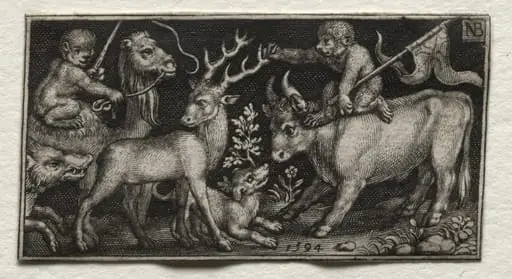 Monkeys Riding a Camel and a Bull
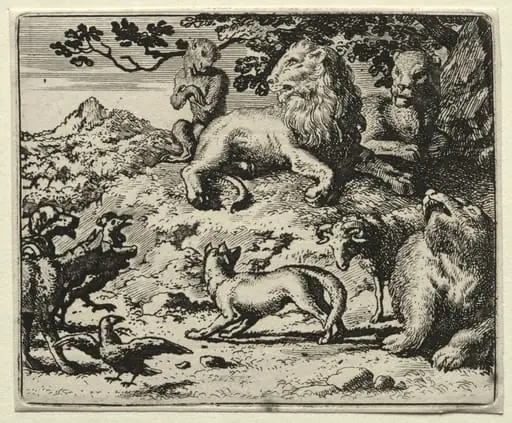 Reynard the Fox: The Animals Complain of Reynard's Pardon
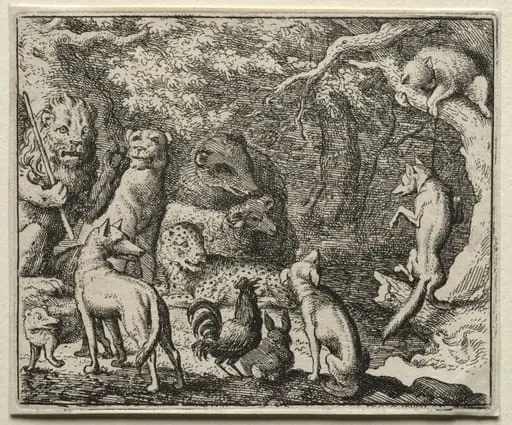 Reynard the Fox: Reynard Asks Permission to Confess
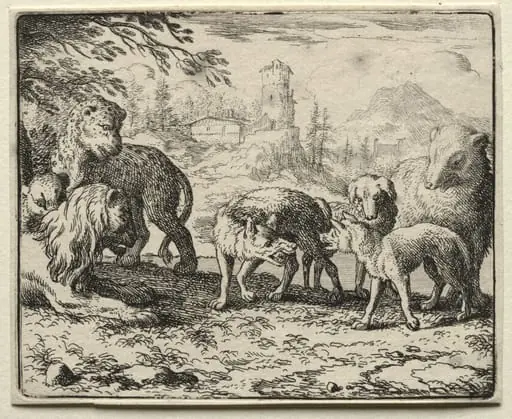 Reynard the Fox: The Condemnation of Reynard
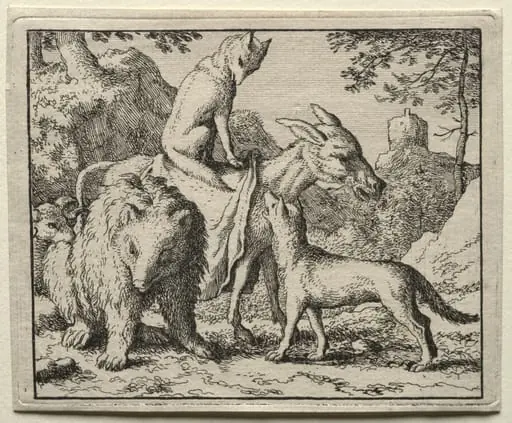 Reynard the Fox: Reynard and his Companions
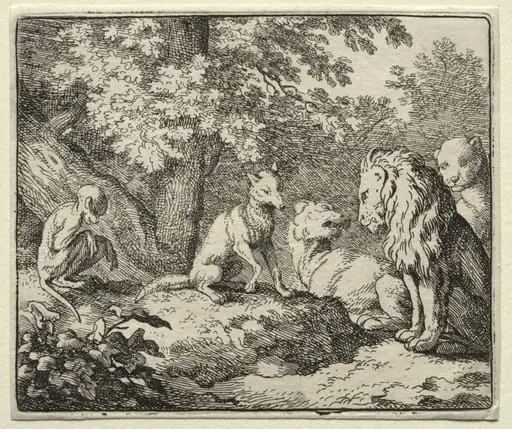 Reynard the Fox: Further False Testimony from Reynard
 Reynard the Fox
 Reynard's Enemies are Dismayed
 Orpheus