Artwork
Orpheus
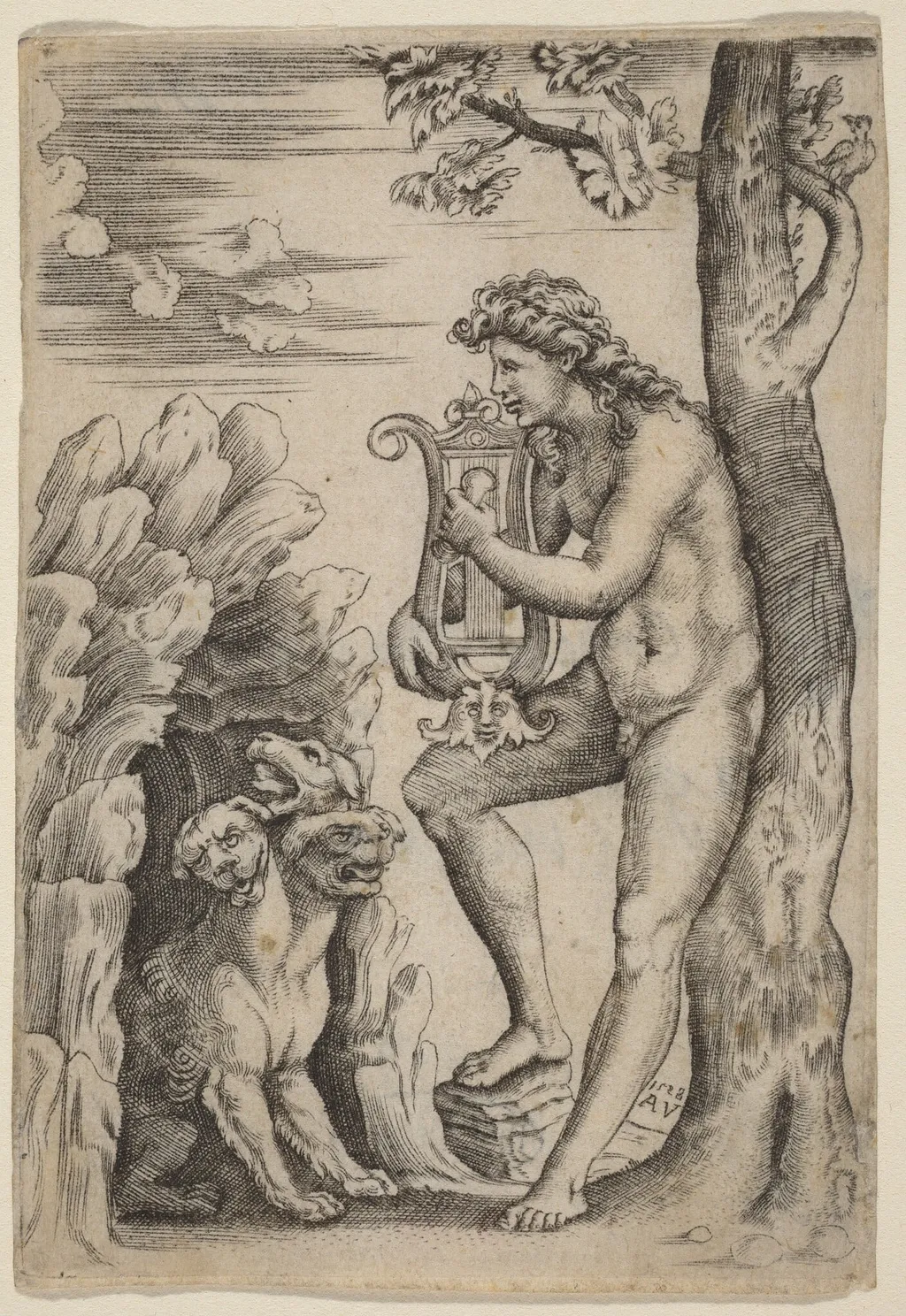
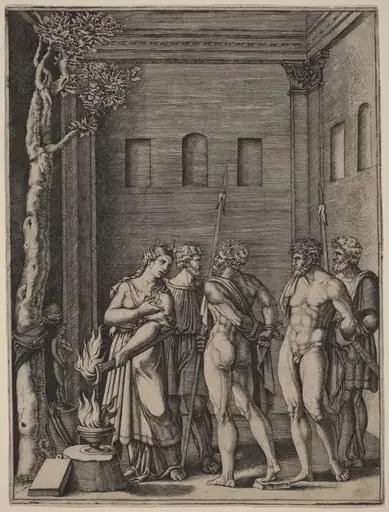
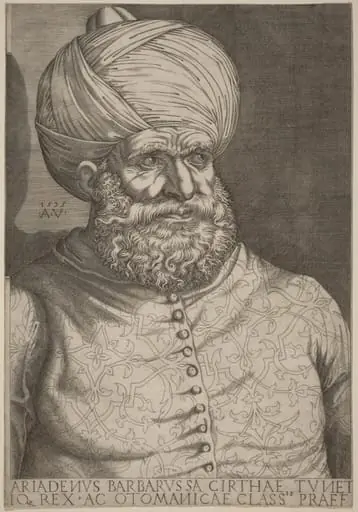
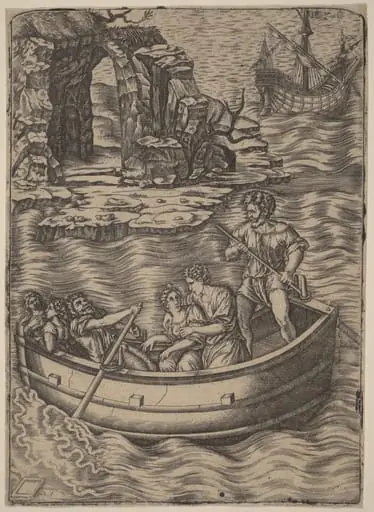
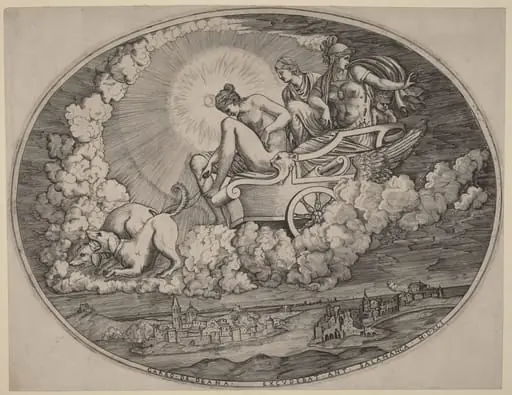
Orpheus is an ink print by the Renaissance artist Agostino dei Musi. It dates from 1528 and is held in the collection of the National Gallery of Art.
About this work
Overview
Agostino Veneziano’s 1528 print presents a mythological scene centered on Orpheus, rendered as an engraving on laid paper. The composition shows a semi‑nude figure seated on a rock, playing a lyre, with a lion at his feet and a contorted tree behind him. The sky is suggested by undulating lines that evoke clouds or wind.
Subject & Meaning
The work draws on the classical tale of Orpheus, the legendary musician whose music could charm nature. By placing the lyre‑playing figure beside a tranquil lion, the print underscores the power of music to pacify even the wild, a theme frequently explored by Renaissance artists interested in the harmony between art and the natural world.
Technique & Style
Veneziano employs fine cross‑hatching to model volume and texture, rendering the lion’s fur, the folds of the figure’s drapery, and the rocky surface with delicate tonal gradations. The use of laid‑paper texture adds subtle variation to the background, while the sinuous lines in the sky convey movement without relying on shading.
History & Provenance
Created in the early 16th century, the engraving reflects the flourishing printmaking culture of Renaissance Italy, where artists like Veneziano produced multiple editions for a growing market of collectors. The work survives in several museum collections, illustrating the widespread distribution of his prints during and after his lifetime.
Artist & collection
Artist
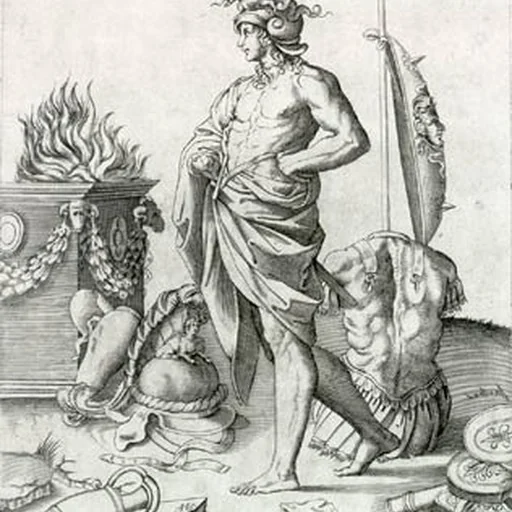
Agostino Veneziano ("Venetian Agostino"), whose real name was Agostino de' Musi (c. 1490 – c. 1540), was an important and prolific Italian engraver of the Renaissance.