Artwork
Rape of Europa
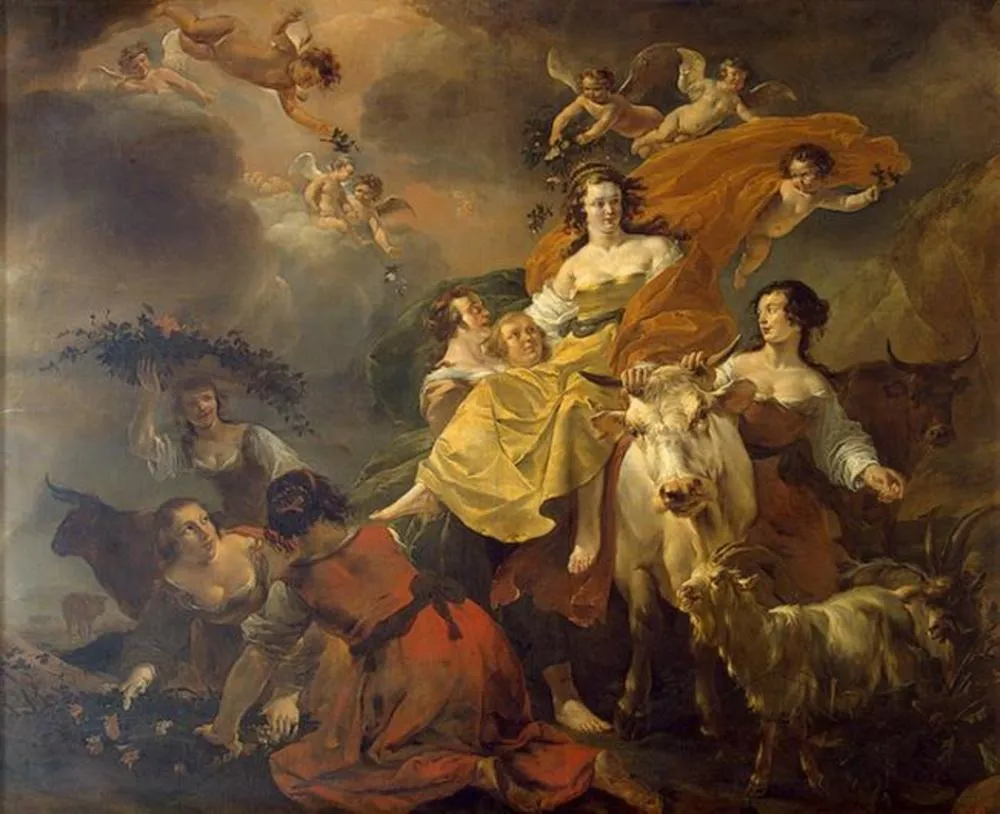
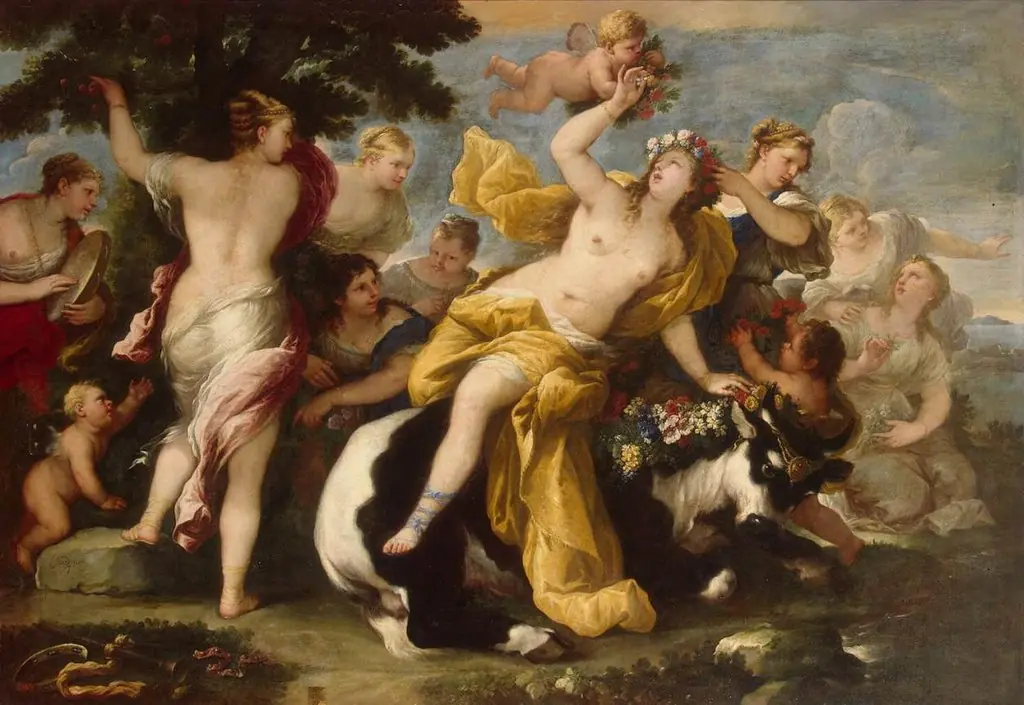
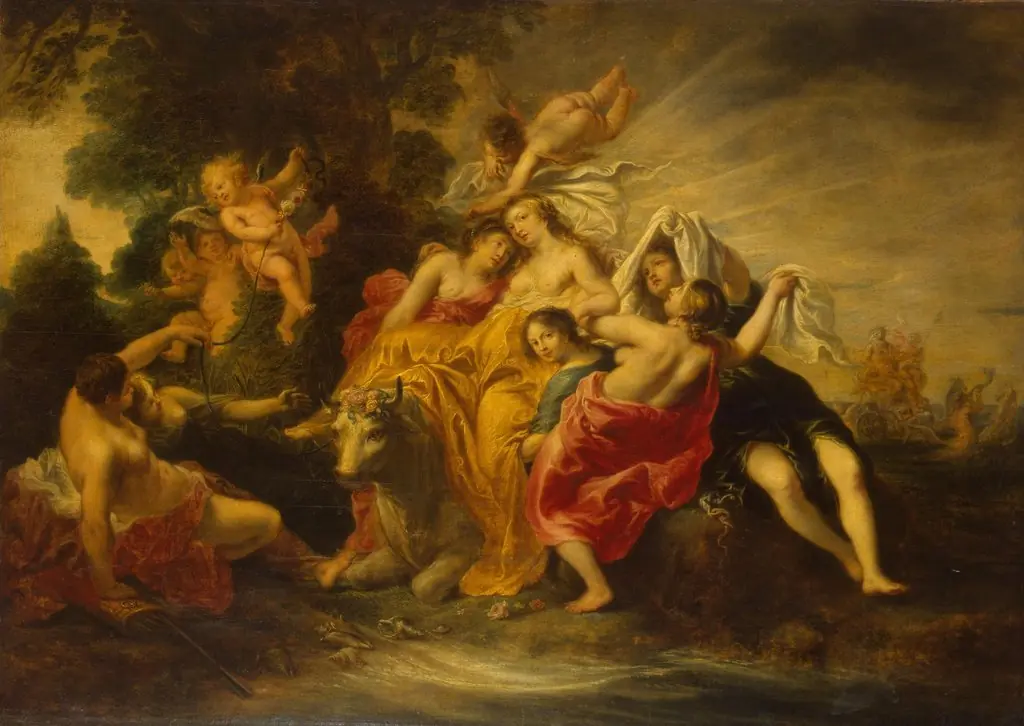
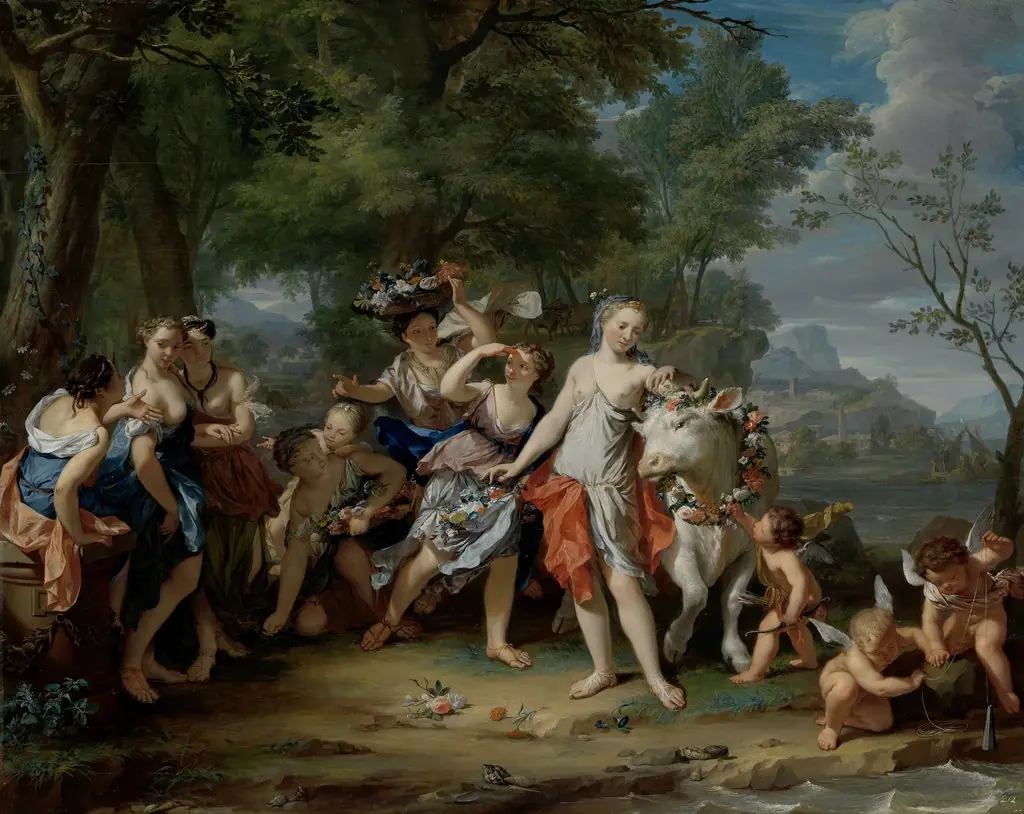
Rape of Europa is an oil painting by the Dutch Golden Age artist Nicolaes Pieterszoon Berchem. It dates from 1649 and is held in the collection of the Hermitage Museum.
About this work
Overview
Nicolaes Pieterszoon Berchem’s 1649 oil painting titled *Rape of Europa* belongs to the Dutch Golden Age’s landscape tradition. Executed in the Italianate mode, the work combines a mythological narrative with a detailed natural setting, typical of Berchem’s output during the mid‑seventeenth century.
Subject & Meaning
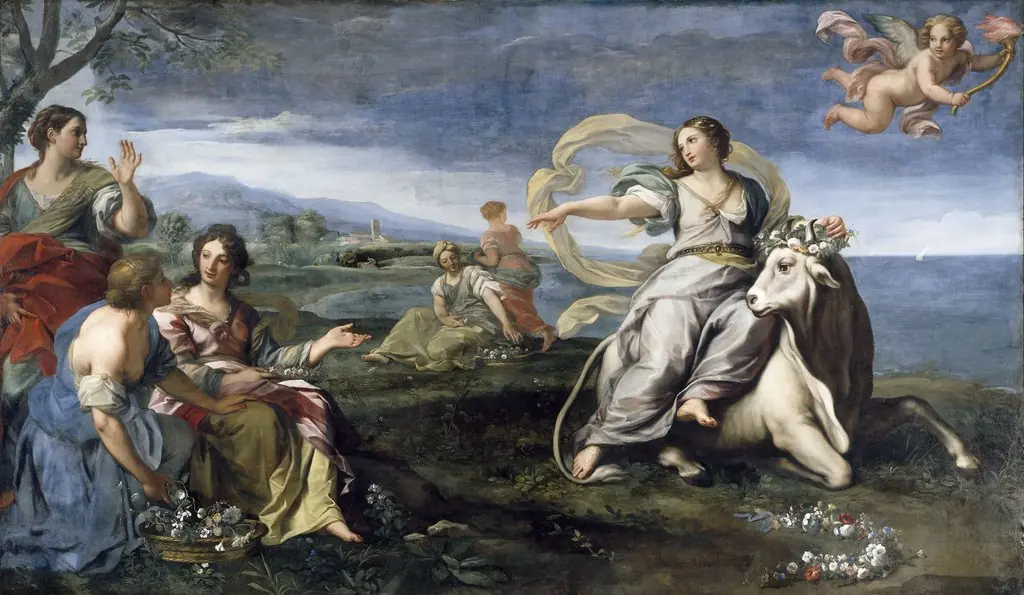
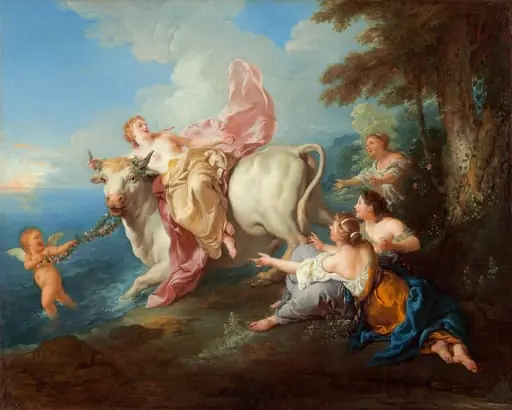
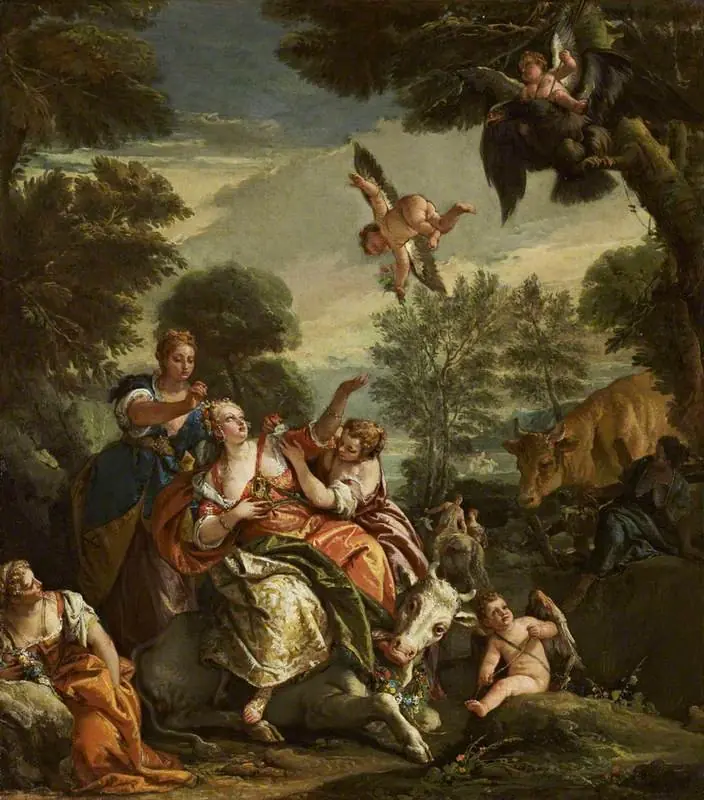
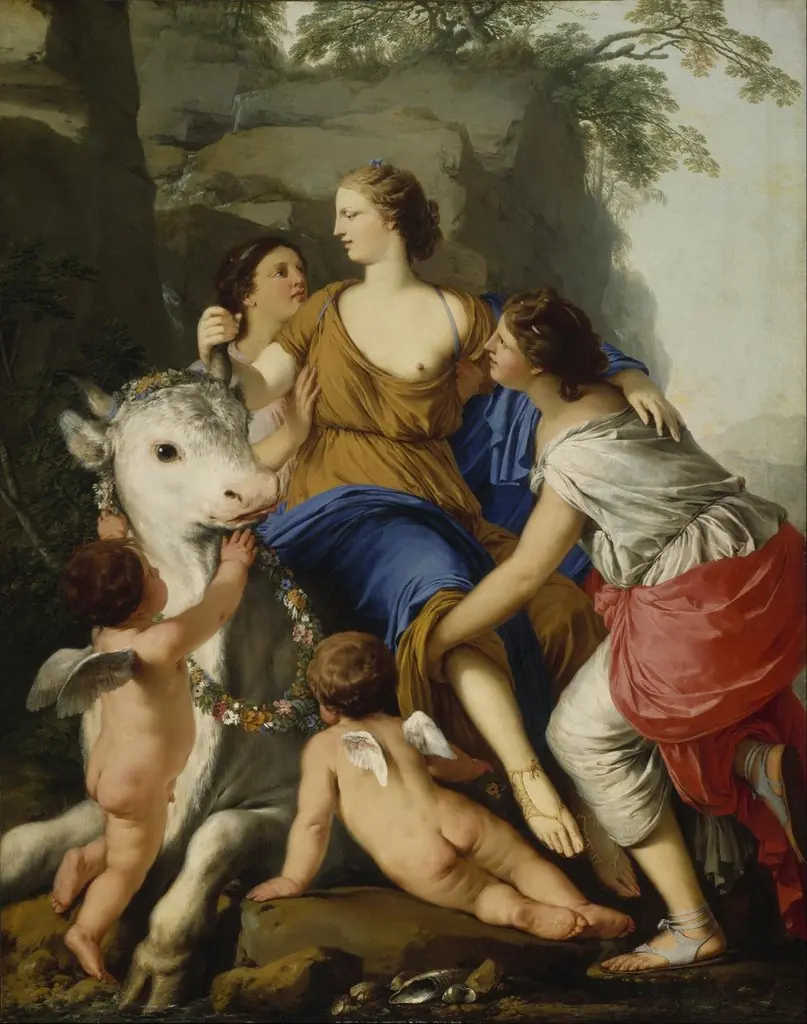
The canvas depicts the myth of Europa being seized by a white bull, her garment rendered in yellow, while a man in a red mantle attempts to intervene. Surrounding figures and animals, along with hovering cherubs, intensify the drama, conveying the tension between vulnerability and force inherent in the story.
Technique & Style
Berchem employs a luminous palette and careful modeling of light to give depth to the rolling hills, trees, and cloudy sky. The composition balances a bustling foreground with a receding landscape, while the use of chiaroscuro highlights the muscular bull and the frightened expression of Europa.
History & Provenance
Created in 1649, the painting reflects Berchem’s position within the second generation of Dutch artists who adopted Italianate motifs after exposure to classical ruins and pastoral scenes. It exemplifies the period’s fascination with mythological subjects rendered in a Northern European landscape idiom.
Context
As part of the broader Dutch Italianate movement, the work illustrates how Dutch painters integrated southern European influences—such as ruins and mythic narratives—into their own countryside depictions. Berchem’s inclusion of mythic figures within a familiar Dutch setting underscores the cross‑cultural artistic exchange of the era.
Artist & collection
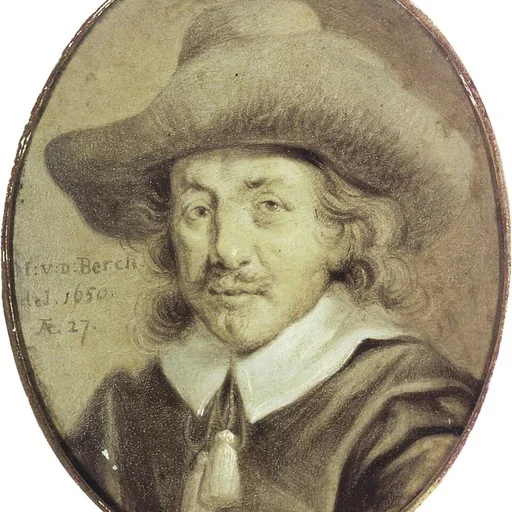
Artist
Nicolaes Pieterszoon Berchem (1 October 1620 – 18 February 1683) was a highly esteemed and prolific Dutch Golden Age painter of pastoral landscapes, populated with mythological or biblical figures, but also of a number of allegories and…