Artwork
Claude Joseph Vernet
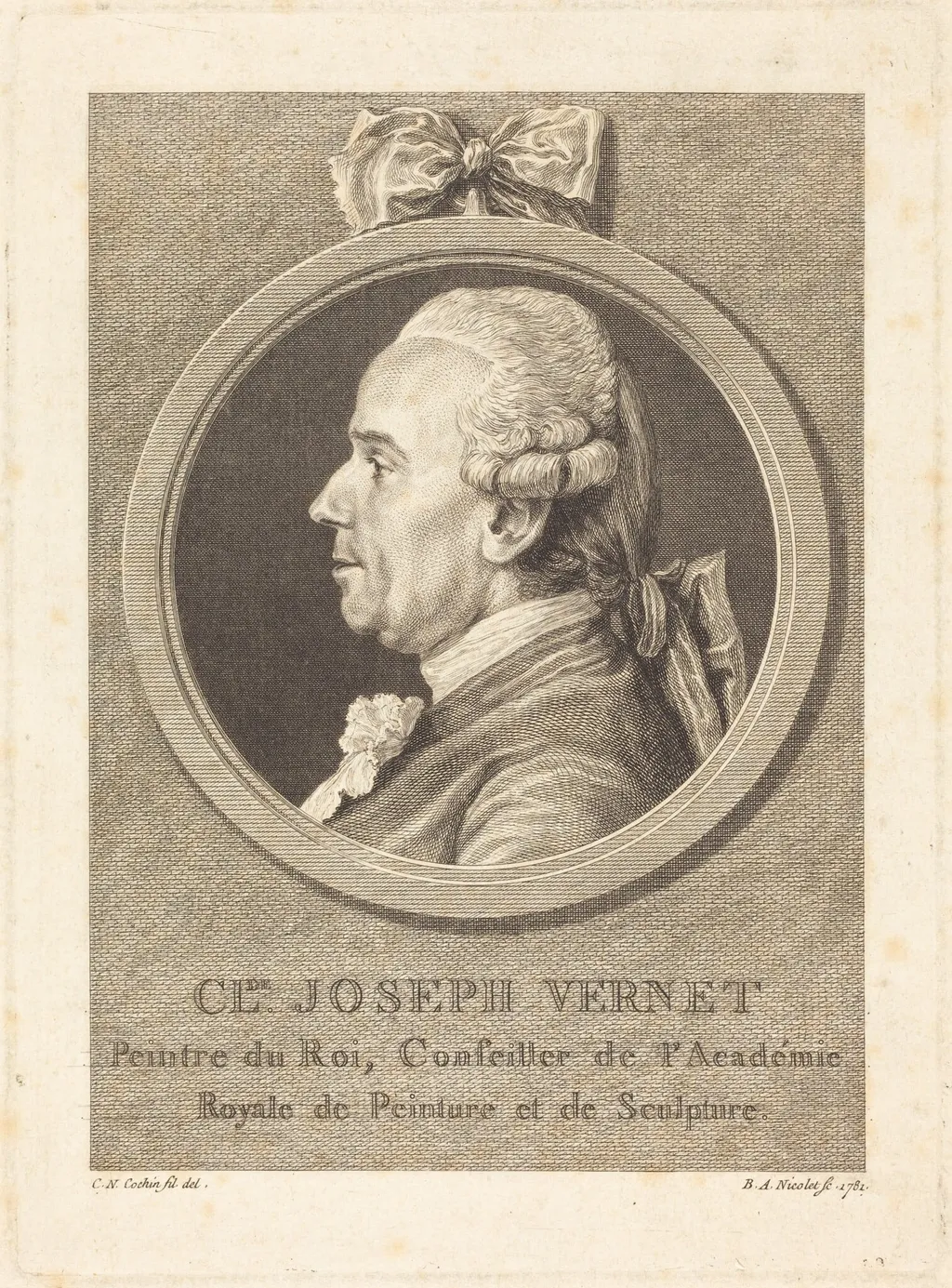
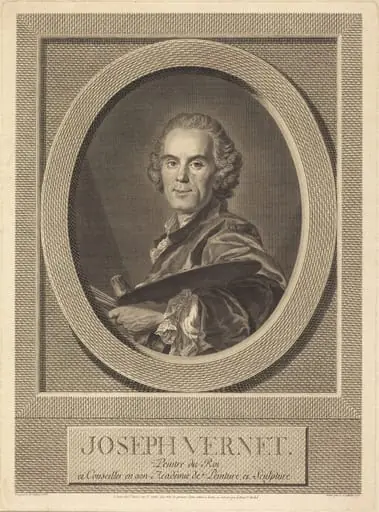
Claude Joseph Vernet is an ink print by the Romanticist artist Benedict Alphonse Nicolet. It dates from 1781 and is held in the collection of the National Gallery of Art.
About this work
This painting shows a scene by Claude Joseph Vernet.
It's an etching, which is a technique that involves carving a design into a metal plate. The artist, Benedict Alphonse Nicolet, created this work in 1781, and it's interesting because it's a rare example of his work from that year.
You can learn more about this technique by looking into etching.
Overview
It reproduces a composition originally created by the French landscape painter Claude‑Joseph Vernet, translating his atmospheric scene into a graphic medium.
This print, executed in 1781, is an etching on laid paper produced by Benedict Alphonse Nicolet. It reproduces a composition originally created by the French landscape painter Claude‑Joseph Vernet, translating his atmospheric scene into a graphic medium. The work exemplifies the collaborative practice of the eighteenth‑century print market, where artists and engravers worked together to disseminate popular images.
Subject & Meaning
The image depicts a typical Vernet subject: a maritime or coastal landscape rendered with careful attention to light and weather effects. While the original painting would have emphasized the drama of sea and sky, the etching preserves the compositional balance and narrative of human activity within a natural setting, inviting viewers to contemplate the relationship between humanity and the elements.
Technique & Style
Nicolet employed the traditional intaglio process, incising lines into a copper plate with a needle before acid bath, then printing the inked design onto laid paper. The fine hatching and cross‑hatching convey tonal variation, echoing Vernet’s painterly handling of clouds and water. The choice of laid paper, with its visible ribbed texture, adds a subtle tactile quality to the print.
History & Provenance
Created in the year 1781, this etching represents a rare surviving example of Nicolet’s output for that period. It likely circulated among collectors interested in Vernet’s scenic subjects, serving both as a decorative object and as a means of extending the painter’s reputation beyond the original canvas.
Context
During the late eighteenth century, the demand for reproductions of popular landscape paintings grew, driven by the rise of the bourgeois art market. Engravers like Nicolet played a crucial role in this diffusion, translating oil paintings into affordable prints that could reach a wider audience across Europe.
Artist & collection