Artwork
Rococo Fountain with Lovers and the Four Elements
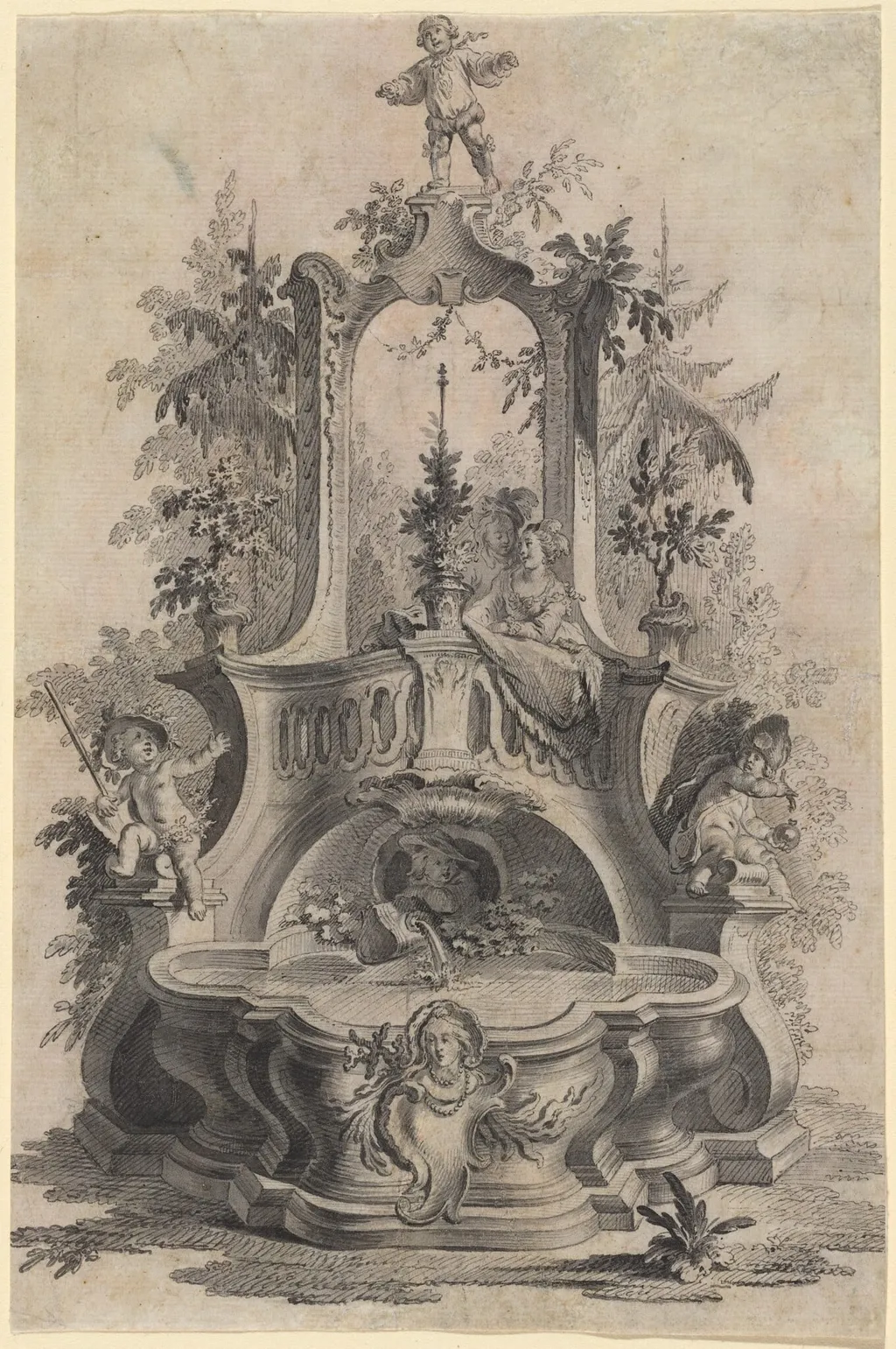
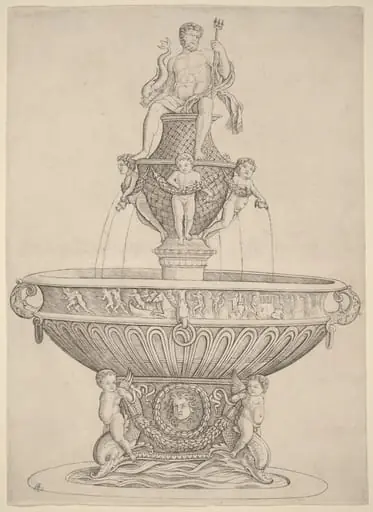
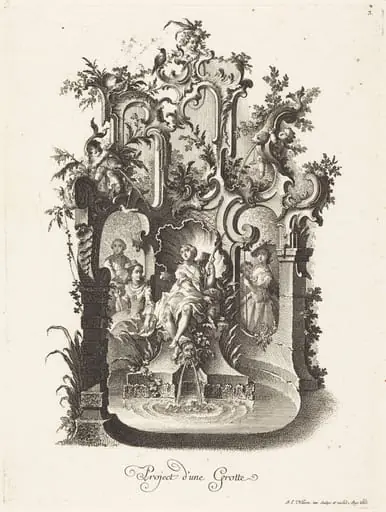
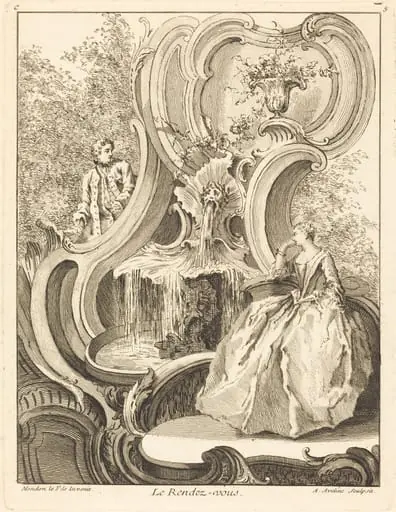
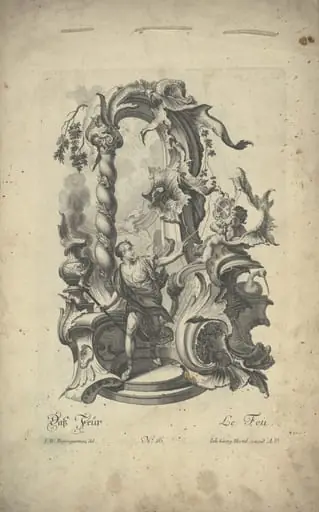
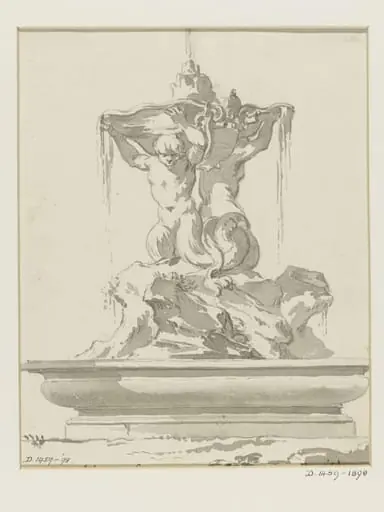
Rococo Fountain with Lovers and the Four Elements is an ink drawing by the Baroque artist Johann Esaias Nilson. It dates from 1754 and is held in the collection of the National Gallery of Art.
About this work
Overview
The composition emphasizes fluidity and delicate detail, characteristic of Nilson’s draftsmanship and the era’s preference for lyrical, intimate scenes.
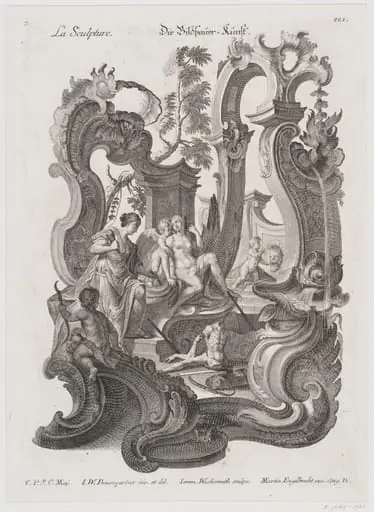
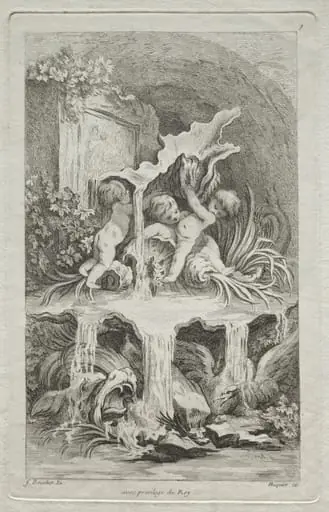
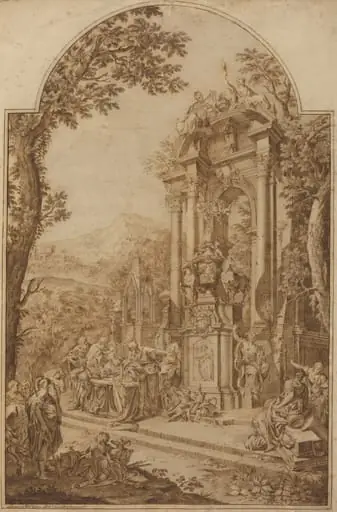
Created in 1754 by Johann Esaias Nilson, this drawing depicts a decorative fountain surrounded by figures symbolizing the four classical elements. Executed in pen and black ink with gray wash on laid paper, it reflects the ornamental sensibility of the Rococo period. The composition emphasizes fluidity and delicate detail, characteristic of Nilson’s draftsmanship and the era’s preference for lyrical, intimate scenes.
Subject & Meaning
The central fountain is encircled by allegorical figures representing earth, water, air, and fire, interwoven with a pair of lovers. This arrangement suggests harmony between human affection and natural forces, a common theme in Rococo decorative arts. The lovers, neither idealized nor dramatic, appear absorbed in quiet companionship, reinforcing the scene’s gentle, contemplative tone.
Technique & Style
Nilson employed fine pen lines and subtle gray washes to model form without heavy shading. Curving contours guide the eye around the fountain, creating a sense of rhythmic motion. The figures are rendered with restrained detail, allowing them to merge organically with the architectural elements. This soft, atmospheric approach aligns with Rococo’s preference for elegance over grandeur.
History & Provenance
The drawing is attributed to Nilson based on stylistic comparison with his other known works and documented practice as a Swedish draftsman active in the mid-18th century. It likely originated as a design study or decorative sketch, possibly for a garden feature or interior panel. Its survival in paper form suggests it was valued as a finished work rather than a preparatory sketch.
Context
Nilson worked within a tradition of Nordic Rococo draftsmanship that adapted French and Italian ornamental models to local tastes. This drawing reflects the period’s fascination with mythological allegory and naturalistic decoration, often used in aristocratic interiors. Similar themes appear in contemporary porcelain and stucco work, though few such drawings by Nilson survive.
Legacy
Though not widely exhibited, this drawing exemplifies the quiet sophistication of lesser-known Rococo draftsmen. It contributes to understanding how allegorical themes were translated into intimate graphic form outside major artistic centers. Nilson’s work remains a reference for scholars studying the diffusion of Rococo aesthetics in Northern Europe.
Artist & collection

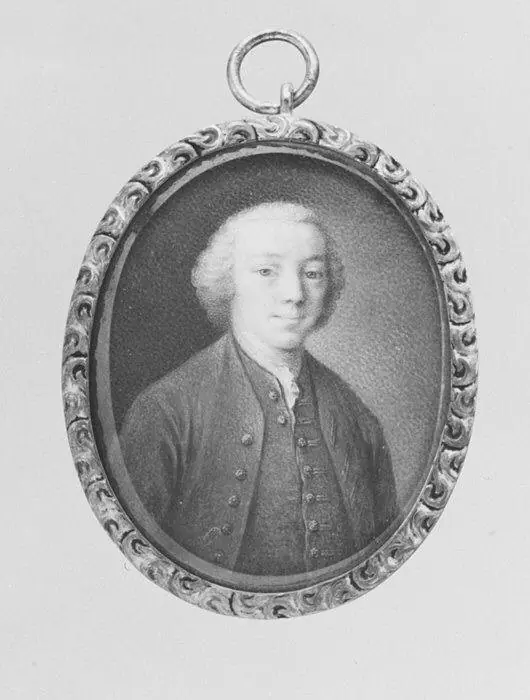 Portrait of a Man
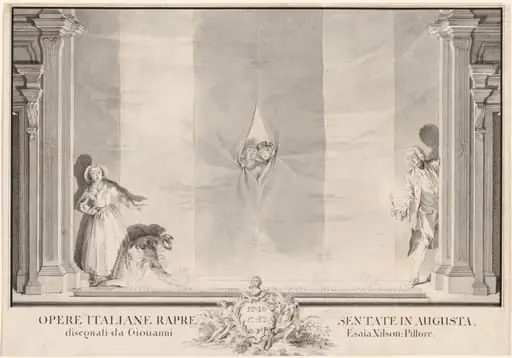 Two Actors Peeking through a Theater Curtain while Others Prepare the Footlights
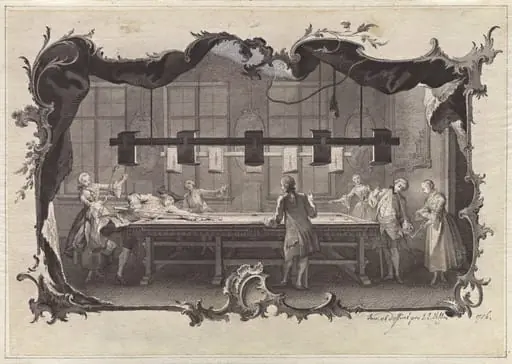 Ladies and Gentlemen Playing Billiards
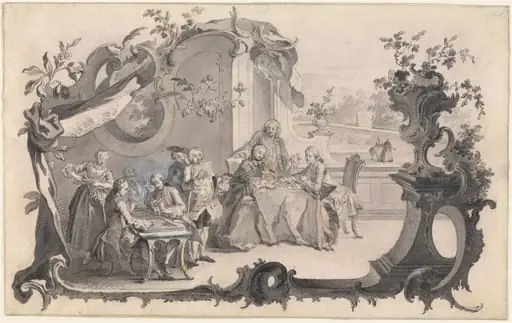 An Elegant Company Playing Board Games
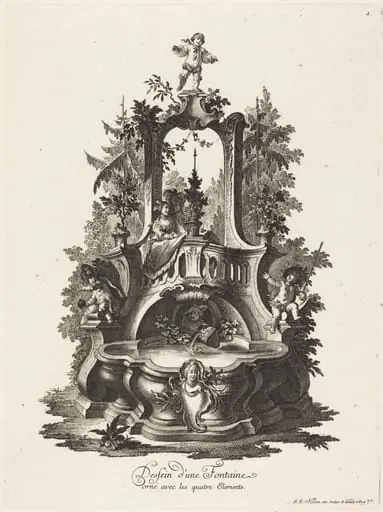 Dessein d'une Fontaine orné avec les quatre Elements (Design for a Fountain Decorated with the Four Elements)
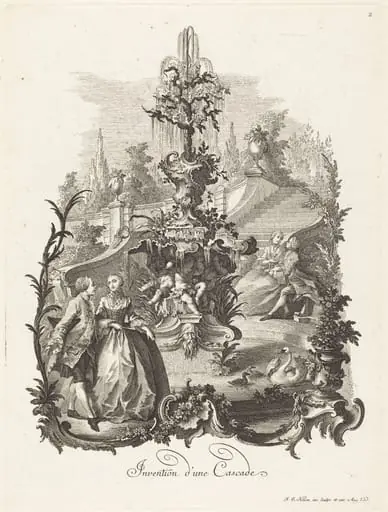 Invention d'une Cascade (Design for a Cascade)
![Cartouches Modernes orné avec des [diferentes Figures] (Plate VI-1 from the set), by Johann Esaias Nilson](https://artifactworldgallery.com/img/johann-esaias-nilson--cartouches-modernes-orne-avec-des-diferentes-figures-plate-v--37083fb67ce929ab-w320.webp) Cartouches Modernes orné avec des [diferentes Figures] (Plate VI-1 from the set)
Cartouches Modernes orné avec des [diferentes Figures] (Plate VI-1 from the set)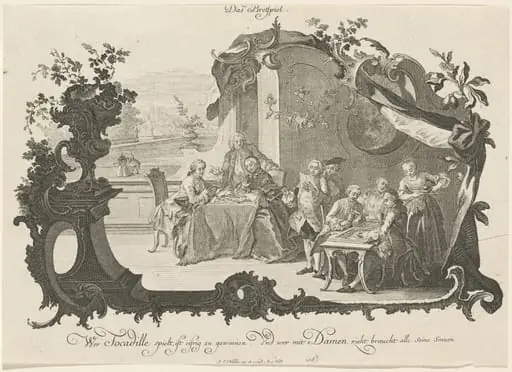 Das Bretspiel (Ladies and Gentlemen Playing Board Games)