Artwork
Ladies and Gentlemen Playing Billiards
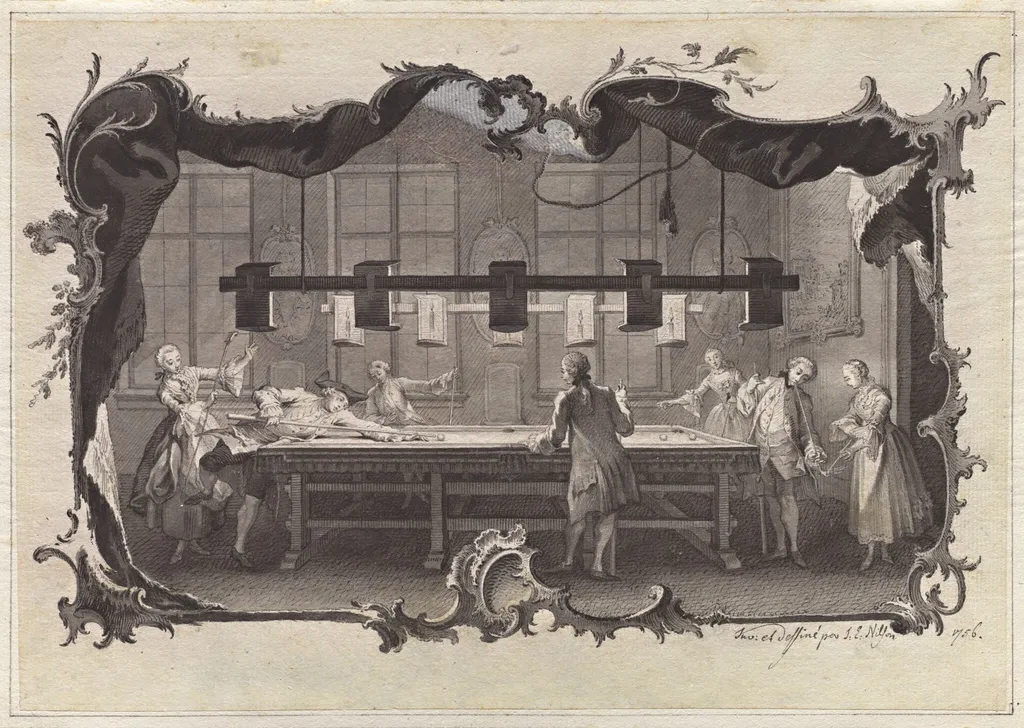
Ladies and Gentlemen Playing Billiards is an ink drawing by the Romanticist artist Johann Esaias Nilson. It dates from 1756 and is held in the collection of the National Gallery of Art.
About this work
Overview
The composition is framed by ornamental borders of leafy scrolls, and the paper’s surface bears incised lines that enhance texture and definition.
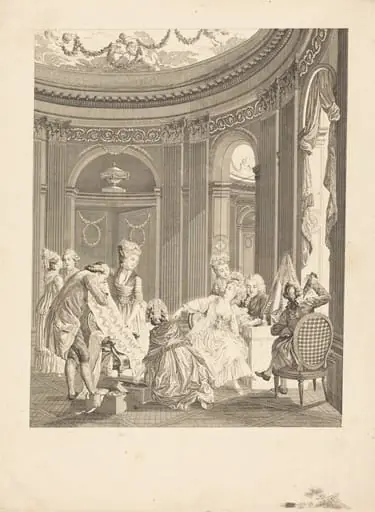
This 1756 drawing by Johann Esaias Nilson depicts a social gathering centered on a billiards table. Executed in pen and ink with washes and white gouache highlights, it captures a moment of leisure among well-dressed individuals. The composition is framed by ornamental borders of leafy scrolls, and the paper’s surface bears incised lines that enhance texture and definition. Mounted on a support, the work retains its delicate tonal range and fine linear detail.
Subject & Meaning
The scene portrays seven figures engaged in or observing a game of billiards, a pastime associated with aristocratic leisure in 18th-century Europe. Postures and gestures suggest casual interaction—some concentrate on play, others converse or observe. The setting implies a private, affluent interior, where recreation serves as both entertainment and social ritual. No narrative climax is indicated; instead, the focus lies in the quiet rhythm of daily life among the upper class.
Technique & Style
Nilson employed fine pen lines to define forms, layered with gray and black washes for volume and shadow. White gouache heightens reflections on surfaces like the table and lamps, while incised lines add crispness to edges and fabric folds. The use of graphite underdrawing is faintly visible, revealing preparatory planning. The airy quality of the room is achieved through controlled washes and strategic light placement near the windows.
History & Provenance
Created in 1756, the drawing was likely made for private circulation rather than public display. Its mounting on a backing sheet and the presence of decorative borders suggest it was preserved as a refined object, possibly collected by a patron or artist’s circle. No documented ownership history prior to modern institutional acquisition is known, though its condition indicates careful handling over time.
Context
In mid-18th-century Sweden and Northern Europe, billiards was a favored indoor activity among the elite, often depicted in genre scenes that celebrated refined domesticity. Nilson, active in Stockholm, frequently illustrated scenes of urban life with attention to costume and interior detail. This work aligns with a broader trend of observational drawings that documented social customs without overt moralizing or theatricality.
Legacy
Nilson’s drawing remains a quiet testament to the visual culture of bourgeois leisure in Enlightenment-era Scandinavia. While not widely reproduced, it contributes to the understanding of how everyday activities were rendered with precision and subtlety in drawn form. Its survival offers insight into the artistic practices of a lesser-known but skilled draftsman of his time.
Artist & collection

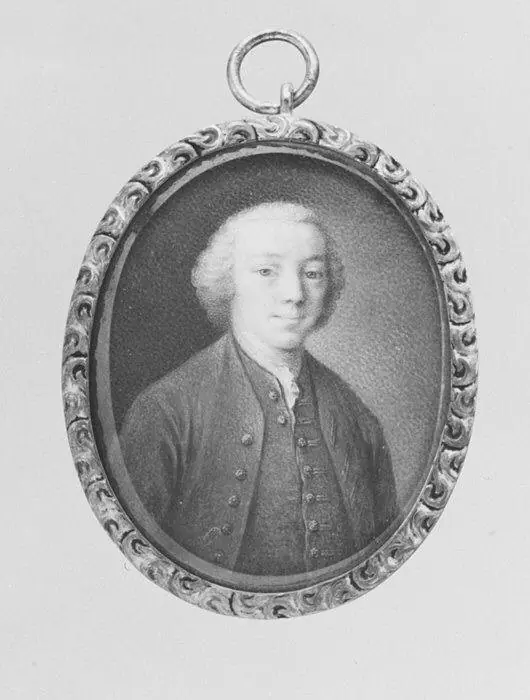 Portrait of a Man
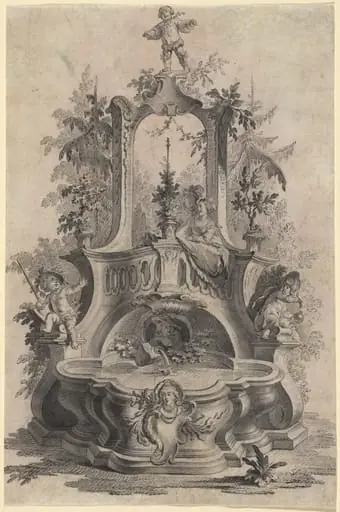 Rococo Fountain with Lovers and the Four Elements
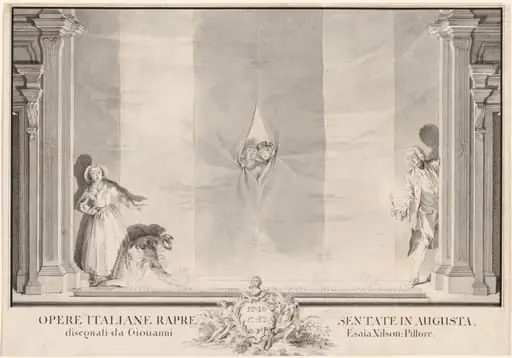 Two Actors Peeking through a Theater Curtain while Others Prepare the Footlights
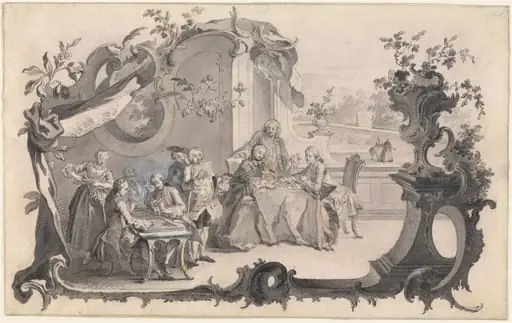 An Elegant Company Playing Board Games
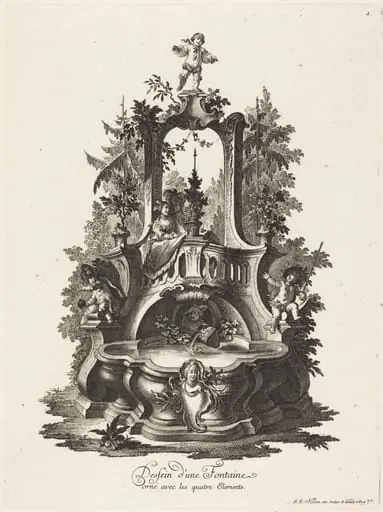 Dessein d'une Fontaine orné avec les quatre Elements (Design for a Fountain Decorated with the Four Elements)
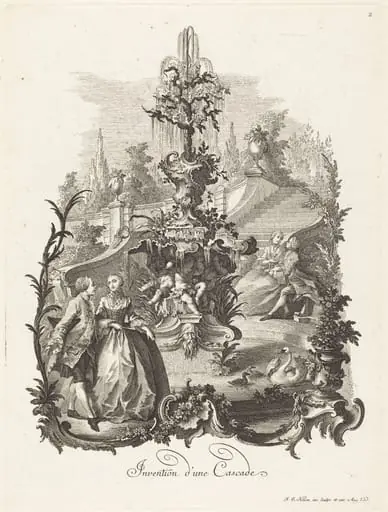 Invention d'une Cascade (Design for a Cascade)
![Cartouches Modernes orné avec des [diferentes Figures] (Plate VI-1 from the set), by Johann Esaias Nilson](https://artifactworldgallery.com/img/johann-esaias-nilson--cartouches-modernes-orne-avec-des-diferentes-figures-plate-v--37083fb67ce929ab-w320.webp) Cartouches Modernes orné avec des [diferentes Figures] (Plate VI-1 from the set)
Cartouches Modernes orné avec des [diferentes Figures] (Plate VI-1 from the set)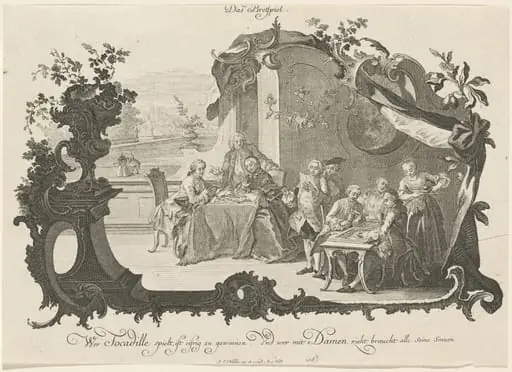 Das Bretspiel (Ladies and Gentlemen Playing Board Games)