Artwork
Woman and Child Beside a Mirror Stand
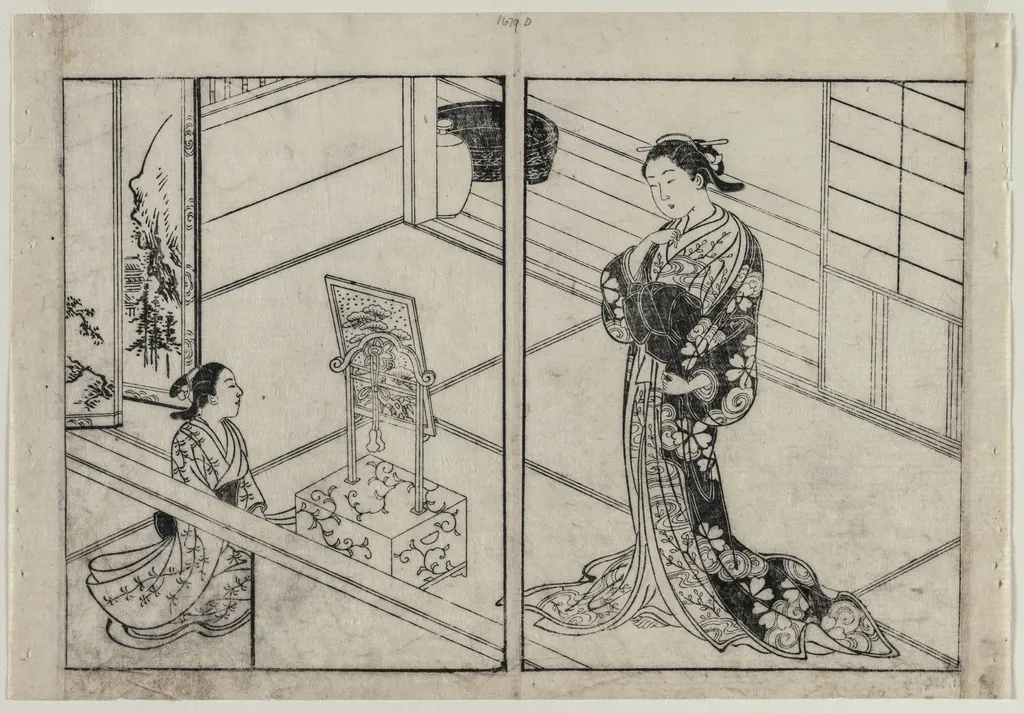
Woman and Child Beside a Mirror Stand is a print by the Baroque artist Nishikawa Sukenobu. It dates from 1744 and is held in the collection of the Cleveland Museum of Art.
About this work
Overview
Woman and Child Beside a Mirror Stand, created circa 1744 by Japanese artist Nishikawa Sukenobu, is a print housed in The Cleveland Museum of Art. The work depicts an intimate domestic scene.
Subject & Meaning
Contrary to its title, the print shows two women, not a woman and child, in a serene interior. One figure sits on a low platform with a fan, while the other stands, adorned in a robe with swirling patterns, holding an unspecified small object. A mirror with an ornate frame is centrally placed.
Technique & Style
Sukenobu employed bold lines and nuanced shading techniques to capture the intricate folds of the standing woman's robe and convey depth within the room, highlighting the artist's attention to texture and spatial composition.
History & Provenance
Created in the mid-18th century, the print's history prior to its acquisition by The Cleveland Museum of Art is not detailed here. It represents a piece from Sukenobu's oeuvre during the Edo period.
Context
This work reflects the ukiyo-e tradition, popular in 18th-century Japan, which often depicted scenes of everyday life, beauty, and leisure activities among the emerging middle class.
Legacy
As part of Sukenobu's body of work, Woman and Child Beside a Mirror Stand contributes to the understanding of Edo period aesthetics and the evolution of ukiyo-e printing techniques, though its specific impact or notable exhibitions are not highlighted here.
Artist & collection

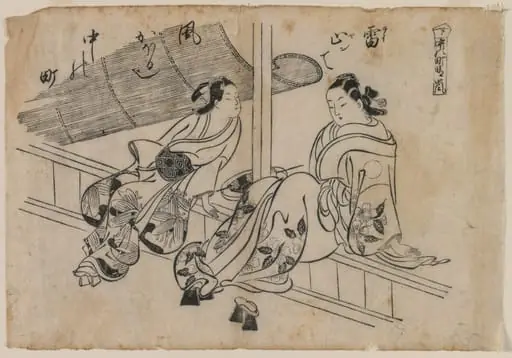 Twilight at Nakanocho
 Untitled
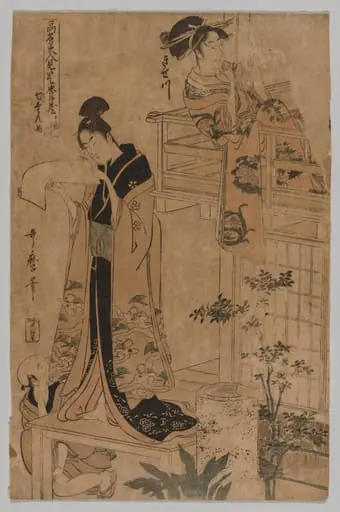 Act VII from the series The Storehouse of Loyal Retainers As Portrayed by Famous Beauties in Twelve Leaves
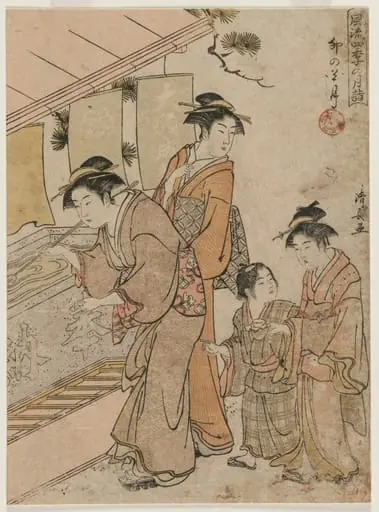 The Fourth Month (from the series Fashionable Monthly Visits to Temples in the Four Seasons)
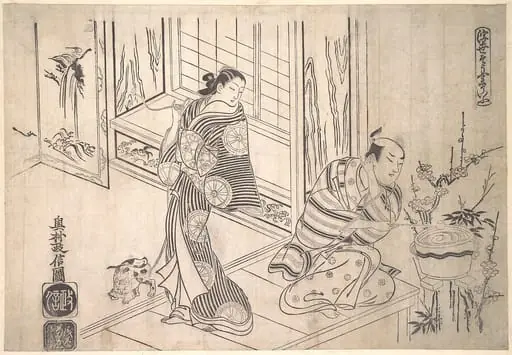 Untitled
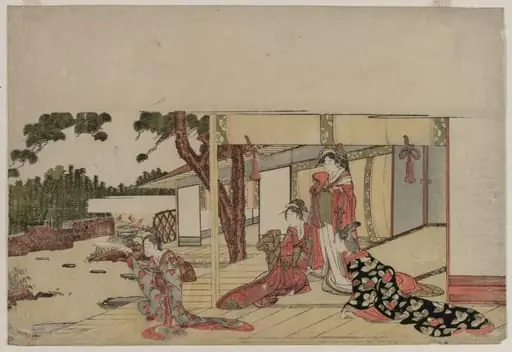 Women on a Veranda
 Untitled
 奥村政信画 見立紫式部図|Parody of Murasaki Shikibu at Her Desk
 Untitled
 Untitled
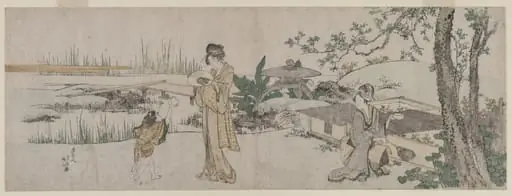 Two Women and a Child Beside a Goldfish Tank
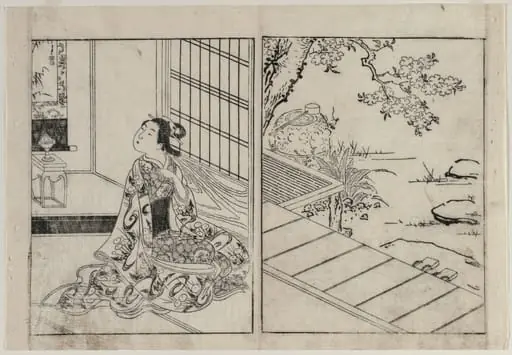 Woman Looking at a Hanging Scroll