Artwork
"Scholshuiten" or "Pinken"
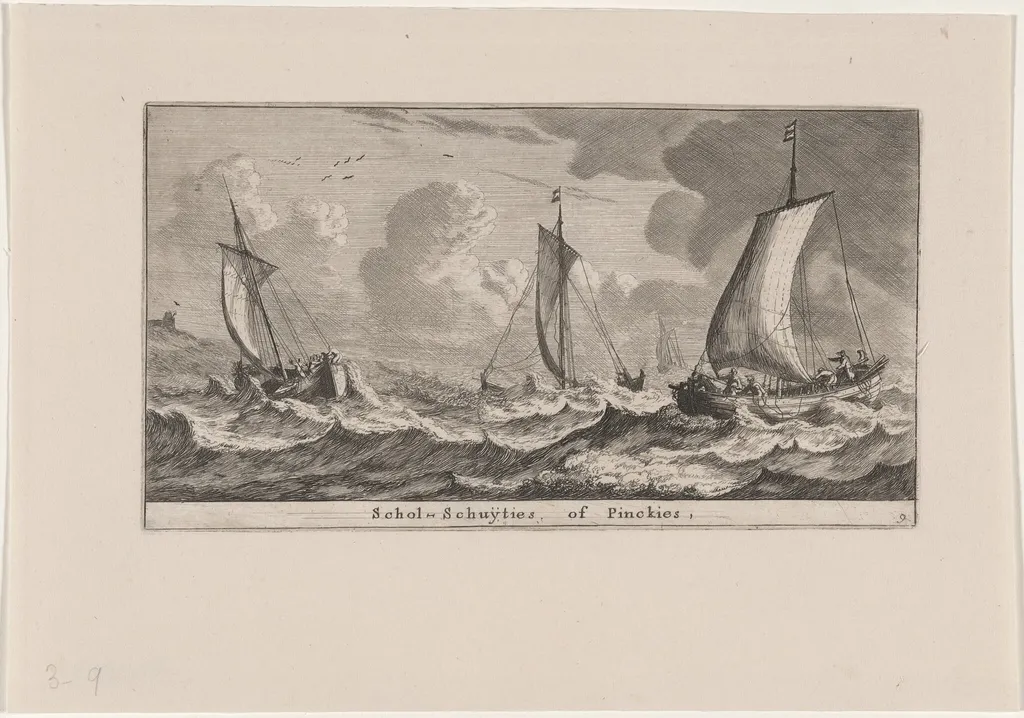
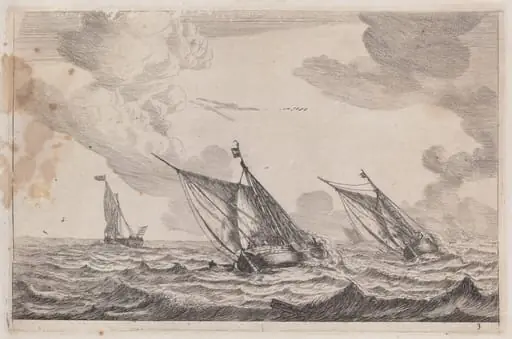
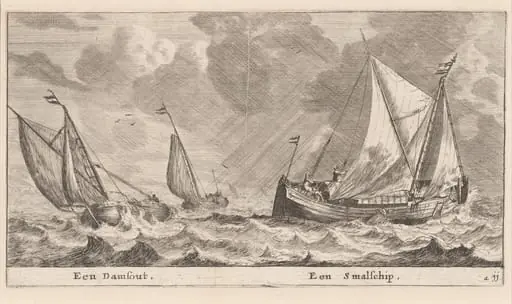
"Scholshuiten" or "Pinken" is an ink print by the Baroque artist Nooms, called Zeeman, Reinier. It dates from 1653 and is held in the collection of the National Gallery of Art. Reinier Nooms, known as Zeeman, created the etching *Scholshuiten* (or *Pinken*) circa 1653 as part of a focused body of maritime prints.
About this work
Overview
Reinier Nooms, known as Zeeman, created the etching *Scholshuiten* (or *Pinken*) circa 1653 as part of a focused body of maritime prints.
Reinier Nooms, known as Zeeman, created the etching *Scholshuiten* (or *Pinken*) circa 1653 as part of a focused body of maritime prints. Executed in etching and drypoint on laid paper, the work captures a moment of tension at sea, emphasizing precise rendering of vessels and atmospheric conditions. Nooms’ technical precision and attention to nautical detail distinguish this piece within his broader oeuvre of Dutch coastal scenes.
Subject & Meaning
The scene depicts a group of small sailing vessels battling rough seas under a heavy, overcast sky. The boats, some single-masted, others two-masted, lean into the wind, their sails strained by the force of the storm. Distant seabirds suggest the vastness of the open water. The image conveys the vulnerability of human endeavor against nature’s power, a recurring theme in 17th-century Dutch maritime art without overt symbolism.
Technique & Style
Nooms employed etching and drypoint to achieve fine linear detail and rich tonal variation. The waves are rendered with incised, swirling lines, while the clouds are built through layered hatching and soft burr effects. Drypoint’s velvety blacks enhance the gloom of the sky and the depth of the water. The composition avoids dramatic flourish, favoring observed realism over theatricality, characteristic of his topographical approach.
History & Provenance
Created during the height of Nooms’ career in the early 1650s, *Scholshuiten* belongs to a series of prints documenting Amsterdam’s harbor and surrounding waters. These works were circulated among collectors and artists, influencing contemporaries through their accuracy. Nooms’ prints were valued for their documentary quality, and this piece likely served both as artistic expression and as a record of maritime activity in the Dutch Golden Age.
Context
In mid-17th-century Amsterdam, maritime commerce and naval power were central to national identity. Artists like Nooms responded to public interest in seascapes by producing detailed, topographically grounded images. Unlike Italian or Flemish Baroque drama, Dutch maritime art favored restraint and observation, reflecting a culture that prized empirical accuracy and the dignity of labor at sea.
Legacy
Nooms’ etchings, including *Scholshuiten*, became reference points for later artists and cartographers interested in accurate depictions of ships and coastal geography. His method of combining technical precision with atmospheric nuance helped define the Dutch maritime print tradition. Though less celebrated today than painters of his era, his prints remain important for their fidelity to the lived experience of seafaring life.
Artist & collection

Artist
Reinier Nooms (c. 1623 – 1664), also known as Zeeman or Seeman (Dutch for "sailor"), was a Dutch maritime painter known for his highly detailed paintings and etchings of ships. From the 1650s, Nooms started producing…