Artwork
Appelmarkt (De Appelmarckt)
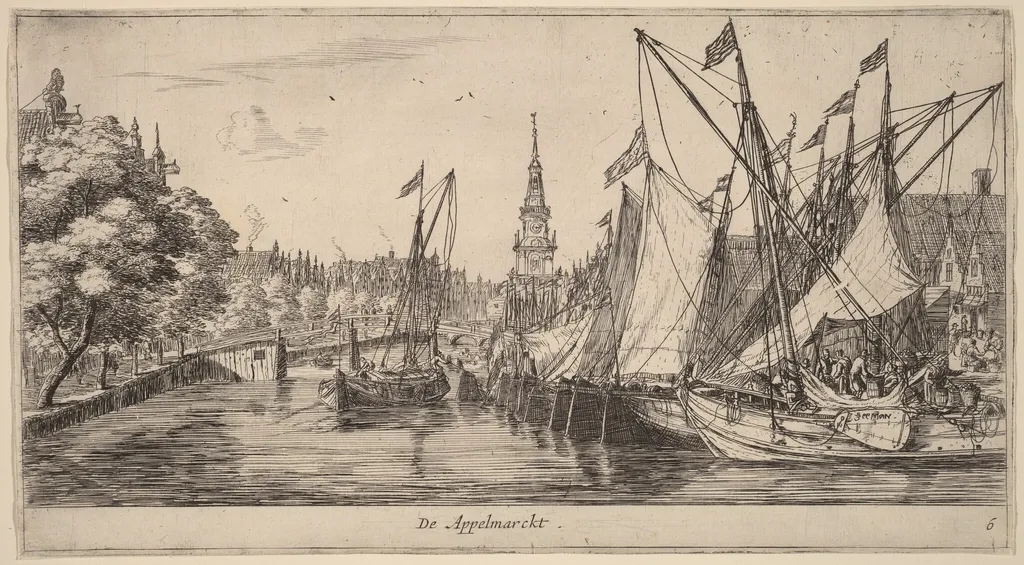
Appelmarkt (De Appelmarckt) is an ink print by the Baroque artist Nooms, called Zeeman, Reinier. It dates from 1645 and is held in the collection of the National Gallery of Art.
About this work
Overview
Appelmarkt (De Appelmarckt) is a 1645 etching by Reinier Nooms, known as Zeeman, a Dutch artist primarily recognized for his maritime paintings and detailed topographical scenes.
Subject & Meaning
The etching captures a vibrant market scene adjacent to a bustling harbor, highlighting the maritime activity characteristic of the period. The depiction of tall ships, smaller boats, and a lively shoreline conveys the economic and social dynamism of the setting.
Technique & Style
Nooms employed his refined etching technique to achieve remarkable detail, rendering intricate ship rigging, choppy water textures, and architectural elements with fine lines, creating a near three-dimensional effect.
History & Provenance
Produced in 1645, Appelmarkt reflects Nooms' established style, which would later influence other artists. The work's specific provenance details are not provided in the available information.
Context
Set against the backdrop of 17th-century Dutch maritime dominance, the etching not only reflects Nooms' specialty in naval subjects but also offers a glimpse into the daily life and commercial hubs of the time.
Legacy
Appelmarkt (De Appelmarckt) stands as an example of Nooms' technical prowess in etching, contributing to his legacy as an artist whose work served as a model for subsequent generations of artists.
Artist & collection

Artist
Reinier Nooms (c. 1623 – 1664), also known as Zeeman or Seeman (Dutch for "sailor"), was a Dutch maritime painter known for his highly detailed paintings and etchings of ships. From the 1650s, Nooms started producing…

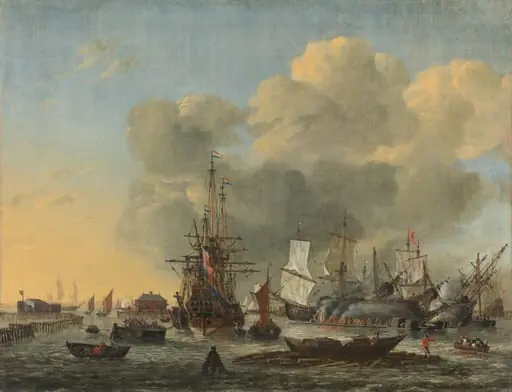
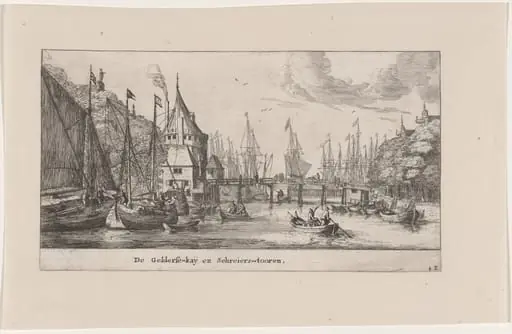 The Gelderse Quay and the Schreiers Tower, Amsterdam
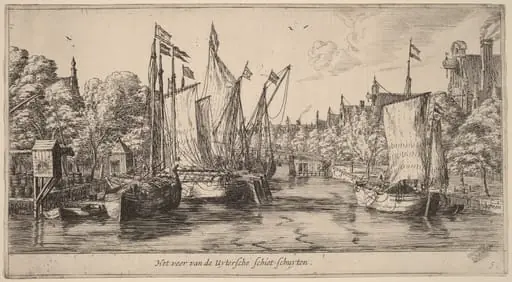 The Ferry to Utrecht (Het veer van der Uytersche schiet-schuyten)
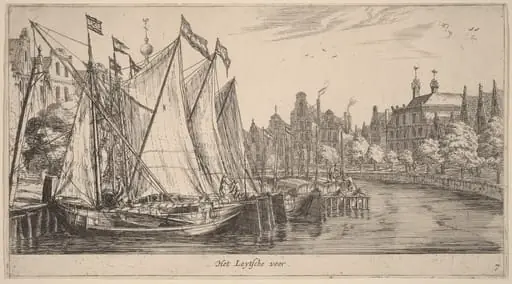 The Ferry to Leiden (Het Leytsche veer)
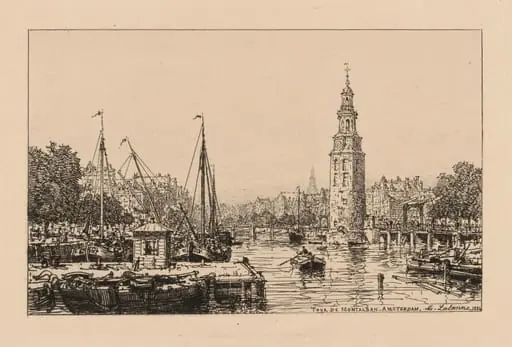 Tour de Montalban, Amsterdam
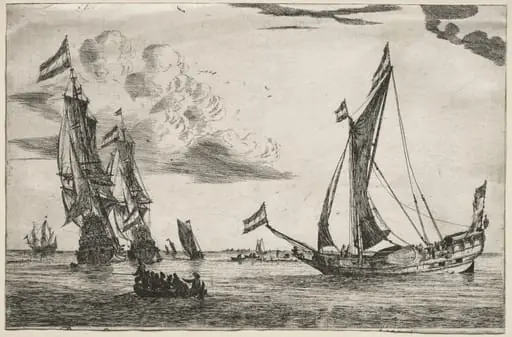 Marine
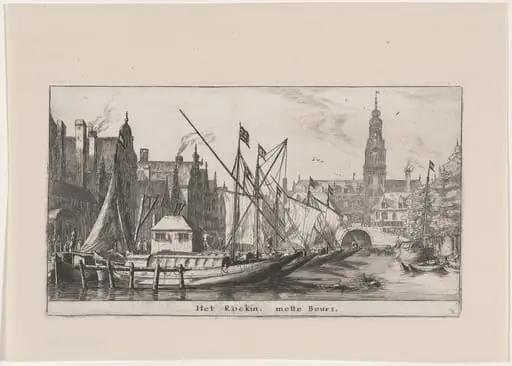 The Rokin and the Bourse in Amsterdam
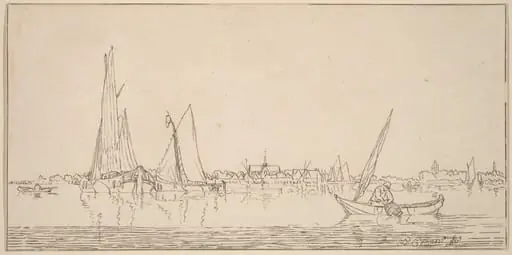 River with Town
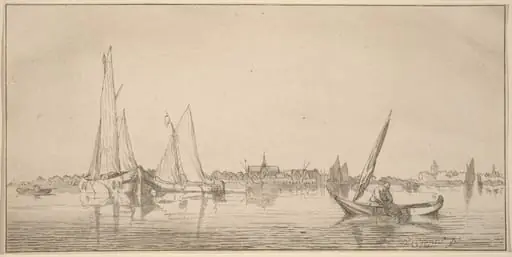 River with Town
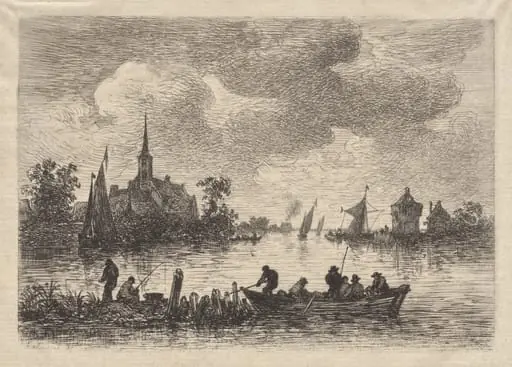 Banks of the Meuse (Bords de la Meuse)
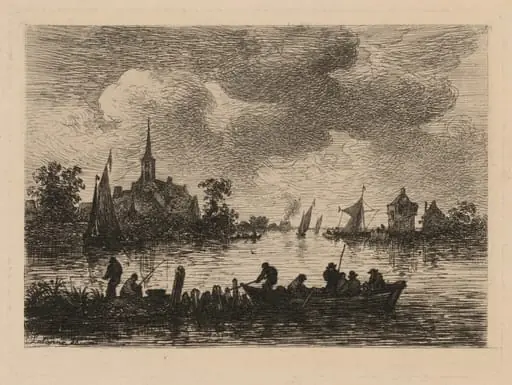 Banks of the Meuse
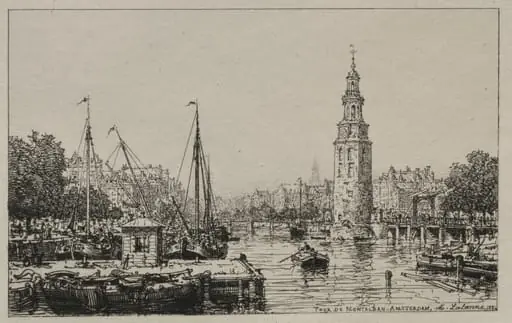 Tour de Montelban, Amsterdam
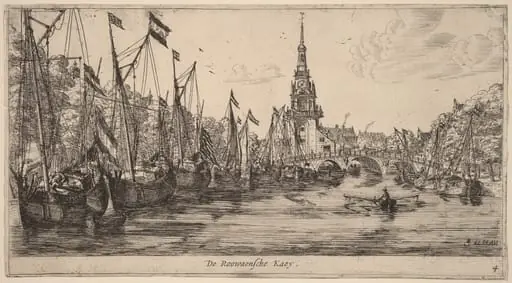 Roowaensche Quay (De Roowaensche Kaey)