Artwork
Funeral Boat, Tomb of Haremhab
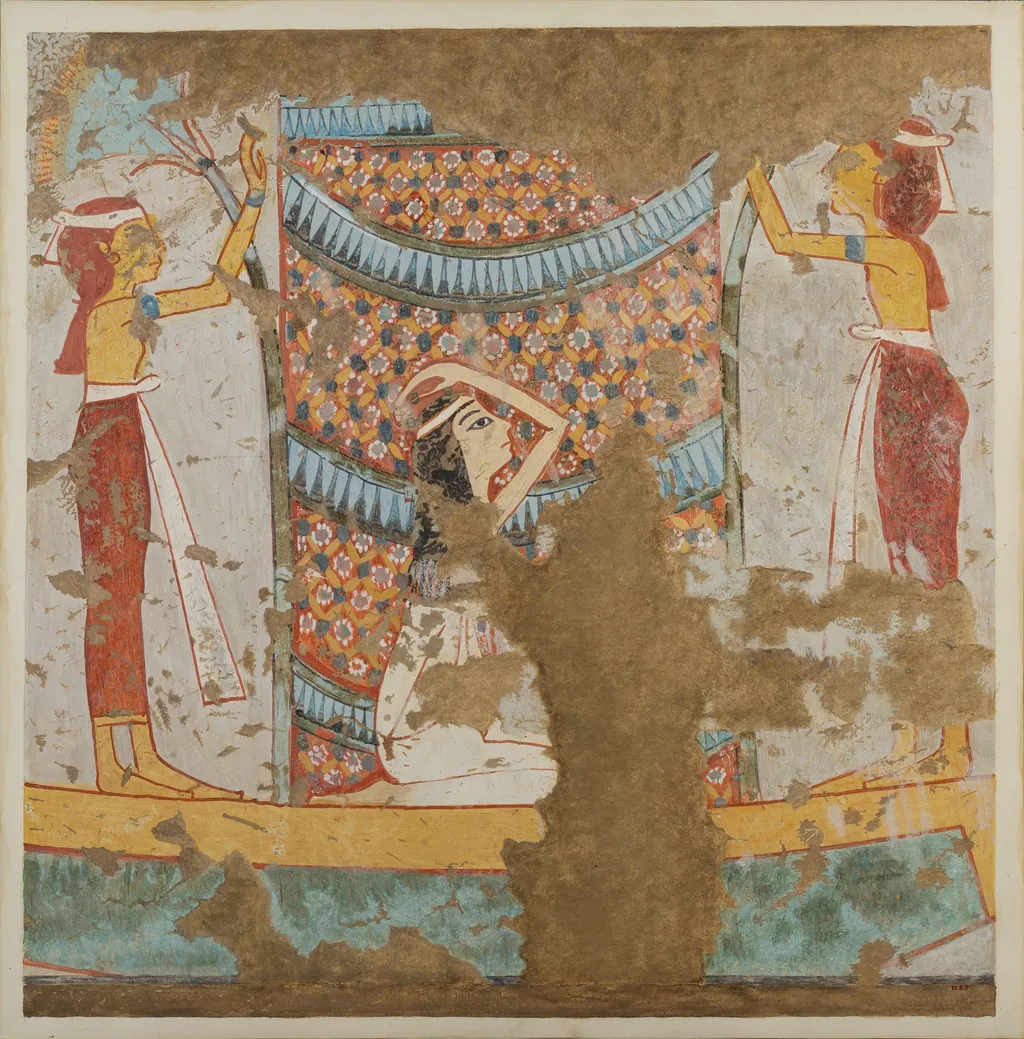
Funeral Boat, Tomb of Haremhab is an unspecified painting by Norman de Garis Davies. It is held in the collection of the Metropolitan Museum of Art.
About this work
Overview
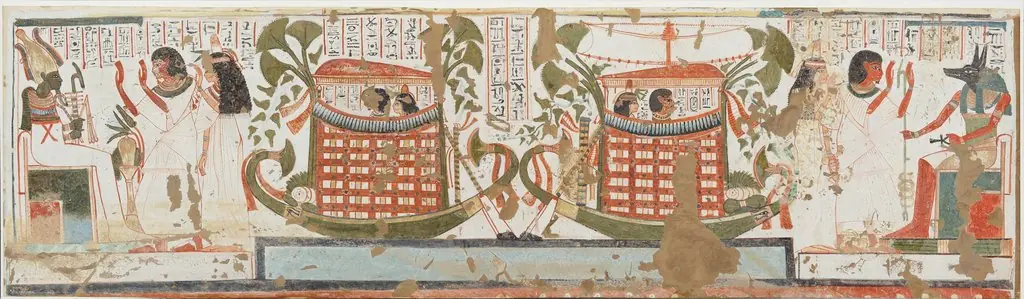
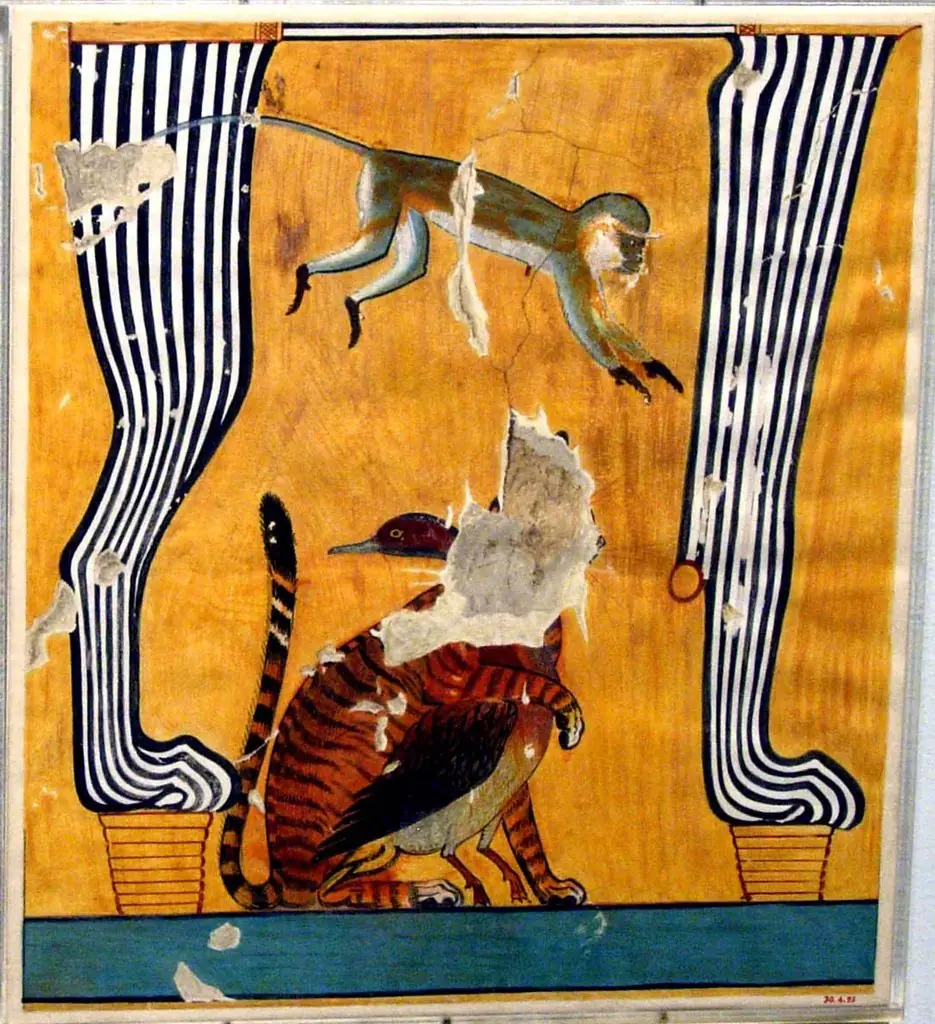
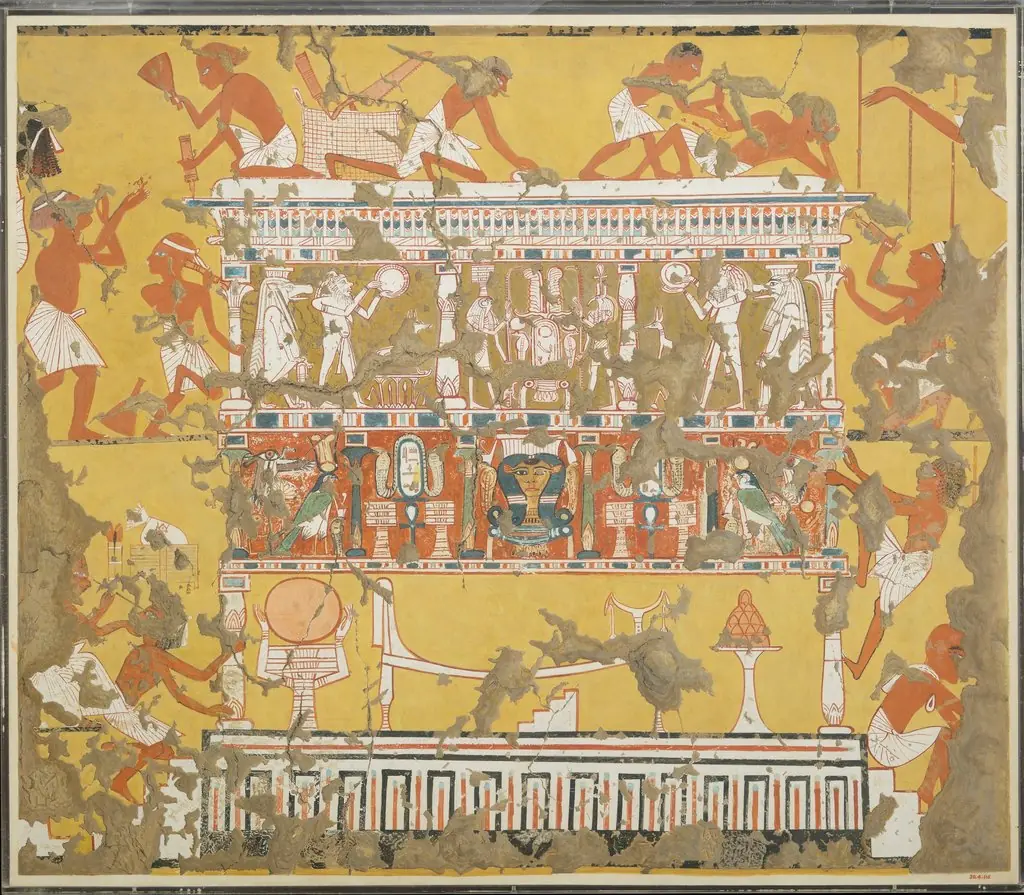
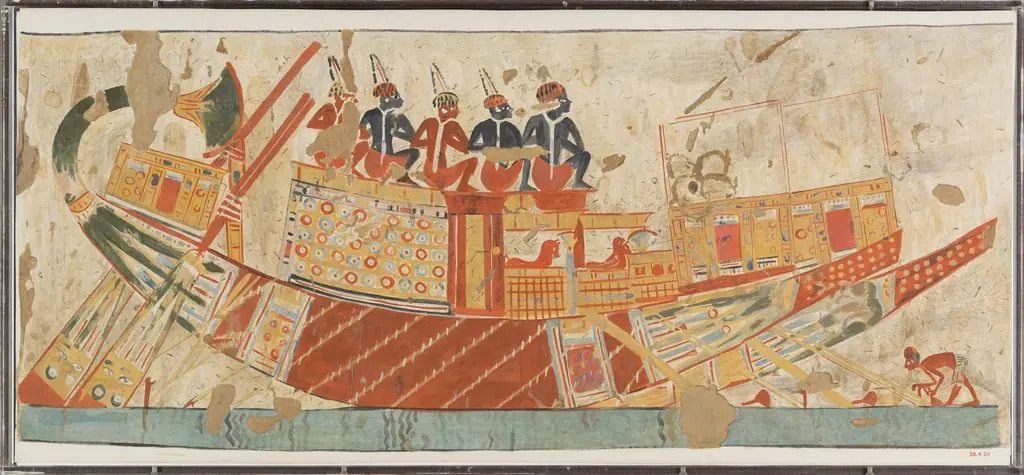
Executed in a palette of vivid, flat hues, it depicts two elongated figures supporting a richly patterned boat that bears a curved roof.
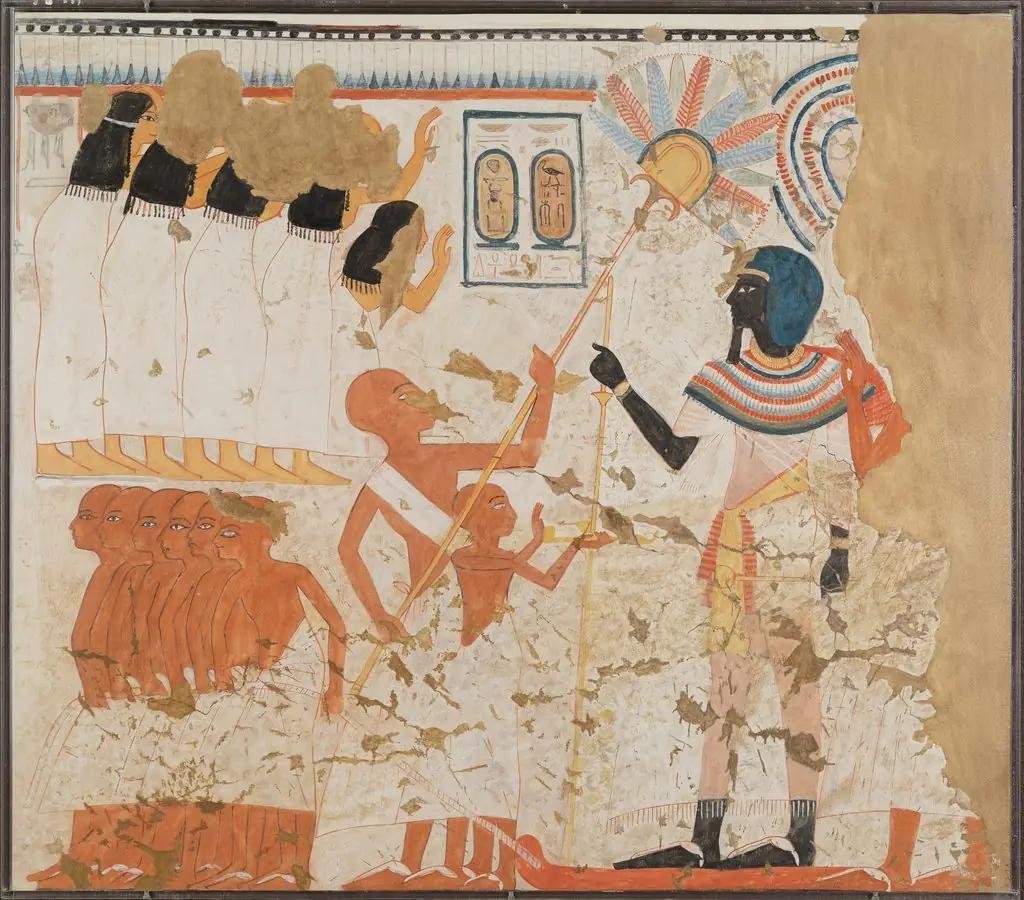
The work entitled *Funeral Boat, Tomb of Haremhab* is a wall painting from an ancient Egyptian burial chamber. Executed in a palette of vivid, flat hues, it depicts two elongated figures supporting a richly patterned boat that bears a curved roof. A seated passenger occupies the vessel, while the scene rests upon a line of ground rendered in a muted green‑blue tone. The surface shows the effects of age, with areas of loss and flaking pigment.
Subject & Meaning
The composition illustrates a funerary barque, a symbolic conveyance for the deceased’s journey to the afterlife. The two standing attendants, dressed in long, brightly colored robes, appear to bear the boat, emphasizing their role in guiding the departed. The presence of a single figure within the boat suggests the tomb’s owner, Haremhab, is being escorted toward his eternal destination, a common motif in New Kingdom burial iconography.
Technique & Style
Rendered with the characteristic Egyptian emphasis on profile and frontal presentation, the figures are rendered in stiff, upright poses outlined in bold black lines. The color fields are applied in flat, unmodulated washes, while decorative motifs on the boat’s roof—red, blue, and white geometric patterns—demonstrate the period’s penchant for symbolic coloration. The paint layer, now partially deteriorated, reveals the original mineral pigments and the fresco‑like technique used on the tomb wall.
History & Provenance
The painting originates from the tomb of Haremhab, a high‑ranking official of the 18th Dynasty, located in the Theban necropolis. Its current condition reflects centuries of exposure and the removal of some plaster sections. Early 20th‑century Egyptologist Norman de Garis Davies documented and reconstructed the fragment, providing a scholarly record that guides present‑day conservation efforts.
Context
Funerary barques appear throughout New Kingdom tombs as visual assurances of safe passage for the dead. The stylized representation aligns with state‑sanctioned artistic conventions that prioritized clarity of symbolic meaning over naturalistic detail. Within the broader corpus of Egyptian tomb decoration, this scene exemplifies the integration of ritual narrative and decorative program intended to secure the deceased’s rebirth in the afterlife.
Artist & collection
Artist
Norman de Garis Davies painted delicate scenes straight from ancient Egyptian tomb walls.