Artwork
Craftsmen, Tomb of Nebamun and Ipuky
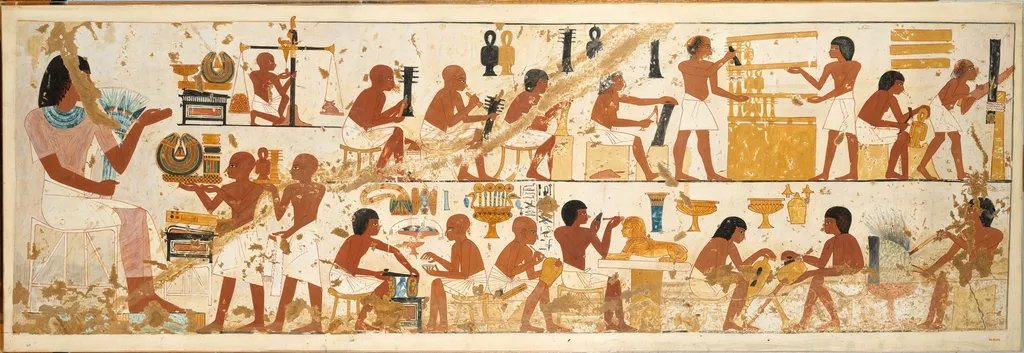
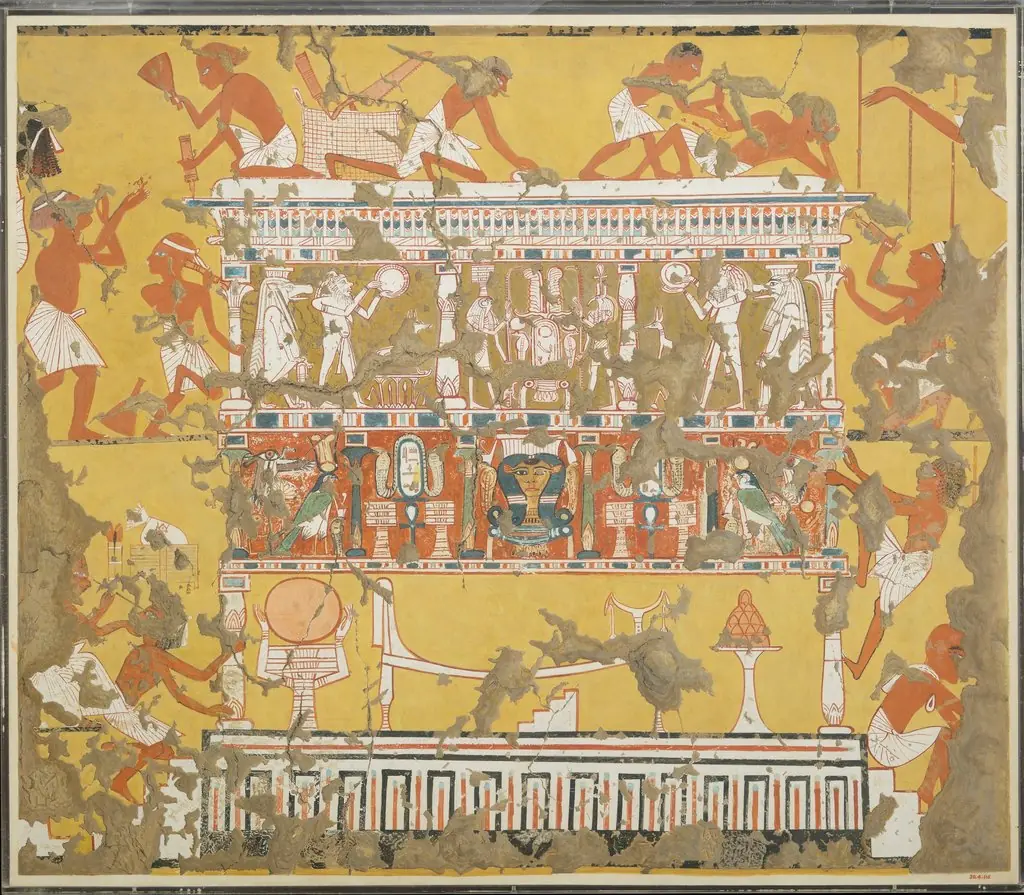
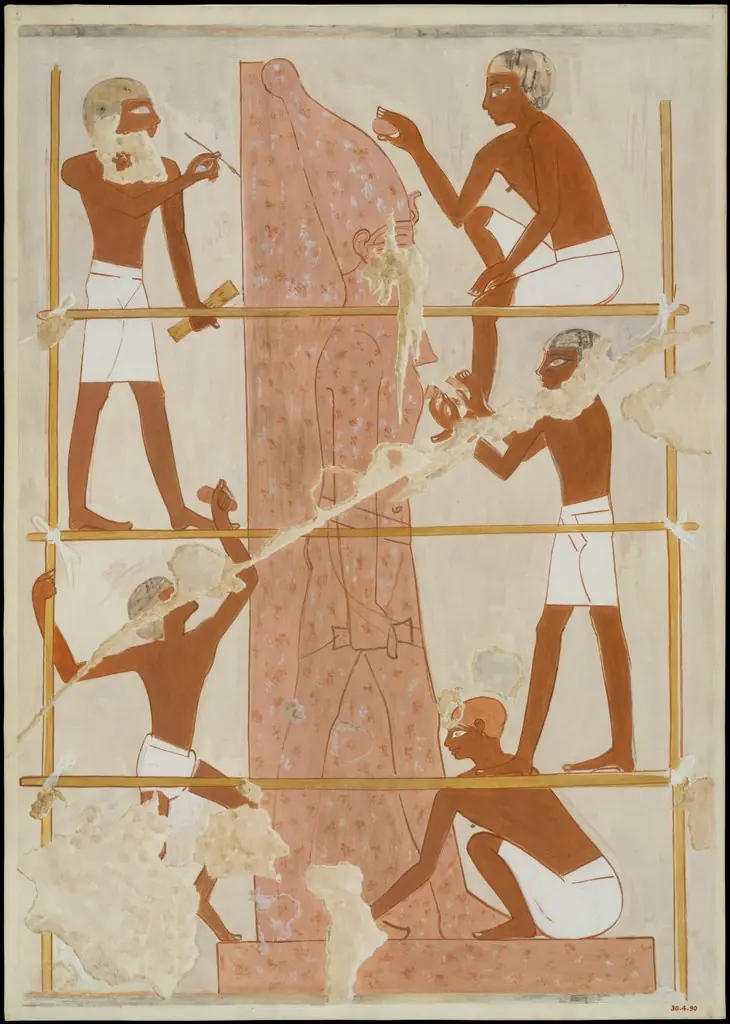
Craftsmen, Tomb of Nebamun and Ipuky is an unspecified painting by Norman de Garis Davies. It is held in the collection of the Metropolitan Museum of Art. This wall painting once adorned the tomb of Nebamun and Ipuky, an official from ancient Thebes during the 18th Dynasty.
About this work
Overview
The composition is arranged in two horizontal registers, with figures shown in profile according to Egyptian conventions.
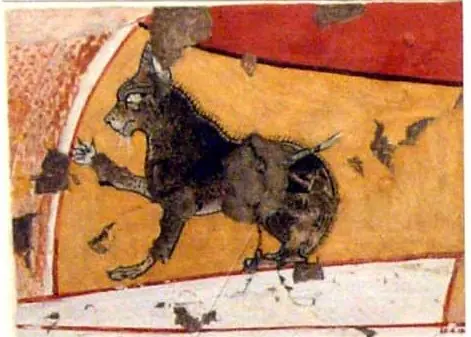
This wall painting once adorned the tomb of Nebamun and Ipuky, an official from ancient Thebes during the 18th Dynasty. It depicts laborers and attendants engaged in daily tasks related to food preparation and offerings. The composition is arranged in two horizontal registers, with figures shown in profile according to Egyptian conventions. Earth tones dominate, accented by gold, while hieroglyphic inscriptions frame the scenes. A cat and a bird appear as subtle, naturalistic details amid the formal arrangement.
Subject & Meaning
The scene illustrates the provisioning of the afterlife, a central concern in Egyptian funerary belief. Figures grinding grain, carrying jars, and seated at feasting tables represent the eternal supply of food and labor for the deceased. The presence of a cat, likely symbolizing protection or domestic harmony, and a flying bird, perhaps a sign of the soul or divine presence, adds layers of symbolic meaning beyond mere documentation of work.
Technique & Style
Painted in tempera on plaster, the work follows traditional Egyptian artistic rules: figures rendered in composite view, hierarchical scale, and flat planes of color. The palette relies on natural pigments—ochres, malachite, and lapis lazuli—with gold leaf used sparingly for emphasis. Brushwork is precise, and the figures lack individualized features, prioritizing symbolic clarity over realism, though the cat and bird introduce a rare moment of spontaneous observation.
History & Provenance
The painting was excavated from the Theban tomb complex in the early 19th century and later acquired by the British Museum. It was documented and carefully removed by Norman de Garis Davies, a noted artist and Egyptologist who specialized in copying tomb murals. His detailed records preserved the painting’s original context, which had been damaged by time and looting. The fragment remains one of many from Nebamun’s tomb now dispersed across institutions.
Context
Tomb paintings like this were part of a broader tradition meant to ensure the deceased’s sustenance and status in the afterlife. Nebamun, as a scribe and accountant, would have overseen grain storage and distribution in life, making these scenes both practical and aspirational. Similar imagery appears in other elite tombs of the New Kingdom, reflecting standardized religious and social ideals shared among the Theban bureaucracy.
Legacy
The painting contributes to modern understanding of daily life in ancient Egypt, particularly the roles of laborers and the symbolic use of animals. Davies’s meticulous copies preserved details lost to deterioration, influencing later scholarship. Though fragmentary, the scene continues to be studied for its blend of ritual formality and quiet, observed detail—offering a glimpse into the rhythms of an ancient world beyond royal monuments.
Artist & collection
Artist
Norman de Garis Davies painted delicate scenes straight from ancient Egyptian tomb walls.

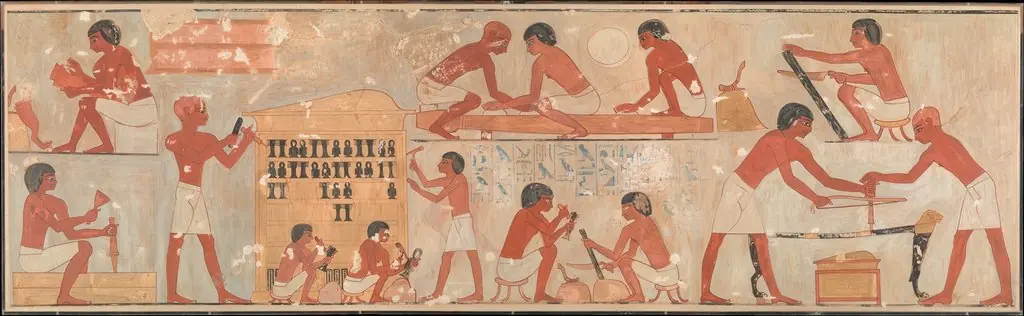 Carpenters at Work, Tomb of Rekhmire
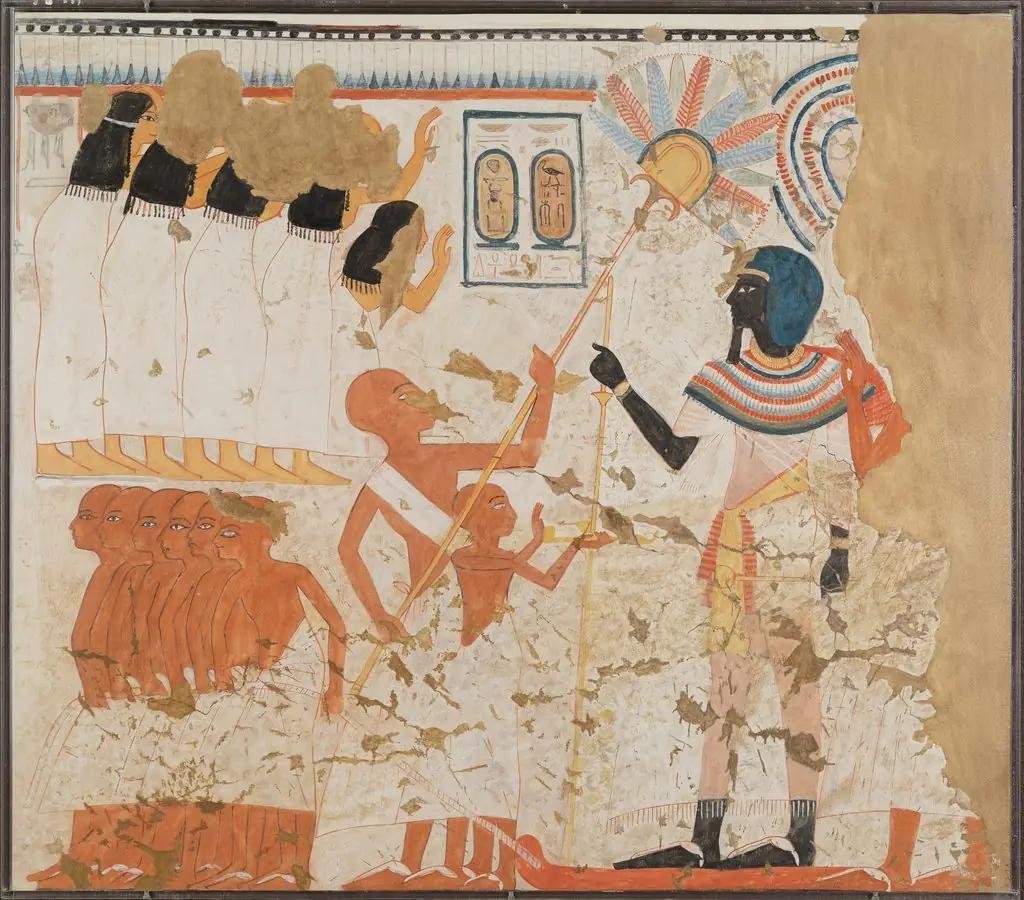
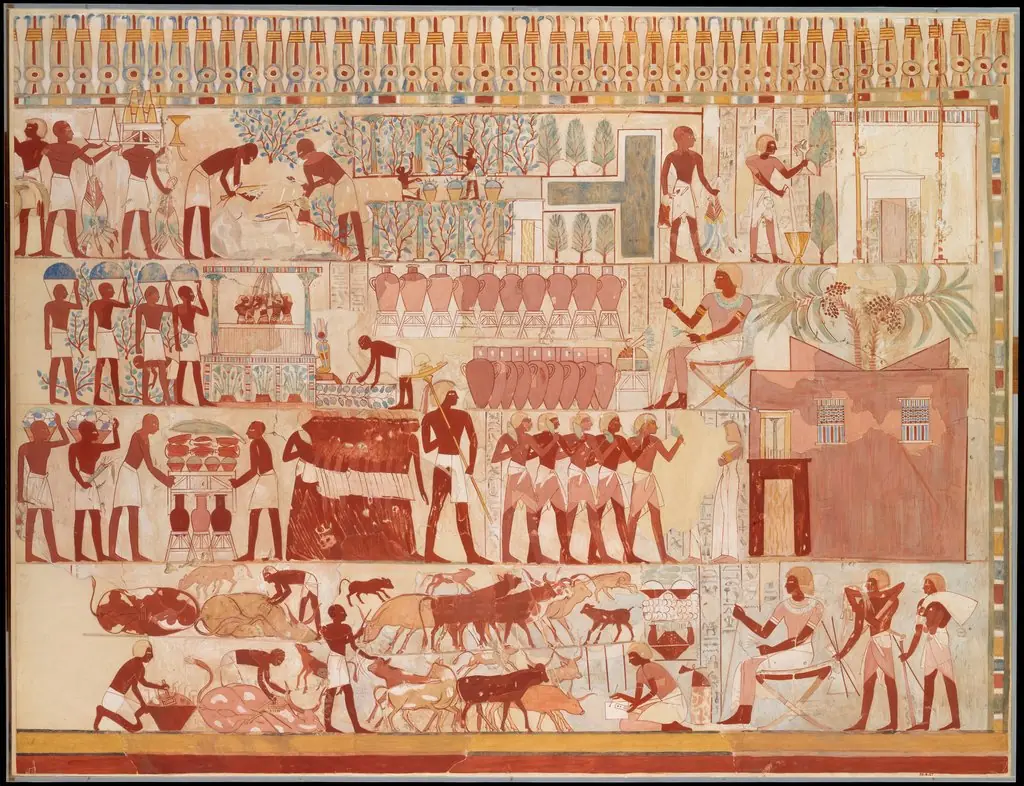 Nebamun Supervising Estate Activities, Tomb of Nebamun
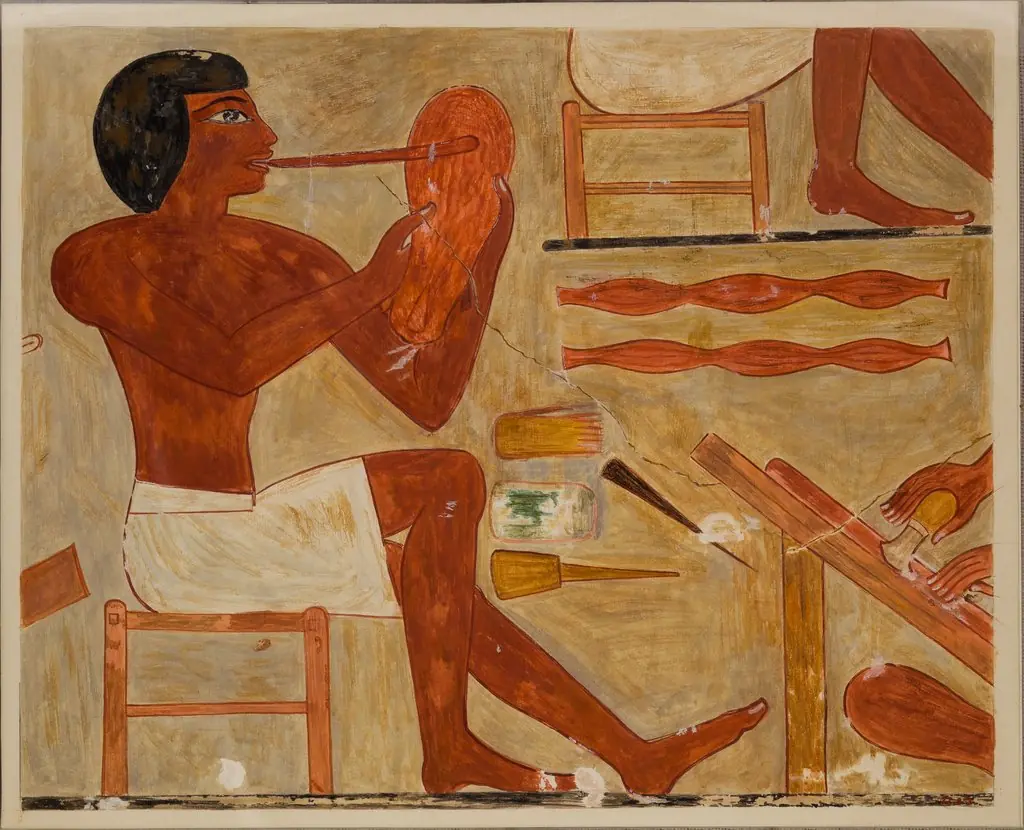 Sandal Maker, Tomb of Rekhmire
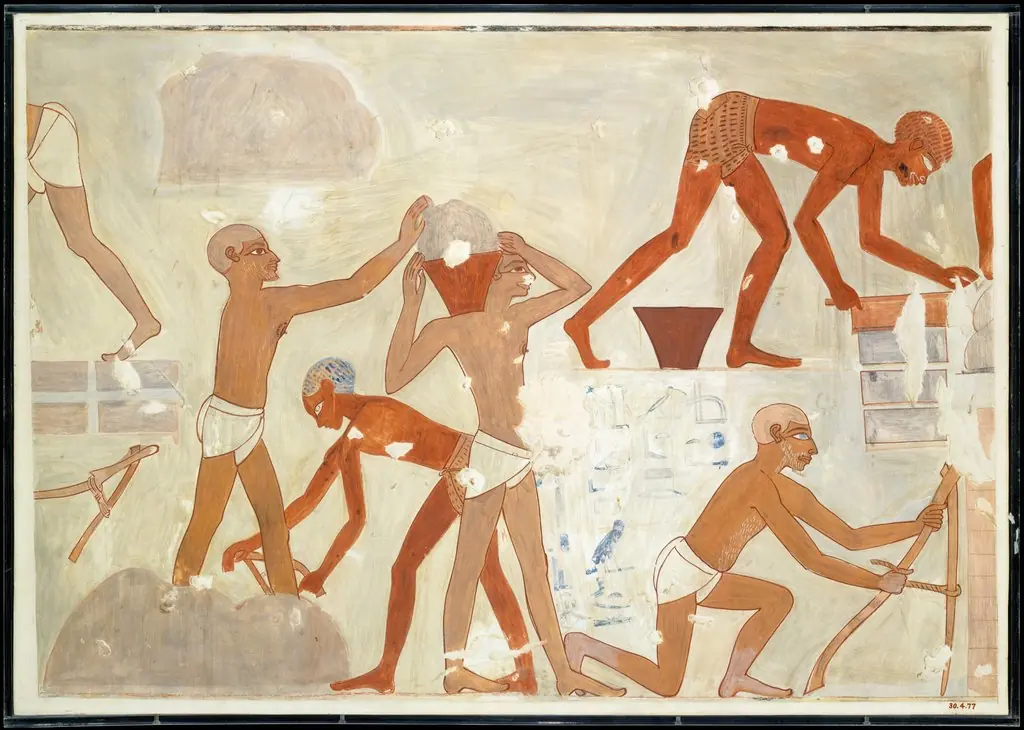 Brickmakers, Tomb of Rekhmire
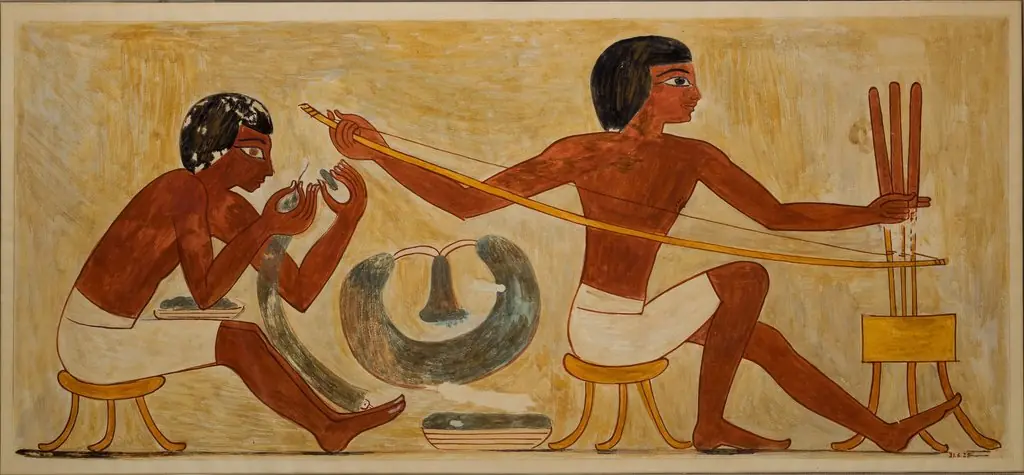 Stringing and Drilling Beads, Tomb of Rekhmire
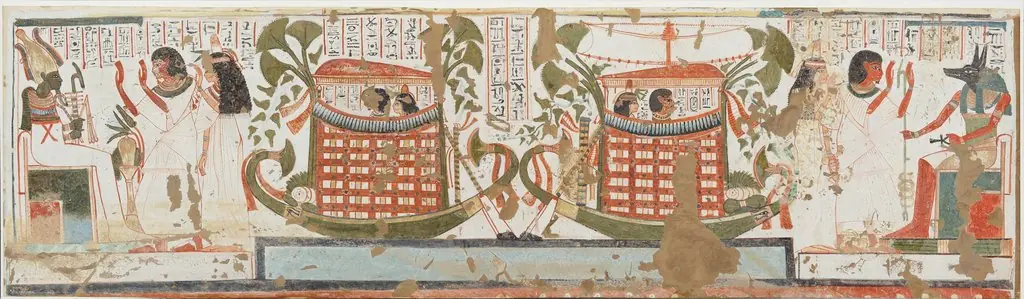
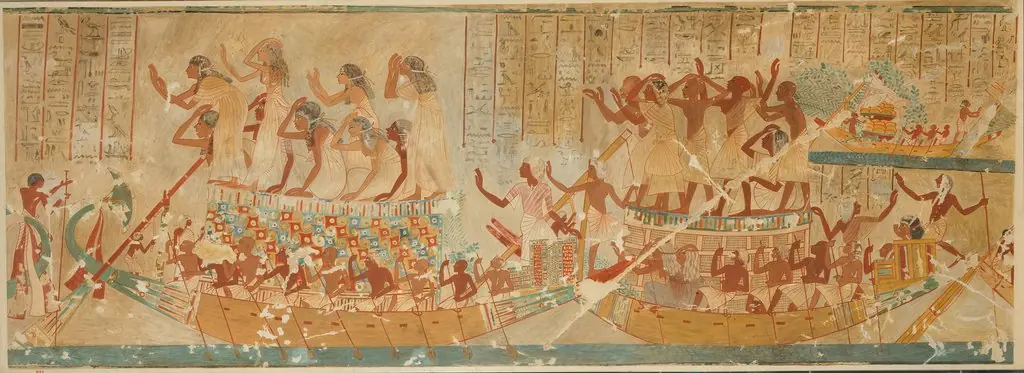 Boats with Mourners and Provisions, Tomb of Neferhotep
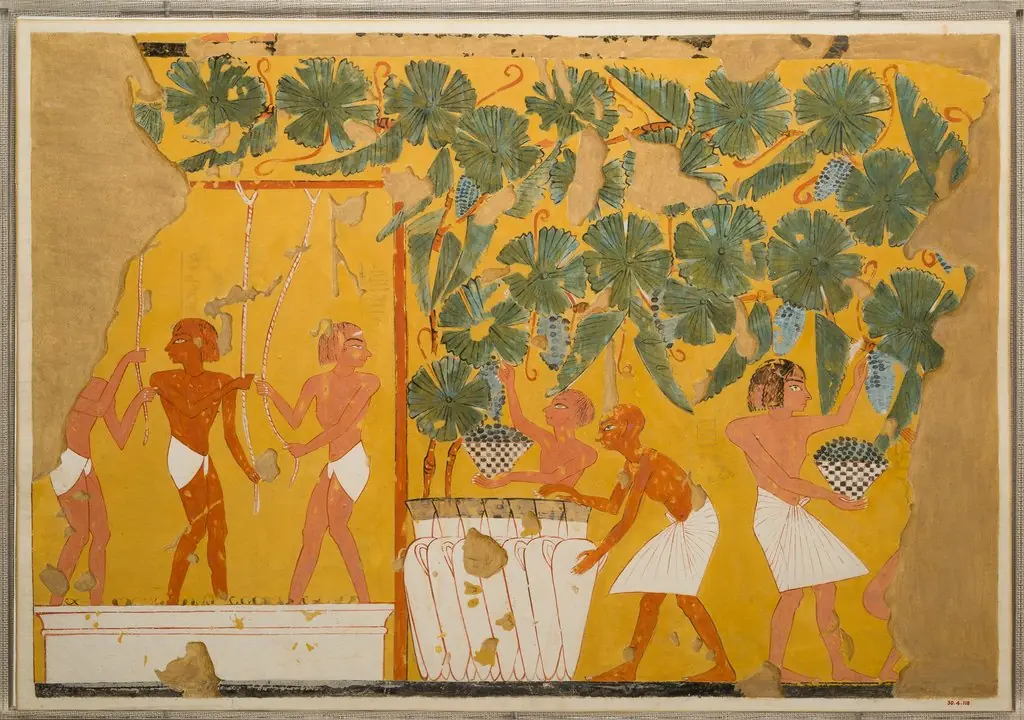 Winemaking, Tomb of Ipuy
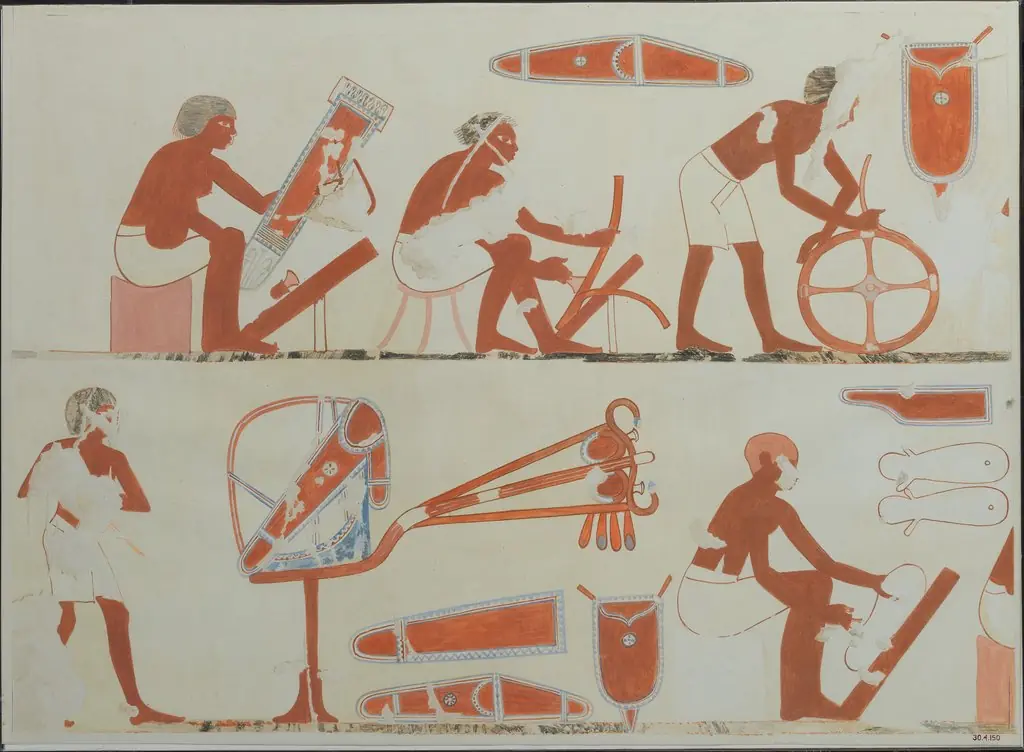 Wood and Leather Craftsmen, Tomb of Hapu
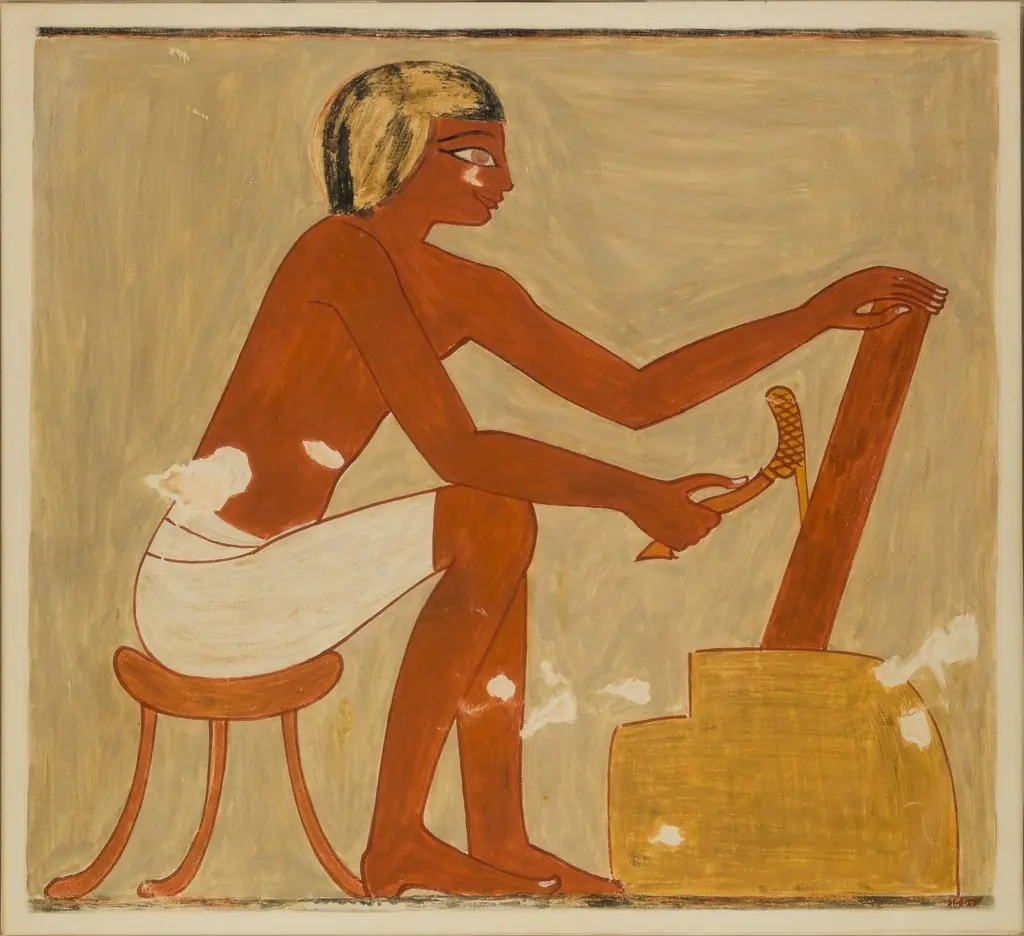 Trimming Wood with an Adze, Tomb of Rekhmire
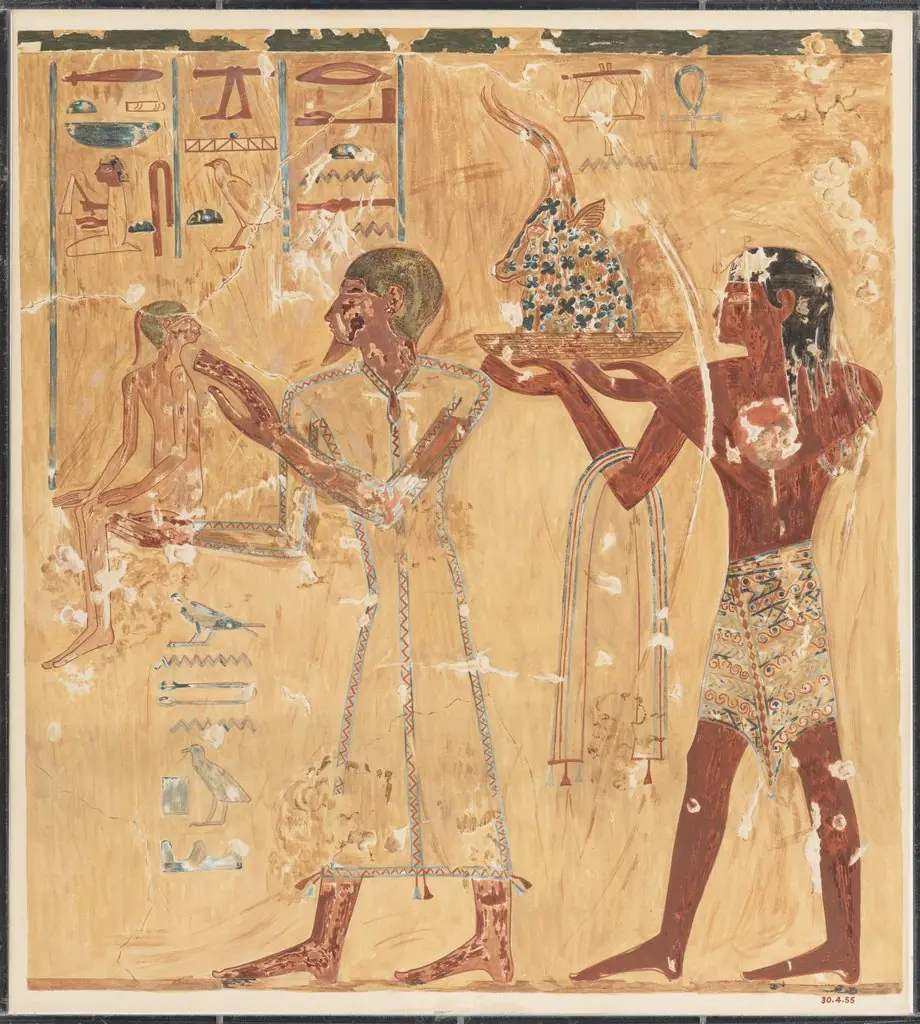 Foreigners, Tomb of Menkheperraseneb
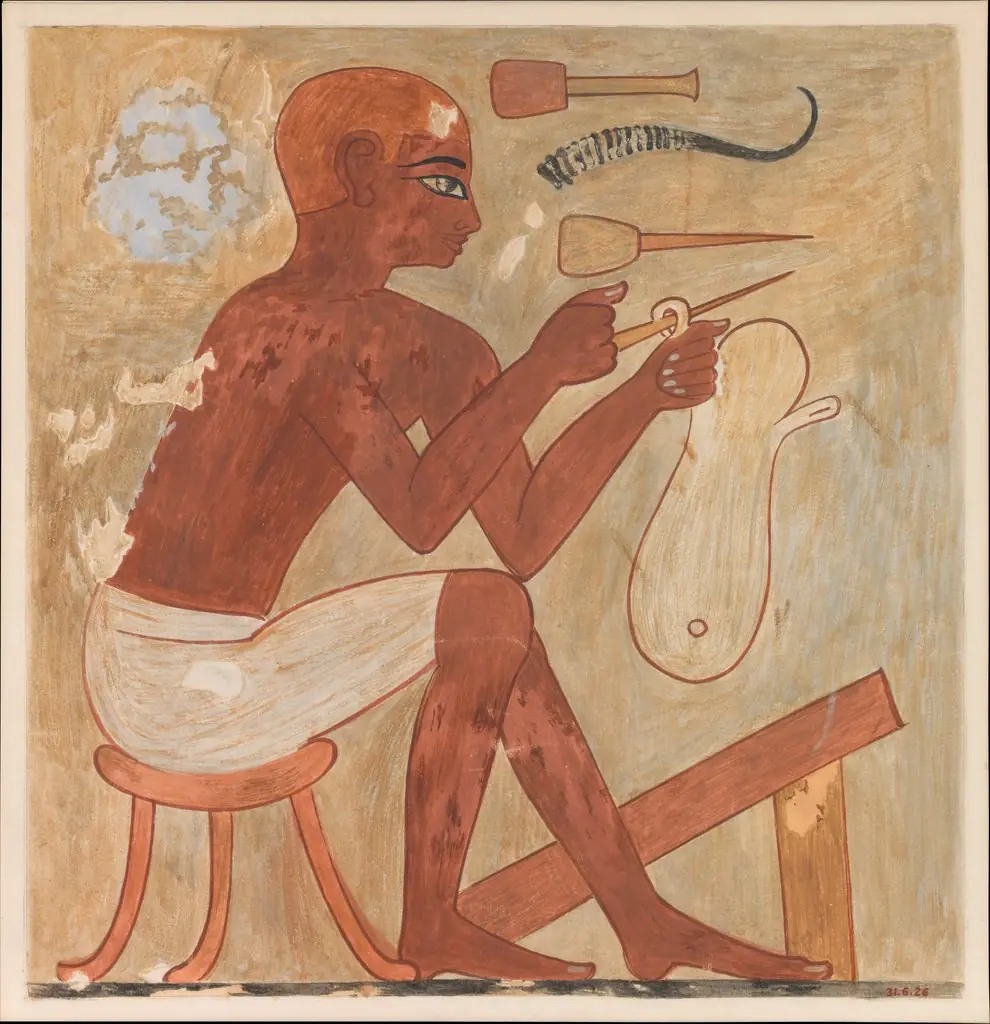 Sandal Maker, Tomb of Rekhmire
 Sculptors at Work, Tomb of Rekhmire