Artwork
Salome with the Head of St. John the Baptist
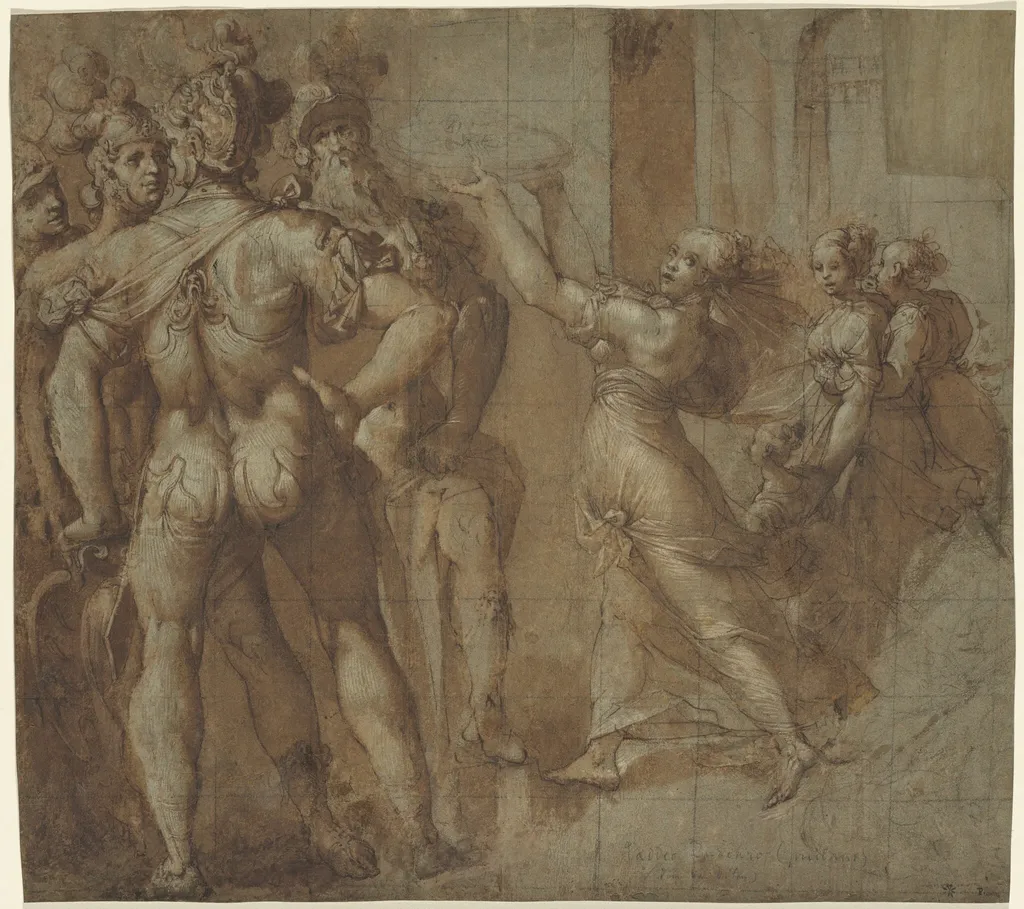
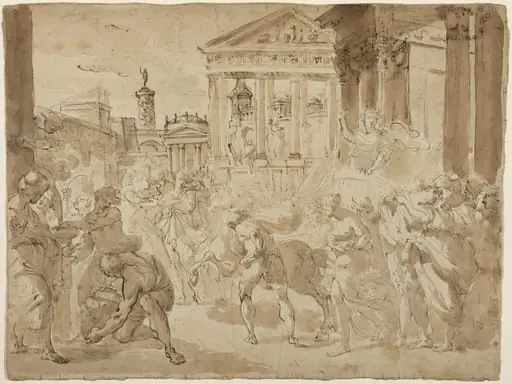
Salome with the Head of St. John the Baptist is an ink drawing by the Renaissance artist Northern Italian 16th Century. It dates from 1580 and is held in the collection of the National Gallery of Art. The drawing portrays the biblical episode of Salome receiving the head of John the Baptist.
About this work
Overview
The drawing portrays the biblical episode of Salome receiving the head of John the Baptist. Executed on blue laid paper, the composition centers on a muscular figure clutching the severed head, while a robed woman reaches toward him, surrounded by onlookers. The work is rendered in pen and black ink, enhanced with brown wash, black chalk, and selective white gouache highlights.
Subject & Meaning
The scene captures the moment of Salome’s triumph and the martyrdom of John the Baptist, a theme frequently explored in Christian art. The contrast between the calm expression of the beheaded saint and the tense, emotive posture of the woman underscores the drama of violence and reward, reflecting the moral and theological tensions of the narrative.
Technique & Style
The artist employs swift, assured lines to delineate musculature and drapery, while brown washes create atmospheric depth.
The artist employs swift, assured lines to delineate musculature and drapery, while brown washes create atmospheric depth. Black chalk serves both for preliminary transfer and for shading, and white gouache is applied sparingly to accentuate the gleam of the severed head and the highlights on fabric. The overall effect is a dynamic yet controlled rendering typical of late‑Renaissance drawing practice.
History & Provenance
Created as a preparatory sketch, the work likely functioned as a study for a larger composition or a painted version. The use of blue laid paper and the combination of ink, wash, and gouache suggest a workshop setting in the 16th‑century Italian tradition, though the drawing’s precise origin and subsequent ownership remain undocumented.
Artist & collection

Artist
This artist drew religious scenes in the late 1500s, blending chalk and ink to tell stories on paper.

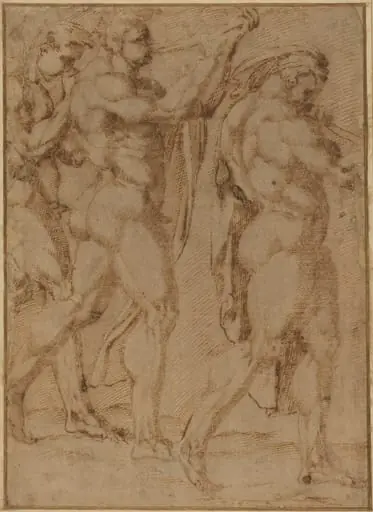 Triumphal Procession
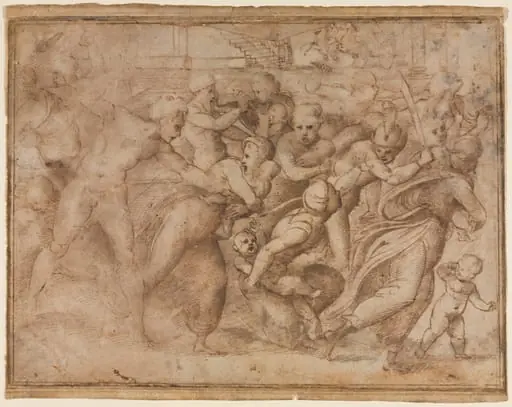 Copy of Raphael's Massacre of the Innocents
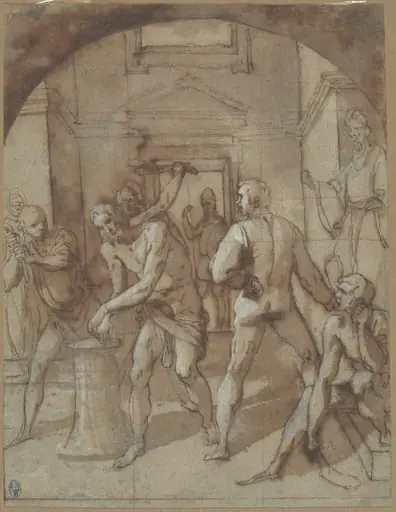 The Flagellation
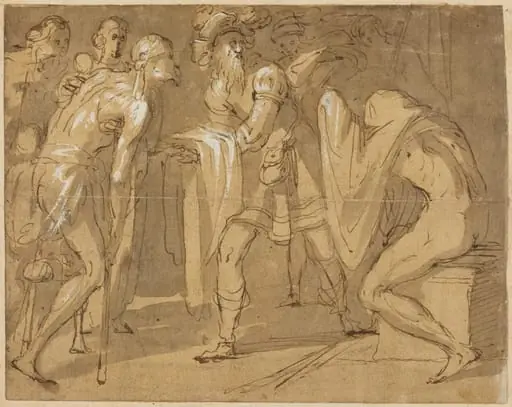 Saint Homobono
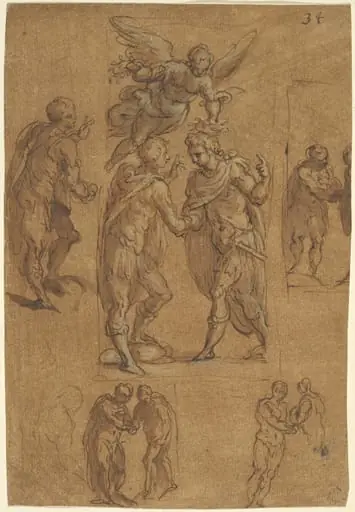 Two Soldiers Crowned by Victory
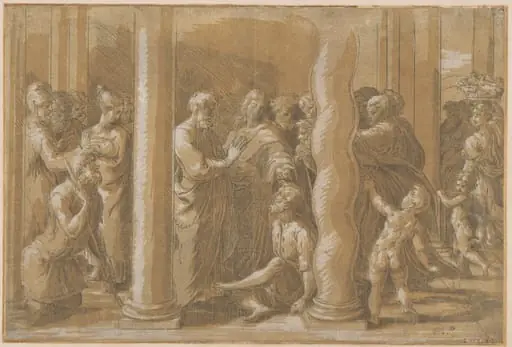 Saints Peter and John Healing the Lame Man at the Golden Gate
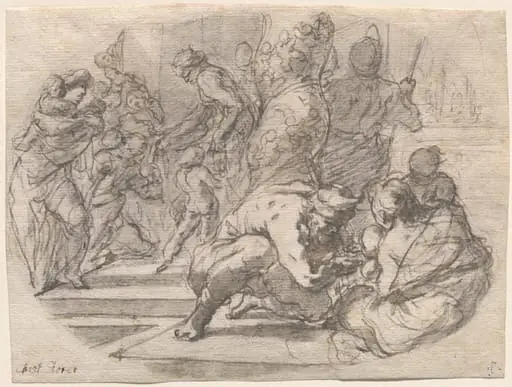 The Generosity of Empress Pulcheria
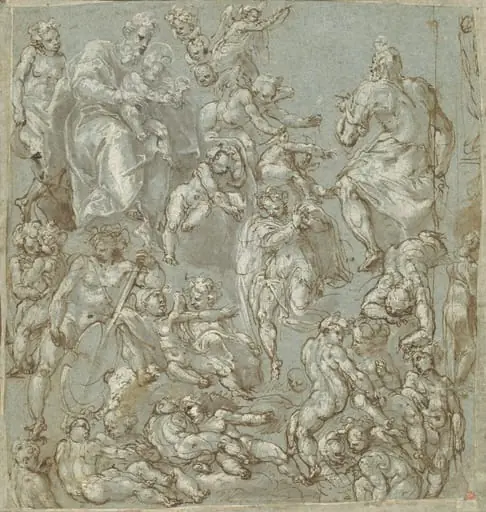 Saint Joseph and the Christ Child with Angels and Putti
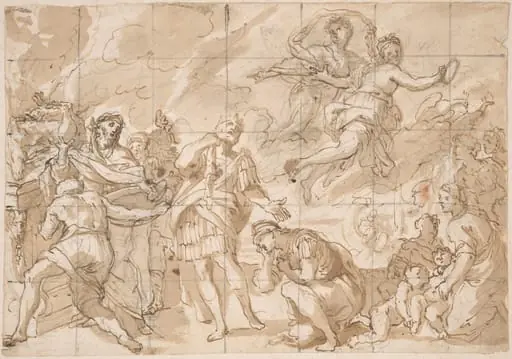 The Sacrifice of Iphigenia
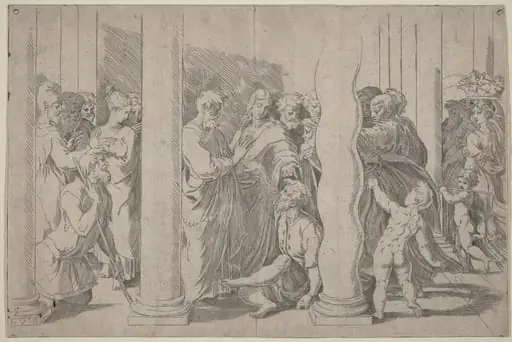 Saints Peter and John Healing the Lame Man at the Golden Gate
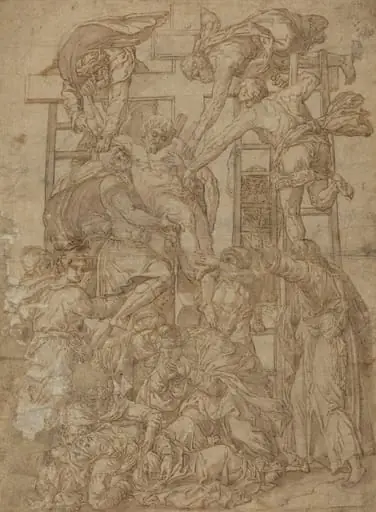 Descent from the Cross
 A Triumphal Procession in Ancient Rome