Artwork
Saint Joseph and the Christ Child with Angels and Putti
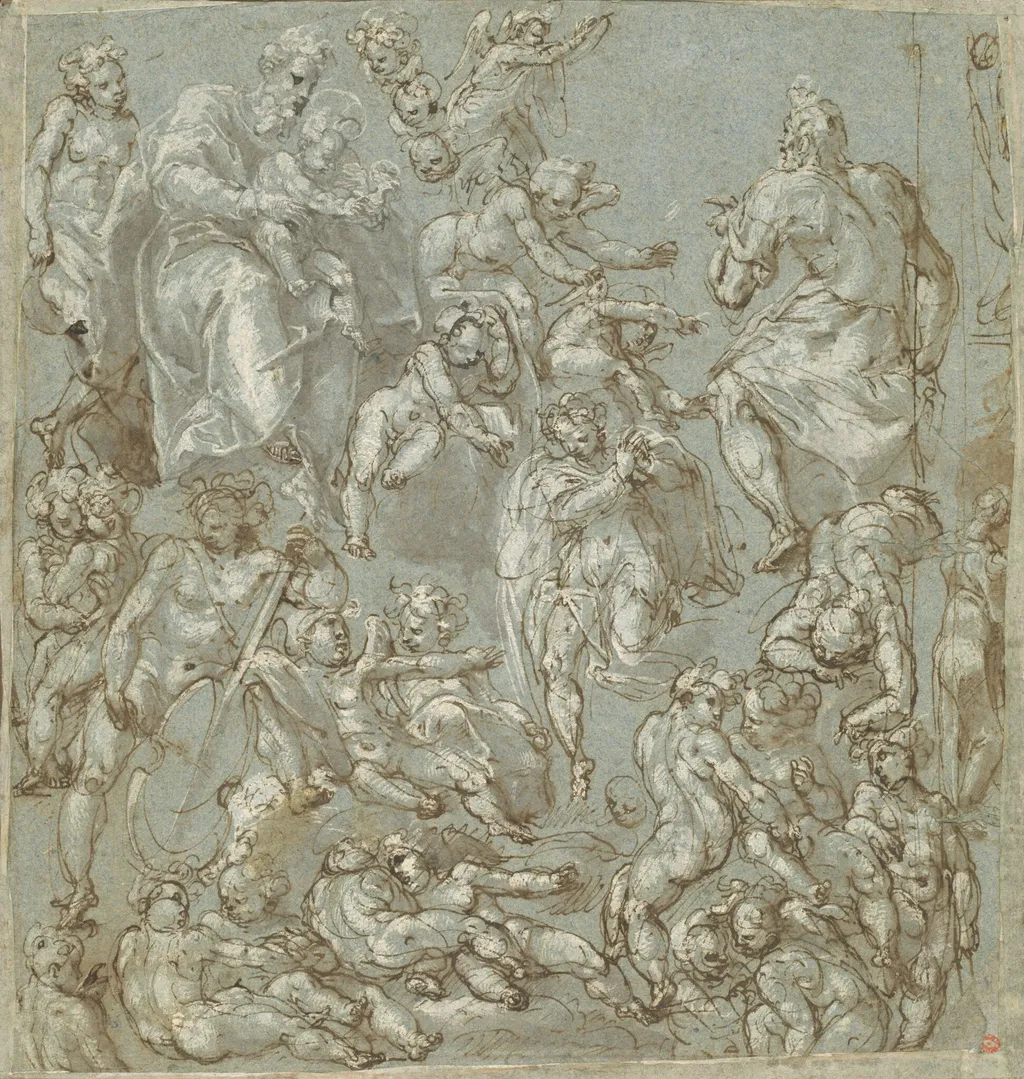
Saint Joseph and the Christ Child with Angels and Putti is an ink drawing by the Renaissance artist Cesare Pollini. It dates from 1595 and is held in the collection of the National Gallery of Art.
About this work
This painting is called Saint Joseph and the Christ Child with Angels and Putti.
It was created by Cesare Pollini between 1590 and 1600.
The artist used a mix of pen, brown ink, and gray and brown wash, with some white gouache on blue paper, which was a common technique back then.
You can learn more about the Renaissance movement.
Overview
Cesare Pollini’s drawing titled Saint Joseph and the Christ Child with Angels and Putti dates from the late sixteenth century, around 1595. Executed on blue laid paper, the work combines pen work, brown ink, and a gray‑brown wash, with highlights of white gouache that bring out the figures against the cool background.
Subject & Meaning
The composition presents Saint Joseph alongside the infant Jesus, surrounded by a group of angels and cherubic putti. The arrangement underscores the protective role of Joseph and the divine nature of the child, a common devotional theme in Counter‑Reformation art.
Technique & Style
Pollini’s method blends linear drawing with watercolor washes, a technique typical of late Renaissance draftsmen. The use of white gouache on a blue ground creates contrast, while the delicate ink lines define the figures and their drapery, giving the scene a sense of immediacy.
History & Provenance
Created between 1590 and 1600, the drawing reflects Pollini’s activity in the Venetian artistic milieu. Its later ownership records are sparse, but it has been catalogued in several collections of Italian Renaissance drawings.
Context
During the period, religious imagery served both private devotion and public instruction. Depictions of the Holy Family with attendant angels were popular in devotional prints and drawings, providing models for contemplation and prayer.
Artist & collection


 The Conversion of St. Paul
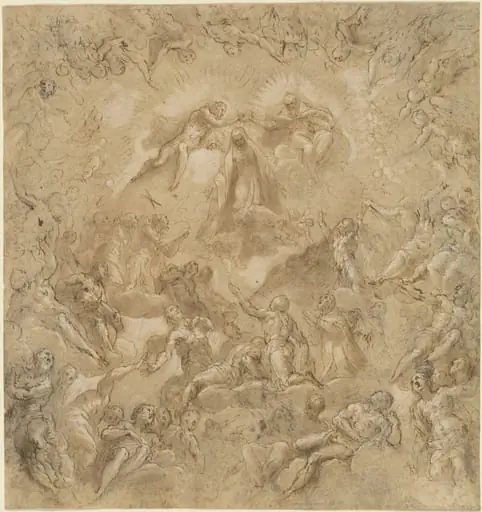 The Coronation of the Virgin
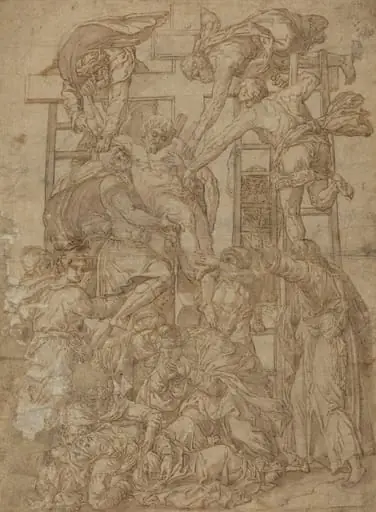 Descent from the Cross
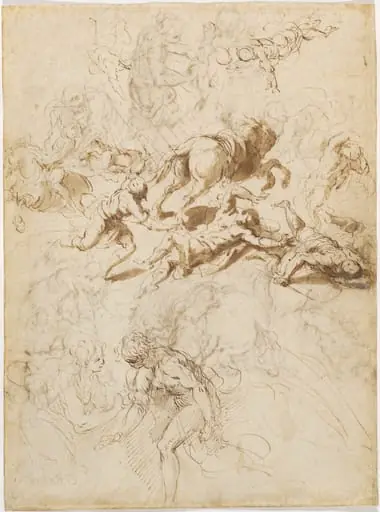 The Conversion of Saint Paul; Adam and Eve
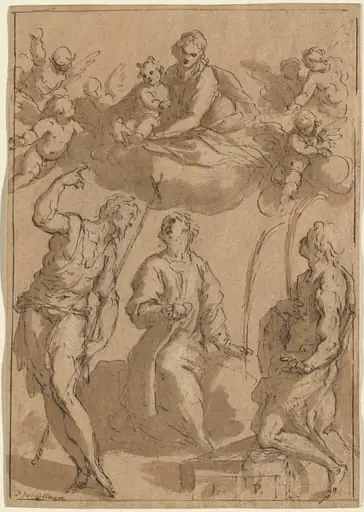 Madonna and Child in Glory with Saints John the Baptist, Stephen, and Lawrence
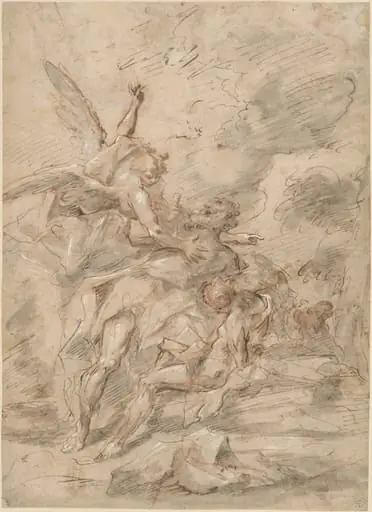 The Sacrifice of Isaac
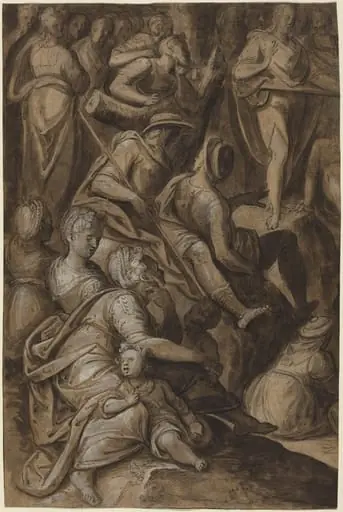 Saint John Preaching
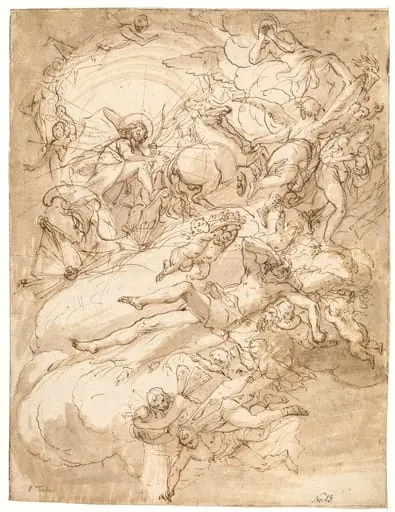 Apollo in his chariot, design for a ceiling painting
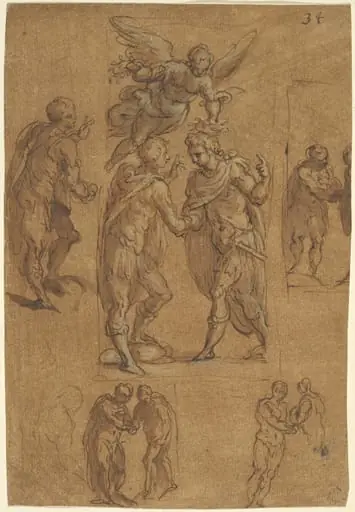 Two Soldiers Crowned by Victory
![Studies for the Rape of the Sabine Women [verso], by Pirro Ligorio](https://artifactworldgallery.com/img/pirro-ligorio--studies-for-the-rape-of-the-sabine-women-verso--b2205f5ea056eb54-w320.webp) Studies for the Rape of the Sabine Women [verso]
Studies for the Rape of the Sabine Women [verso]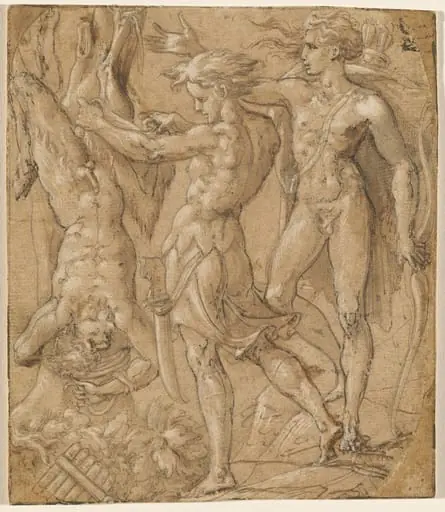 The Flaying of Marsyas
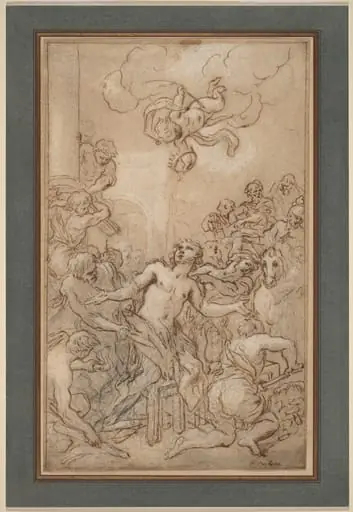 The Martyrdom of Saint Lawrence