Artwork
Untitled
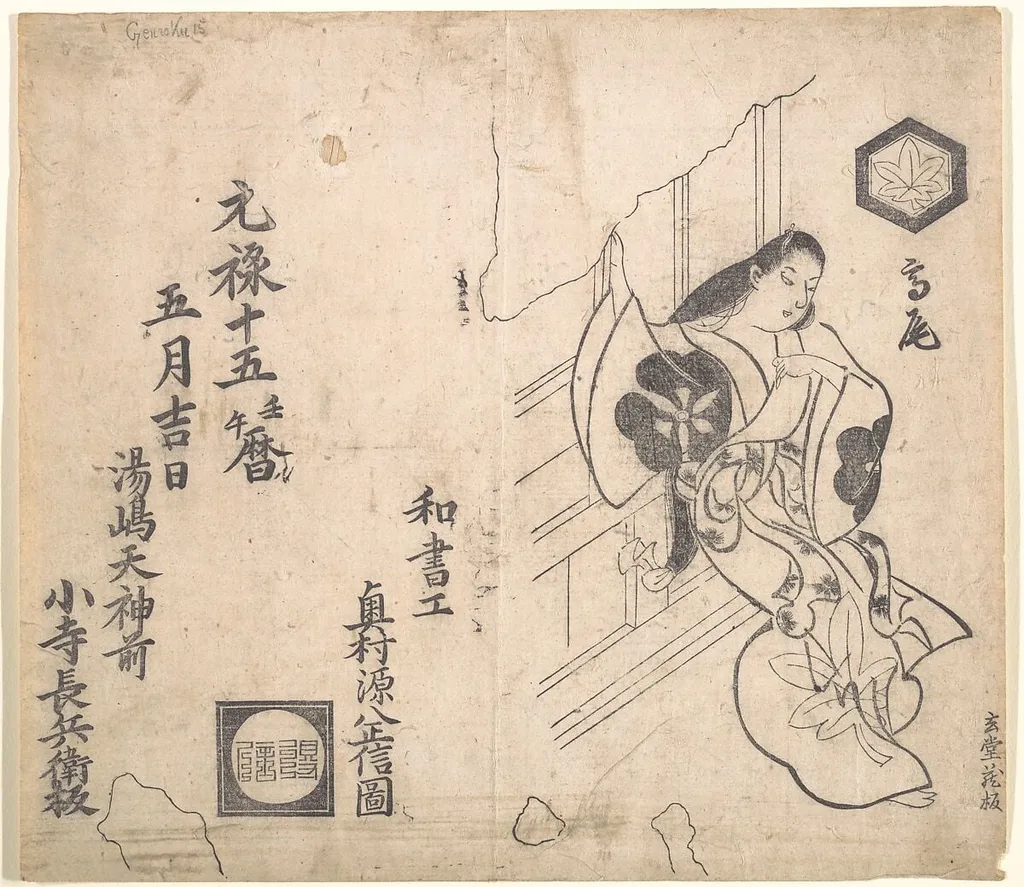
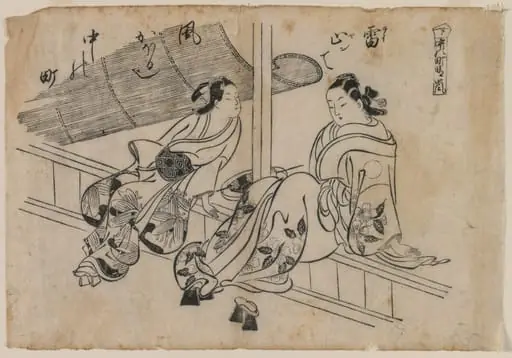
Untitled is an ink print by the Baroque artist Okumura Masanobu. It dates from 1725 and is held in the collection of the Metropolitan Museum of Art.
About this work
Overview
This monochrome woodblock print, dated to around 1725, is attributed to Okumura Masanobu and is part of The Metropolitan Museum of Art’s print collection.
This monochrome woodblock print, dated to around 1725, is attributed to Okumura Masanobu and is part of The Metropolitan Museum of Art’s print collection. Executed in ink on paper, it exemplifies the ukiyo-e tradition’s capacity for expressive minimalism. The composition relies solely on black ink to convey form, mood, and spatial depth, avoiding color while maintaining visual richness through intricate line work.
Subject & Meaning
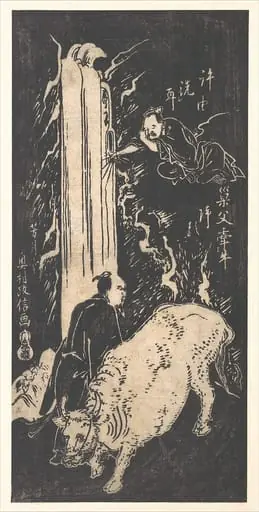
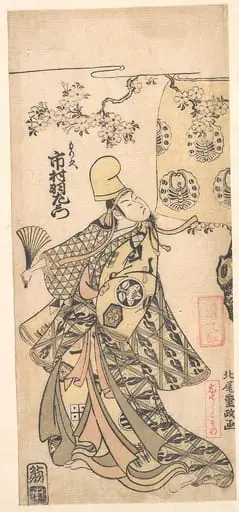
The figure is a woman captured mid-movement, leaning backward against an architectural ledge, one arm extended as if grasping at an unseen object. Her posture suggests contemplation or longing, while her calm expression contrasts with the dynamism of her pose. The ambiguous setting—neither fully interior nor exterior—enhances the sense of introspection, inviting interpretation without narrative closure.
Technique & Style
Masanobu employed precise cross-hatching to model volume and texture, particularly in the folds of the woman’s robes and the density of her hair. The ink is applied with controlled, layered strokes that build shadow without gradation, relying on line density for tonal variation. Background elements are reduced to sparse, suggestive forms, emphasizing the figure’s isolation and the print’s restrained aesthetic.
History & Provenance
The print was produced during the early 18th century in Edo, a period when woodblock printing flourished as a medium for both commercial and artistic expression. It entered The Metropolitan Museum of Art’s collection through documented acquisitions of Japanese prints, likely in the early 20th century, and has since been studied as an example of Masanobu’s experimental approach to monochrome composition.
Context
Created during the Genroku era, this work reflects the growing interest in individual emotion and everyday moments within ukiyo-e. While many prints of the time depicted actors or courtesans in vivid color, Masanobu’s use of ink alone signals a shift toward introspective, literary themes. The absence of color and the focus on posture align with broader trends in literati aesthetics gaining traction among educated urban audiences.
Legacy
This print stands as a quiet but significant example of Masanobu’s exploration of monochrome expression within a color-dominated genre. Its emphasis on line, gesture, and psychological nuance influenced later artists who sought to convey depth without reliance on pigment. Though not widely reproduced, it remains a reference point for studies of ink-based ukiyo-e and the boundaries of visual suggestion.
Artist & collection
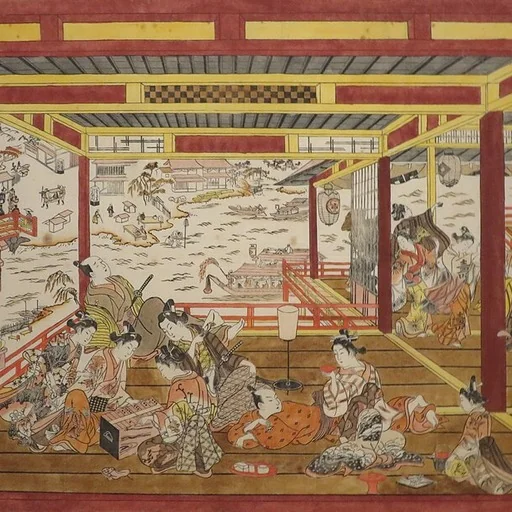
Artist
Okumura Masanobu lived in Edo (now Tokyo) when the city was a flashy, fast-growing hub of theater, gossip, and new ideas.

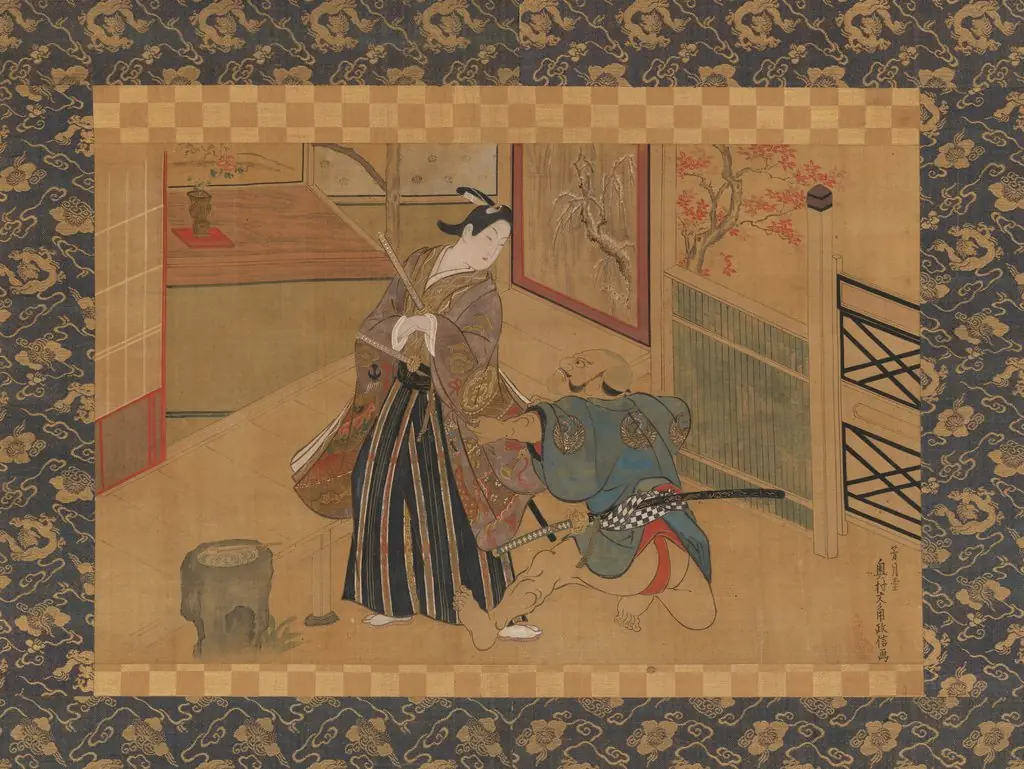 Kabuki Play Kusazuribiki from the Tales of Soga (Soga monogatari)
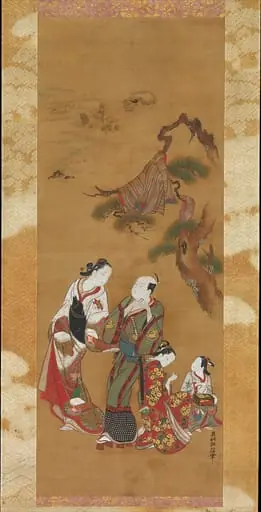 Untitled
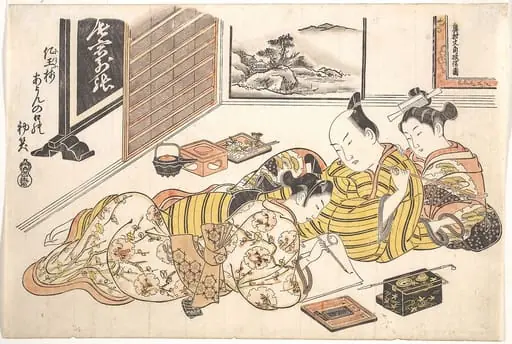 『閨の雛形』 正月|Plate from the Erotic Book Mounds of Dyed Colors: A Pattern Book for the Boudoir (Someiro no yama neya no hinagata), First Month
 Untitled
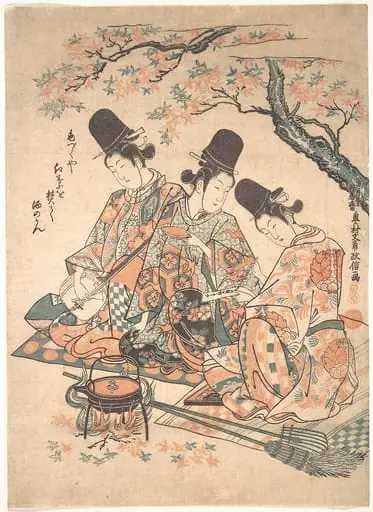 見立『平家物語』 紅葉焚図|Parody of Palace Servants Heating Sake over a Fire of Maple Leaves
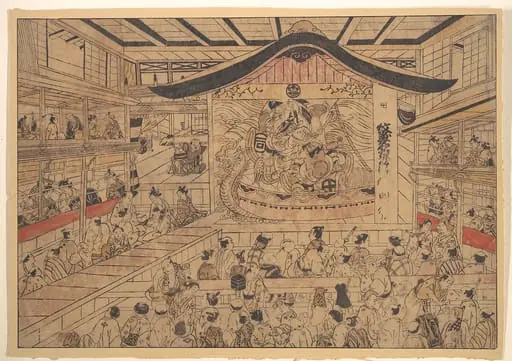 浮絵 「紋尽名古屋曽我」|Perpsective View (uki-e) of a Kabuki Theatre, with a Performance of The Crest Patterns of the Soga Brothers and Nagoya Sanza (Mon-zukushi Nagoya Soga)
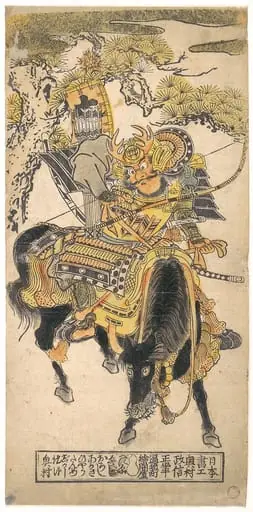 Untitled
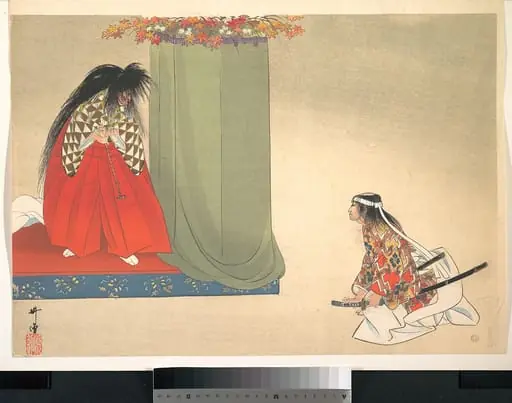 Untitled
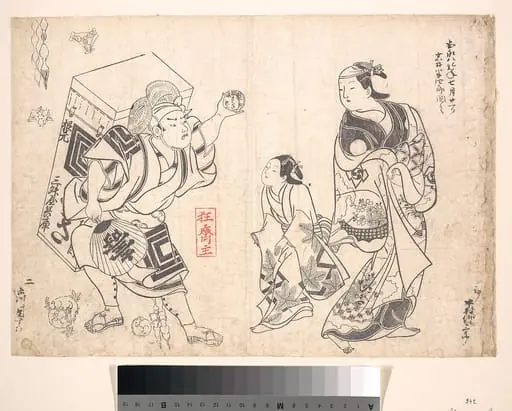 Untitled
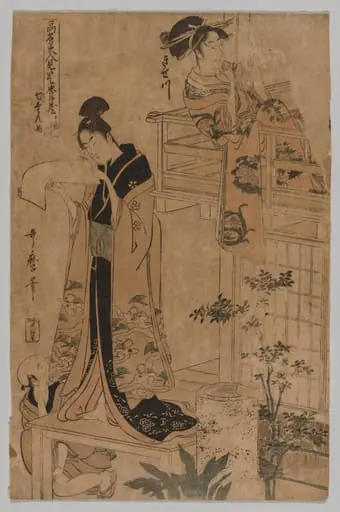 Act VII from the series The Storehouse of Loyal Retainers As Portrayed by Famous Beauties in Twelve Leaves
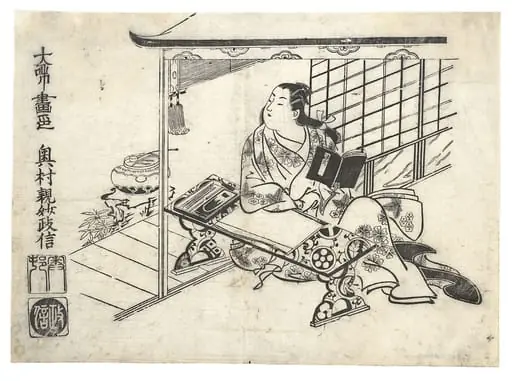 奥村政信画 見立紫式部図|Parody of Murasaki Shikibu at Her Desk
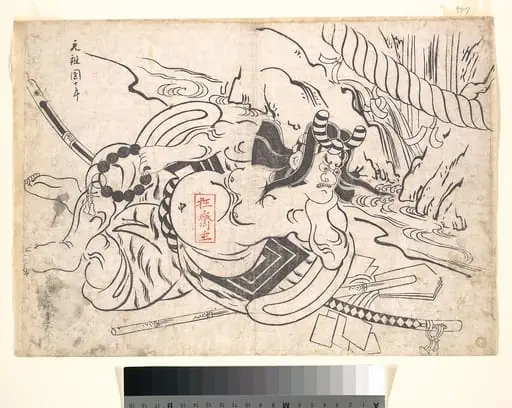 Untitled
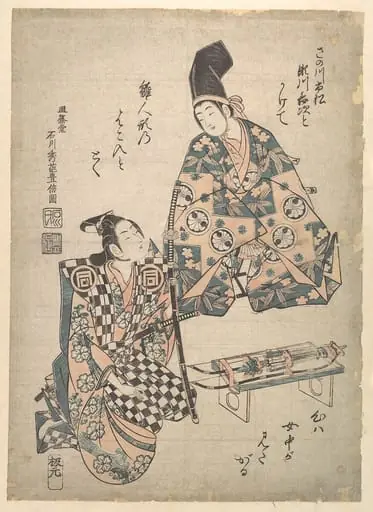 Untitled
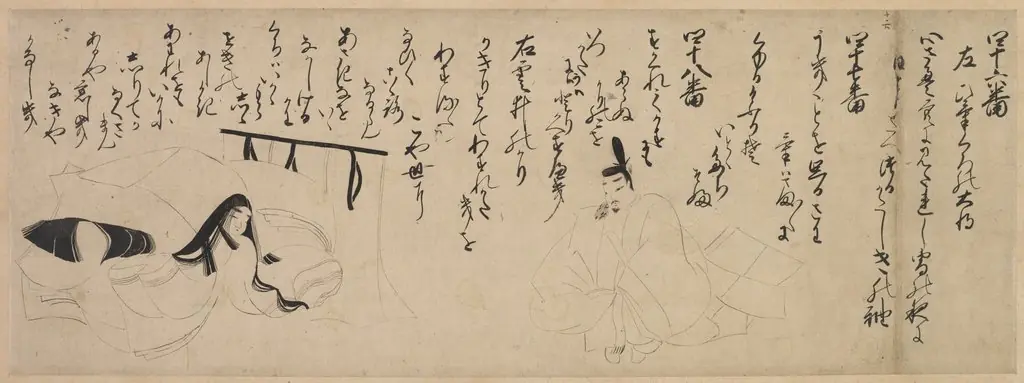 Section of an Illustrated Tale of Genji Poetry Contest
 Twilight at Nakanocho
 Kureha of Gakuiseya, from Selection of Beauties from the Pleasure Quarters
 Untitled
 Komachi Washes the Book (from the series Seven Elegant Episodes from the Life of the Poetess Ono no Komachi)
 Untitled
 女官図|Court Woman at her Desk with Poem Cards