Artwork
見立『平家物語』 紅葉焚図|Parody of Palace Servants Heating Sake over a Fire of Maple Leaves
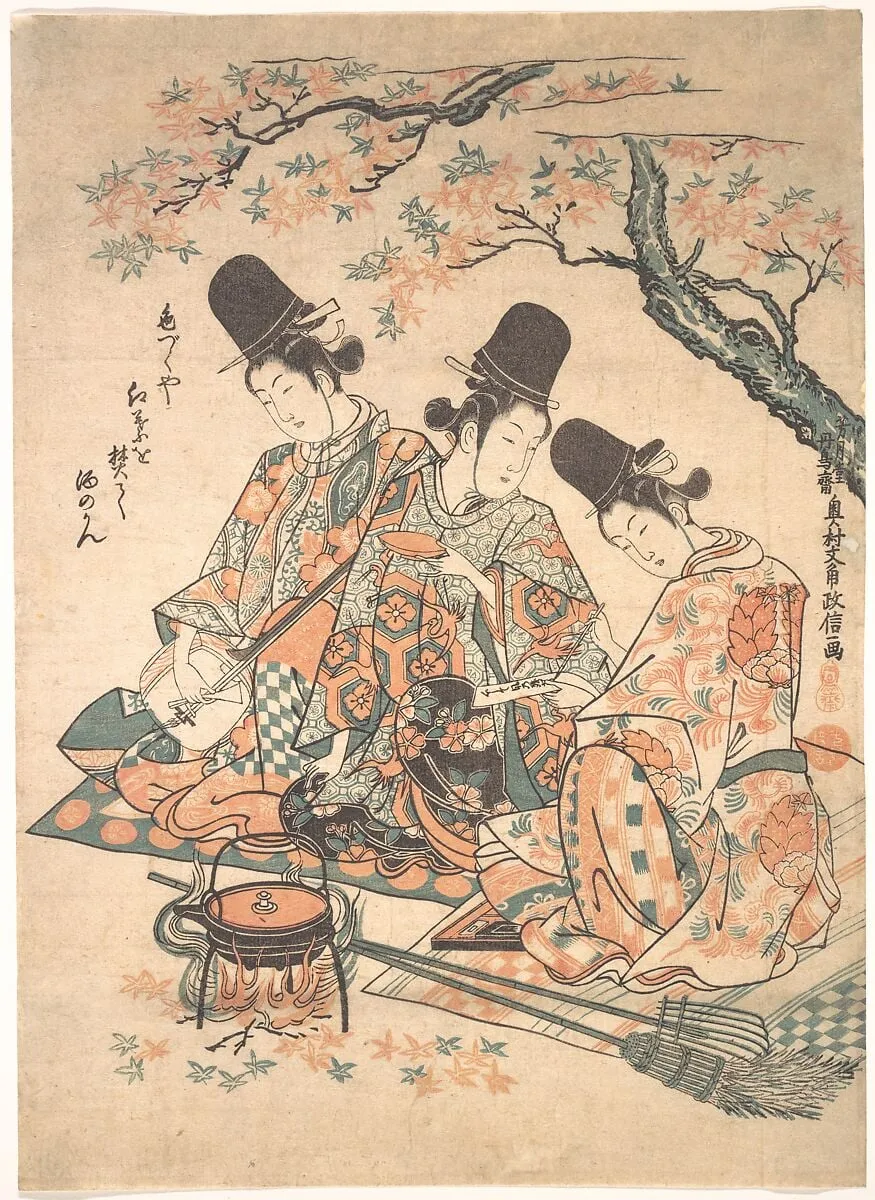
見立『平家物語』 紅葉焚図|Parody of Palace Servants Heating Sake over a Fire of Maple Leaves is an ink print by the Baroque artist Okumura Masanobu. It dates from 1750 and is held in the collection of the Metropolitan Museum of Art.
About this work
Overview
Created around 1750 by Okumura Masanobu, this benizuri-e woodblock print depicts a whimsical reinterpretation of scenes from the Heike Monogatari.
Created around 1750 by Okumura Masanobu, this benizuri-e woodblock print depicts a whimsical reinterpretation of scenes from the Heike Monogatari. Rendered in ink and color on paper, it features three courtly women engaged in an absurdly elegant act: heating sake over a fire of maple leaves. The composition balances decorative richness with playful absurdity, characteristic of Masanobu’s genre-bending approach to ukiyo-e.
Subject & Meaning
The scene parodies the tragic tale of the Heike by replacing warriors with palace attendants performing a frivolous ritual. The maple leaves, symbolic of autumn’s transience, become fuel for warming sake—a domestic act contrasting sharply with the epic’s themes of war and loss. The women’s elaborate attire and props suggest courtly life, yet their actions invert solemnity into lightheartedness, inviting viewers to reflect on the fragility of status and tradition.
Technique & Style
Masanobu employed benizuri-e, a technique using limited red pigment alongside ink and subtle greens and golds, to create vivid yet restrained color harmony. Forms are simplified with bold outlines and flat planes, enhancing the print’s graphic energy. The upward sweep of the leaf-laden branch and the angular postures of the figures lend rhythm to the scene, while the absence of detailed backgrounds focuses attention on the absurdity of the moment.
History & Provenance
The print entered the collection of The Metropolitan Museum of Art as part of its broader acquisition of Edo-period ukiyo-e. Its survival in good condition reflects its appeal to collectors interested in humorous or satirical prints. Though little is known of its early ownership, its presence in major institutions underscores its recognition as a distinctive example of mid-18th-century popular print culture.
Context
In mid-1700s Edo, ukiyo-e artists increasingly drew from literary classics to entertain urban audiences. Masanobu, a pioneer in this trend, often juxtaposed high culture with everyday absurdity. This print aligns with a broader trend of 'mitate'—visual puns that recontextualize revered subjects—offering witty commentary on social norms while appealing to the tastes of a growing merchant class.
Legacy
Okumura Masanobu’s playful reimagining of classical narratives influenced later ukiyo-e artists who embraced satire and genre blending. While not widely replicated, this print remains a key example of how Edo-period printmakers used humor to engage with cultural memory. Its enduring presence in museum collections highlights its role in expanding the thematic range of woodblock printing beyond portraiture and landscapes.
Artist & collection
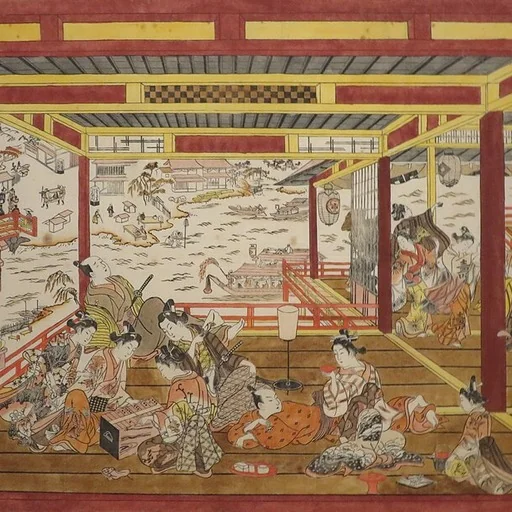
Artist
Okumura Masanobu lived in Edo (now Tokyo) when the city was a flashy, fast-growing hub of theater, gossip, and new ideas.

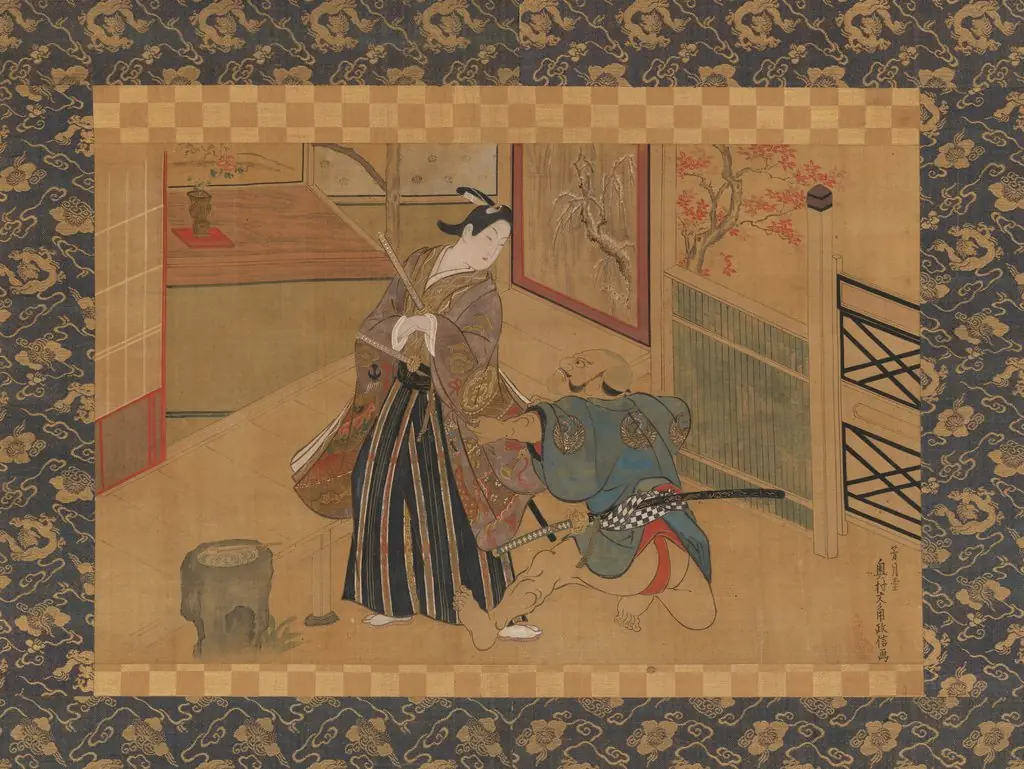 Kabuki Play Kusazuribiki from the Tales of Soga (Soga monogatari)
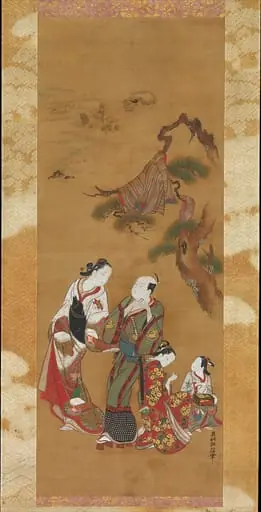 Untitled
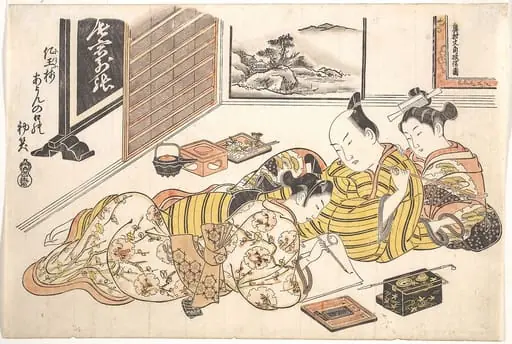 『閨の雛形』 正月|Plate from the Erotic Book Mounds of Dyed Colors: A Pattern Book for the Boudoir (Someiro no yama neya no hinagata), First Month
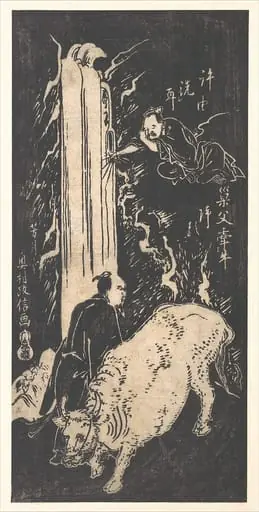 Untitled
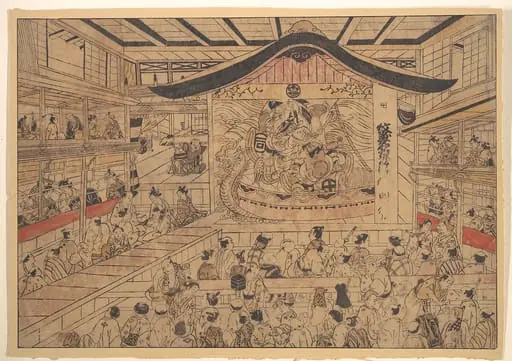 浮絵 「紋尽名古屋曽我」|Perpsective View (uki-e) of a Kabuki Theatre, with a Performance of The Crest Patterns of the Soga Brothers and Nagoya Sanza (Mon-zukushi Nagoya Soga)
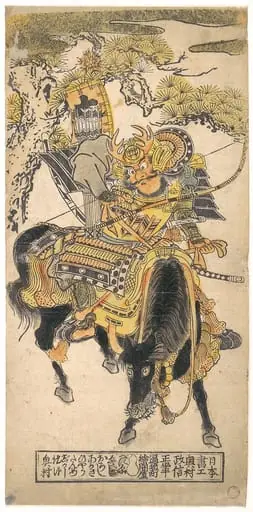 Untitled
 Untitled
 Untitled
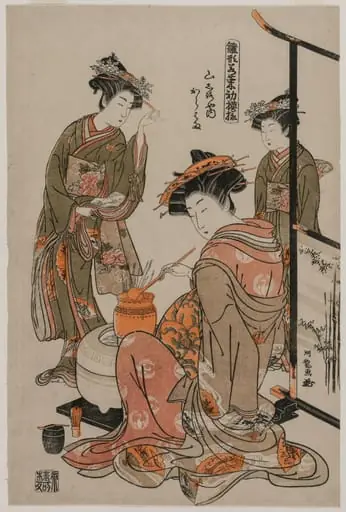 The Courtesan Karahama of Yamashiroya Performing the Tea Ceremony (from the series Models for Fahions: New Designs as Fresh as Young Leaves)
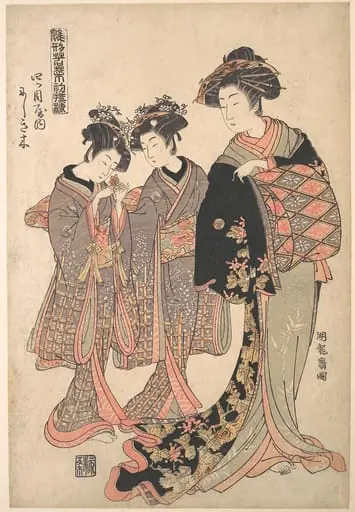 『雛形若菜初模様 四ツ目屋内 にしき木』|The Courtesan Nishikigi of the Yotsumeya Brothel, from the series “A Pattern Book of the Year’s First Designs, Fresh as Spring Herbs” (“Hinagata wakana hatsu moyō”)
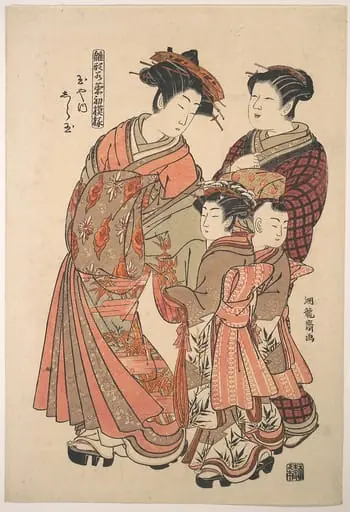 『雛形若菜初模様 玉や内 しら玉』|The Courtesan Shiratama of the Tamaya Brothel, from the series “A Pat-tern Book of the Year’s First Designs, Fresh as Spring Herbs” (“Hinagata wakana hatsu moyō”)
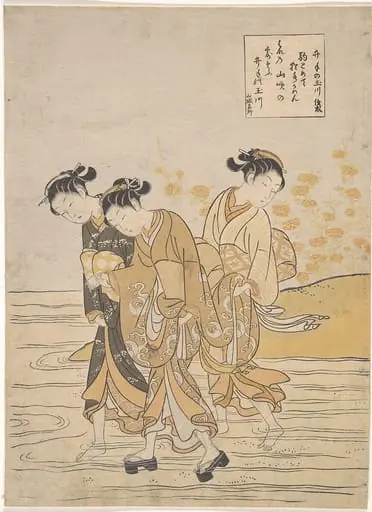 井手の玉川|Jewel River at Ide (Ide no Tamagawa)
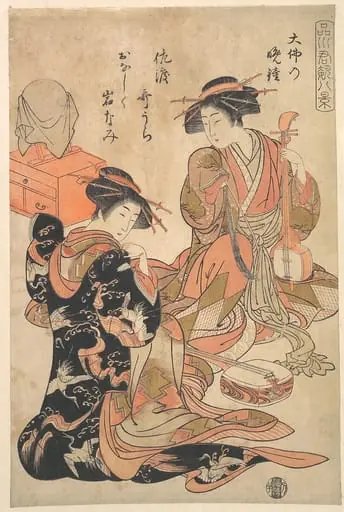 Daibutsu no bansho|Vesper Bell of the Temple of Great Buddha
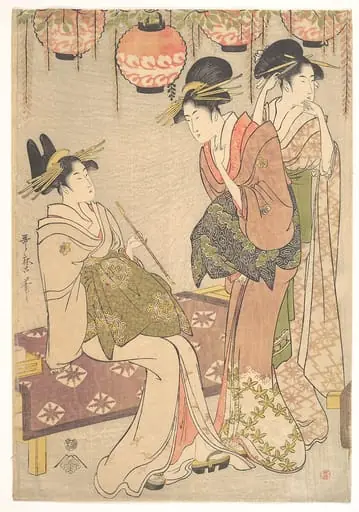 Untitled
 Untitled
 Untitled
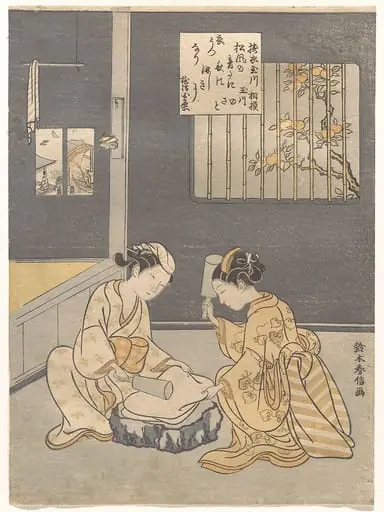 鈴木春信画 六玉川 「壔衣の玉川 摂津の名所」|Kōromō Uchi Tamagawa|The Cloth-Fulling Jewel River, a Famous Place in Settsu Province (Tōi no Tamagawa, Settsu no meisho), from an untitled series of Six Jewel Rivers (Mu Tamagawa)
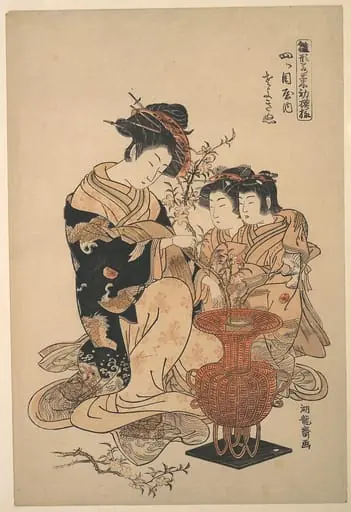 礒田湖竜斎画「雛形若菜初模様 四ツ目屋内 さよぎぬ」|The Courtesan Sayoginu of the Yotsumeya Brothel, from the series “A Pattern Book of the Year’s First Designs, Fresh as Spring Herbs” (Hinagata wakana hatsu moyō)
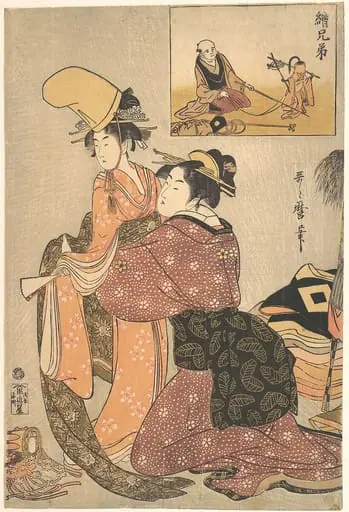 喜多川歌麿画 絵兄弟娘道成寺 見立猿廻し 「絵兄弟」|A Woman Dressing a Girl for a the Kabuki Dance “Musume Dojōji,” with “Brother Picture” (E-kyōdai) of a Monkey Trainer
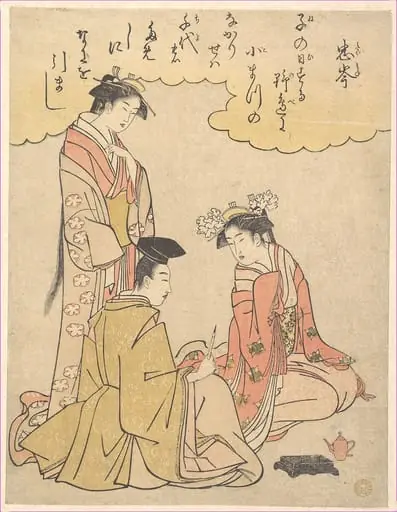 礫川亭永理 (鳥橋斎栄里)画 壬生忠岑の見立絵|Courtier and Two Ladies of the Court, with a Poem by Mibu no Tadamine