Artwork
Kureha of Gakuiseya, from Selection of Beauties from the Pleasure Quarters
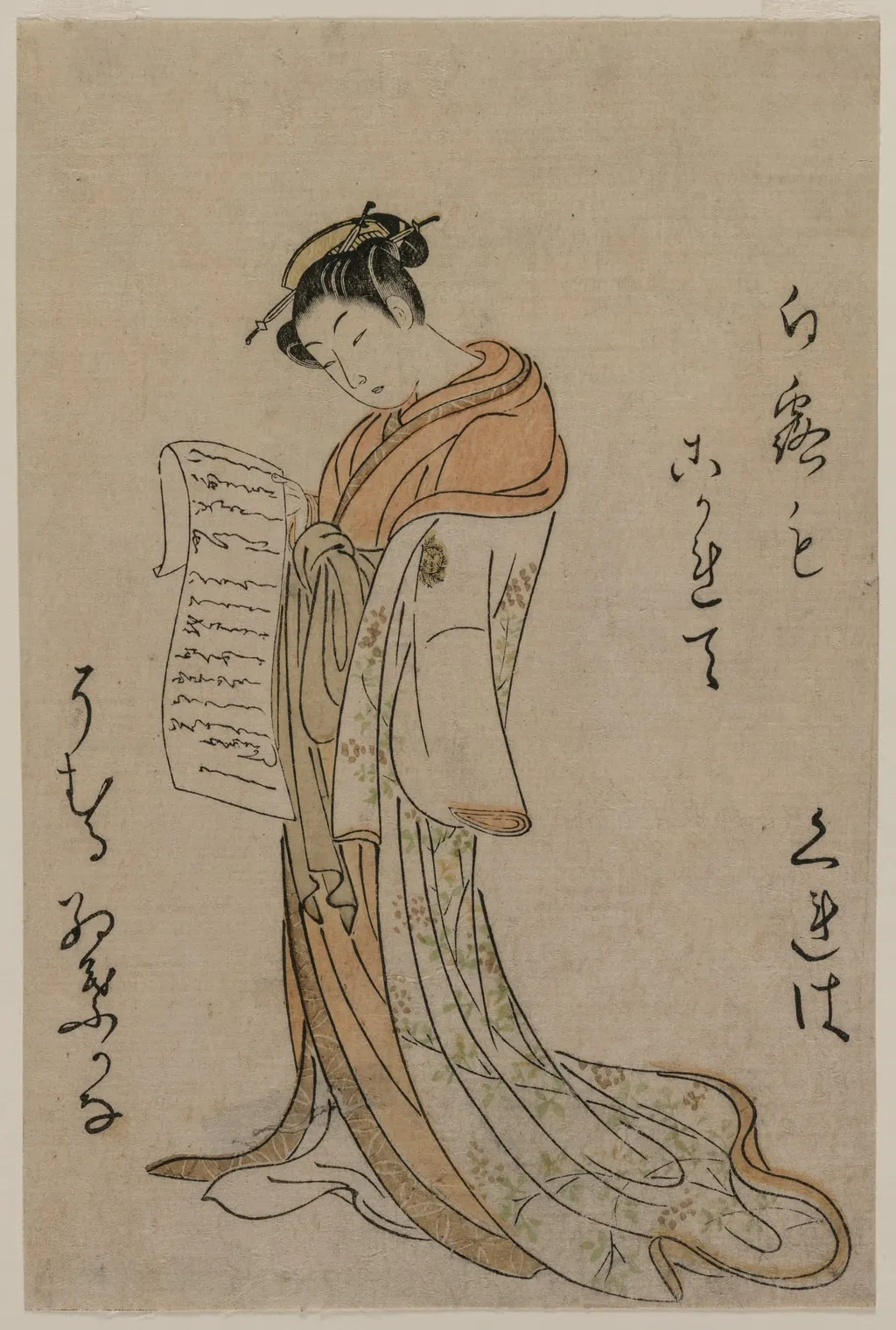
Kureha of Gakuiseya, from Selection of Beauties from the Pleasure Quarters is a print by the Romanticist artist Suzuki Harunobu. It dates from 1770 and is held in the collection of the Cleveland Museum of Art.
About this work
Overview
This woodblock print is one of 166 portraits in a five-volume series by Suzuki Harunobu, depicting courtesans from Edo’s pleasure quarters. Each volume pairs images with seasonal poetry; this page, originally from the fourth volume, features Kureha of the Gakuiseya brothel. The print was trimmed from a bound picture book, a format common in mid-18th-century Edo for intimate, collectible art.
Subject & Meaning
The scene reflects the literary culture of the pleasure quarters, where correspondence was both personal and performative.
Kureha is shown in a quiet moment, reading a letter, her expression composed yet introspective. The scene reflects the literary culture of the pleasure quarters, where correspondence was both personal and performative. Her identity is tied to her establishment, Gakuiseya, whose crest—a pine branch circle—appears on her sleeve, signaling status and lineage within the hierarchical world of courtesans.
Technique & Style
Harunobu employed early nishiki-e coloring, using multiple carved blocks to achieve subtle gradations and delicate hues. The composition is restrained, emphasizing Kureha’s posture and the texture of her robe. Fine lines define her kimono patterns, while the background remains uncluttered, directing focus to her gesture and the seasonal allusion embedded in the accompanying poem.
History & Provenance
The series was published around 1765–1770, during a period of rising demand for illustrated books among Edo’s urban middle class. Surviving intact volumes are rare; most individual sheets, including this one, were later separated and trimmed for display. The presence of the Gakuiseya crest confirms its origin in the fourth volume, where Kureha appears as the final courtesan of her house.
Context
The Edo pleasure quarters were regulated spaces where art, poetry, and social performance intersected. Courtesans were cultural figures, celebrated for their refinement and literary skill. Harunobu’s series elevated their imagery beyond mere eroticism, embedding them in seasonal aesthetics and poetic tradition, aligning their lives with classical Japanese literary ideals.
Legacy
Harunobu’s series helped define the aesthetic of ukiyo-e portraiture, influencing later artists in their treatment of female subjects and seasonal symbolism. Though the original books were ephemeral, surviving prints like this one remain key to understanding how Edo society viewed beauty, status, and emotional nuance in the context of urban leisure.
Own this work as a print
Artist & collection

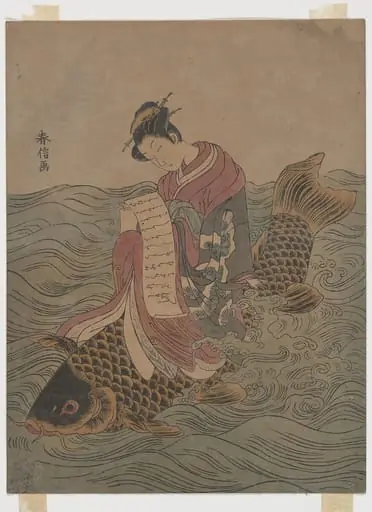
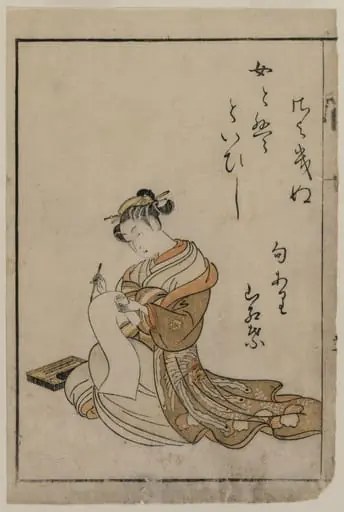 The Courtesan Writing from a Book from the series A Collection of Beautiful Women of the Yoshiwara
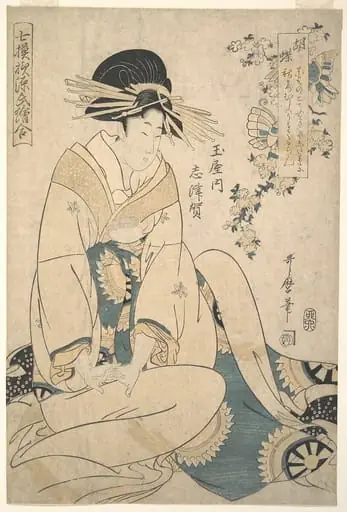 玉屋内 志津賀|A Courtesan
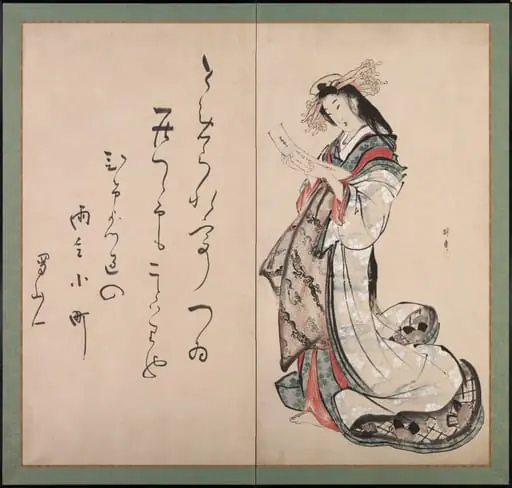 Courtesan Reading a Letter
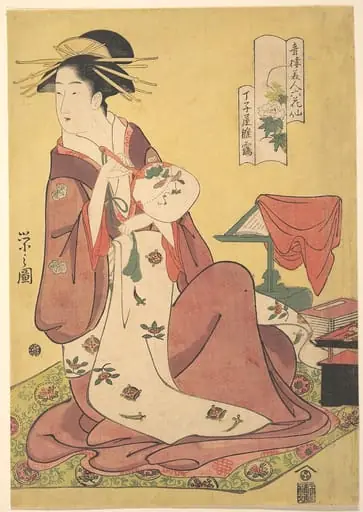 鳥文斎栄之画 「青楼美人六花仙 丁子屋雛鶴鸖」|The Courtesan Hinazuru of the Chōjiya Brothel (Chōjiya Hinazuru), from the series Beauties of the Pleasure Quarters as Six Floral Immortals (Seirō bijin rokkasen)
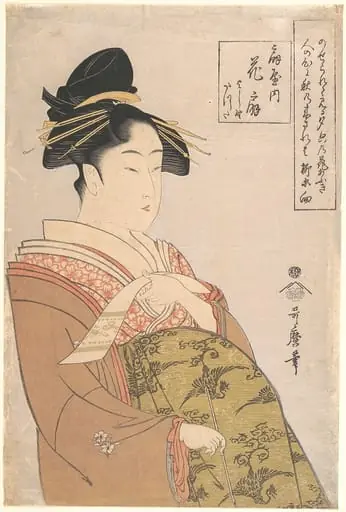 「扇屋内花扇図」|The Courtesan Hanaōgi of the Ōgiya Brothel in Yoshiwara (Ōgiya uchi Hanaōgi, Yoshino, Tatsuta)
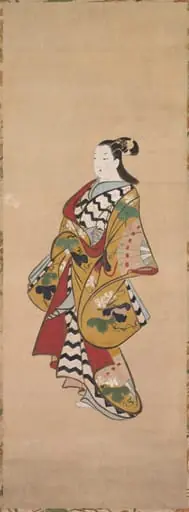 Courtesan