Artwork
『閨の雛形』 正月|Plate from the Erotic Book Mounds of Dyed Colors: A Pattern Book for the Boudoir (Someiro no yama neya no hinagata), First Month
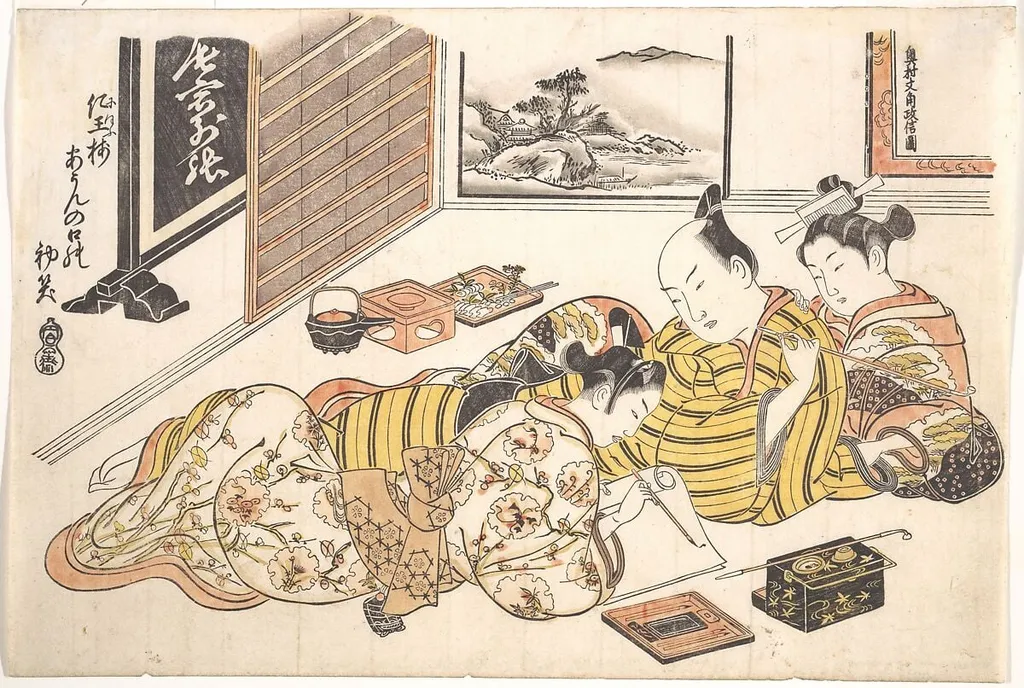
『閨の雛形』 正月|Plate from the Erotic Book Mounds of Dyed Colors: A Pattern Book for the Boudoir (Someiro no yama neya no hinagata), First Month is an ink print by the Baroque artist Okumura Masanobu. It dates from 1740 and is held in the collection of the Metropolitan Museum of Art.
About this work
Overview
Designed as a visual guide for domestic scenes, it was intended for replication by artists and artisans rather than mere contemplation.
Created around 1740 by Okumura Masanobu, this hand-colored woodblock print is one plate from a series titled Mounds of Dyed Colors: A Pattern Book for the Boudoir. Designed as a visual guide for domestic scenes, it was intended for replication by artists and artisans rather than mere contemplation. The image captures a quiet, intimate moment within a private space, blending everyday objects with subtle erotic undertones common in early Edo-period illustrated manuals.
Subject & Meaning
The scene portrays a woman in a red robe writing a letter at a low table, while a man leans over her shoulder, smoking a long pipe. A teapot steams nearby and a tray of sweets rests within reach. These elements—writing, tobacco, tea, and confections—suggest a private, sensual interlude between lovers. The composition avoids theatricality, instead implying intimacy through stillness and proximity, characteristic of pattern books that framed desire as part of daily ritual.
Technique & Style
Executed in ink and color on paper using woodblock printing, the image employs soft outlines and muted hues to evoke a sense of quietude. The coloring is delicate, with the woman’s red robe standing out against neutral backgrounds. Details like the curl of smoke and the texture of paper are rendered with precision, reflecting the technical sophistication of early 18th-century ukiyo-e. The composition’s asymmetry and cropped perspective suggest an informal, observational approach.
History & Provenance
The print belongs to a series commissioned as a practical reference for painters and decorators in Edo-period Japan. Such pattern books circulated among artisans seeking models for domestic interiors and intimate scenes. Though individual plates were often detached and reused, few complete sets survive. This plate is among the better-preserved examples, likely originating from a private collection in Kyoto or Edo before entering institutional holdings in the 20th century.
Context
During the early 1700s, illustrated manuals like this one reflected a growing interest in codifying private life, especially among urban elites. Erotic themes were often veiled in domestic imagery, allowing such works to navigate censorship while still serving as guides for sensual conduct. Similar motifs appear in other pattern books and illustrated novels, positioning this print within a broader cultural trend of visualizing intimacy as both art and instruction.
Legacy
Okumura Masanobu’s pattern book influenced later ukiyo-e artists by demonstrating how everyday moments could carry emotional weight. Its emphasis on quiet composition and subtle suggestion paved the way for more nuanced depictions of interior life in 19th-century prints. Though not widely known outside specialist circles, the work remains a key example of how eroticism was embedded in the mundane, shaping the visual language of Japanese domestic art.
Artist & collection
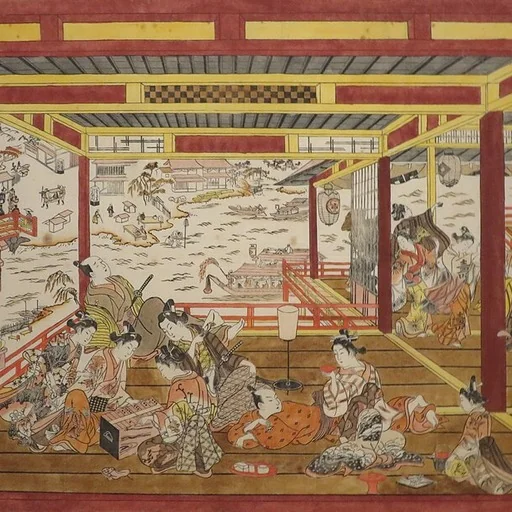
Artist
Okumura Masanobu lived in Edo (now Tokyo) when the city was a flashy, fast-growing hub of theater, gossip, and new ideas.

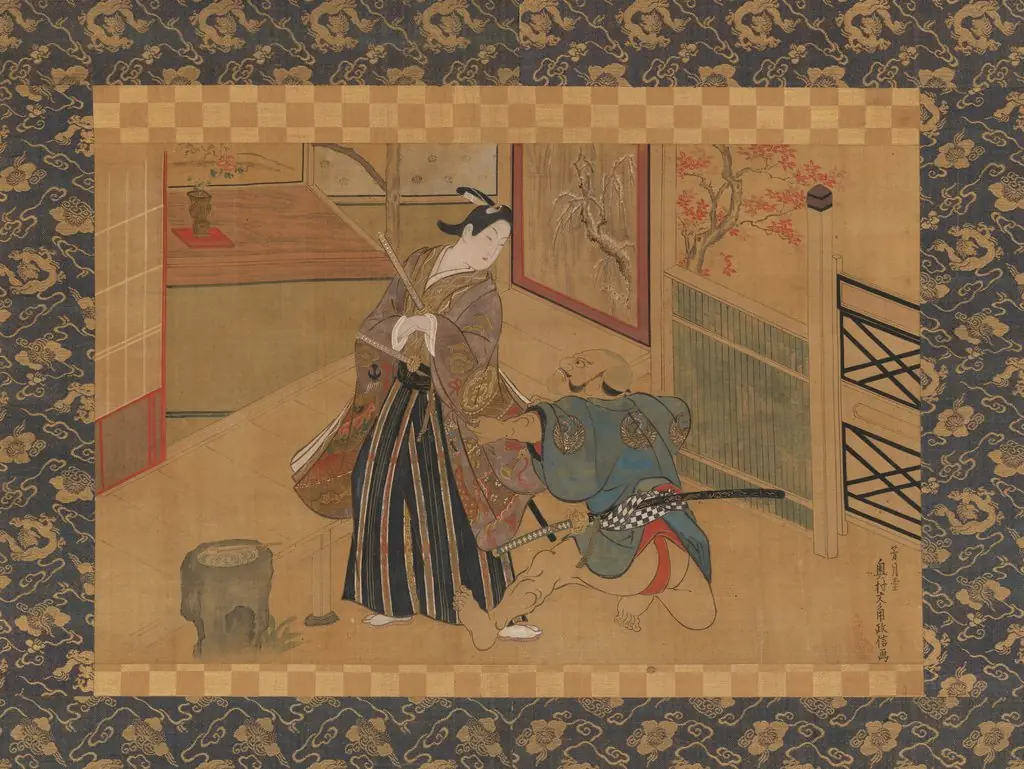 Kabuki Play Kusazuribiki from the Tales of Soga (Soga monogatari)
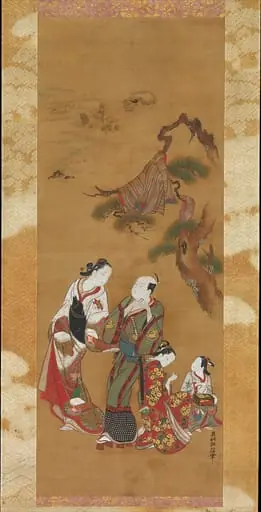 Untitled
 Untitled
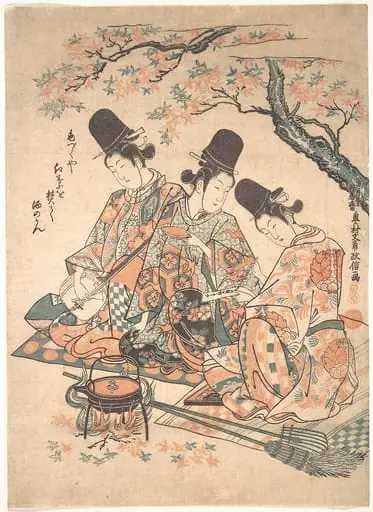 見立『平家物語』 紅葉焚図|Parody of Palace Servants Heating Sake over a Fire of Maple Leaves
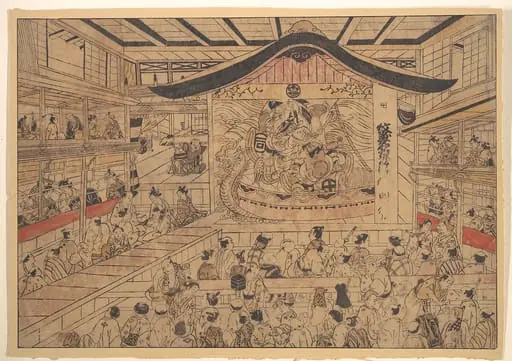 浮絵 「紋尽名古屋曽我」|Perpsective View (uki-e) of a Kabuki Theatre, with a Performance of The Crest Patterns of the Soga Brothers and Nagoya Sanza (Mon-zukushi Nagoya Soga)
 Untitled
 Untitled
 Untitled
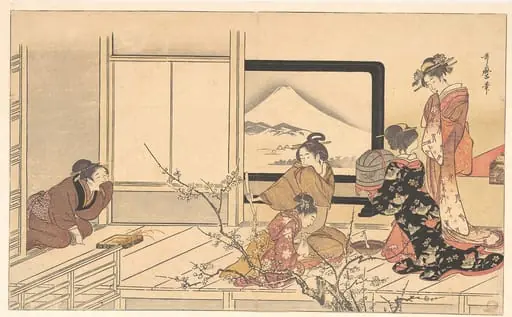 喜多川歌麿画 『男踏歌』 鶯の餌すり|“Preparing Food for the Warbler,” from the album Men’s Stamping Dance (Otoko dōka, uguisu no esa suri)
 Untitled
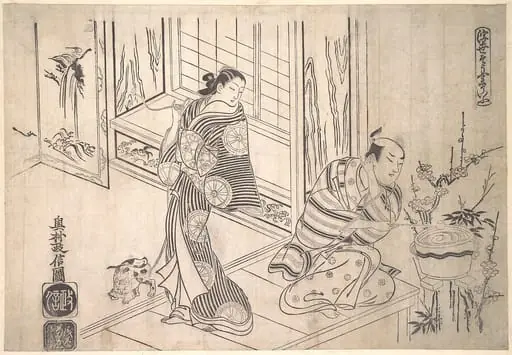 Untitled
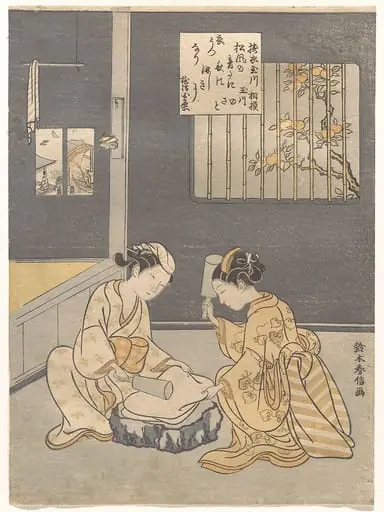 鈴木春信画 六玉川 「壔衣の玉川 摂津の名所」|Kōromō Uchi Tamagawa|The Cloth-Fulling Jewel River, a Famous Place in Settsu Province (Tōi no Tamagawa, Settsu no meisho), from an untitled series of Six Jewel Rivers (Mu Tamagawa)
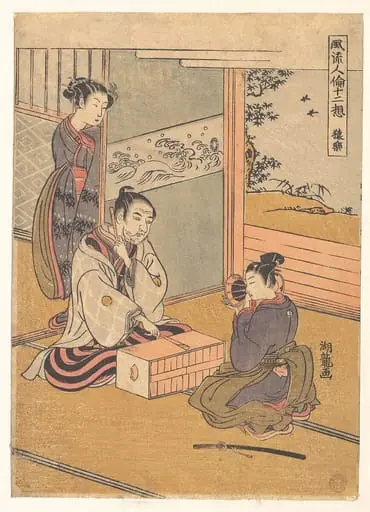 Untitled
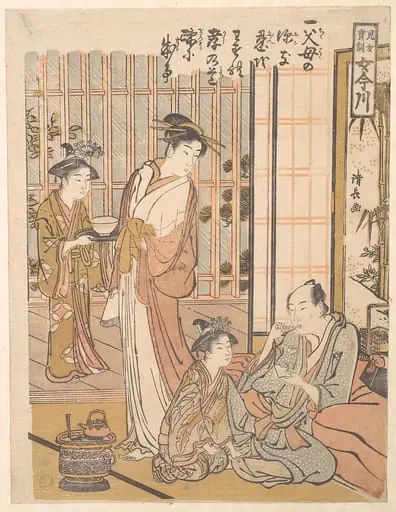 Untitled
 Untitled
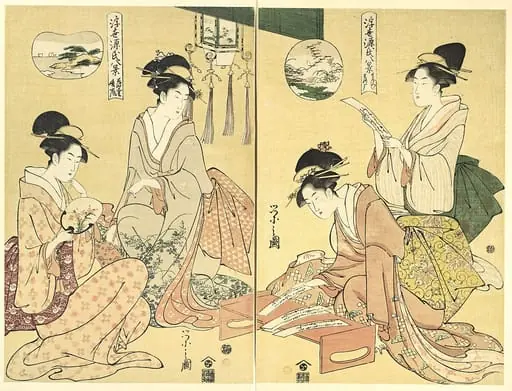 鳥文斎栄之画 「浮世源氏八景 幻 落雁 薄雲 晴嵐」|Spirit Summoner; Wild Geese Returning Home (Maboroshi; Rakugan) (right) and A Thin Veil of Clouds; Clearing Weather (Usugumo; Seiran) (left), from the series Eight Views of The Tale of Genji in the Floating World (Ukiyo Genji hakkei)
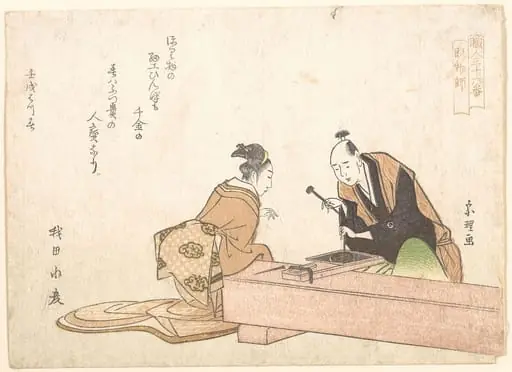 Horimono-shi|職人三十六番|The Metal Carver
 Untitled
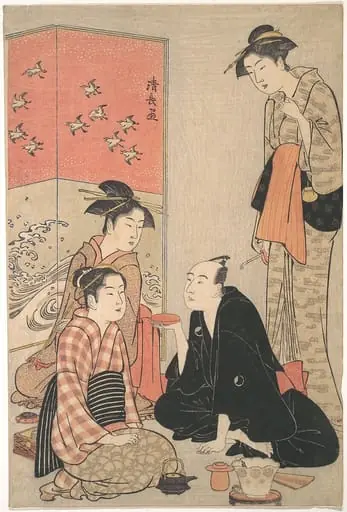 三代目沢村宗十郎と遊女|The Kabuki Actor Sawamura Sōjūrō III and Courtesans
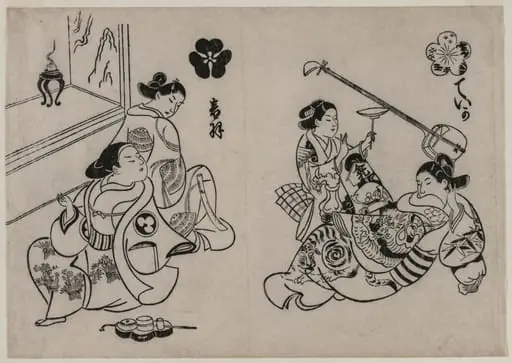 Three Courtesans with a Client