Artwork
Untitled
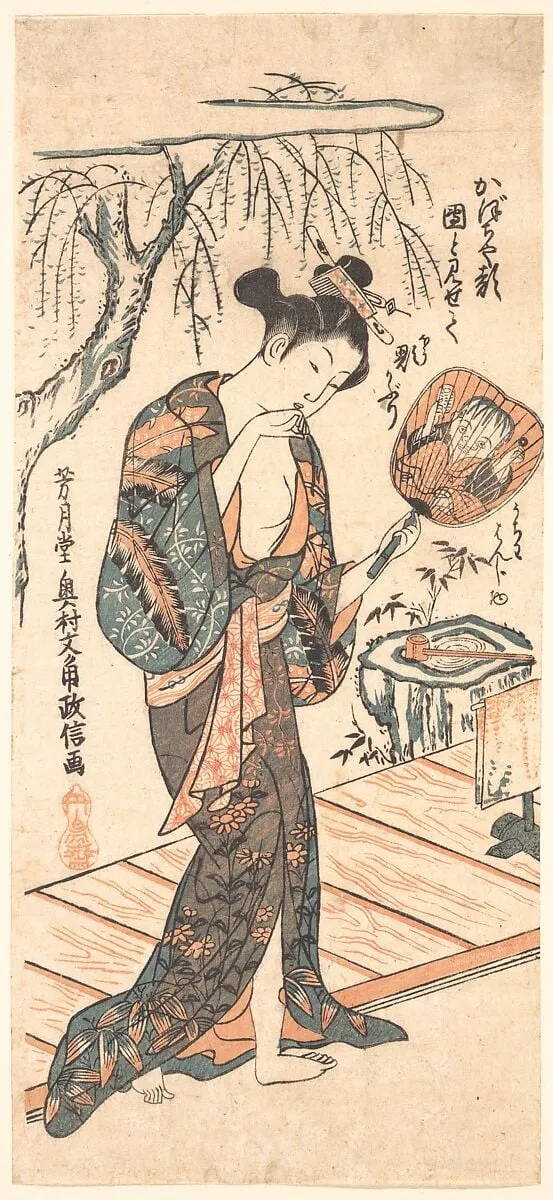
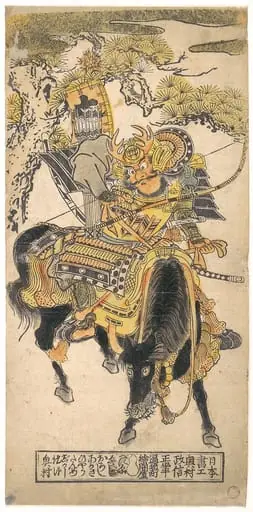
Untitled is an ink print by the Baroque artist Okumura Masanobu. It dates from 1755 and is held in the collection of the Metropolitan Museum of Art.
About this work
Overview
Executed in ink and color on paper, it exemplifies the ukiyo-e tradition with its restrained palette and linear clarity.
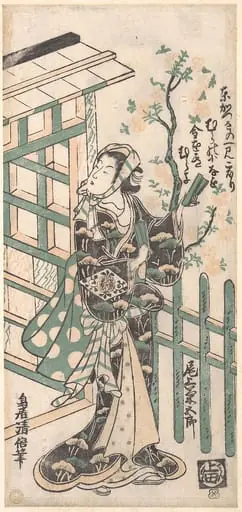
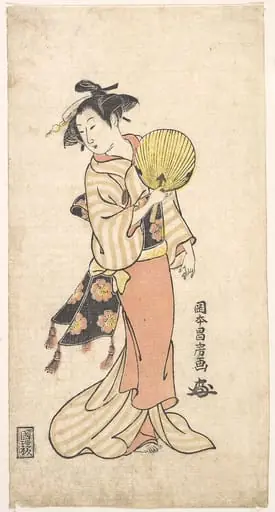
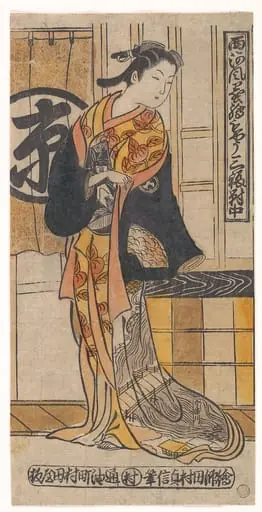
Created around 1755, this woodblock print by Okumura Masanobu is part of The Metropolitan Museum of Art’s collection. Executed in ink and color on paper, it exemplifies the ukiyo-e tradition with its restrained palette and linear clarity. The composition centers on a solitary figure beneath a bare tree, surrounded by modest domestic elements. Its simplicity and quiet atmosphere reflect the aesthetic values of mid-18th century Japanese printmaking.
Subject & Meaning
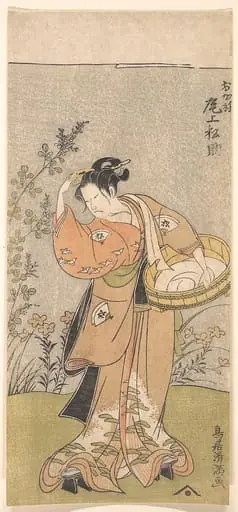
A woman, dressed in a patterned kimono, stands beneath a tree holding a fan and a small round object, possibly a mirror or a ritual item. Her stillness and the sparse surroundings suggest a moment of private contemplation. The absence of narrative detail invites interpretation rather than storytelling, aligning with the introspective tone common in later ukiyo-e works. The setting implies an intimate, everyday scene, stripped of theatricality.
Technique & Style
The print employs flat areas of color and minimal shading, relying on clean outlines to define form. The kimono’s swirling blue and brown patterns are rendered with rhythmic precision, while the tree’s bare branches frame the figure like a natural arch. The wooden ground and scattered objects—basket, table, small items—are suggested with economical lines. This restrained approach avoids depth modeling, emphasizing surface design over illusion.
History & Provenance
The work dates to the mid-1750s, a period when Masanobu was refining his style after earlier experiments with color printing. It entered The Metropolitan Museum of Art’s collection through established acquisition channels, likely as part of a broader effort to document Edo-period print culture. Its survival in good condition reflects careful preservation, though its specific provenance prior to museum ownership remains undocumented.
Context
Produced during the height of ukiyo-e’s popularity, this print reflects a shift toward quieter, more personal subjects amid the genre’s broader focus on entertainment and urban life. Masanobu’s work bridges the early, illustrative phase of woodblock printing and the later, more refined styles of artists like Utamaro. The emphasis on solitary figures and natural framing points to influences from literati painting and Zen aesthetics.
Legacy
Though not among Masanobu’s most widely reproduced works, this print illustrates his contribution to the evolution of ukiyo-e’s visual language. Its understated composition influenced later artists who favored emotional subtlety over dramatic action. Today, it serves as a quiet example of how everyday moments were elevated through disciplined design in 18th-century Japanese printmaking.
Artist & collection
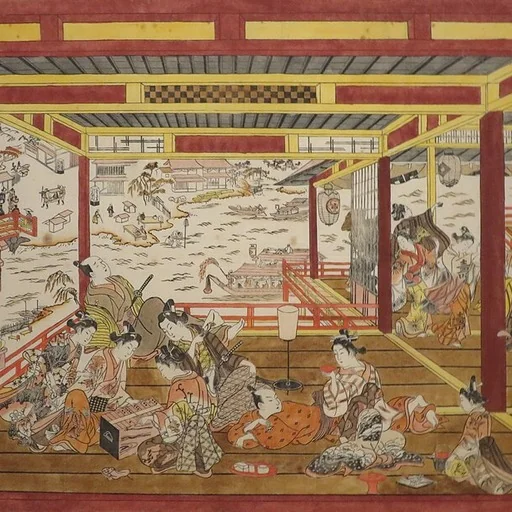
Artist
Okumura Masanobu lived in Edo (now Tokyo) when the city was a flashy, fast-growing hub of theater, gossip, and new ideas.

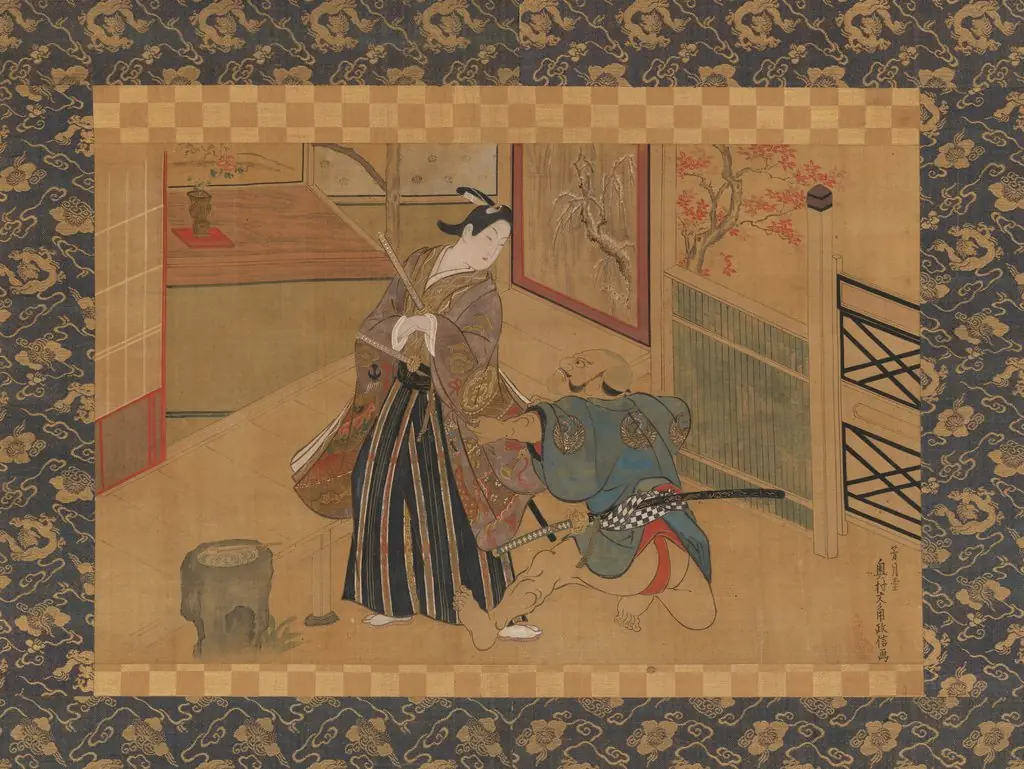 Kabuki Play Kusazuribiki from the Tales of Soga (Soga monogatari)
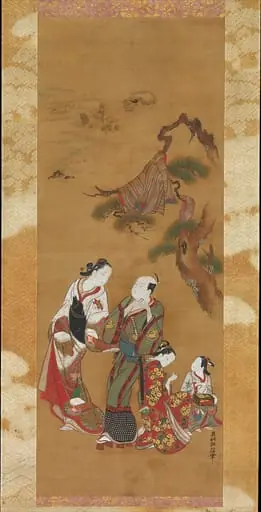 Untitled
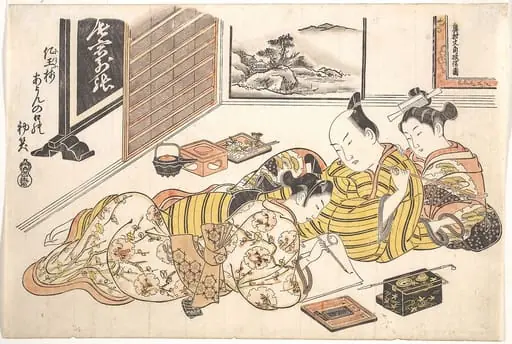 『閨の雛形』 正月|Plate from the Erotic Book Mounds of Dyed Colors: A Pattern Book for the Boudoir (Someiro no yama neya no hinagata), First Month
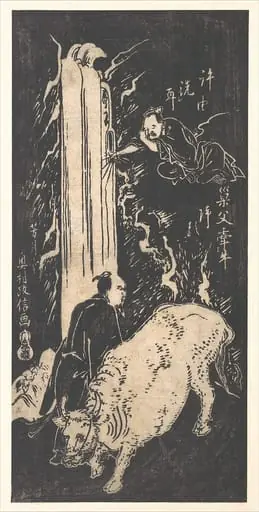 Untitled
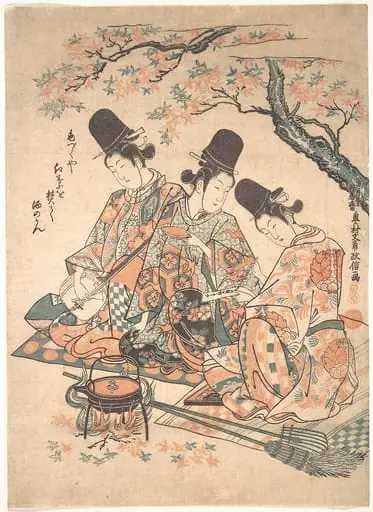 見立『平家物語』 紅葉焚図|Parody of Palace Servants Heating Sake over a Fire of Maple Leaves
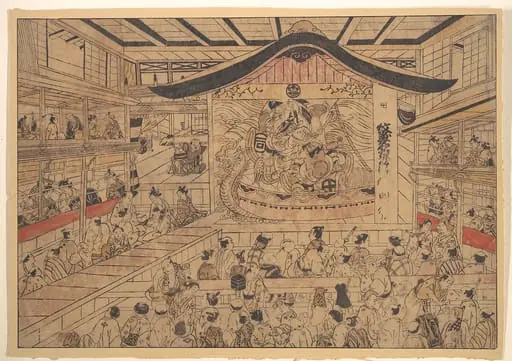 浮絵 「紋尽名古屋曽我」|Perpsective View (uki-e) of a Kabuki Theatre, with a Performance of The Crest Patterns of the Soga Brothers and Nagoya Sanza (Mon-zukushi Nagoya Soga)
 Untitled
 Untitled