Artwork
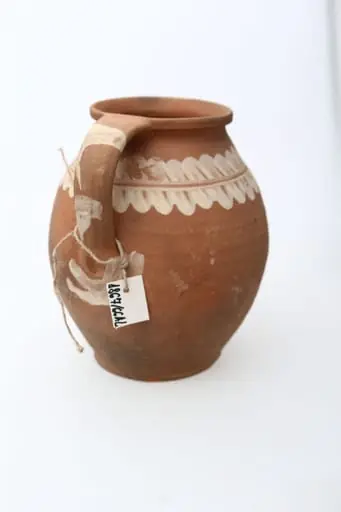
Vas puțin bombat, cu gura largă și toartă laterală. De la gura vasului coboară pete mari ovoidale peste care s-a stropit cu verde. Fondul este cărămiziu în partea inferioară și ocru în partea superioară. Jumătatea de sus a toartei cu alb-gălbui. Cromatică: cărămiziu, ocru, gălbui, verde, alb-gălbui. Timp de lucru: circa două săptămâni.
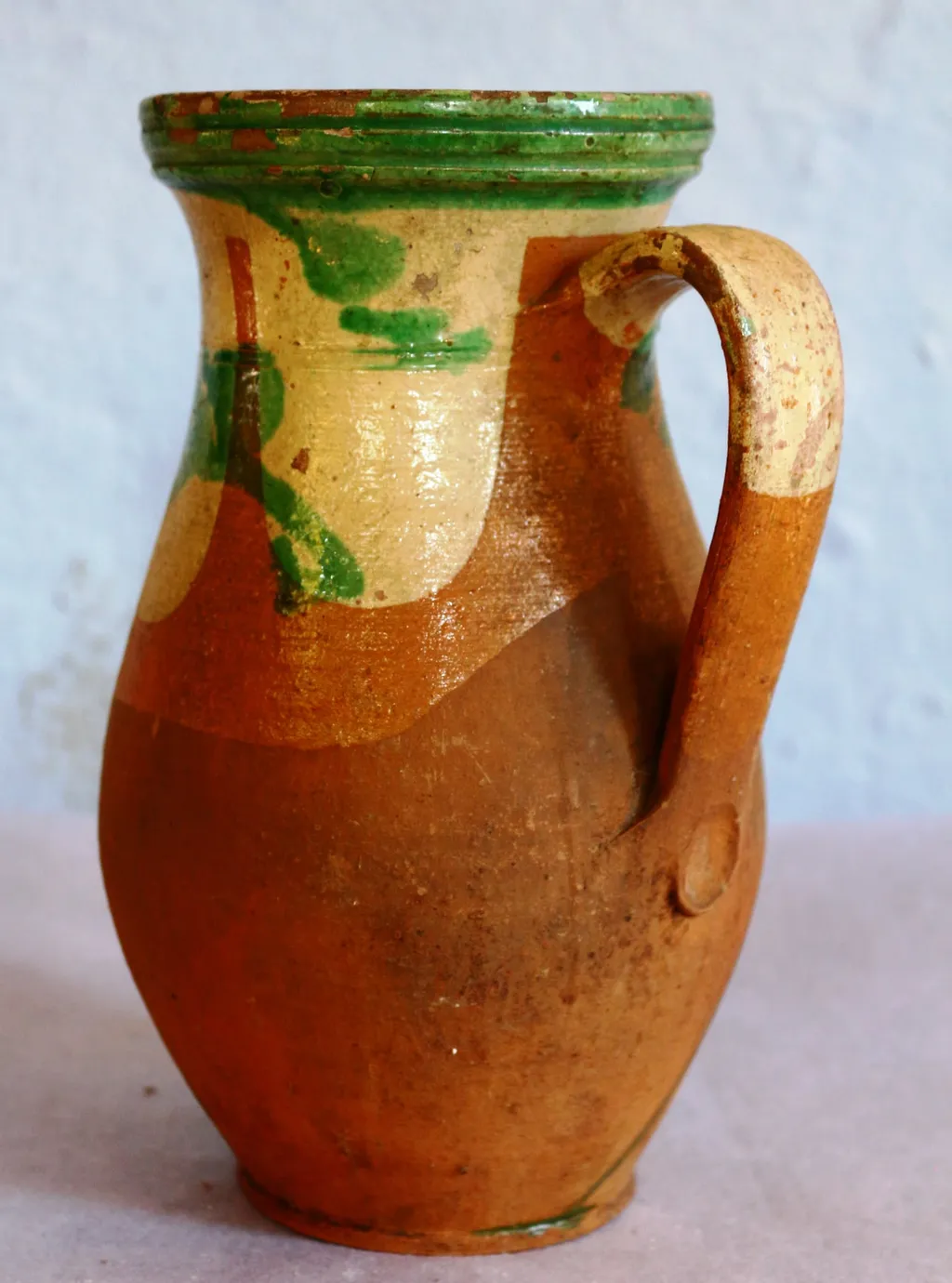
Vas puțin bombat, cu gura largă și toartă laterală. De la gura vasului coboară pete mari ovoidale peste care s-a stropit cu verde. Fondul este cărămiziu în partea inferioară și ocru în partea superioară. Jumătatea de sus a toartei cu alb-gălbui. Cromatică: cărămiziu, ocru, gălbui, verde, alb-gălbui. Timp de lucru: circa două săptămâni. is a photography by olar. It is held in the collection of the "Dimitrie Gusti" National Village Museum. This ceramic vessel features a broad mouth and a thick, irregular handle, suggesting hand-formed construction rather than wheel-throwing.
About this work
Overview
This ceramic vessel features a broad mouth and a thick, irregular handle, suggesting hand-formed construction rather than wheel-throwing.
This ceramic vessel features a broad mouth and a thick, irregular handle, suggesting hand-formed construction rather than wheel-throwing. Its surface shows uneven glazing and visible texture, indicating a deliberate, non-industrial process. The color palette consists of earth tones—reddish-brown below, fading to ochre above—with green splatters cascading from the rim. The finish appears intentionally rustic, with patches of unglazed clay and irregular pigment application.
Subject & Meaning
No figurative or symbolic imagery is present; the design focuses on materiality and process. The dripped green pigment and uneven surface suggest an aesthetic preference for imperfection and organic form. The vessel likely served a utilitarian purpose, with its visual qualities reflecting a cultural value placed on handmade authenticity rather than decorative perfection.
Technique & Style
The pot was constructed from clay and fired, with color applied in two stages: the base tones were likely glazed before firing, while the green splatters were added post-firing. The thick, asymmetrical handle and irregular surface indicate manual shaping without precise molds. The use of natural pigments and uneven application reinforces a handcrafted, non-mechanized approach.
History & Provenance
The work dates to a period when functional pottery was commonly made by local artisans using accessible materials. Its construction and decoration align with regional traditions that valued tactile quality over uniformity. No documented ownership or archaeological context is provided, but its form and technique suggest it originated in a community with established ceramic practices.
Context
This piece reflects a broader tradition in which utilitarian ceramics embraced visible imperfections as part of their character. The post-firing green drips mimic natural weathering or organic growth, a technique used to enhance the sense of authenticity. Similar vessels were produced across rural areas where industrial methods had not yet replaced artisanal methods.
Legacy
The vessel stands as an example of pre-industrial ceramic practice, where function and material honesty shaped aesthetic choices. Its preservation offers insight into everyday material culture, contrasting with later mass-produced wares. It contributes to understanding how handmade objects carried cultural meaning through their imperfections and material presence.
Artist & collection
Artist
These folk potters shaped everyday jugs and bowls, glazing only the top half and painting them with spirals, flowers, and bristle-like sprigs in mustard, green, and brown.
Museum
"Dimitrie Gusti" National Village Museum
Continue through works from the same source collection.
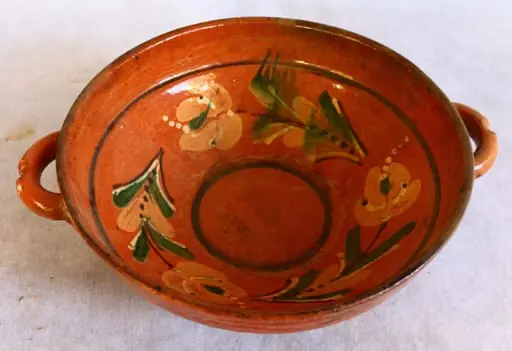 Vas de formă tronconică, cu două toarte laterale („cu urechi”) și una mică la spate. Decor geometric și floral stilizat: între două cercuri concentrice (unul pe fundul vasului, iar cel de-al doilea în partea superioară), trei flori cu frunze stilizate. Cromatică: roșu, negru, verde, alb, galben. Timp de lucru: circa două săptămâni.
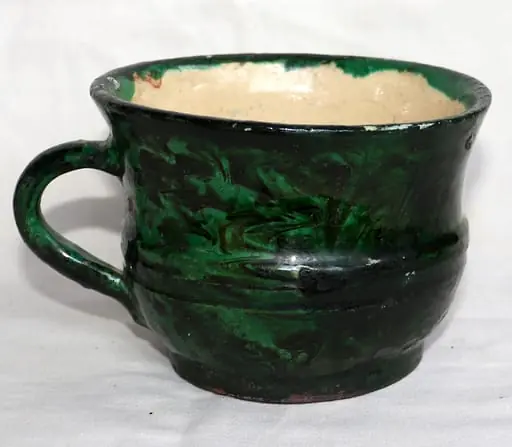 Piesa are o formă cilindrică, fiind lărgită în partea superioară și îngustată către bază. Are toartă situată în zona centrală a suprafeței. Este smălțuită și decorată cu motive geometrice: pe toată suprafața se găsesc forme geometrice (mai ascuțite și mai rotunjite), neregulate, realizate cu pensula; asemenea și toarta. La mijlocul cănii (în partea exterioară) se găsesc două cercuri incizate de jur-împrejur, acestea fiind singurele motive ornamentale ale obiectului. Culorile folosite pentru decorarea ulcelei sunt verde și negru, la interior piesa fiind de culoare bej (crem); fundul nu este smălțuit, culoarea fiind cea cărămizie.
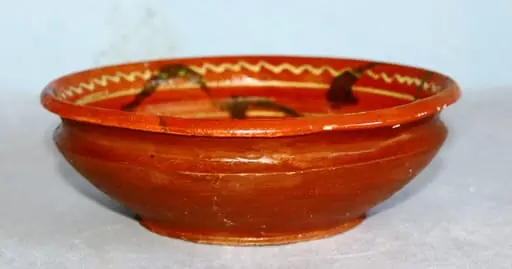 Piesă de formă circulară, adâncită, cu partea superioară concavă la exterior și gaură pentru agățat la spate. În centru, o spirală circulară, înconjurată de patru grupuri de semicercuri cu o bulină în centru. Pe margine: pete elipsoidale între cercuri concentrice și linie șerpuită înspre interior. Stropituri cu verde suprafața interiorului. Cromatică: cărămiziu, alb-gălbui, verde. Timp de lucru: circa două săptămâni.
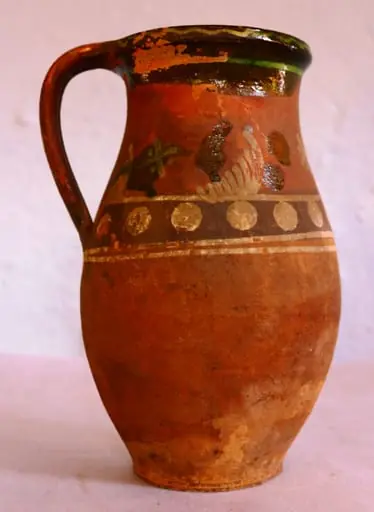 Vas cu corpul bombat, gura largă și o toartă laterală. Central, între două cercuri la bază și unul deasupra, un șir de buline. În partea superioară, patru grupuri de linii curbe, grupate cu o creastă de cocoș. Cruci de punte între brațe. O linie în zig-zag pe gura vasului și una orizontală pe toartă. Cromatică: cărămiziu, brun, alb-gălbui, verde. Timp de lucru: circa două spătămâni.
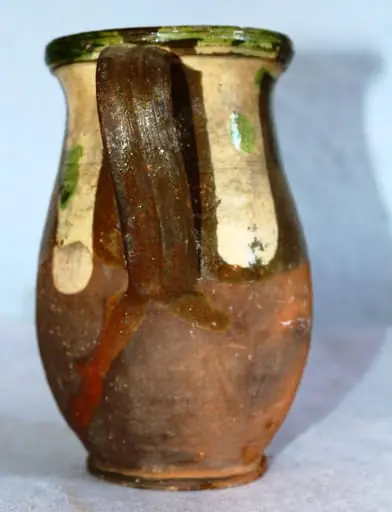 Vas de formă bombată, cu gura largă și toartă laterală. În partea superioară a piesei, pete mari alungite (benzi sau „limbi”) de culoare, realizate prin scurgere, alternând cu fundalul. Peste aceste benzi, pete verzi stropite. Pe buza vasului, la exterior, două cercuri incizate. Cromatică: cărămiziu, alb-gălbui, verde închis. Timp de lucru: circa două săptămâni.
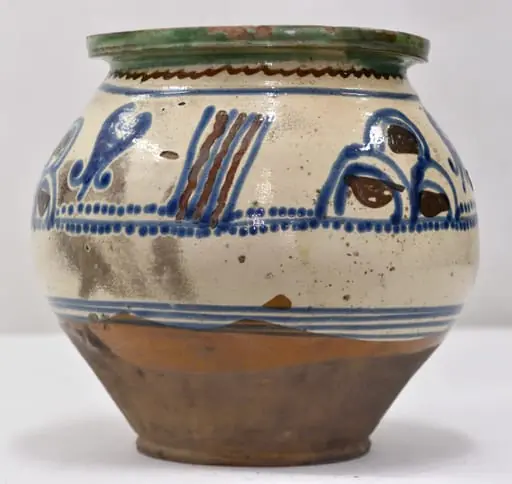 Piesa, al cărei corp este lărgit în partea mediană, are gâtul îngustat și buza evazată. Are atașată o toartă în jumătatea superioară. Este pictată (decorată), conținând motive decorative geometrice și florale: linii verticale, mici linii orizontale, aranjate una deasupra celeilalte, cercuri, de jur-împrejur (între ele fiind creat un registru în care s-a aplicat pictura), flori, fragmente de cerc grupate câte trei, o linie șerpuită în jurul gâtului oalei; toarta este, de asemenea, decorată cu scurte linii orizontale suprapuse. Partea de jos a obiectului este nedecorată. Culorile obiectului, cu excepția suprafeței nedecorate de culoare cărămizie, sunt: alb-crem, maro închis și deschis, verde și albastru.
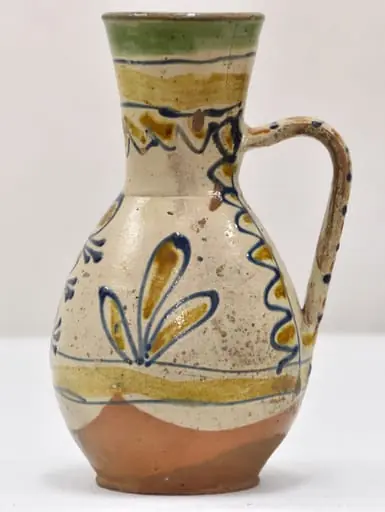 Piesa are o formă relativ cilindrică, fiind îngustată în jumătatea superioară și lărgită (bombată) în cea inferioară. Este dotată cu o toartă laterală. Suprafața exterioară este pictată (decorată), conținând motive decorative geometrice și vegetale: pete de culoare și linii orizontale pe toartă, cercuri de jur-împrejur atât în partea superioară cât și în partea inferioară, semicercuri separate prin câte câte trei liniuțe ramificate - de o parte și de cealaltă a unei linii verticale, două grupuri a câte trei frunze fiecare și linii șerpuite alături de câte o linie verticală (două). Partea de jos a obiectului nu este decorată având culoarea cărămizie. Culorile decorului sunt: alb-crem (fondul), albastru, verde și galben-ocru.
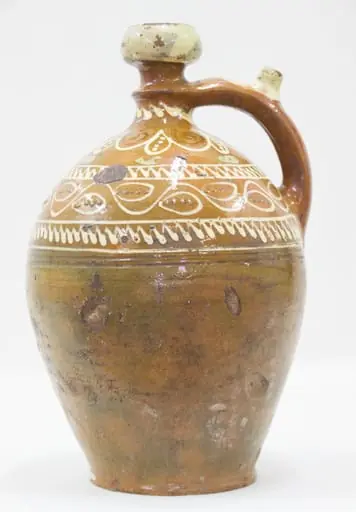 Ulcior de formă bitronconică cu gura îngustă și rotundă, cu o toartă și un orificiu pentru scurgerea lichidului, smălțuit și decorat pe jumătatea superioară cu motive vegetale (ghirlande) și geometrice (spirale; patru cercuri concentrice cu o linie șerpuită între ele).Cromatică: maro (fond), decor - galben, bej, alb, verde. Jumătatea inferioară a obiectului este nesmălțuită.
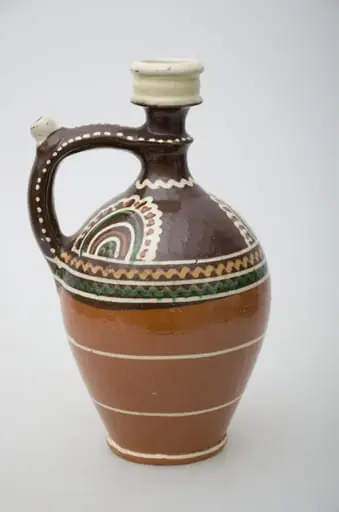 Vas smălțuit de formă ovoidală cu gât alungit care se termină cu o gură cu manșon și buza circulară. Prezintă o toartă lată, arcuită, prevăzută cu o ”țâță” ce se prinde de gâtul piesei pe un inel în relief iar celălalt capăt de zona mediană a recipientului. Decorul realizat din motive geometrice este predominant în registrul superior al vasului, ilustrând o succesiune de linii circulare, linii meandrice, semicercuri, puncte. Pe toartă sunt pictate trei șiruri de puncte albe. În partea inferioară sunt pictate trei linii circulare, distanțate. Cromatică: fond: maro închis (în partea superioară), maro deschis (în partea inferioară); motive: verde, crem, maro, alb.
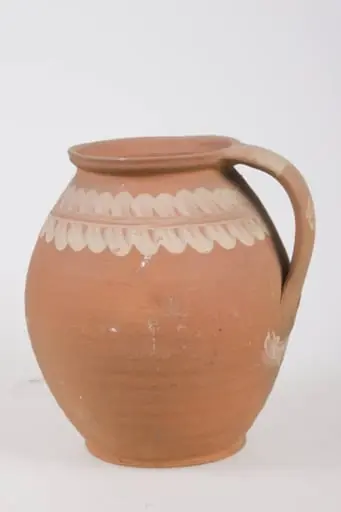 Oală ce are corpul bombat simetric cu diametrul maxim la mijlocul vasului, gâtul scurt și gura dreaptă. Buza este răsfrântă în exterior și toartă între buză și mijlocul vasului. Decor pe umăr cu linie ondulată realizată cu degetul și două linii paralele realizate cu fichieșul; dungi paralele pe toartă.
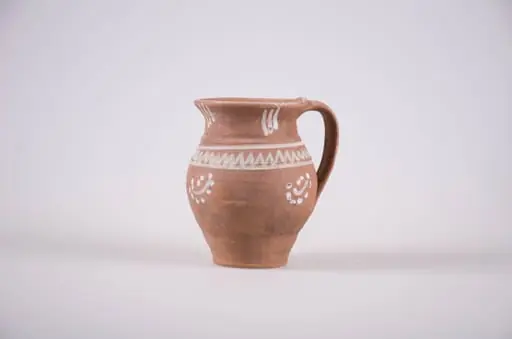 Recipient bitronconic cu gura largă. Prezintă toartă laterală care pleacă din buză până la diametrul maxim al vasului. Decor geometrizant pe partea superioară a vasului și pe toartă; linii paralele, cercuri, linie ondulată, puncte. Cromatică: fond: cărămiziu; motive trasate cu angobă albă. Vasul este nesmălțuit.
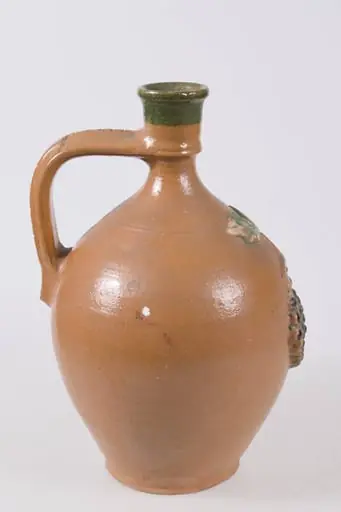 Recipient de lut de formă sferică cu gâtul lung și buza rasfrântă. Prezintă o toartă ce pleacă de la baza gâtului spre partea mediană a vasului. Decorat frontal, în relief, cu doi ciorchini cu frunze. Smălțuit la gură. Cromatică: fond: cărămiziu; motive: verde; negru.
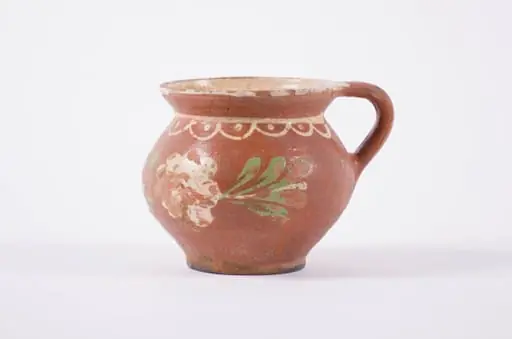 Vas de lut cu gura largă, smălțuit în totalitate. Din baza plată pornesc pereții bombați care se îngustează în partea superioară terminată cu o buză evazată spre exterior. Prezintă o toartă, pentru manipulare care leagă gura cu partea mediană. Interiorul vasului este smălțuit cu smalț alb, în exterior având un fond maro deschis cu decor, realizat prin pictare cu pensula, dispus în partea mediană, ilustrând două flori cu petale albe despărțite de frunze verzi. În partea superioară linie vălurită cu câte un punct în mijloc. Cromatică: fond: maro; motive: alb; verde.
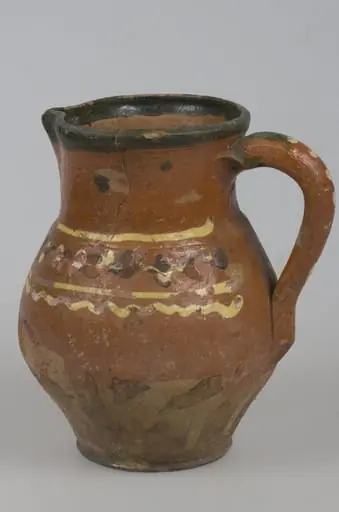 Vas de lut de mici dimensiuni, bombat, cu gât lung și puțin evazat, cu gură largă și cioc de scurgere. Toarta pornește de sub gură și coboară până în zona diametrului maxim al vasului. Este smălțuit în interior și exterior. Decorul dispus pe umărul vasului este format din: motive florale: o cunună din frunze încadrată de motive geometrice: o linie circulară în partea superioară și o linie circulară și una în val în partea inferioară. Buza vasului este vopsită în interior și exterior. Toarta este decorată cu puncte de culoare albă. Cromatică: fond: cărămiziu; motive: alb; verde; negru.
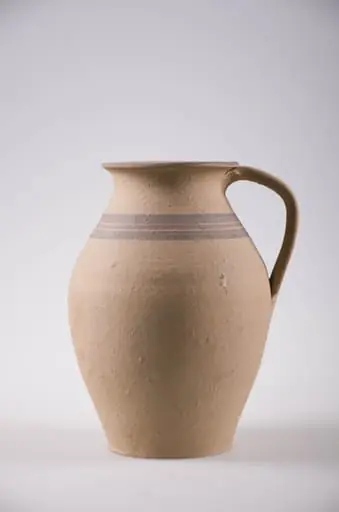 Oală borcan cu gât foarte pronunțat și buză evazată; de sub gât pleacă o toartă, unindu-se cu corpul în zona diametrului maxim; este decorată pe umeri cu cinci linii - două negre încadrează trei linii maro. Cromatică: fond: cărămiziu; motive: negru, maro închis.
 Recipient din lut nesmălțuit, de formă bitronconică, având gât îngust, gura ușor răsfrântă și buza dreaptă. Prevăzut cu o toartă lată și arcuită fixată la buză și la mijlocul vasului. Decorat cu degetul pe umeri cu motive zoomorfe (dintele de lup), și pe toartă cu motive geometrice neregulate. Decorat cu pastă de angobă, albă. Se folosește la fiertul mâncării pe vatră liberă în familii mai puțin numeroase. Cromatică:fundal cărămiziu,motive: alb.