Artwork
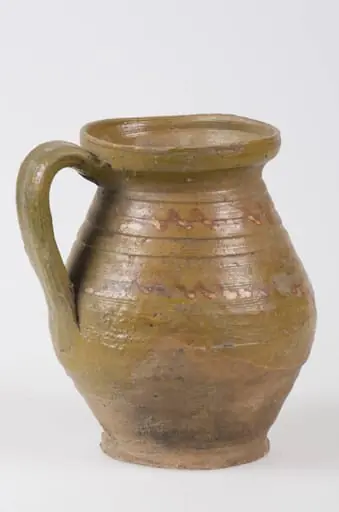
Recipient bitronconic cu gura largă. Prezintă toartă laterală care pleacă din buză până la diametrul maxim al vasului. Decor geometrizant pe partea superioară a vasului și pe toartă; linii paralele, cercuri, linie ondulată, puncte. Cromatică: fond: cărămiziu; motive trasate cu angobă albă. Vasul este nesmălțuit.
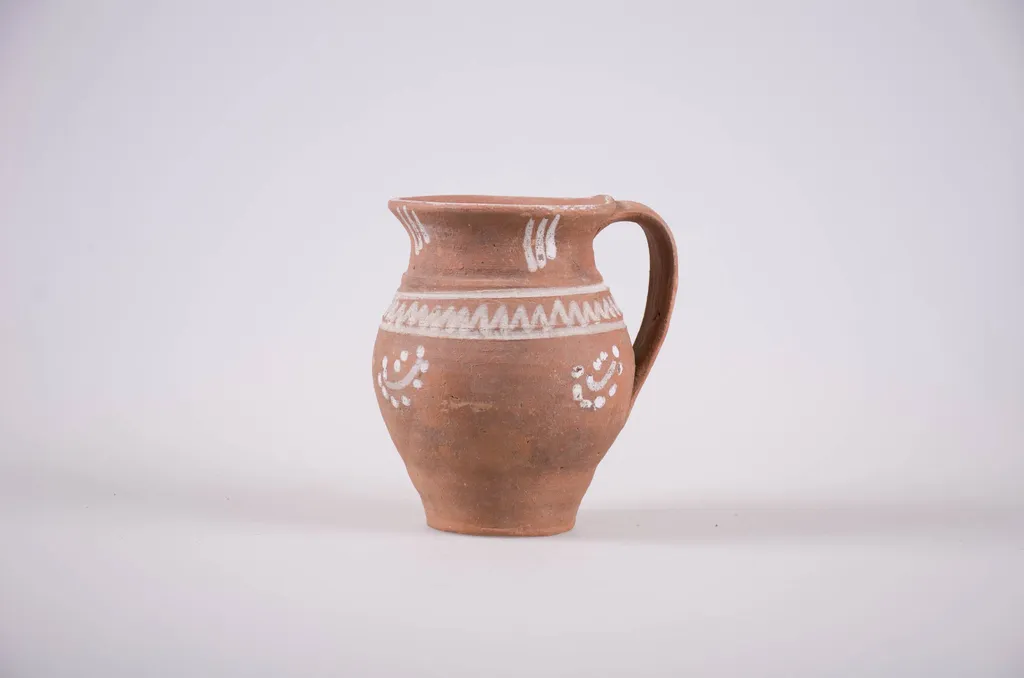
Recipient bitronconic cu gura largă. Prezintă toartă laterală care pleacă din buză până la diametrul maxim al vasului. Decor geometrizant pe partea superioară a vasului și pe toartă; linii paralele, cercuri, linie ondulată, puncte. Cromatică: fond: cărămiziu; motive trasate cu angobă albă. Vasul este nesmălțuit. is a photography by Unknown. It dates from 1850 and is held in the collection of the ASTRA National Museum Complex. The object is a robust, unglazed clay pitcher characterized by a straight handle that extends from the rim to the vessel’s maximum width.
About this work
Overview
The object is a robust, unglazed clay pitcher characterized by a straight handle that extends from the rim to the vessel’s maximum width. Its body displays a brick‑red hue, while a network of white incised designs—parallel lines, circles, a wavy band, and dots—covers both the upper surface and the handle.
Subject & Meaning
The decorative scheme consists of geometric motifs that abstractly reference traditional ornamental patterns, suggesting a functional yet aesthetically considered everyday object within its cultural context.
Technique & Style
Crafted from earthenware, the pitcher was shaped by hand and left without glaze, preserving the natural texture of the fired clay. The white designs were incised with a tool, likely a fine stylus, creating a contrast against the reddish slip.
History & Provenance
The piece is part of the collection of the Museum of Ethnography, where it is displayed as an example of regional ceramic production. Its exact origin and date are not specified in the available documentation.
Context
Such pitchers were commonly used for storing and pouring liquids in domestic settings, and the geometric decoration aligns with broader folk‑art traditions that favor repetitive, stylized patterns.
Artist & collection

 Domestic Scene
 Giacomo and Cardinal Marco, investing Andrea, Abbot of San Zeno, with his Benefice
 The Nymph of Fontainebleau
 Portrait of a Woman
 Madonna and Child with Saints in the Enclosed Garden
 Venus and Minerva
 Family Group of Four on Sofa
 Wall painting from Room H of the Villa of P. Fannius Synistor at Boscoreale
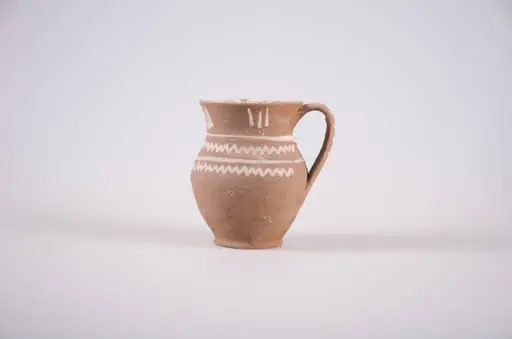 Recipient bitronconic cu gura largă. Are o toartă laterală care pleacă din buză până la diametrul maxim al vasului. Decor cu motive geometrice pe partea superioară a vasului și pe toartă: linii paralele, doua cercuri, linii ondulate. Cromatică: fond: cărămiziu; motive din angobă albă. Vasul este nesmălțuit.
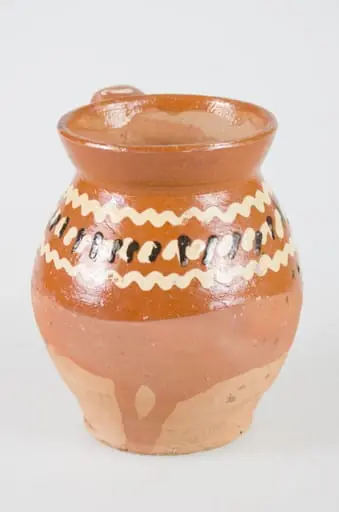 Recipientul este realizat din lut, are dimensiuni mici și formă bitronconică, cu gura mai largă decât baza și fundul plat. Obiectul este smălțuit la exterior, pe doar două treimi din suprafață. Acesta este prevăzut cu o toartă care pleacă din buză până aproape de partea inferioară a vasului. Cana este ornamenată în partea superioară cu pensula, cu motive geometrice: linii alternante albe și negre, dispuse oblic, încadrate de două rânduri de valuri pictate în alb. Din punct de vedere al cromaticii distingem fondul cărămiziu pe care sunt pictate motive cu alb și negru.
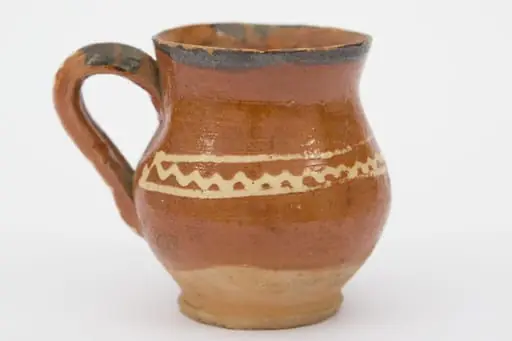 Recipientul este realizat din lut,având dimensiuni reduse, fiind de formă cilindrică, cu o gură largă și buza rotunjită. Acesta este prevăzut cu o toartă laterală având punctele de inserție în gatul și proeminența pântecului al vasului. Obiectul prezintă un decor median format din două linii orizontale de culoare albă, între acestea fiind realizată o linie sinusoidală de culoare albă, pictate pe fundalul maro cu care este decorat vasul. Obiectul este smălțuit la exterior. Cromatică: fond: maro; motive: alb.
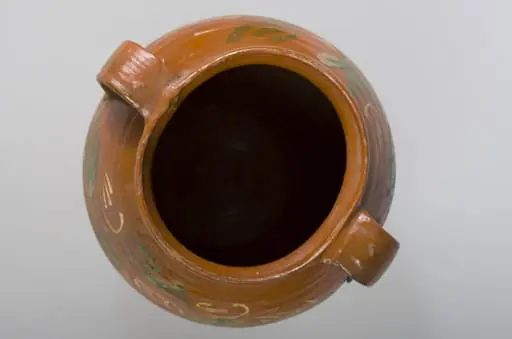 Vas de formă bitronconică, cu gât scurt cu buză rotunjită și evazată. Oala este smălțuită interior și pe 2/3 din exterior. Prezintă două toarte late ce unesc buza vasului de zona diametrului maxim. Decorații în registru floral-vegetal, dispuse concentric, în partea superioară a vasului, compuse din linii ondulate și palmate. Cromatică: fond: cărămiziu; motive: alb, verde.
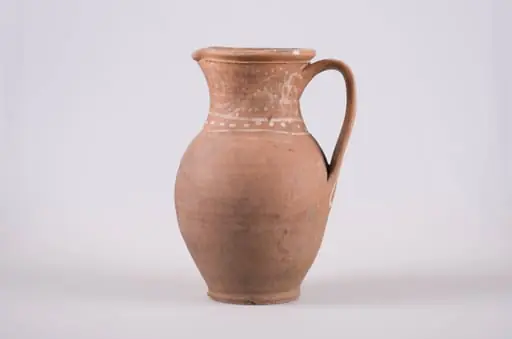 Recipient sferoidal cu gura largă și cioc. Prezintă toartă laterală. Decorul este floral și geometric pe toată suprafața gâtului format din linii, puncte, spirale. Decorat și pe toartă cu o linie de jur împrejur, iar pe buza vasului format din puncte. Cromatică: fond: cărămiziu; motive: alb.
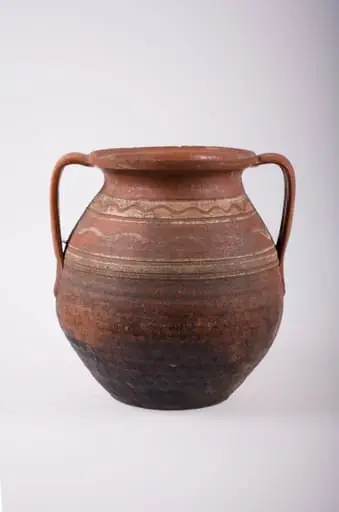 Oala bombată cu două toarte late, aplatizate, dispuse de o parte și de alta a gurii vasului; buză evazată; decorată în exterior cu motive geometrice: linii, linii vălurite pe un registru de cromatică albă. Cromatică: fond: maro; motive: alb-gălbui. Smălțuită pe gura vasului, interior și pe mânerul vasului.
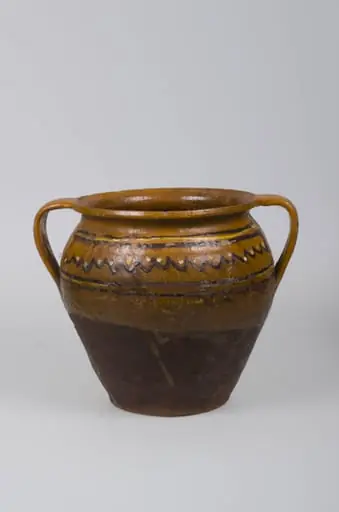 Vasul are formă bitronconică, prevăzut cu două toarte dispuse vertical în opoziție una față de cealalltă. Gâtul foarte profilat și buza evazată. Toartele pornesc din buza vasului și se unesc cu corpul în zona diametrului vasului, fiind aplatizate. Oala are urme de ardere secundară; este smălțuită în interior și în exterior (doar jumătatea superioară). Este folosită atât la pregătirea hranei cât și pentru păstrarea alimentelor și pentru transportul hranei la câmp. Oala este decorată pe umăr cu motive geometrice: linii drepte, linie în val, puncte. Cromatică cărămiziu; galben; maro închis.
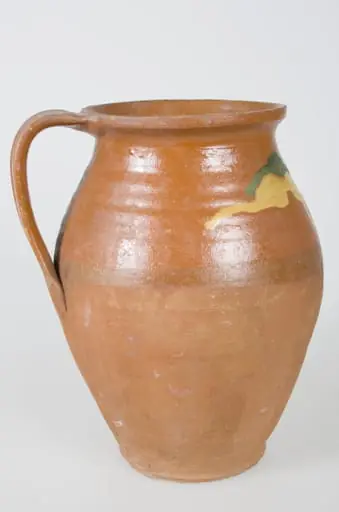 Vas bombat în partea mediană și cu buza evazată, smălțuit în jumătatea superioară. Prezintă o toartă ce leagă buza vasului de partea mediană. Decorații frontale realizate prin stropire, sub forma a două linii suprapuse și neregulate dispuse orizontal. Cromatică: fond cărămiziu; motive: verde; galben.
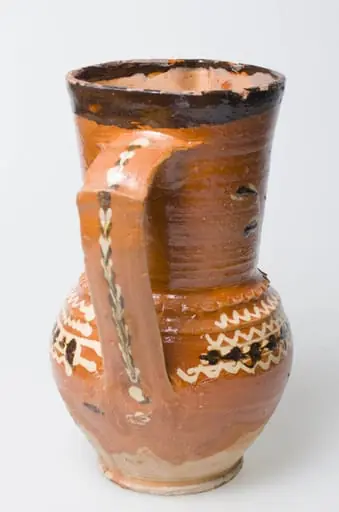 Vasul este confecționat din lut, având forma bitronconică, cu gura largă. Acesta este prevăzut cu o toartă pentru prindere fixată, în partea superioară de margine, iar în partea inferioară de zona bombată a vasului. Obiectul este decorat cu linii vălurite și motive florale. Cromatică: fond: maro; decor: alb; negru.
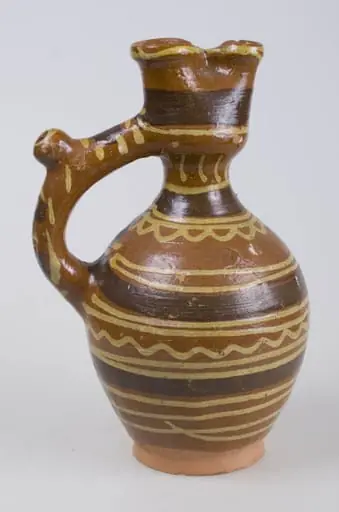 Recipientul este confecționat din lut, cu pântecul extins în zona mediană, cu gât îngust și gură bilobată. Acesta prezintă ciur la gură și în interior piatră sunătoare. Obiectul este prevăzut cu o toartă tubulară cu țâță pentru scurgerea lichidului, lipită de gât și de mijlocul diametrului maxim al corpului. Ulciorul este smălțuit până aproape de fundul vasului. Decorul este format din motive geometrice, pictate cu cornul, pe toată suprafața corpului, inclusiv pe mâner: linii circulare, linii vălurite, linii oblice dispuse vertical, semicercuri pe umeri. Cromatică: fond: cărămiziu; decor: galben; maro închis.
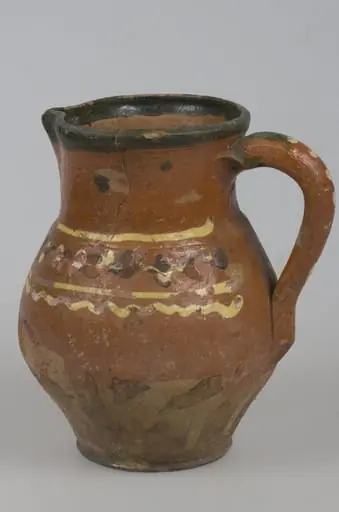 Vas de lut de mici dimensiuni, bombat, cu gât lung și puțin evazat, cu gură largă și cioc de scurgere. Toarta pornește de sub gură și coboară până în zona diametrului maxim al vasului. Este smălțuit în interior și exterior. Decorul dispus pe umărul vasului este format din: motive florale: o cunună din frunze încadrată de motive geometrice: o linie circulară în partea superioară și o linie circulară și una în val în partea inferioară. Buza vasului este vopsită în interior și exterior. Toarta este decorată cu puncte de culoare albă. Cromatică: fond: cărămiziu; motive: alb; verde; negru.
 Vas bitronconic cu gât scurt și foarte profilat, cu gura înaltă și dreaptă. Prezintă o toartă care pleacă de sub buză și se unește cu corpul sub zona diametrului maxim. Este smălțuit în interior și la exterior (parțial nesmălțuit în partea de jos). În partea superioară prezintă un decor geometric realizat din cinci linii incizate și două linii în val pictate. Toarta este decorată cu puncte. Cromatică: fond: cărămiziu și pe alocuri verziu; motive: alb; maroniu. Prezintă uzură funcțională.