Artwork
Oală ce are corpul bombat simetric cu diametrul maxim la mijlocul vasului, gâtul scurt și gura dreaptă. Buza este răsfrântă în exterior și toartă între buză și mijlocul vasului. Decor pe umăr cu linie ondulată realizată cu degetul și două linii paralele realizate cu fichieșul; dungi paralele pe toartă.
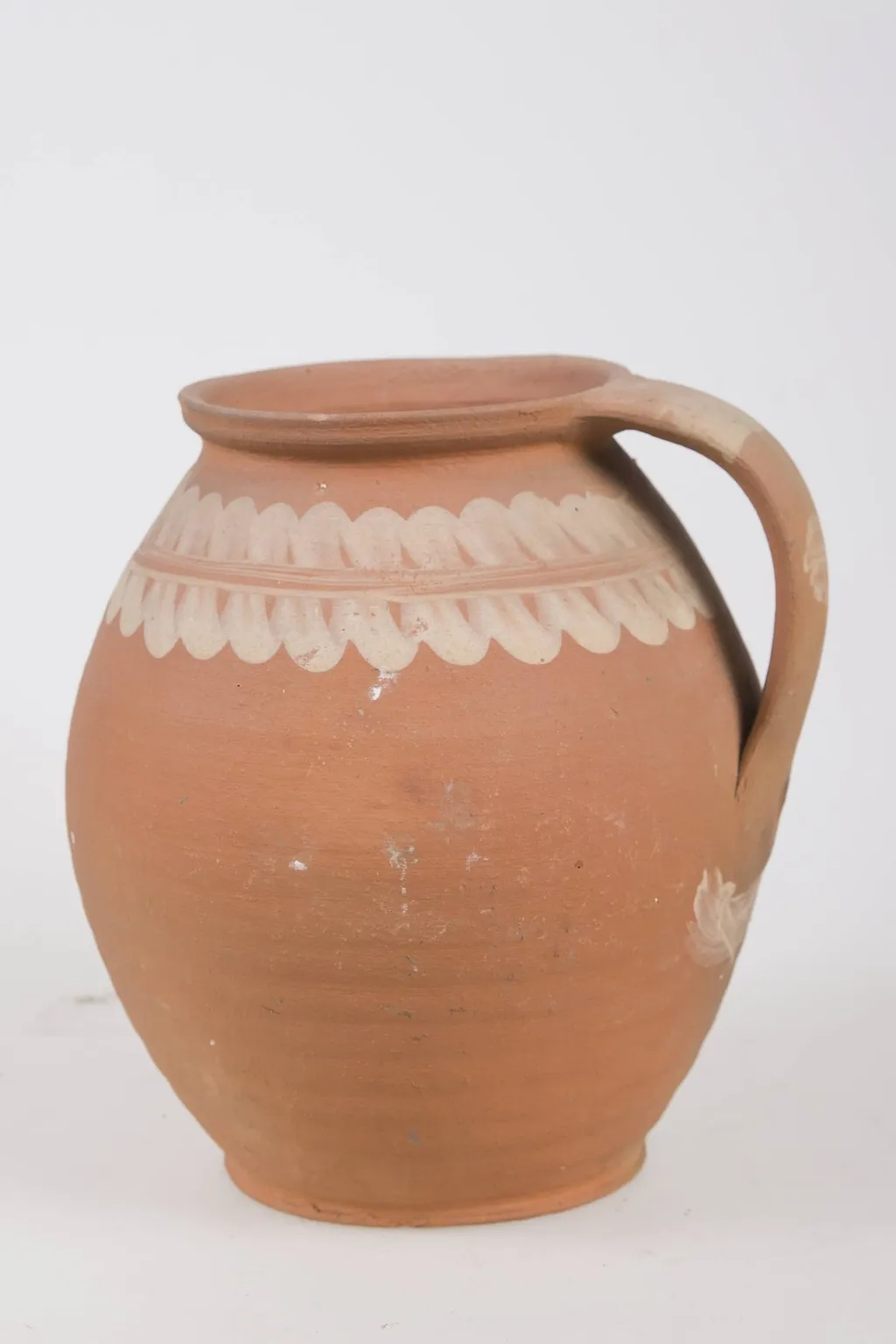
Oală ce are corpul bombat simetric cu diametrul maxim la mijlocul vasului, gâtul scurt și gura dreaptă. Buza este răsfrântă în exterior și toartă între buză și mijlocul vasului. Decor pe umăr cu linie ondulată realizată cu degetul și două linii paralele realizate cu fichieșul; dungi paralele pe toartă. is a photography by Toc Gheorghe. It is held in the collection of the ASTRA National Museum Complex. This ceramic vessel features a symmetrical, rounded body with its maximum diameter at the center, tapering to a short neck and a flared rim.
About this work
Overview
The surface retains a natural earthy tone, with minimal decoration concentrated near the upper section, suggesting emphasis on form over ornamentation.
This ceramic vessel features a symmetrical, rounded body with its maximum diameter at the center, tapering to a short neck and a flared rim. The form is functional and balanced, typical of utilitarian pottery. A single handle extends from the shoulder to the rim, aiding in handling. The surface retains a natural earthy tone, with minimal decoration concentrated near the upper section, suggesting emphasis on form over ornamentation.
Subject & Meaning
No figurative or symbolic imagery is present; the decoration consists of abstract, repetitive lines. The wavy band and parallel strokes may indicate a cultural convention rather than narrative intent. Such patterns could denote ownership, group identity, or simply aesthetic preference. The absence of complex motifs suggests a focus on practicality, with decoration serving as a subtle marker of craftsmanship or tradition.
Technique & Style
The wavy line was applied by dragging a finger through wet slip, creating an organic, irregular contour. Parallel lines were made using a thin tool, likely a stick or bone implement, producing consistent, controlled marks. The paint, a lighter clay slip, contrasts subtly with the vessel’s surface. The technique is direct and unrefined, emphasizing tactile engagement over precision, characteristic of hand-formed, non-industrial pottery.
History & Provenance
The vessel’s form and decoration align with early to mid-second millennium BCE ceramic traditions in the Carpathian Basin. Similar vessels have been recovered from settlement sites and burial contexts, indicating domestic or ritual use. Its preservation suggests it was not discarded casually. While its exact origin is unrecorded, stylistic parallels link it to Neolithic or Eneolithic communities in present-day Romania or Moldova.
Context
This jug belongs to a widespread tradition of handmade pottery in prehistoric Europe, where vessels were formed on the wheel or by coiling and fired in open pits. Decoration was often limited to the shoulder or rim, possibly to avoid interference with function. The use of finger-dragged patterns reflects a shared technological vocabulary across regional groups, indicating cultural exchange or common origins in craft practices.
Legacy
The vessel exemplifies a prehistoric ceramic lineage that persisted for centuries, influencing later regional pottery styles. Its simplicity and durability reflect enduring principles of functional design. Modern ethnographic collections, such as those at the Museum of Ethnography, preserve similar forms to illustrate the continuity of handmade traditions and the aesthetic values of early agrarian societies.
Artist & collection
Artist
Gheorghe Toc made earthenware jugs, bowls, and pitchers with geometric or floral patterns and rich colors like brick red, cream, and green.

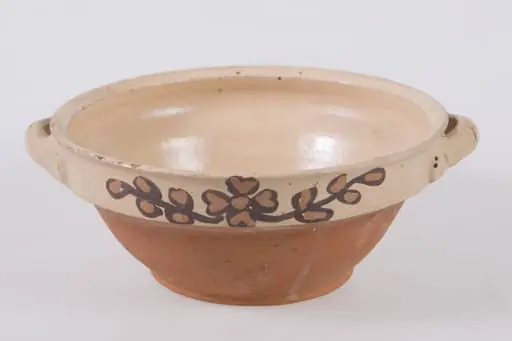 Castron mic de formă tronconică, cu baza marcată printr-un inel proeminent. Buză cu contur rotund în exterior și ascuțit în interior. Decorul floral ce constă dintr-o floare pictată cu cornul în interior, pe fundul vasului. Cromatică: fond: alb-crem; motive: galben; negru; verde.
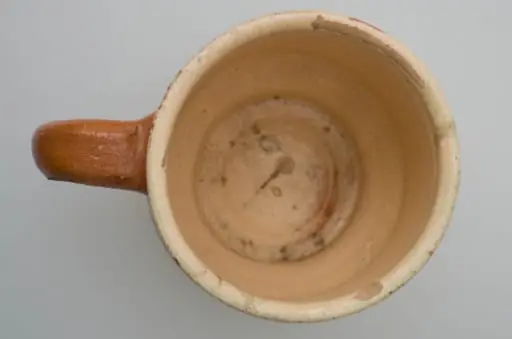 Cană de formă ușor tronconică cu inel răsfrânt în exterior. Prezintă toartă ce pleacă de sub buză și se unește cu corpul spre bază. Smălțuită în interior și exterior. Decor: floare cu patru petale realizată cu cornul din hume naturale; brâu de dungi scurte. Cromatică: fond maro; motive: alb; negru; verde.
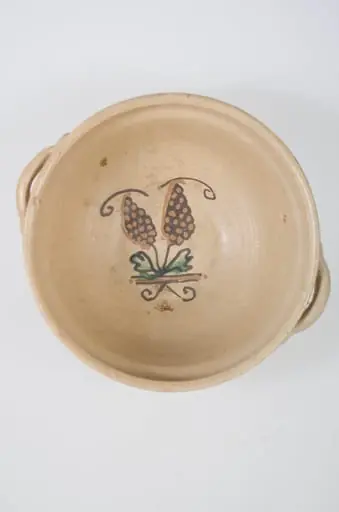 Farfurie de formă tronconică cu buza răsfrântă. Vasul este smălțuit atât la interior cât și la exterior. Decorul este amplasat pe fundul vasului motive florale (buchet) și motive fitomorfe (vrej). Cromatică; fond: alb-crem; motive: galben; negru; verde.
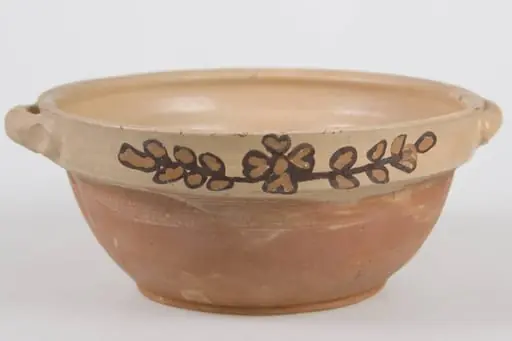 Vas tronconic cu buza răsfrântă. Prezintă două toarte mici fixate diametral opus la nivelul buzei. Decorul este poziționat într-un registru central format din motive florale (buchet) și motive fitomorfe (vrej). Cromatică: fond: crem; motive: maron deschis; maron închis; verde.
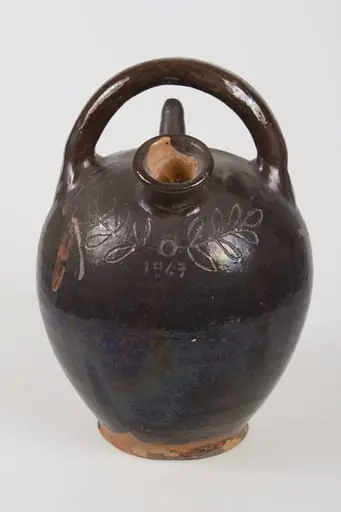 Recipient din lut de formă sferică, prevăzut cu două orificii la partea superioară și toartă. Sub gură, frontal, sunt incizate motive vegetale - o creangă cu frunze și anul ”1967''. La capătul opus, țuțul subțire este încadrat de două flori incizate cu tulpini și frunze. Cromatică: brun închis.
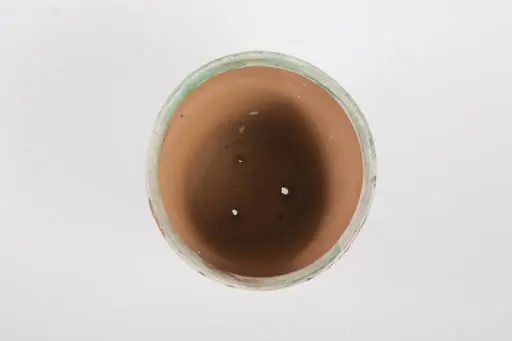 Vas de mici dimensiuni de formă tronconică cu baza mai mică; manșon sub gură lat de 4 cm, decorat cu motive geometrice: șir de romburi înscrise realizate cu cornul. Fund perforat pentru scurgerea apei. Cromatică: fond: cărămiziu; motive: galben; negru.
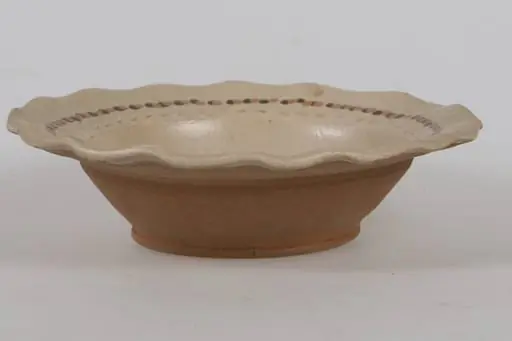 Farfurie de formă tronconică cu baza marcată printr-un inel proeminent perforat pentru atârnare pe perete cu buza lată, mult înclinată în afară și ondulată. Decorată cu un motiv central: floare; brâu alveolat pe buză realizat cu unghia si un alt brâu de puncte realizate cu cornul. Smălțuită la interior și la exterior. Cromatică: fond: bej; motive: maron închis; maron deschis.
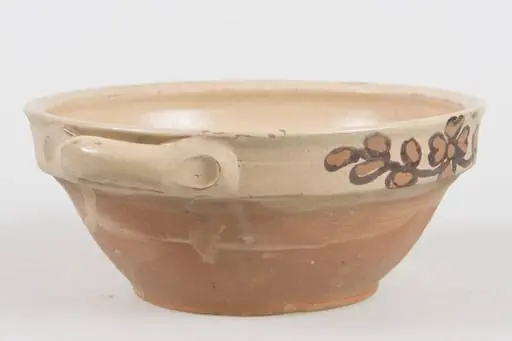 Vas de formă tronconică, cu baza marcată printr-un inel proeminent, buza ușor răsfrântă continuată cu o bandă lată, de care sunt fixate două torți dispuse orizontal ce au la capete impresiuni alveolate, rămase de la lipirea lor prin apăsare cu degetul. Cromatică: fond: crem; motive: verde; maron deschis; maron închis.
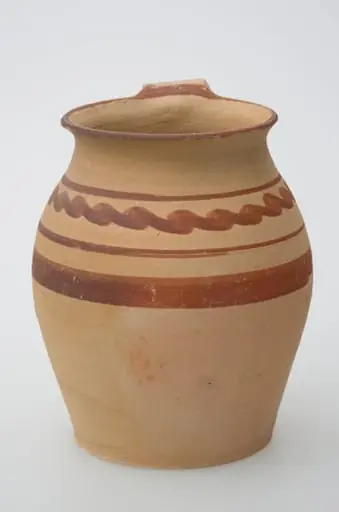 Oală de formă bitronconică, cu corpul alungit spre bază și buza ușor răsfrântă spre exterior. Prezintă o toartă plată ce pleacă de la buză și se unește cu corpul vasului în zona diametrului maxim. Decorul este format din linii drepte paralele, dublate de linii ondulate, plasate în zona mediană a vasului.
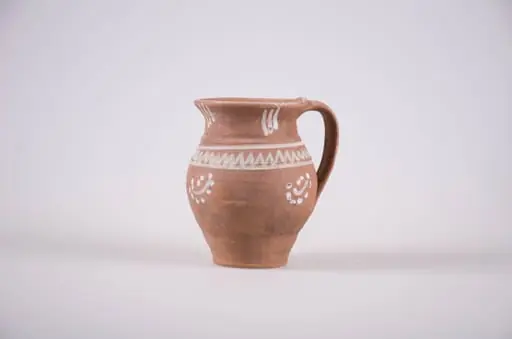 Recipient bitronconic cu gura largă. Prezintă toartă laterală care pleacă din buză până la diametrul maxim al vasului. Decor geometrizant pe partea superioară a vasului și pe toartă; linii paralele, cercuri, linie ondulată, puncte. Cromatică: fond: cărămiziu; motive trasate cu angobă albă. Vasul este nesmălțuit.
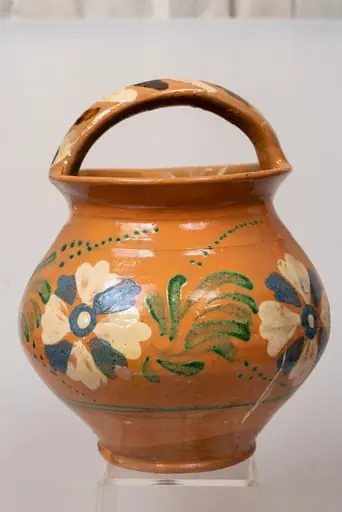 Piesă cu corp sferic, bombat, modelată din lut la roata olarului, gât îngust, drept și buză evazată; oala este prevăzută la gură cu o toartă orizontală pe post de mâner de prindere. Vasul este angobat pe suprafața exterioară cu un strat de angobă de culoare siena naturală, peste care este realizat decorul, prin pictare cu cornul și cu pensula. Toarta este decorată cu un șir de linii groase pictate în formă de V, de culoare albă și maro. Pe corpul vasului se desfășoară decorul principal, format din motive florale stilizate (patru flori cu opt petale de trifoi, de culoare albă și albastră) alternând cu motivul fitomorf caracteristic centrului: frunze alungite, de culoare verde. Partea inferioară a corpului este decorată cu trei linii subțiri concentrice, de culoare verde, pictate cu cornul. Cromatica: alb, siena naturală, maro, verde, albastru. Piesa este acoperită pe ambele fețe cu un strat de smalț transparent.
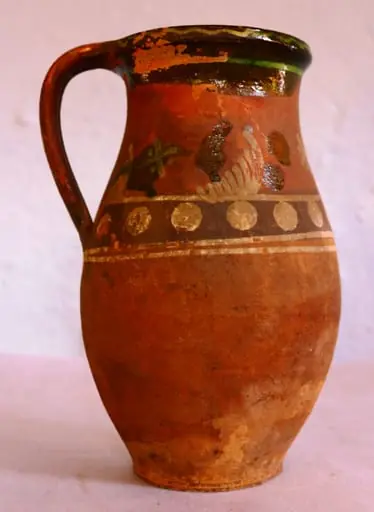 Vas cu corpul bombat, gura largă și o toartă laterală. Central, între două cercuri la bază și unul deasupra, un șir de buline. În partea superioară, patru grupuri de linii curbe, grupate cu o creastă de cocoș. Cruci de punte între brațe. O linie în zig-zag pe gura vasului și una orizontală pe toartă. Cromatică: cărămiziu, brun, alb-gălbui, verde. Timp de lucru: circa două spătămâni.
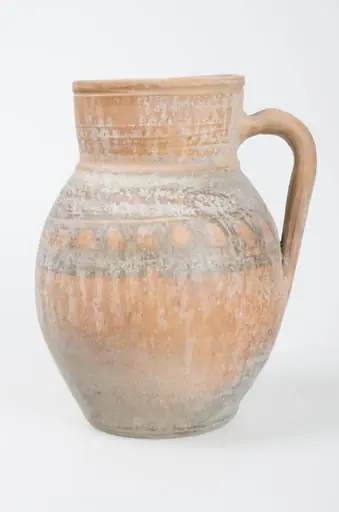 Piesă de ceramică cilindric realizat prin prelucrarea manuală la roată. Din bază plată pornesc pe vertical pereți arcuiți spre exterior ce se încheie prin îngustare printr-un gât drept și înalt cu buza rotunjită. De la jumătatea gâtului până la zona de bombare maximă, pe o parte este așezată o toartă rotunjită. Vasul este lustruit la exterior. Structura ornamentală este amplasată imediat sub gât până la baza toartei, trecând pe sub aceasta și este reprezentată prin motive geometrice, zig-zagul; pătratul; linia dreaptă. Cromatică: cărămiziu; negru.
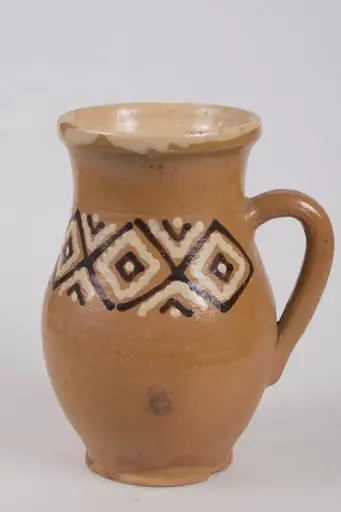 Vas mic de formă cilindrică cu gât svelt, gura dreaptă și buza ușor răsfrântă și inel la bază. Toarta este plasată de la mijlocul gâtului la mijlocul vasului. Interior angobat apoi smălțuit. Decor compus dintr-un brâu de romburi pictat cu cornul, din hume naturale; două dungi în partea superioară realizate prin apăsare cu pieptenul. Cromatică; fond: cărămiziu; motive; maron; crem
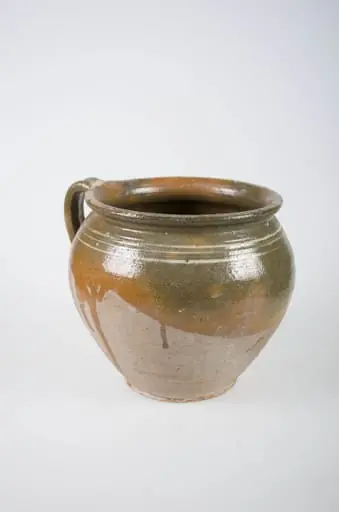 Vas cu corpul foarte bombat în partea superioară, cu un gât scurt și profilat, cu gura foarte lată, buza evazată și rotunjită. Din buză pornește o toartă care se unește cu corpul sub diametrul maxim. Vasul este smălțuit în interior și exterior (doar partea superioară). Este decorat cu motive geometrice: trei linii concentrice pe umăr și o linie scurtă orizontală pe toartă. Cromatica: fond: cărămiziu; motive: alb,.
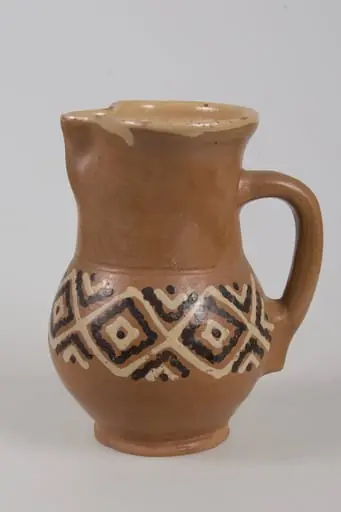 Vas din lut de formă sferoidală cu inel la bază, gât înalt și drept, cu toartă prinsă între gât și mijlocul vasului. Capătul inferior al toartei are un pinten. Angobat in interior cu smalț la exterior și interior. Decor cu motive geometrice: brâu de romburi pictat cu corn in hume naturale; două dungi imprimate cu piaptănul. Prezintă cioc de scurgere. Cromatică: fond: alb-crem în interior; cărămiziu în exterior; motive: alb; negre.
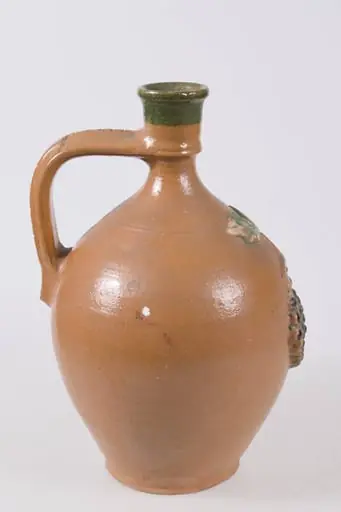 Recipient de lut de formă sferică cu gâtul lung și buza rasfrântă. Prezintă o toartă ce pleacă de la baza gâtului spre partea mediană a vasului. Decorat frontal, în relief, cu doi ciorchini cu frunze. Smălțuit la gură. Cromatică: fond: cărămiziu; motive: verde; negru.
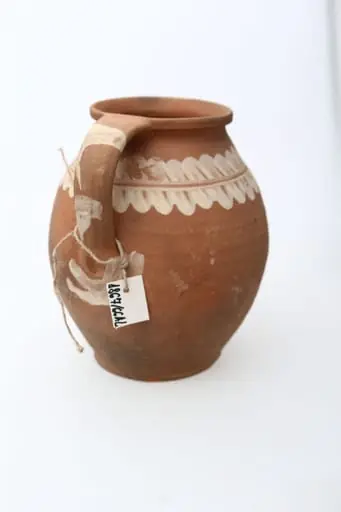 Recipient din lut nesmălțuit, de formă bitronconică, având gât îngust, gura ușor răsfrântă și buza dreaptă. Prevăzut cu o toartă lată și arcuită fixată la buză și la mijlocul vasului. Decorat cu degetul pe umeri cu motive zoomorfe (dintele de lup), și pe toartă cu motive geometrice neregulate. Decorat cu pastă de angobă, albă. Se folosește la fiertul mâncării pe vatră liberă în familii mai puțin numeroase. Cromatică:fundal cărămiziu,motive: alb.
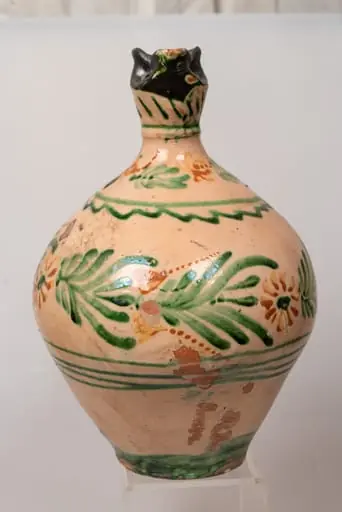 Piesă cu corp sfericl bombat, cu gât profilat, cu gât și gură îngustă, bilobată, cu cior. Din pântecul vasului pornește o toartă tubulară cu orificiu pronunțat pentru băut (cu țâță), care se unește cu vasul sub buza acestuia. Fața exterioară a ulciorului este angobată cu un strat de humă albă, peste care este pictat decorul, cu pensula și cu cornul, astfel: pe partea superioară a vasului, între două grupări de linii concentrice apare o bandă decorată cu motiv floral (o floare rotundă cu multe petale) alternând cu motivul fitomorf caracteristic centrului: frunze alungite, de culoare verde. Pe cant, delimitată de banda decorativă de pe burta vasului de către două linii concentrice, realizate drept și în valuri, este dispusă o bandă decorativă mai îngustă, cu motiv floral și motiv fitomorf delimitat de gât de un brâu colorat. Sub buza bilobată sunt realizate o serie de linii oblice paralele pictate, care continuă pe toată suprafața torții. Fundul vasului este marcat cu o bandă lată orizontală, pictată. Cromatica: alb, maro, verde. Vasul este acoperit cu un strat de smalț transparent.