Artwork
Peisaj
Peisaj is a print by Edith Orlowski-Balogh. It dates from 1950 and is held in the collection of the Gavrila Simion Eco-Museum Research Institute Tulcea.
About this work
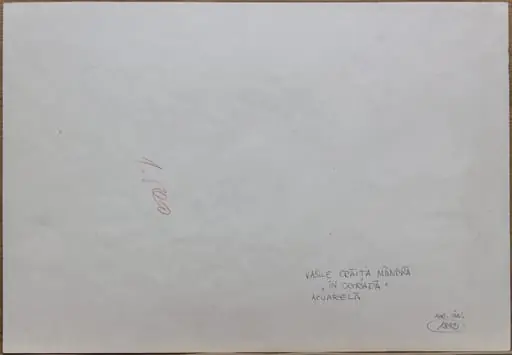
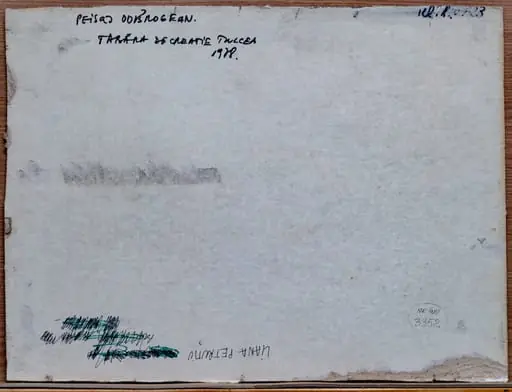
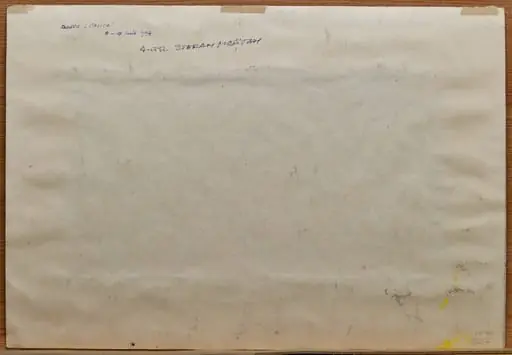
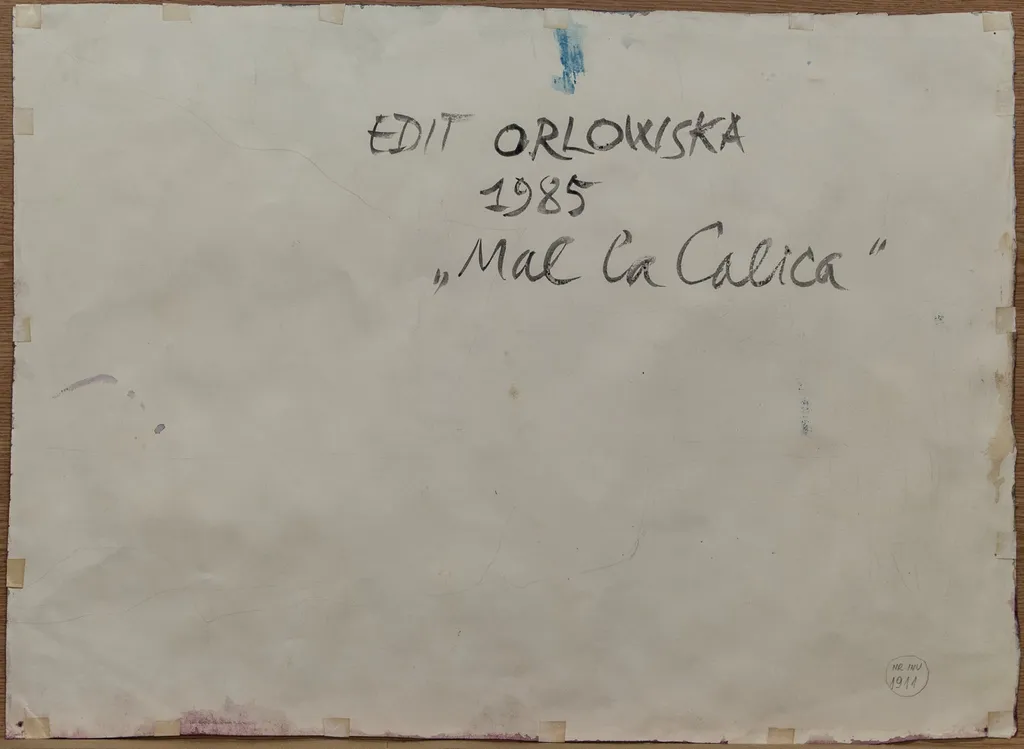
The top shows handwritten black ink: *"EDIT ORLOWSKI 1985 'Peisaj'"* (though the date might not match).
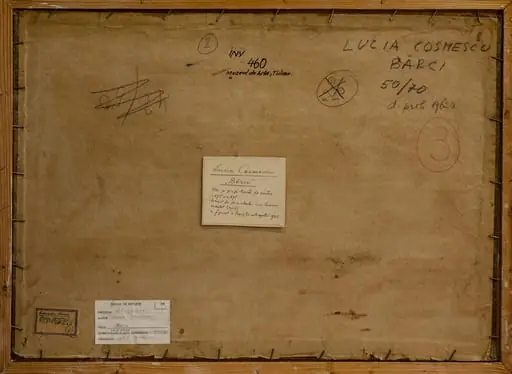
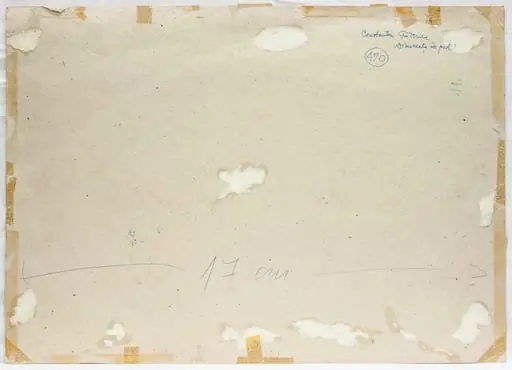
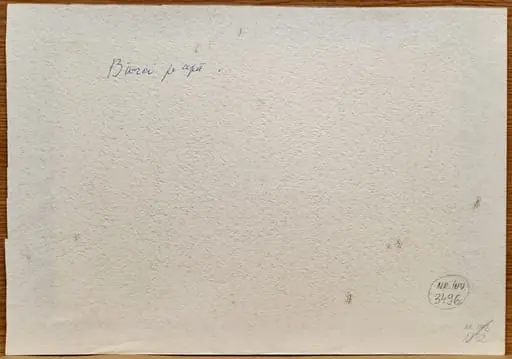
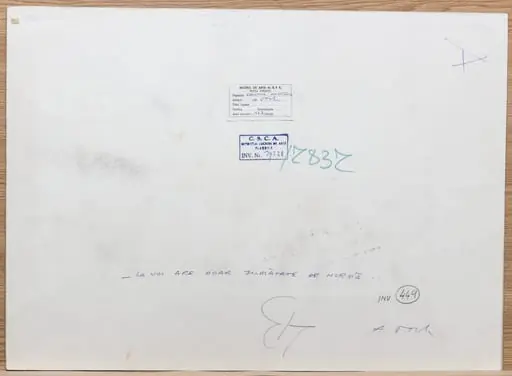
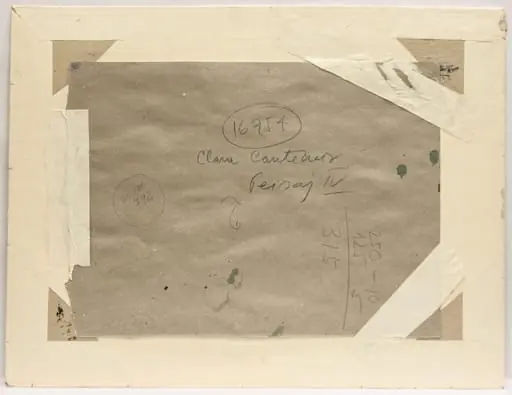
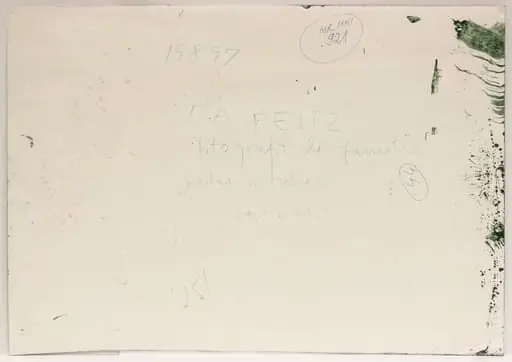
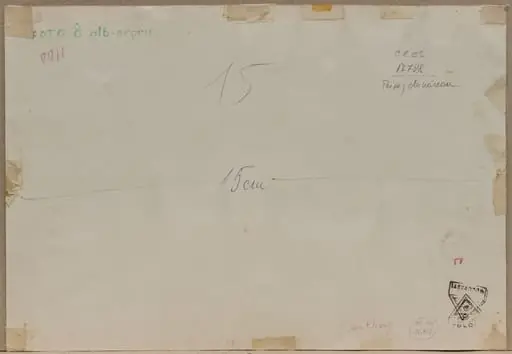
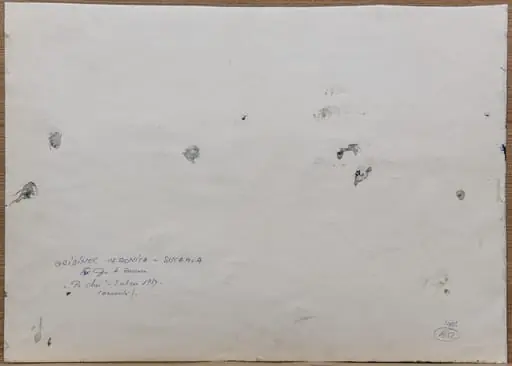
This is a blank canvas with a few marks. The top shows handwritten black ink: *"EDIT ORLOWSKI 1985 'Peisaj'"* (though the date might not match). The paper is light, with faint stains and tape on the edges. A small stamp in the corner reads *"Nr. INV 1911."*
The title *"Peisaj"* means "landscape" in Romanian, but the canvas itself is empty. The handwriting looks rushed, like a sketch that never filled in. The tape and stains suggest it’s been stored for a long time.
If you like empty or minimal art, check out Orlowski-Balogh, Edith.
Overview
Edith Orlowski-Balogh created this work around 1950, though it was later inscribed with a different date and signature. It is currently in the collection of the Museum of Ethnography, cataloged as INV 1911. The surface is minimal: a thin sheet of paper bearing only faint discolorations, adhesive tape along the borders, and a handwritten title in black ink. The work resists conventional representation, offering no imagery beyond its own material traces.
Subject & Meaning
The title 'Peisaj,' meaning 'landscape' in Romanian, contrasts sharply with the absence of visual content. The inscription suggests an intention to depict a landscape that was never realized, perhaps as a gesture of absence or unfulfilled vision. The rushed handwriting and lack of composition imply a momentary thought or note, left incomplete—inviting reflection on the gap between intent and execution.
Technique & Style
The work is executed on lightweight paper with no pigment beyond the inked inscription. The artist’s hand appears hurried, the letters uneven and unpolished. Tape and stains indicate physical handling and prolonged storage. There is no brushwork, no layering, no compositional structure—only the barest trace of a label, reducing the artwork to its material and textual remnants.
History & Provenance
The piece carries a museum inventory number from the Museum of Ethnography, suggesting it entered the collection as part of a documented acquisition. The discrepancy between the 1950 creation date and the 1985 inscription raises questions about its later attribution or recontextualization. Tape and stains imply decades of storage under non-ideal conditions, possibly reflecting limited institutional resources or shifting priorities in preservation.
Context
Orlowski-Balogh worked in a postwar environment where artistic experimentation often embraced abstraction and conceptual gestures. In this context, an empty landscape may reflect broader cultural silences, displacement, or the erosion of personal and collective memory. The work aligns with emerging tendencies in Eastern European art that valued implication over depiction, especially under conditions of material scarcity.
Legacy
This piece endures not through visual richness but through its quiet ambiguity. It invites viewers to consider what remains when representation fails, and how objects acquire meaning through context rather than content. Its inclusion in a museum collection signals a recognition of minimal, non-traditional forms as valid expressions of artistic intent, even when they appear unfinished.
Artist & collection
Artist
Edith Orlowski-Balogh made prints of landscapes and urban scenes in a crisp, graphic style that feels timeless.
Museum
Gavrila Simion Eco-Museum Research Institute Tulcea
Continue through works from the same source collection.