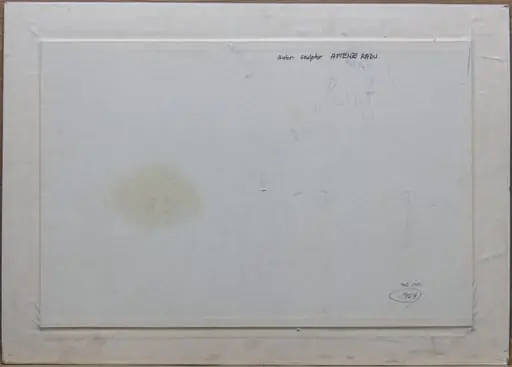
Artwork
La noi are doar 1/2 normă
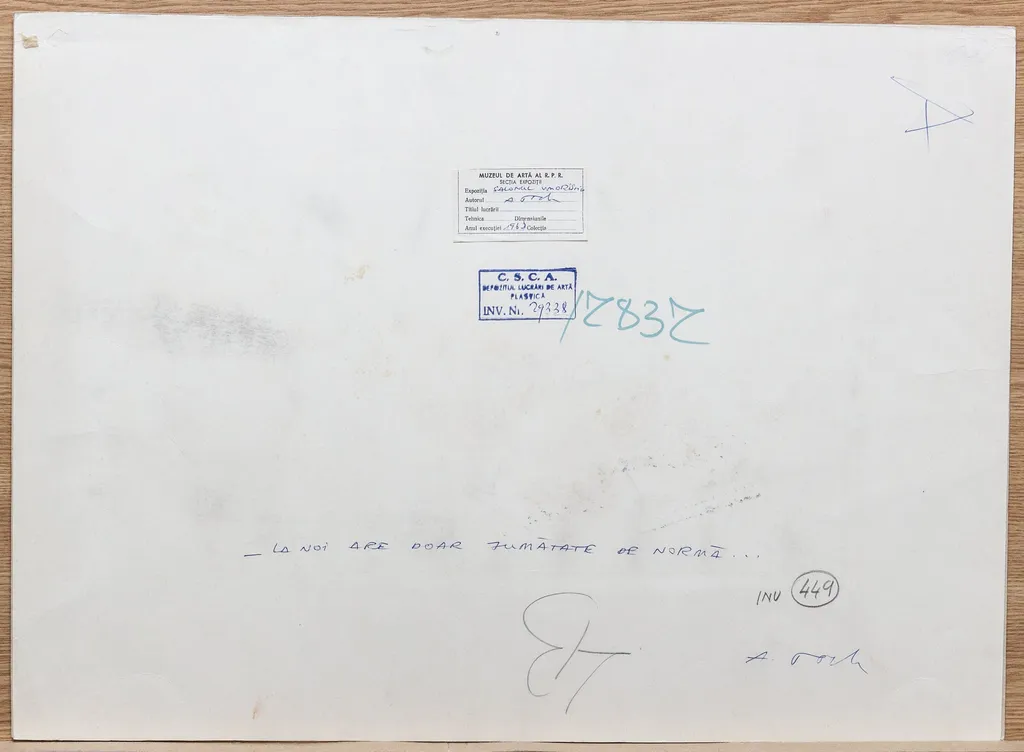
La noi are doar 1/2 normă is a drawing by Poch Albert. It dates from 1950 and is held in the collection of the Gavrila Simion Eco-Museum Research Institute Tulcea.
About this work
Overview
The work’s minimal appearance suggests it was intended as a preparatory sketch or conceptual piece, though its intended function remains ambiguous.
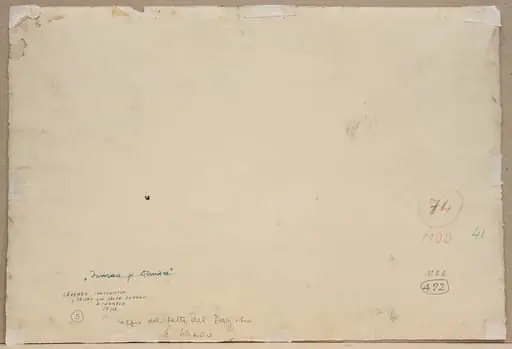
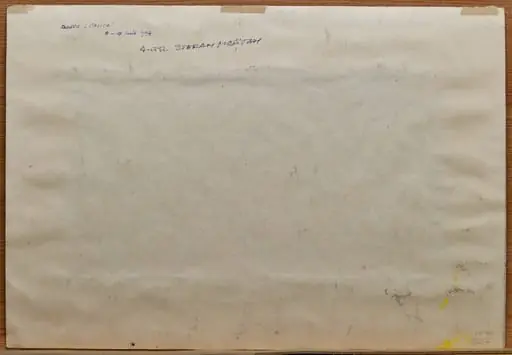
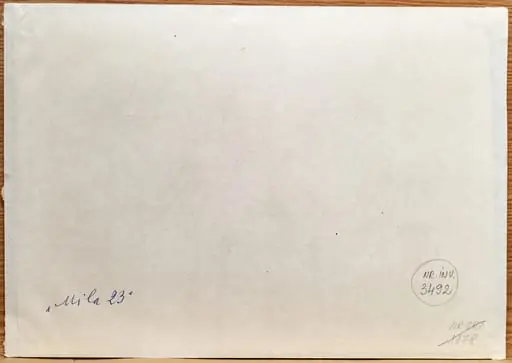
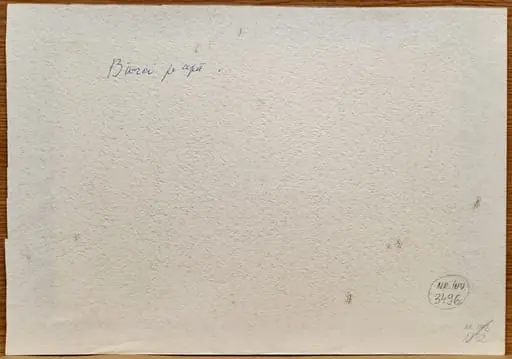
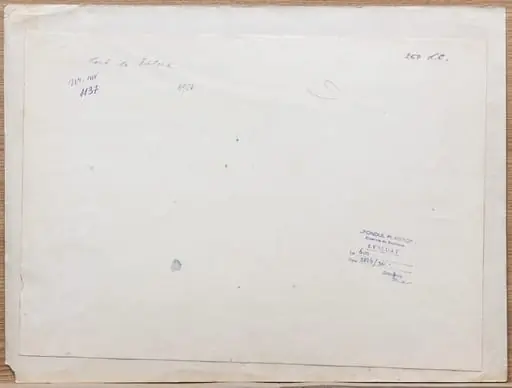
La noi are doar 1/2 normă is a nearly blank canvas attributed to Poch Albert, dated around 1950. It contains only faint pencil traces, a smudged signature, and a handwritten phrase in cursive. Two museum labels are affixed to the surface, one identifying the institution and the other an inventory number. The work’s minimal appearance suggests it was intended as a preparatory sketch or conceptual piece, though its intended function remains ambiguous.
Subject & Meaning
The phrase 'La noi are doar jumătate de normă...' translates to 'We only have half a quota...'—a reference to labor quotas common in postwar Romania. The emptiness of the canvas may reflect disillusionment with industrial expectations or bureaucratic inefficiency. The work does not illustrate the subject directly; instead, its silence and incompleteness serve as a quiet commentary on unmet obligations and unfulfilled labor.
Technique & Style
The work is executed in pencil on an unprimed surface, with minimal marks suggesting a sketch abandoned mid-process. The signature and inscription are handwritten, informal, and slightly smudged, indicating haste or lack of concern for permanence. The absence of shading, composition, or detail contrasts sharply with typical artistic conventions of the period, pointing toward a deliberate reduction or conceptual gesture rather than technical failure.
History & Provenance
The piece entered the collection of the Museum of Ethnography, where it remains today. The presence of two institutional labels confirms its documented acquisition, though no record of its creation or early ownership is publicly available. Its survival as a museum object, despite its apparent incompleteness, suggests it was recognized early as a culturally significant artifact, possibly for its reflection of everyday conditions under state planning.
Context
Created in the early 1950s, the work emerges during Romania’s enforced industrialization under communist rule, when labor quotas were strictly enforced and public discourse was tightly controlled. The phrase on the canvas echoes a common complaint among workers, making the piece a subtle, non-confrontational record of lived experience. Its survival in a museum collection implies an institutional awareness of its social resonance, even if unintended as art.
Legacy
Though Poch Albert’s other works are not widely documented, this piece has endured as an example of understated resistance in socialist-era visual culture. Its quietness invites interpretation beyond the literal, positioning it as a relic of unspoken dissent. It is now studied not for its aesthetic qualities but for its capacity to embody the tensions between official rhetoric and daily reality in mid-century Romania.
Artist & collection
Artist
Poch Albert left behind a small group of drawings and one sculpture made during Romania’s communist years.
Museum
Gavrila Simion Eco-Museum Research Institute Tulcea
Continue through works from the same source collection.